

Synthetic Biology, Artificial Cells, Amphiphile Systems, Machine Learning, Cell-Free Protein Synthesis: Italy, Denmark, Japan, USA, France, Germany, UK.
Rome, Lazio
Joined April 2010
- Tweets1.6K
- Following882
- Followers572
- Likes2.2K


Filippo Caschera retweeted

Transcription Terminators with Context-Dependent Promoter and Terminator Activities
doi.org/10.1021/acssynbio.6c…

Filippo Caschera retweeted
ORB-TXTL: Cell-Free Expression of Membrane Proteins on Lipid Bilayer-Coated Beads pubs.acs.org/asbcd6/article-…

Filippo Caschera retweeted
Decoding & manipulating human intercellular signaling via scalable cell-free protein synthesis
doi.org/10.64898/2026.10.24.…

Filippo Caschera retweeted

通信系(IEEE)分野にやや風変わりなperspectiveを書きました(せっかくなので最後に「パケットの進化」とか好き放題言っている
Cell-Free Systems and Nucleic Acid Packets for Robust Molecular Communication
ieeexplore.ieee.org/abstract…

Filippo Caschera retweeted

On chip 50S assembly pubs.acs.org/jacsat/article/…

Filippo Caschera retweeted

Congrats to everyone involved! frontiersin.org/journals/mol…

Filippo Caschera retweeted
Mitigating the deleterious impact of saliva on cell-free expression sensors for point-of-use diagnostics doi.org/10.1093/synbio/ysag0…

Filippo Caschera retweeted
Cell-free Engineering of LPST153 Bacteriophage Receptor-Binding Proteins Enables Tunable Host-Range Modulation
doi.org/10.1021/acssynbio.6c…
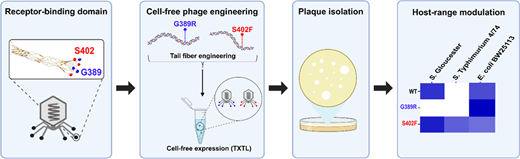
Filippo Caschera retweeted
Engineered Orthogonal Translation Systems from Metagenomic Libraries Expand the Genetic Code
doi.org/10.1021/acssynbio.6c…

Filippo Caschera retweeted
A Two-step Gene Expression Method for In Vitro Evolution of Translational Proteins
doi.org/10.1021/acssynbio.6c…

Filippo Caschera retweeted

櫻井・庄司・市橋でやった論文が出ました。ドロプレット内反応を2段階で行うことで、翻訳タンパク質の完全in vitro進化ができるようになりました。WTより比活性の高いEF-Gも作れました
pubs.acs.org/asbcd6/article/…

Filippo Caschera retweeted

Jiami and Laura's paper is out now! In collaboration with the Reddy lab at ETHZ!
cell.com/cell-systems/fullte…

Filippo Caschera retweeted
Our work is out in ACS SynBio.
- More T7RNAP effective ONLY at low DNA
- LESS(!) ribosome is good at low DNA
- ~14nM mRNA & ~96nM mNG-GFP from 0.2pM(!) DNA input
- Easy-to-use recipe for direct signal readout from microdroplets
pubs.acs.org/asbcd6/article/…
(with @NaohiroTerasaka lab)

Filippo Caschera retweeted
Engineering erythrocytes into synthetic cells using cell-free gene expression
doi.org/10.64898/2026.08.20.…
Filippo Caschera retweeted

I’m really excited to share our new preprint, out today, where we built a fully autonomous system for enzyme engineering — integrating a self-driving lab with a generative protein language model that worked together over a month to engineer substrate specificity in glycoside hydrolase (GH1) enzymes.
biorxiv.org/content/10.64898…
[1/n]
Filippo Caschera retweeted

Automated synthetic cell-based screening for designed proteins with emergent functions @NatureComms
1. The paper introduces PUREdrop, an automated microfluidic screening platform that expresses protein libraries inside thousands of picoliter “synthetic cells” (water-in-oil droplets) per construct, then deposits each droplet population into predefined wells of a 96-well plate for time-lapse microscopy.
2. Key idea: emergent functions (e.g., cytoskeletal self-organization) require both confinement and spatiotemporal readouts. PUREdrop is positioned between bulk plate assays (good genotype-to-well mapping, poor spatial resolution) and ultrahigh-throughput droplet sorting (high throughput, but typically single-timepoint scalar readouts).
3. Hardware/workflow: a 5-way hydrodynamic focusing junction co-encapsulates DNA (IA1) with PURE TXTL reagents (IA2) into monodisperse ~20 µm droplets at ~3 kHz. An autosampler sequentially swaps DNA templates from a 96-well input plate; a fraction collector routes each droplet population into the correct destination well.
4. Automation details that enable reliable library screening: pneumatic valves switch between priming/production modes; ethanol+water cleaning cycles reduce DNA carryover; real-time pressure/flow monitoring stabilizes droplet generation and improves run-to-run reproducibility during multi-well operation.
5. Practical impact: reagent efficiency. By decoupling DNA from the TXTL stream and producing droplets on demand, the platform generates ~3×10^5 droplets using ~0.87 µL of key PUREfrex2.0 components per reaction, reported as ~7.4-fold lower PURE consumption versus manual emulsification workflows.
6. Validation experiment: alternating sfGFP and mCherry DNA across 48 wells showed clear per-well channel segregation with minimal cross-contamination. Time-lapse traces enabled quantitative expression-kinetics metrics (e.g., T0.5 and slope at T0.5), revealing reproducible construct-specific maturation/production dynamics.
7. End-to-end “design-to-screen” pipeline: Golden Gate assembly in plate format (Echo acoustic handling compatible), bacterial growth, PCR from lysate to generate PURE-ready linear templates, normalization, then a ~5-hour PUREdrop run for 48 constructs followed by overnight imaging and droplet-level segmentation/feature extraction.
8. Showcase 1 (designed proteins): screening computationally redesigned FtsZ variants. The authors used conservation/functional-site masking + ProteinMPNN redesign, AlphaFold2-based selection, and then screened 24 designs (plus WT and blinded replicates) for higher-order bundling dynamics inside droplets.
9. Phenotype quantification goes beyond “does it polymerize”: they track time-resolved bundle area trajectories (including onset timing and FWHM as a persistence descriptor) and morphology proxies (skeleton length; intensity coefficient of variation as a bundling compactness proxy). Hits included variants with earlier onset and more compact bundling (mpnnFtsZv18) and variants with delayed onset and reduced bundling (mpnnFtsZv14).
10. Showcase 2 (multi-component emergent function): screening FtsZ modulators by co-expression and reading out changes in FtsZ organization. Distinct modulators shifted lifetime and morphology; ZipA stood out by anchoring FtsZ assemblies to droplet–droplet interfaces and yielding ring-like structures, despite the compartments being surfactant-stabilized rather than membrane-bound.
💻Code: github.com/KANahas/PUREdrop.…
📜Paper: doi.org/10.1038/s41467-026-7…
#SyntheticBiology #BottomUpBiology #SyntheticCells #Microfluidics #CellFree #ProteinDesign #ProteinEngineering #TXTL #FtsZ #SelfOrganization #Automation #HighThroughputScreening

Filippo Caschera retweeted

Introducing the T7 Promoter Calculator, our newest model that predicts the T7 transcription rate for every start site across a genetic system's sequence, including both canonical & low-affinity sites; and redesigns T7 expression systems to remove production of long RNA byproducts

Filippo Caschera retweeted
Cell-free pathway prototyping enables cost-effective
biomanufacturing of 1,2,4-butanetriol at the 1-L scale
doi.org/10.64898/2026.08.03.…


Filippo Caschera retweeted
Quantifying phage-host dynamics using droplet microfluidics
doi.org/10.1038/s41467-026-7…

Filippo Caschera retweeted
Development of a Microdroplet-Based Functional Genomic Screening Pipeline by Combination of DNA Nanoflowers and PURExpress Cell-Free Expression
doi.org/10.1021/acssynbio.6c…
