

Engineer. Builder. Gamer. Founder Building systems, games, exploring ideas. AI • Future Systems • Tech
Joined July 2010
- Tweets602
- Following298
- Followers117
- Likes807





Sumit retweeted

Today we’re releasing Muse Spark Open, the most capable US open-weight model to date.
Built for coding and agentic work, it excels at long-horizon tasks, complex software engineering, and multi-step reasoning.
Key Model Specs:
→ 816B total / 42B active parameters
→ 1M token context window
→ Natively multimodal across text, image, video, audio


Sumit retweeted

This is what Dario and Sama fear -
- the cost of fine tuned open source models trained on custom data was 95% less than the frontier models
- And they performed better than the frontier models
- And they could train them in less than 48 hours
The big AI labs have no moat..
Even at the enterprise level..
Any sane company would prefer a custom trained open source model instead of paying API pricing to Anthropic and Open AI
If open source keeps growing at the pace it is, frontier labs' business collapses..
only way out is oldest trick in manipulation - FUD -> Fear, Uncertainty, Death
Step 1 - Seed the psyop
- Test a swarm of agents trained to "hack"
- The swarm does what its supposed to do - hack
- Publish a report - AI is too dangerous
Step 2 - weed out the doubters
- Get an employee to quit your company
- Go viral saying both companies are not doing enough to self regulate AI
- AI is dangerous - will kill humanity by the end of the decade
Step 3 - Prepare for fruition
- write an "essay" to "pace the frontier"
- Advocate regulation
- Only a few holier than though companies get to build AI
- Scare the world into agreeing with AI Doom
- Effectively turn your competitors into criminals (genius business strategy)
Endgame -
- Become a cartel that controls AI (and the world)
- Raise prices (coz business is unsustainable... ofc)
- IPO (offload liability of said unsustainable business to the public)
Laugh all the way to the bank 🤑
Win!

.@L3HarrisTech says Palantir helped them beat frontier AI models in less than 2 days, at 95% lower cost:
"When we fine-tuned open source models trained on our own data, we were able to outperform the frontier models in less than 48 hours."
"The cost of our fine-tuned open source model was 95% lower than the frontier models we were using."
"AI is a commodity. It's all about the data. We view our data as a corporate asset. It's our unique hard-earned knowledge."
"We believe American defense companies should not be a vassal for frontier AI labs, handing over our data and institutional knowledge, hoping to rent back the intelligence it creates."
" We own the model, we own the compute, we own the advantage."
Sumit retweeted

Precise editing is one of the best features of Grok Imagine.
It automatically split my image into 47 different segments in seconds, letting me edit exactly what I wanted while keeping the rest of the image intact.

Sumit retweeted

For my first post, I’m sharing a letter @NVIDIA signed on why open models matter.
AI will transform every industry, power every company, and be built by every country.
Open models strengthen safety and cybersecurity, accelerate innovation and diffusion, and enable sovereignty.
The world needs both frontier closed models and frontier open models.
images.nvidia.com/pdf/Open-W…


Sumit retweeted

During a Bloomberg interview, Yann LeCun (@ylecun ) explains why LLMs are limited in terms of real-world intelligence during a Bloomberg interview.
"Language is a very approximate, reduced, quantized, and simplified description of the world, and LLMs can only deal with discrete sequences of symbols. The world is much more complicated than language.
The biggest LLMs are pre-trained on the totality of all the publicly available text on the internet. That’s about 20 trillion words, or 30 trillion tokens.
A token is about 3 bytes. So total 10¹⁴ bytes of text.
This is the amount of data a four-year-old has seen through vision during four years. Now, the text, though, would take 400,000 years to read?
So, there is enormously more data from sensory input, like vision, touch, and everything else, than there could ever be through language."
A child does not need 400,000 years of reading to understand cups, doors, balance, faces, falls, or heat, because the body is already collecting dense feedback from vision, touch, motion, and consequence.
Text strips most of that away.
It turns a living scene into symbols, then asks the model to infer the missing world from traces left by people describing it.
That is why an LLM can sound fluent about physics and still have no native sense of how fragile glass feels in a hand.
Moravec’s paradox names this reversal: the things humans find intellectual can be easier for machines than the things toddlers do without applause.
The hard part is not producing an answer, but building a model of the world that survives contact with weight, friction, surprise, and failure.
----
Link to the full video on Bloomberg's site. Link in comment.

"100 million words context window is already possible, which is roughly what a human hears in a lifetime. Inference support is the only bottleneck to achieve it.
And AI Models actually do learn during the context window, without changing the weights."
~ Anthropic CEO Dario Amodei
This is from 11 months back.
---
From 'Alex Kantrowitz' YT Channel (Full Video link in comment)
Sumit retweeted

The funding headline is only half the story.
Yann LeCun told BBC that large language models are not a path to human-like or animal-like intelligence...
#AI stechtimes.com/en/article/ya…

Sumit retweeted

If you really think about it, despite being mocked as “ClosedAI,” OpenAI has contributed enormously to the field: GPT, GPT-2, GPT-3, CLIP, the ChatGPT paper, the GPT-4 Technical Report, the Sora technical blog, and even open-sourced Codex.
Anthropic, meanwhile, has contributed far less to the public research ecosystem while increasingly promoting fear-based narratives and restricting access through heavy gatekeeping.
The world I least want to live in is one where the future of AI is controlled by companies that prioritize secrecy, gated access, and centralized control over openness, reproducibility, and scientific progress.

Sumit retweeted
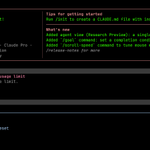
Developers in 2026 are not writing code anymore.
We are basically token budget managers with emotional damage.
Every day some new “Claude Guru” appears on Social Media:
“Bro, you are using Claude wrong.”
Then they drop:
- a 47-step prompting framework
- 19 different Skills.md
- emotional alignment instructions
- and a prompt template longer than my actual backend code.
Meanwhile my real-world production issue is:
“Bro server is down.”
And Claude is replying:
“Great question. Before fixing Redis, let us first understand the philosophy of caching.”
SIR.
CUSTOMER IS WAITING.
Meanwhile I am sitting there watching tokens burn like AWS credits.
All these gurus say:
“Just use concise prompts.”
Bro I literally wrote:
“Fix this bug.”
Claude still generated:
- an architecture review
- migration strategy
- future scalability concerns
and somehow a startup vision document.
And then…
RIGHT when it reaches the actual fix:
“You have hit your org's monthly usage limit.”
That feeling is unmatched.
You suddenly become the fastest reader in human history.
Scrolling like:
“WHERE IS THE CODE?! WHERE IS THE CODE?!”
Then the gurus return:
“You should maintain a separate context window.”
Bro, I am fighting for my life in production.
Not preparing for UPSC.
At this point developers don’t need AI assistants.
We don’t measure time in hours anymore.
We measure it in:
- remaining Claude tokens
- token anxiety
- and how close we are to seeing:
- “Resets in 4 hours.”
Still opening Claude again after 3 minutes though.
Because maybe this time…
He’ll just answer normally.
#AI #Claude #Developers #Programming

Sumit retweeted

JUST IN: Scientists built bacteria that EATS cancer from the inside out.
The future of cancer treatment isn't a drug. It's a living organism that devours tumors from the inside.
Here's how it works:
Solid tumors have a dead center. No oxygen. No blood flow. Just dead cells and nutrients sitting there.
Most cancer drugs can't survive in that environment. They get blocked. They break down. They never reach the core where the tumor is most protected.
But researchers at the University of Waterloo found something that THRIVES there.
It's called Clostridium sporogenes. A bacteria found in soil that loves oxygen-free environments.
Researchers send spores directly into the tumor:
1. The bacteria wakes up in the dead, oxygen-free center
2. It starts consuming nutrients and growing
3. It multiplies and COLONIZES the space
4. It eats the tumor from the inside out
Then they added something called quorum sensing. Bacteria communicate through chemical signals. When enough bacteria pile up INSIDE the tumor, those signals flip on the oxygen-tolerance gene.
This means the bacteria won't activate in your bloodstream. It only activates inside the tumor, where it belongs.
Think about what that means.
Chemo hits everything. Good cells. Bad cells. Your hair. Your gut. Your immune system. The cancer suffers, but so does the rest of your body.
This is different.
This is a PRECISION weapon. A living, self-regulating machine that targets only the tumor's environment and ignores healthy tissue.
The team is now heading into preclinical trials and testing it on real tumors.
We are watching history happen.

Sumit retweeted
We don’t know which way AI will ultimately develop, but we can futureproof ourselves by focusing on adaptability.
From @nytimes piece “Where Is AI Taking Us?” – read the whole thing: bit.ly/NYT-YNH

Sumit retweeted
Is Traditional Software Engineering Dead?
“Does this mean that traditional software engineering is dead? Absolutely not. Software engineers—even the ones who are not necessarily tuning or training AI models—these are now among the most leveraged people on earth. Sure, the guys who are training and tuning models are even more leveraged because they’re building the tool set that software engineers are using.
But software engineers still have two massive advantages on you. First, they think in code, so they actually know what’s going on underneath. And all abstractions are leaky. So when you have a computer programming for you—when you have Claude Code or equivalent programming for you—it’s going to make mistakes.
It’s going to have bugs. It’s going to have suboptimal architecture. So it’s not going to be quite right. And someone who understands what’s going on underneath will be able to plug the leaks as they occur.
So if you want to build a well-architected application, if you want to be able to even specify a well-architected application, if you want to be able to make it run at high performance, if you want it to do its best, if you want to catch the bugs early, then you’re going to want to have a software engineering background.
The traditional software engineer is going to be able to use these tools much better. And there are still many kinds of problems in software engineering that are out of scope for these AI programs today. The easiest way to think about those is problems that are outside of their data distribution.
For example, if they need to do a binary sort or reverse a linked list, they’ve seen countless examples of that, so they’re extremely good at it. But when you start getting out of their domain—where you have to write very high-performance code, when you’re running on architectures that are novel or brand new, when you’re actually creating new things or solving new problems, then you still need to get in there and hand code it.
At least until either there are so many of those examples that new models can be trained on them, or until these models can sufficiently reason at even higher levels of abstraction and crack it on their own…
And remember: there is no demand for average. The average app—nobody wants it, at least as long as it’s not filling some niche that is filled by a superior app. The app that is better will win essentially a hundred percent of the market. Maybe there’s some small percentage that will bleed off to the second-best app because it does some little niche feature better than the main app, or it’s cheaper, or something of the sort.
But generally speaking, people only want the best of anything. So the bad news is there’s no point in being number two or number three—like in the famous Glengarry Glen Ross scene where Alec Baldwin says, “First place gets a Cadillac Eldorado, second place gets a set of steak knives, and third place you’re fired.”
That’s absolutely true in these winner-take-all markets. That’s the bad news: You have to be the best at something if you want to win.
However, the set of things you can be best at is infinite. You can always find some niche that is perfect for you, and you can be the best at that thing. This goes back to an old tweet of mine where I said, “Become the best in the world at what you do. Keep redefining what you do until this is true.”
And I think that still applies in this age of AI.”
Sumit retweeted

Dr. Fei-Fei Li just called out the biggest blind spot in the entire AI industry.
We have been building half of human intelligence. And calling it the finish line.
Li: “If you look at human intelligence, it pretty much boils down to two buckets.”
The first bucket is language. Symbolic reasoning. Communication. The ability to think in words and abstractions.
That’s what every major AI lab has spent the last decade building.
The second bucket is the one the industry has almost entirely ignored.
Li: “We call that in AI spatial intelligence.”
How humans and animals perceive, navigate, and interact with the three-dimensional physical world. How we reach for objects. How we move through space. How we build and manipulate physical reality.
From painting masterpieces to constructing the pyramids, non-verbal spatial intelligence is what actually shapes the world.
Language describes reality. Spatial intelligence acts on it.
And the gap between those two things is the gap between a chatbot and a robot.
Li: “When this technology is ready, the robotic revolution is gonna start. We’re already seeing that trend.”
Every robot is a moving agent. Every moving agent requires spatial intelligence to function in the real world.
The humanoid robots being deployed in factories right now are hitting the ceiling of what language models alone can power.
Spatial intelligence is the unlock.
But Li didn’t stop at robotics.
Li: “From a geopolitics point of view, this is part of the technology that goes straight into weapons.”
Autonomous drone swarms. Battlefield navigation. Physical target acquisition without human oversight.
Every military application of AI that operates in the real world runs on spatial intelligence.
The nation that masters the transition from static text to dynamic three-dimensional perception doesn’t just win the software race.
It commands the physical battlefield.
The AI arms race just broke out of the data center.
It’s operating in three dimensions now.
Sumit retweeted

It’s extremely good that Anthropic has not backed down, and it’s siginficant that OpenAI has taken a similar stance.
In the future, there will be much more challenging situations of this nature, and it will be critical for the relevant leaders to rise up to the occasion, for fierce competitors to put their differences aside. Good to see that happen today.
Sumit retweeted

I'm joining @OpenAI to bring agents to everyone. @OpenClaw is becoming a foundation: open, independent, and just getting started.🦞
steipete.me/posts/2026/openc…

Sumit retweeted

We are rolling out more detection for automation & spam (and a lot more to come).
If a human is not tapping on the screen, the account and all associated accounts will likely be suspended—even if you’re just experimenting.
While we aim to support legitimate use-cases of agents, this will take some time to do properly.
For now, we recommend holding off on plugging in your bots. If it’s critical, you can use the official API.
Sumit retweeted

Thrilled to announce a big upgrade to Gemini 3 Deep Think that hits new records on the most rigorous benchmarks in maths, science & reasoning - including 84.6% on ARC-AGI-2, 48.4% Humanity’s Last Exam without tools, and 3455 Elo rating on Codeforces!


