


I think this young lady is going to be a superstar - the Aretha Franklin of Scotland - gawn yersel BC!
@brookecombe

Loved doing this interview in the Paris Olympia with Trop Bien
Always makes me laugh (and cringe slightly) when I think about some of the first lyrics I wrote 🫣
🇫🇷 #Pariskeepsthefaith
Sweet Soul Drives with GC and The Sunset Cannons
The Good Ship...round here, we Persevere
#GCandTheSunsetCannons
#TheGoodShip
#Leith
#Persevere
#Soul
#Motown
26
Fun facts about highland cattle
Highland cattle—often called "hairy coos"—are the oldest registered cattle breed in the world, with origins in the Scottish Highlands and Outer Hebrides dating back to the 6th century.
Physical Traits & Appearance
• Double-Layer Coat: They feature a thick, oily, waterproof outer coat (the longest of any cattle breed) combined with a soft, downy undercoat for extreme insulation.
• The "Dossan": Their iconic long fringe over their eyes is called a dossan, which protects them from biting flies, heavy rain, and winter gales.
• Horn Shapes: Both males and females have horns; bulls have thicker, forward-curving horns, while cows have longer, upward-pointing horns. They use these horns to forage and dig through snow for food.
• Color Variety: While ginger/red is the most famous color (popularized during the Victorian era by Queen Victoria), they also come in black, yellow, white, dun, silver, brindle, and tan.
Behavior & Lifestyle
• Gentle Giants: Despite their massive horns and shaggy, imposing appearance, they are remarkably docile, friendly, and calm.
• Slow Growth: They mature and grow at roughly half the speed of standard cattle breeds, which contributes to their exceptionally long lifespan of up to 20 years.
• Heavy Eaters: An adult can consume up to 70 to 75 kg (about 150+ lbs) of grass and rough vegetation every day, spending roughly 8 hours grazing.
• Natural Landscapers: Because of their light foot-treading and ability to eat rough brush, gorse, and thistles, they help maintain healthy local ecosystems.
Historical & Farm Facts
• House Guests: In past centuries during cold Scottish winters, Highlanders would sometimes bring their cattle inside the lower end of their stone homes; the cows' body heat warmed the family, and having them close prevented cattle thieves (like the famous Rob Roy) from stealing them.
• Rich Milk: Their milk has an unusually high butterfat content of around 8% to 10%.
• Lean Beef: Their meat is prized for being naturally lower in fat and cholesterol than many conventional beef options.
#YoullBeFine
#GCandTheSunsetCannons
#Motown
#Soul
#HairyCoo
open.spotify.com/track/3MKfi…

62
I've written songs all my life, some good, some bad, many pish. Some of them stay with you for years, decades and evolve and mutate into different creatures with different names. Often when you return to the source, the best songs are the ones that hit you like a lightning bolt, almost as if you have downloaded them from some great Apple Store in the sky. They should be preserved in their original form.
This is one of my own personal favourites - quite simple, it's about getting through the storms of life and seeing the sun rise again.
I've never been to San Francisco but for a music fan growing up in the 70s, 80s and 90s, it seemed like a paradise.
San Francisco Bay by GC and The Sunset Cannons on #SoundCloud
on.soundcloud.com/5LpJ8u2p9B…
#SanFranciscoBay
#GCandTheSunsetCannons
#Motown
#Soul

49
A little shout out to The Drive At Haddo.
A beautifully bonkers Motorsport themed cafe on the edge of the Haddo Estate in Aberdeenshire.
#TheDriveAtHaddo
#Aberdeenshire
#GCandTheSunsetCannons
#HairRock
Hit The Road Again by GC and The Sunset Cannons on #SoundCloud
on.soundcloud.com/Y3yrdiF6JQ…


29


"Hurricane Bawbag"
Hurricane Bawbag (officially named Cyclone Friedhelm) was an intense extratropical cyclone that brought hurricane-force winds to Scotland between 7 and 13 December 2011.
It is widely remembered as the worst storm to hit the country in a decade, prompting the Met Office to issue its first-ever Red Warning for wind across the Central Belt.
Key Meteorological Facts
Peak Winds: The storm generated extraordinary gusts, peaking at 165 mph (266 km/h) at the Cairngorm Summit due to a meteorological phenomenon known as a "sting jet".
Populous Areas: Sustained winds reached up to 80 mph in low-lying, urban areas.
The "Weather Bomb": The system underwent explosive deepening, with its barometric pressure dropping 44 hPa in just 24 hours, eventually bottoming out at 956 hPa.
Impacts and Disruption
Power Outages: The severe weather knocked out electricity for 150,000 Scottish homes.
Closures: Virtually every school in western and central Scotland was closed, alongside major transport routes and bridges (including the Forth, Tay, and Skye bridges).
Travel Chaos: Dozens of flights were cancelled or diverted at Glasgow and Edinburgh airports, and rail networks were entirely shut down or heavily restricted.
The Viral Name and Legacy
The storm became a global sensation on social media, specifically Twitter, where Scottish users rejected the official name "Friedhelm" and instead dubbed it #HurricaneBawbag.
Origin: "Bawbag" is a piece of traditional Scottish slang referring to the scrotum, often used as a lighthearted derogatory term for an idiot.
Cultural Phenomenon: The name trended worldwide alongside viral videos of escaped trampolines rolling down residential streets. The moniker was so dominant that it was eventually used on-air by major broadcasters, discussed by politicians, and added to the Macmillan Open Dictionary in 2016.
#HurricaneBawbag
#Scotland
#Soul
#Motown
#GCandTheSunsetCannons
#PeaceInYourHurricane
#Bawbag
Listen to Peace In Your Hurricane by GC and The Sunset Cannons on #SoundCloud
on.soundcloud.com/v3ITPO9PfI…

129
The "aye been" mindset (or "it's aye been") is a traditional Scottish phrase and cultural attitude meaning "it has always been this way".
Meaning and Origin
"Aye" in Scots:
In the Scots language, aye commonly means "yes," but it also means "always" or "ever" ("for aye" means forever).
The "Aye Been" Mentality:
Saying "it's aye been" or pointing out an "aye-been syndrome" describes deep-seated resistance to change, complacency, or institutional inertia. It is the assumption that because a practice, policy, or tradition has lasted for a long time, it should remain untouched—regardless of whether it still makes sense.
Cultural and Social Context
Politics and Public Policy:
Writers and commentators use the phrase to criticize how Scotland handles public systems (such as education or governance), where outdated or entrenched traditions are defended simply out of historical habit rather than active merit.
Regional Roots:
The phrase is especially well-known and frequently referenced in the Scottish Borders and other rural areas to describe local conservatism or a reluctance to shake up traditional ways of working, business, or recruitment.
The language of Empire often casts imperial powers as benevolent civilising influences and those who resist as terrorists. This is the Machiavellian manipulation of the mind that contributes to the Aye Been mindset.
Return to your friends and tell them that we came here with no peaceful intent but ready for battle, and determined to avenge our own wrongs and set our country free. Let your masters come and attack us. We are ready to meet them beard to beard.
William Wallace
Statement before The Battle of Stirling Bridge 11 September 1297
Listen to I Been (Rapsodaidh nan Reubaltach) by GC and The Sunset Cannons on #SoundCloud
on.soundcloud.com/HU2EttPkZ2…
#AyeBeen
#GCandTheSunsetCannons
#Motown
#Soul
#WilliamWallace

60
Stonehaven and the Jacobites
Stonehaven was a staunchly Jacobite town throughout both the 1715 and 1745 risings, serving as a critical strategic stronghold in the Episcopalian north-east of Scotland. Its maritime harbour, geographic positioning, and fierce anti-Hanoverian sentiment tied the community deeply to the doomed Stuart cause.
The 1715 Uprising and the March North
During the Jacobite Rising of 1715, Stonehaven operated as a reliable sanctuary for the rebel forces. Following the strategic stalemate at the Battle of Sheriffmuir and the arrival of the "Old Pretender" (James VIII and III), the Jacobite momentum fractured.
As the royal army retreated northward from Perth, Stonehaven provided a safe base for the retreating Jacobite army, who stayed overnight in the town on the night of February 5–6, 1716. Shortly after, the rebellion dissolved when the leaders slipped away into exile from nearby Montrose.
The 1745 Rising: French Supplies and Maritime Support
When "Bonnie Prince Charlie" (the Young Pretender) launched the 1745 Rebellion, Stonehaven once again proved to be "reliably Jacobite". Because the local population was heavily Episcopalian—a religious group fiercely aligned with Stuart succession rights—the town resisted the Hanoverian King George II.
Rather than just providing soldiers, Stonehaven’s most vital contribution to the '45 was its harbour. It served as one of the key north-eastern ports where French reinforcements, gold, and military equipment were covertly landed to sustain the Prince's campaign.
Hanoverian Retribution: Cumberland's Vengeance
Following the definitive destruction of the Jacobite army at the Battle of Culloden on April 16, 1746, Stonehaven paid a heavy price for its loyalties. The government forces under the command of the Duke of Cumberland marched north to root out the remnants of the rebellion.
The Pillaging of the Town:
Cumberland's troops brutally pillaged and sacked Stonehaven in 1746 specifically to punish its inhabitants for being staunchly Jacobite.
The Tolbooth Imprisonments:
The Stonehaven Tolbooth—the town's historical courthouse and jail—became a site of political and religious oppression. Local Episcopalian clergymen, including the prominent Reverend Alexander Greig, were imprisoned here for continuing to hold services and refusing to pray for the Hanoverian King.
The Role of Dunnottar Castle
Perched on the sea cliffs just outside the town, Dunnottar Castle is also heavily woven into the story. The castle belonged to the Keith family, who held the title of Earl Marischal.
George Keith, the 10th and final Earl Marischal, was a committed Jacobite leader who actively backed the 1715 rising. When the rebellion collapsed, the British Government seized the castle, convicted the Earl of high treason in absentia, and dismantled the fortress, leaving it a striking cliffside ruin.
#GCandTheSunsetCannons
#Stonehaven
#SetTheSails
#Outlander
#Jacobites
Listen to Set The Sails by GC and The Sunset Cannons on #SoundCloud
on.soundcloud.com/fxdopU87kB…

1
89
A little bit of skittery-rhythemed, Roy Ayers inspired soul for Saturday morning!!
#GCandTheSunsetCannons
#Horizon
#RoyAyers
Listen to Horizon by GC and The Sunset Cannons on #SoundCloud
on.soundcloud.com/YGDPONvlDG…

31

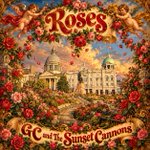
Ma SunsetCannon studied in Aberdeen in the 60s and told me that there was a period when it was known as The City of Granite and Roses....
Aberdeen has won the national Britain in Bloom title 14 times and earned a medal or finalist spot every year since 2008.
Early Success and Dominance (1960s–1970s)
First Win (1965):
Aberdeen won its first-ever Britain in Bloom title just a year after the competition began in 1964, praised for its parks, trees, and creative use of small green spaces.
Golden Era:
The city accumulated wins in 1965, 1969, 1970, 1971, 1973, 1974, 1977, and 1979, famously earning the nickname the "Boom and Bloom city" during the North Sea oil boom.
The "Ban" Myth: After a hat-trick of wins (1969–1971), rule changes in 1972 barred communities from winning the national trophy in consecutive years. This restriction led to an urban legend that Aberdeen had been officially banned from entering.
Later Decades and Recovery (1980s–1990s)
1987 Victory: Aberdeen continued its strong run with another national win.
The 1997 Cleanup and 1998 Comeback:
After a brief dip where it was criticized for litter and urban wear, the Granite City underwent a major cleanup and roared back to claim its 10th national title in 1998.
Modern Era (2000s–Present)
2006 & 2014–2018:
The city secured further national gold awards, driven by displays on Union Street, Union Terrace Gardens, Seaton Park, and the Duthie Park Winter Gardens.
Recent Achievements:
Aberdeen won national gold in Britain in Bloom again in 2023 and won the City and Small City category in 2025 alongside continuous top honors at the regional Beautiful Scotland awards.
#Aberdeen
#BritainInBloom
#Roses
#CityOfGraniteAndRoses
#GCandTheSunsetCannons
#Motown
#Soul
Listen to Roses by GC and The Sunset Cannons on #SoundCloud
on.soundcloud.com/J0wWk2udlh…

55
Bon Accord, mes amis! Incidentally, did you know there was a connection between the word debonnaire and our very own Robert the Bruce?
The Literary Connection
In 1375, the Scottish poet John Barbour wrote The Bruce to chronicle the deeds, struggles, and ultimate victory of King Robert I during the First War of Scottish Independence. This masterpiece is considered one of the most critical foundational texts in Older Scots literature.
Within this poem, Barbour used the word "debonayr" (the Middle English and Older Scots variation of the word) to describe the ideal traits of the King's brother, Edward Bruce, and other noble figures. For example, in Book X of the poem, Barbour writes:
"With braid wesage, plesand and fayr, / Curtais at poynt, and debonayr"
(With a broad face, pleasant and fair, courteous in every way, and debonair).
How the Meaning Shifted
While the word is used heavily in the literature surrounding Robert the Bruce, its meaning back then was completely different from how we use it today:
In the 14th Century: Borrowed from the Old French phrase de bon aire (literally meaning "of a good lineage" or "of a good race"), the word was used to describe medieval chivalric ideals. When Barbour applied it to the Bruce family dynamic, he meant they were gentle, courteous, meek, and of noble disposition.
In the Modern Day: Over the centuries, the word evolved. Today, when someone is described as "debonair," we picture a suave, charming, sophisticated, and well-dressed individual—like James Bond—rather than a battle-hardened medieval knight.
Listen to The Wild Knight And The Black Goddess by GC and The Sunset Cannons on #SoundCloud
on.soundcloud.com/JO87Ut7PPf…
#GCandTheSunsetCannons
#Soul
#Motown
#Aberdeen
#RobertTheBruce
#BonAccord

170
#GCandTheSunsetCannons
#Soul
#Motown
#NorthernSoul
Listen to I'll Take My Chances by GC and The Sunset Cannons on #SoundCloud
on.soundcloud.com/hwaghQ2bn6…

52

#Craignure
#IsleOfMull
#Motown
#Soul
Listen to We Will Rock Yew by GC and The Sunset Cannons on #SoundCloud
on.soundcloud.com/bh67CpwHYQ…
28
The Cannons go Balling!!!
#CannonballRun
#Motown
#Soul
Listen to Cannonball Sunset (Cover) by GC and The Sunset Cannons on #SoundCloud
on.soundcloud.com/l80PAhRq82…

1
49

On the Isle of Skye, the legend of how the landscape formed involved a titanic tussle between Cu Chulainn, hero of Ulster and Scathach, warrior and independent female business owner - she ran a martial arts academy in the extinct volcano. Girl boss!
Basically this was a duel between the Celtic equivalent of The Incredible Hulk - Cu Chulainn was known to enter a "War Spasm" and destroy everything in his path...and Wonder Woman.
They fought in the volcano, in the sea, on the beaches, over the moorlands and mountains, ripping out chunks of the landscape and launching them at each other. It is the creation story of the Isle of Skye.
This supernatural scrap lasted over 6 days and finally they both fell down, exhausted and after all the violence, had to admit that they kinda digged each other.
Sometimes, life is just that...the one who winds you up is the one you dig...
#IsleOfSkye
#Whirlwind
#GCandTheSunsetCannons
#CuChulainn
#Scathach
#Hulk
#Wonderwoman
#GirlBoss
Listen to Whirlwind by GC and The Sunset Cannons on #SoundCloud
on.soundcloud.com/Gj8rqQtSwp…

86