The Chinese Learning App That Makes You Speak Download now: https://nitter.gq/t.co/ozYYZ1iDM9
Shanghai
Joined September 2018
- Tweets1.4K
- Following447
- Followers6.4K
- Likes1.4K





China divides the year into 24 seasons, not 4.
立春 / Lìchūn / Feb 4 / Start of Spring
雨水 / Yǔshuǐ / Feb 19 / Rain Water
惊蛰 / Jīngzhé / Mar 5 / Awakening of Insects
春分 / Chūnfēn / Mar 20 / Spring Equinox
清明 / Qīngmíng / Apr 4 / Clear and Bright
谷雨 / Gǔyǔ / Apr 20 / Grain Rain
立夏 / Lìxià / May 5 / Start of Summer
小满 / Xiǎomǎn / May 21 / Grain Buds
芒种 / Mángzhòng / Jun 5 / Grain in Ear
夏至 / Xiàzhì / Jun 21 / Summer Solstice
小暑 / Xiǎoshǔ / Jul 7 / Minor Heat
大暑 / Dàshǔ / Jul 22 / Major Heat
立秋 / Lìqiū / Aug 7 / Start of Autumn
处暑 / Chǔshǔ / Aug 23 / End of Heat
白露 / Báilù / Sep 7 / White Dew
秋分 / Qiūfēn / Sep 23 / Autumn Equinox
寒露 / Hánlù / Oct 8 / Cold Dew
霜降 / Shuāngjiàng / Oct 23 / Frost Descent
立冬 / Lìdōng / Nov 7 / Start of Winter
小雪 / Xiǎoxuě / Nov 22 / Minor Snow
大雪 / Dàxuě / Dec 7 / Major Snow
冬至 / Dōngzhì / Dec 21 / Winter Solstice
小寒 / Xiǎohán / Jan 5 / Minor Cold
大寒 / Dàhán / Jan 20 / Major Cold
November 7 is 立冬 Lìdōng, the start of winter. Which solar term is your birthday in?


The 2,000-year-old story behind the Chinese word for a best friend.
Bo Ya (伯牙) was one of the best guqin (古琴) players of his time, and he was completely alone. People heard his notes, never him. Only his friend Zhong Ziqi (钟子期) heard what he never said out loud.
When Bo Ya played about mountains, Zhong Ziqi said: “I see Mount Tai.” About water: “I see a great river.” He was right every time.
Then Zhong Ziqi died. Bo Ya broke his guqin and never played again. Not because he forgot how. Because there was no one left to play for.
That is why Chinese calls a best friend 知音 (zhī yīn), “the one who knows your sound.”
Who is your 知音?

HSK 1 vs HSK 6: same meaning, very different words.
热 (rè) → 炎热 (yánrè): hot → scorching
大 (dà) → 庞大 (pángdà): big → huge
吃 (chī) → 品尝 (pǐncháng): eat → taste
漂亮 (piàoliang) → 迷人 (mírén): pretty → enchanting
谢谢 (xièxie) → 感激 (gǎnjī): thanks → deeply grateful
想 (xiǎng) → 思念 (sīniàn): miss → long for

These 6 Halloween monsters have very unexpected names in Chinese.
吸血鬼 (xīxuèguǐ) = vampire, “suck-blood ghost”
狼人 (lángrén) = werewolf, “wolf person”
僵尸 (jiāngshī) = zombie, “stiff corpse”
女巫 (nǚwū) = witch, “woman shaman”
科学怪人 (kēxué guàirén) = Frankenstein's monster, “science strange-person”
木乃伊 (mùnǎiyī) = mummy, “nothing”
Which Chinese name is your favorite?

How to scream in Chinese like a native.
吓死我了 (xià sǐ wǒ le) = scared me to death! (literally: scared me dead)
吓我一跳 (xià wǒ yí tiào) = you made me jump! (literally: scare me one jump)
我的妈呀 (wǒ de mā ya) = oh my god! (literally: my mom)
救命啊 (jiù mìng a) = help! (literally: save life)
好可怕 (hǎo kěpà) = so scary (literally: very worth fearing)
啊啊啊 (ā ā ā) = aaaaah!
Which phrase will you choose to practice the next time you're scared?

7 ways Chinese turns your friends into ghosts.
胆小鬼 (dǎnxiǎoguǐ) = scaredy-cat
酒鬼 (jiǔguǐ) = drunkard
小气鬼 (xiǎoqìguǐ) = cheapskate
淘气鬼 (táoqìguǐ) = little troublemaker
机灵鬼 (jīlingguǐ) = clever little rascal
讨厌鬼 (tǎoyànguǐ) = pain in the neck
穷鬼 (qióngguǐ) = broke person
Which ghost are you?

Chinese is easy. Learn just one sound, “shi,” and you can already say 30+ words. A few are old, rarely used characters.
How many did you already know? Comment your number.
Bonus: which one can be read as something other than “shi”? A) 师 B) 诗 C) 识 The answer is in the pinned comment.

In Chinese, Mastercard is 万事达卡 (Wàn Shì Dá Kǎ)
The name 万事达 (Wàn Shì Dá) is actually a brilliant translation.
万 (Wàn): Ten thousand / All
事 (Shì): Things / Matters
达 (Dá): Reach / Accomplish
So 万事达 literally means "Everything is achievable" or "Ten thousand things reach." It sounds like a magical card that lets you do anything. The Chinese name is much more poetic and lucky-sounding than the English name!
And 卡 (Kǎ) simply means Card!
So, while "Mastercard" in English sounds like a "Boss Card," in Chinese, it sounds like a "Lucky Card that gets everything done." Both are pretty cool, right?

Instead of falling in love, spend that time learning Chinese.
Send this to someone who should learn Chinese.

4
270
If you can tell these 2 characters apart at a glance, you're a pro Chinese learner.
未 (wèi), not yet, vs 末 (mò), end.
Six levels, easy to hard:
1. 大 (dà) vs 太 (tài)
2. 日 (rì) vs 目 (mù)
3. 买 (mǎi) vs 卖 (mài)
4. 土 (tǔ) vs 士 (shì)
5. 己 (jǐ) vs 已 (yǐ)
6. 未 (wèi) vs 末 (mò)
Which level did you stop at?

Answers:
1. 卖 (mài), sell. Sell 卖 (mài) wears a 十 (shí) on its head. Buy 买 (mǎi) does not.
2. 受 (shòu), to receive. 爱 (ài) has 友 (yǒu), friend, at the bottom. 受 (shòu) has 又 (yòu), again.
3. 夏 (xià), summer. 夏 (xià) starts with a flat line on top. 复 (fù) starts with a slanted stroke.
4. 士 (shì), scholar, soldier. Earth 土 (tǔ) has the longer line at the bottom. 士 (shì) has it on top.
5. 己 (jǐ), self. 己 (jǐ) is open at the top. 已 (yǐ) is half closed.
6. 未 (wèi), not yet. 未 (wèi) has the shorter line on top. 末 (mò) has the longer line on top.
How many did you get right?
2
109
Many Chinese parents rarely say “I love you.” They say these 6 things instead.
好好吃饭 (hǎohǎo chīfàn) = eat a proper meal, said at the end of almost every phone call home
多穿点 (duō chuān diǎn) = wear more, said when the weather turns, right before you walk out the door
注意身体 (zhùyì shēntǐ) = pay attention to your health, said when you are busy, sick or working too hard
早点回家 (zǎo diǎn huí jiā) = come home early, said as you head out, with dinner already waiting
早点睡 (zǎo diǎn shuì) = go to bed early, said when they know you are up late working or studying
好好照顾自己 (hǎohǎo zhàogù zìjǐ) = take good care of yourself, said at goodbyes, when you move away or leave on a trip
What does your family say instead of “I love you”?

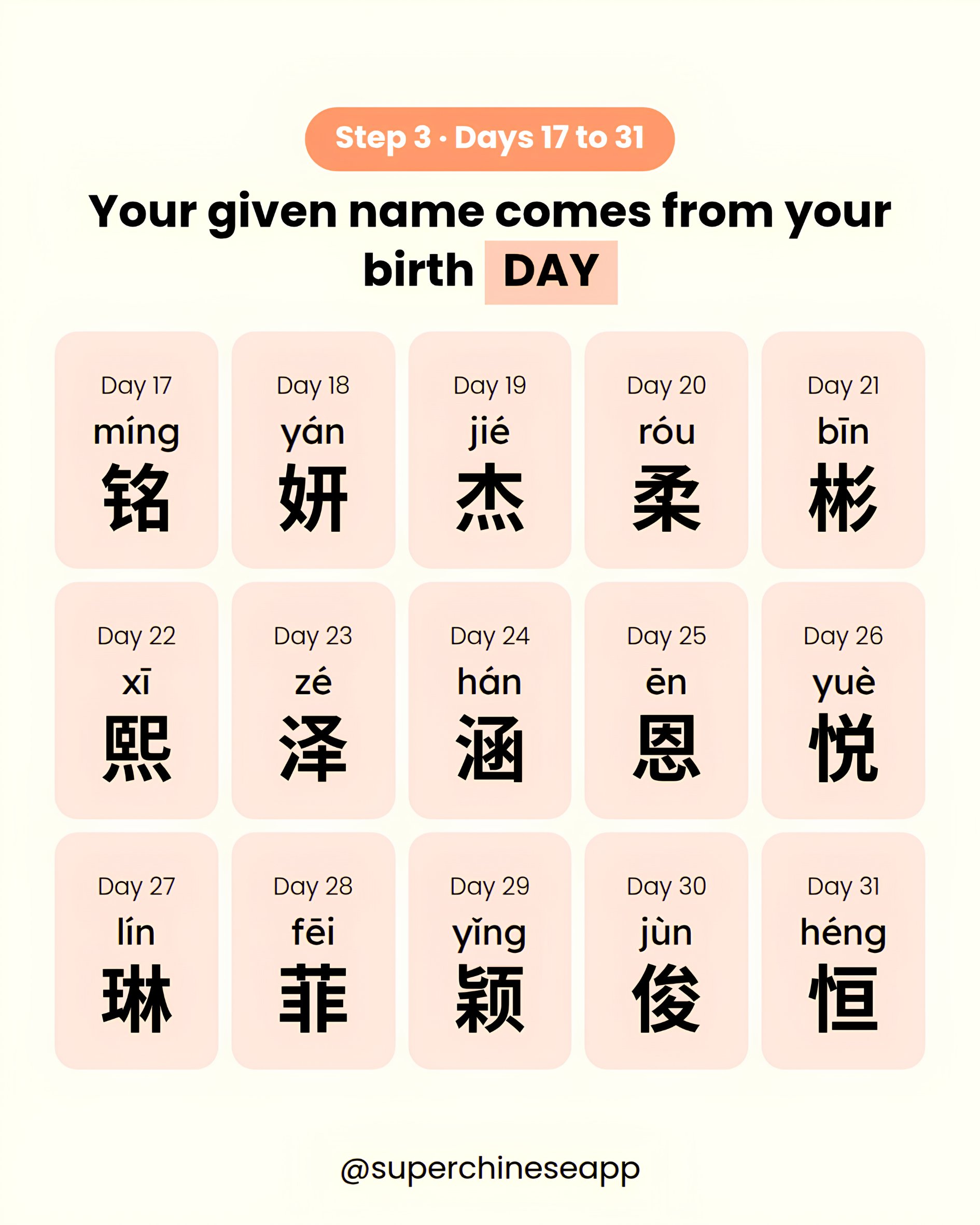
What would your Chinese name be if it came from your birthday?
1. Surname = last digit of birth year (or pick your lucky number)
2. Middle character = birth month
3. Given name = birth day
Example: born on 24 February 2001 = 王 (Wáng) + 梓 (Zǐ) + 涵 (Hán) = 王梓涵 (Wáng Zǐ Hán).
Tables in the images.
Comment your Chinese name below.
Just for fun! For a name you will keep, ask a Chinese friend to choose one for you.