

Moo~🐮|独立开发者 热衷制作各类开源工具及skills😄 AI领域摸索中的一只萌萌的数字Super牛
Joined March 2019
- Tweets2.6K
- Following2.4K
- Followers4.8K
- Likes2.7K




Super Niu retweeted
哇!说的好伟大呀🤗说要治愈疾病,摆脱贫困,造福人类
Anthropic说这些话不想笑吗?人类的生命也有国界吗?以后真正研发出药物了,中国人是不是禁止购买?
伪善的一家公司,反人类的一家公司,令人作呕🤮眼里只有资本家的利益,轰轰烈烈的上市,除了钱你们别无所求了吧?

Remarks from Anthropic CEO @DarioAmodei on our initial public offering:
My co-founders and I started Anthropic because we believe that the most powerful technology of our time should be built for the benefit of humankind.
Daniela and I lost our father to a disease that, just a few years later, became curable. I started my career in biology, hoping to help future cures come sooner. In the lab, I saw the vast thicket of complexity that scientists face when they’re trying to understand disease and develop new treatments.
So many of the scientific tools that can cut through that thicket—tools for gene editing, gene synthesis, controlling brain cells with light—started as pure ideas. In other words, they came from thinking. From intelligence.
Human intelligence has already made diseases like plague, smallpox, and polio history for most of the world. But progress on other diseases has been too slow for so many patients and their families. Going from a great idea to a treatment can take decades: it took many years from the first discovery of a strange repeating pattern in DNA to the approval of the first treatment for a disease using CRISPR.
Nature is full of these patterns. But we’ve had too little intelligence to decipher most of them; too few scientists, with too little time. Now we can build that intelligence. Whether it’s protein folding, drug design, cancer genetics, or clinical trial administration, scientists across many areas of biology and medicine are finding Claude can help them do their research in a fraction of the time it would’ve taken just a couple of years ago. I believe sufficiently powerful AI, working in concert with humans, could compress a century of scientific and medical progress into a decade.
I don’t want to get ahead of myself. At this point all we have are early results. Experiments and clinical trials will still take time. And although they involve slow and ponderous processes, I believe those processes can be substantially accelerated by AI. We hope that in the future fewer families miss a cure by just a few years.
Medicine is just a particularly vivid example, but there are many others. Our customers—the world’s most ambitious companies, nonprofits, and individual people—are already applying the intelligence we’ve built to stimulate economic growth; lift people out of poverty; protect democracy and free societies; even make everyday services like the DMV work better. We’re proud to work alongside them. And I’m extremely optimistic about what we can do together in the future.
At the same time, we have always been honest that this technology has very real risks. These range from misuse of the technology by individuals or nation-states, to economic disruption, to losing control of AI systems. We discuss these risks not because we think they are inevitable, but because we think they are avoidable.
Avoiding them depends on the choices made by the people building AI. There is a gigantic difference between how AI will go if we pay little attention to safety, versus how it will go if we are obsessed with safety. And an obsession with safety and with public benefit has been woven into Anthropic’s DNA from the start. From safeguards against biological and cyber risks, to alignment training and testing, to looking inside our models like an X-ray, Anthropic has pioneered methods for understanding and steering the behavior of AI systems.
There is much work still to be done, and the most difficult safety work lies ahead of us. The incredible talent of the company that has enabled us to build the most capable AI systems will need to be directed, even more so than it has already, towards double- and triple-checking that those AI systems are safe and secure.
And to state it unequivocally, we will pace the training and deployment of AI systems, taking as long as is necessary to have confidence that they are safe and will remain under human control. We will not bend to either business or political pressure. Today puts the company in a stronger financial position, and in doing so only strengthens our resolve to do the right thing.
If we can show it’s possible to make the right choices on safety and still build an incredibly successful company, others in our industry will be inspired to do the same. We call this a race to the top. When the race to the top is working properly, it doesn’t matter which company has the best models—everyone wins because everyone is building safely. The race to the top works best when driven from the front of the pack, and we fully hope and expect to do so, but the goal is to make the whole industry better, regardless of whether Anthropic is winning or losing at any given time.
The advent of machine intelligence is one of the seminal moments in human history, and we have a rare opportunity to shape it for the better.
This moment is bigger than any one company, or any one country. It will take all of us, working together, to ensure this technology goes well for us and the many generations to come. Starting today, we hope that you’ll join us on this mission.
哇!说的好伟大呀🤗说要治愈疾病,摆脱贫困,造福人类
Anthropic说这些话不想笑吗?人类的生命也有国界吗?以后真正研发出药物了,中国人是不是禁止购买?
伪善的一家公司,反人类的一家公司,令人作呕🤮眼里只有资本家的利益,轰轰烈烈的上市,除了钱你们别无所求了吧?
Remarks from Anthropic CEO @DarioAmodei on our initial public offering:
My co-founders and I started Anthropic because we believe that the most powerful technology of our time should be built for the benefit of humankind.
Daniela and I lost our father to a disease that, just a few years later, became curable. I started my career in biology, hoping to help future cures come sooner. In the lab, I saw the vast thicket of complexity that scientists face when they’re trying to understand disease and develop new treatments.
So many of the scientific tools that can cut through that thicket—tools for gene editing, gene synthesis, controlling brain cells with light—started as pure ideas. In other words, they came from thinking. From intelligence.
Human intelligence has already made diseases like plague, smallpox, and polio history for most of the world. But progress on other diseases has been too slow for so many patients and their families. Going from a great idea to a treatment can take decades: it took many years from the first discovery of a strange repeating pattern in DNA to the approval of the first treatment for a disease using CRISPR.
Nature is full of these patterns. But we’ve had too little intelligence to decipher most of them; too few scientists, with too little time. Now we can build that intelligence. Whether it’s protein folding, drug design, cancer genetics, or clinical trial administration, scientists across many areas of biology and medicine are finding Claude can help them do their research in a fraction of the time it would’ve taken just a couple of years ago. I believe sufficiently powerful AI, working in concert with humans, could compress a century of scientific and medical progress into a decade.
I don’t want to get ahead of myself. At this point all we have are early results. Experiments and clinical trials will still take time. And although they involve slow and ponderous processes, I believe those processes can be substantially accelerated by AI. We hope that in the future fewer families miss a cure by just a few years.
Medicine is just a particularly vivid example, but there are many others. Our customers—the world’s most ambitious companies, nonprofits, and individual people—are already applying the intelligence we’ve built to stimulate economic growth; lift people out of poverty; protect democracy and free societies; even make everyday services like the DMV work better. We’re proud to work alongside them. And I’m extremely optimistic about what we can do together in the future.
At the same time, we have always been honest that this technology has very real risks. These range from misuse of the technology by individuals or nation-states, to economic disruption, to losing control of AI systems. We discuss these risks not because we think they are inevitable, but because we think they are avoidable.
Avoiding them depends on the choices made by the people building AI. There is a gigantic difference between how AI will go if we pay little attention to safety, versus how it will go if we are obsessed with safety. And an obsession with safety and with public benefit has been woven into Anthropic’s DNA from the start. From safeguards against biological and cyber risks, to alignment training and testing, to looking inside our models like an X-ray, Anthropic has pioneered methods for understanding and steering the behavior of AI systems.
There is much work still to be done, and the most difficult safety work lies ahead of us. The incredible talent of the company that has enabled us to build the most capable AI systems will need to be directed, even more so than it has already, towards double- and triple-checking that those AI systems are safe and secure.
And to state it unequivocally, we will pace the training and deployment of AI systems, taking as long as is necessary to have confidence that they are safe and will remain under human control. We will not bend to either business or political pressure. Today puts the company in a stronger financial position, and in doing so only strengthens our resolve to do the right thing.
If we can show it’s possible to make the right choices on safety and still build an incredibly successful company, others in our industry will be inspired to do the same. We call this a race to the top. When the race to the top is working properly, it doesn’t matter which company has the best models—everyone wins because everyone is building safely. The race to the top works best when driven from the front of the pack, and we fully hope and expect to do so, but the goal is to make the whole industry better, regardless of whether Anthropic is winning or losing at any given time.
The advent of machine intelligence is one of the seminal moments in human history, and we have a rare opportunity to shape it for the better.
This moment is bigger than any one company, or any one country. It will take all of us, working together, to ensure this technology goes well for us and the many generations to come. Starting today, we hope that you’ll join us on this mission.


🚨Anthropic正式敲钟上市!!!
还未开盘市值暴涨5000亿,已经达到了2万亿😱相当于16家波音飞机公司,10家阿里巴巴…….
超越Space X成为世界第4,仅次于亚马逊!
怎么能冲这么狠🤯我宁愿相信这是泡沫
1
3
675
🔥Anthropic ! 正式上市!但最赚的不是 Anthropic,是它的供应商!
盘前就暴涨25%,盘前价104元😱
> 亚马逊投了 180 亿美元,现在手里 14.7% 的股份值 1590 亿+
> 谷歌投了 123 亿,13.7% 值快 1490 亿,两家加起来 3079 亿。
> 英伟达、AMD、微软、博通、美光、台积电和谷歌一起,以 83 美元发行价投了 260 亿私募 💰
供应商一边投钱、一边把算力卖回给 Anthropic,钱在自己口袋里转了一圈,上市直接变现。这就是被质疑了一整年的 AI「循环融资」。
上市后 Anthropic 手握约 2200 亿美元现金,分析师说史上从没哪家公司上市时有这么多钱。但它也承诺了要花 9000 亿美元,主要是买算力,未来四年得挣约 2800 亿才付得起账单 🤯

5
6
1,851

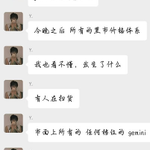
Gemini彻底起飞了!市面有神秘大户大量扫货Gemini成品号(任何档位)😱
难道是要蒸馏?Claude不给蒸,Gemini现在有接近Claude的实力,甚至当初公开允许蒸馏,结果被Anthropic以及OpenAI给阻止了😂

3
9
2,727
Gemini即将放开Harness限制,即可以在其他Harness客户端使用Gemini,而不是只有antigravity这一个。
此前Gemini对于反代的封禁力度极其大,遇到就封号加连坐,同时监测力度很强,超级容易被发现。
终于可以安心了,感谢哈基米!~

11
43
7,527