

Keeping humanity in technology. Data Science Products. Opinions are my own. I'd like to see the raw data on that. AT suuurelock DOT bsky DOT social
- Tweets1.2K
- Following731
- Followers87
- Likes16.7K






ALT Several key U.S. anti-poverty measures expired or were eliminated after 2021. A snapshot of enhanced coverage from 2020 to 2023. This range chart plots the start of new health and anti-poverty initiatives in green and their end in red. Eviction ban, September 4, 2020 through July 31, 2021; extended unemployment coverage, May 5, 2020 through September 4, 2021; additional unemployment benefits, December 27, 2020 to September 30, 2021; child tax credit expansion, January 1, 2021 to December 31, 2021; earned income tax credit expansion, January 1, 2021 to December 31, 2021; free school meals, March 16, 2020 to June 30, 2022; emergency food aid, March 18, 2020 to February 28, 2023; Medicaid expansion, March 18, 2020 to March 31, 2023; student loan pause, March 13, 2020 to September 30, 2023; child care provider grants, April 15, 2021 to September 30, 2023; increase to the Special Supplemental Nutrition Program for Women, Infants and Children, June 1, 2021 to September 30, 2023.


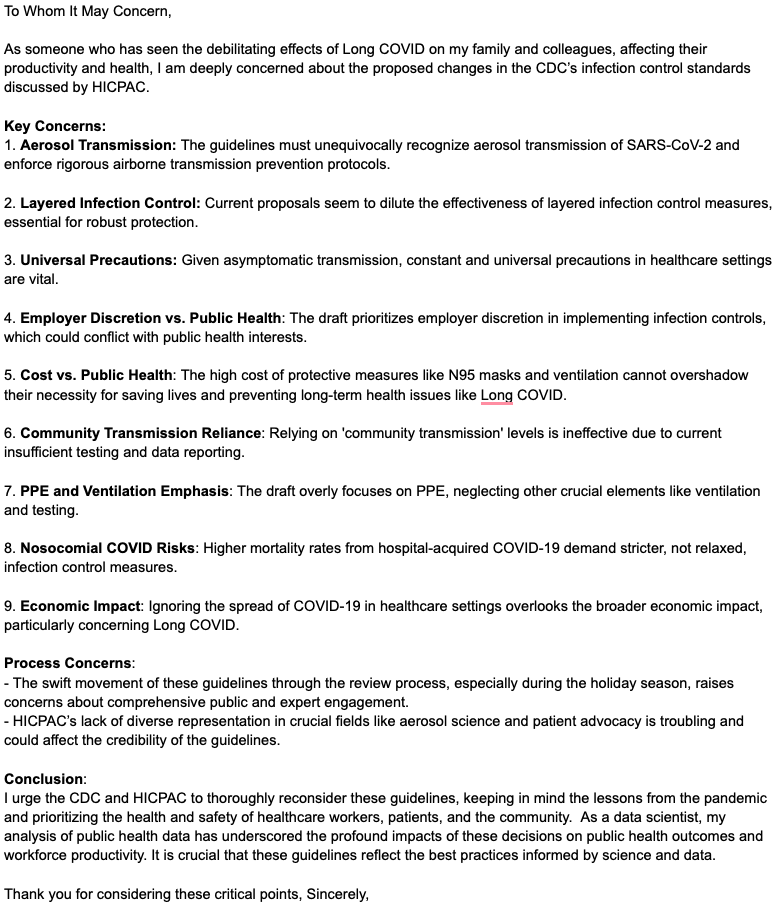
ALT As a data scientist with personal experience of Long COVID's impact on my family and colleagues, I have serious concerns about HICPAC's proposed CDC infection control guideline changes. Issues include: Ensuring clear protocols for SARS-CoV-2 aerosol transmission; maintaining effective layered infection control; implementing universal precautions against asymptomatic transmission; balancing public health needs against employer discretion; considering the long-term impacts of protective measures versus the health and economic costs, especially in light of Long COVID; using comprehensive data to assess community transmission levels; focusing on ventilation and testing, alongside PPE use; addressing high mortality from hospital-acquired COVID-19. Urging CDC and HICPAC to rethink these guidelines, focusing on health, safety, and data-driven decisions.


ALT As someone who has seen the debilitating effects of Long COVID on my family and colleagues, affecting their productivity and health, I am deeply concerned about the proposed changes in the CDC’s infection control standards discussed by HICPAC. **Key Concerns:** 1. **Aerosol Transmission:** The guidelines must unequivocally recognize aerosol transmission of SARS-CoV-2 and enforce rigorous airborne transmission prevention protocols. 2. **Layered Infection Control:** Current proposals seem to dilute the effectiveness of layered infection control measures, essential for robust protection. 3. **Universal Precautions:** Given asymptomatic transmission, constant and universal precautions in healthcare settings are vital. 4. **Employer Discretion vs. Public Health:** The draft prioritizes employer discretion in implementing infection controls, which could conflict with public health interests. 5. **Cost vs. Public Health:** The high cost of protective measures like N95 masks and ventilati


