

Clinical psychology PhD student @universityofky | fMRI and Exposure Therapy | Exercise and Mental Health | #Rstats | Hiking, art, and plants.
Lexington, KY
Joined March 2022
- Tweets275
- Following655
- Followers320
- Likes21.2K





Troy Hubert retweeted

So why is healthcare so expensive? Part of it is the bloat/burden/regulation that now exists just to have the privilege of taking care of patients as a practice…
Yes, healthcare administrator roles are up 156%, but so is the admin/bloat…
+598% more billing rules. +97% more healthcare federal regulations…
Prior Auth, MIPS, denial appeals, no surprise act / IDR, “quality” metrics, EHR/IT requirements…the list goes on and so does the cost of complying.

Troy Hubert retweeted

The effects described in this paper are a real policy/implementation challenge for dimensional models of psychopathology that show that there are no firm or clear boundaries between non-disordered and disordered mental and behavioral functioning.
How do we take the clear scientific results to improve conceptualization and diagnosis without sliding down the slippery slope of “everyone has a mental disorder?”
I think we shouldn’t shy away from what the data about mental illness show us, that most things fall along a spectrum, but we have to be mindful about how that information can be used for good and for bad for the public.
People with lower grade impairments can benefit from help and support AND we shouldn’t be pathologizing normal experiences. It may seem like threading a needle but I have to believe it’s possible. Good data, criteria, and methods of assessment and diagnosis will help a ton here.

Imagine a 19-year-old scrolling TikTok. She watches a creator list five "signs you have undiagnosed anxiety." She recognizes three in herself. By the end of the week, she's describing herself as anxious to her friends. A month later, she's avoiding situations she used to handle fine.
What went wrong?
In a new paper by my PhD student Dasha Sandra, titled "Why mental health awareness can harm: Converging explanations for a societal problem", we argue that well-meaning mental health awareness can backfire, and we identify how. Four separate literatures (concept creep, nocebo effects, prevalence inflation, and illness self-labeling) have been circling the same problem from different angles. We show they converge on three mechanisms:
1.Awareness lowers the threshold for what counts as a disorder.
2. It trains people to scan their inner lives for symptoms and reinterpret normal distress as pathology.
3. Once someone adopts an illness identity, they behave in ways that confirm and deepen it.
The evidence is wide. Learning that loneliness is harmful makes solitude feel worse. Learning that stress is harmful worsens well-being and performance. Awareness videos about fake conditions like "wind turbine syndrome" produce real headaches. Trigger warnings raise anticipatory anxiety without reducing distress.
This does not mean awareness should stop. It means awareness can have unintended consequences, including manufacturing the suffering it tries to prevent. Inoculating people against these mechanisms works, and we already have evidence it does.
Link to paper: michael-inzlicht.squarespace…

Troy Hubert retweeted

Science is about to get absolutely nuked.
Unless we get extremely strict about providing and opening up code and data and documenting lab experiments rigorously, a torrent of credible-looking but fraudulent papers is upon us.

Can water intake prevent Alzheimer’s disease? No. This is fully AI-generated… but the data below could easily pass as real.
The new ChatGPT image model is truly impressive, but I think it poses a real risk for scientific integrity in future.
For example, I could just generate a dataset with a single prompt that appears to show something like water preventing Alzheimer’s disease. Ironically, we used to laugh at obvious “AI slop” (like those weird generated mice), but that’s changing pretty fast. If I were reviewing this fake figure today, I’m not sure I could reliably tell whether this figure is real or AI-generated?
The bigger issue is that the usual signals we rely on e.g., how realistic or plausible something looks are no longer enough.
I think we really need more comprehensive AI detection and, more importantly, stronger verification standards for scientific submissions going forward. We’ll probably also need better ways to digitize lab notebooks and ensure access to raw data, something closer to how code and version history are tracked...

Troy Hubert retweeted

Lock in folks, this year we’re going to increase our brain’s neuroplasticity by meditating, sleeping well, exercising, learning new things and doing things that are challenging.


Troy Hubert retweeted

CBT is awesome.
- Cognitive Restructuring: Get rid of negative thoughts
- Behavioral Activation: Stay active, feel better
- Problem-Solving: Address challenges directly
- Exposure Techniques: Confront fears, reduce them
Unlike endless psychoanalysis or revisiting obscure childhood drama (jokes at psychodynamic), CBT often delivers quicker results.
While I prefer psychodynamic therapy, I value most therapy approaches. Psychiatry has bigger challenges than debating therapy types. Harsh comments on X about certain therapies sadden me. If you dislike one, it may stem from a poor, manualized version or a caricature.

Most viewed in the last 7 days from @JAMAPsych:
Cognitive behavior therapy (CBT) is generally effective for treating major depression, anxiety disorders, PTSD, OCD, and eating disorders.
ja.ma/42sc6IO

Troy Hubert retweeted

OCD & PTSD can look the same. I’ve created a handout offering considerations for differentiating these symptoms: spaces-cdn.owlstown.com/blob…
Thanks to our @IOCDF Trauma & PTSD in OCD SIG members for the recommendation! This & other free resources available at cmpinciotti.com
Troy Hubert retweeted

This is still one of my favorite #dataviz of all time.
It shows how sensitive results are in small samples.
It provides raincloud plots with N=20 (on the left) & N=500 (right).
There is no difference between the two conditions other than the N.
Troy Hubert retweeted


It's published.
We ran 80,000 simulations tonight.
Harris won in 40,012.
natesilver.net/p/nate-silver…



Troy Hubert retweeted
If academic articles were written by Youtubers: WE RAN A BUNCH OF REGRESSIONS AND YOU WOULDN'T BELIEVE WHAT HAPPENED NEXT...



Troy Hubert retweeted

1/8 New tutorial preprint led by @b_siepe in which we present different descriptive statistics & data visualization techniques with the goal to better understand EMA item functioning.
Preprint: osf.io/preprints/psyarxiv/dv…
Brief overview thread 🧵:


Troy Hubert retweeted

In a recent paper accepted at JAD, together with @THubert95 and @HannahWild11, we identified multiple distinct depression and anxiety symptom trajectories in an adult sample receiving daily treatment: sciencedirect.com/science/ar…
Troy Hubert retweeted

This never stops giving me joy
This Post is from an account that no longer exists. Learn more
Troy Hubert retweeted

Neurons in layer 2/3 of the human neocortex.
Credit: Humboldt University of Berlin
#neuroscience #MedTwitter

Troy Hubert retweeted
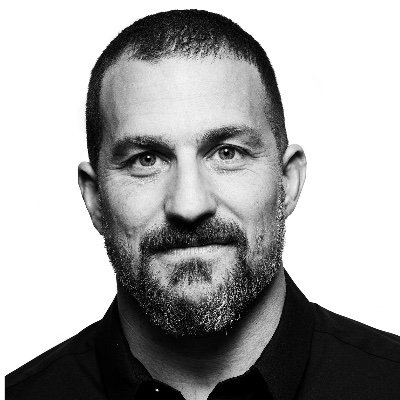
I’ve read this book and it’s incredible. So much so that it stands to be the go-to guide for health and longevity. (Note: I am not a paid endorser; it’s simply terrific).


