




Tal beeri retweeted

We have noted your comment.
Optical fibers used in civilian communications infrastructure, including internet networks, are based on the same underlying technology used in fiber-optic-guided drones. However, not every fiber-optic cable designed for civilian communications infrastructure is suitable for use in drones.
Regarding the suspected theft of optical fiber from the warehouses of the Lebanese telecommunications company Ogero, civilian optical communications equipment could, in principle, have dual-use applications. However, it is important to distinguish between an optical fiber and a finished fiber-optic communications cable, which may include protective sheathing, reinforcement components, and armoring. The available reports do not provide precise information about the type of equipment stolen or its characteristics. Given the potential for dual use, the possibility that this equipment may be suitable for use in drones cannot be ruled out.
In conclusion, the potential for dual use depends on the product’s physical form. In this case, that form is not known to us. Therefore, based on local reports, there is potential for dual use unless proven otherwise.
Tal beeri retweeted
From Lebanon to Berlin: How Did Hezbollah’s Educational Model, the Imam al-Mahdi Scouts, Reach Berlin’s Diaspora Community?
On November 17, 2026, Berlin authorities banned the activities of the El-Irschad association and three groups they designated as its subsidiary organizations. According to the authorities, the association used the mosque it operated in Neukölln to spread Hezbollah’s ideology and ran youth activities modeled on the Imam al-Mahdi Scouts in Lebanon. German authorities also said the association provided financial and organizational support to Hezbollah.
Read the full article. israel-alma.org/the-el-irsch…

Tal beeri retweeted
14 Smuggling Interdictions and an Active Supply Route: Hezbollah’s Military Buildup Continues
Between April 17 and November 23, 2026, we documented 14 incidents involving the interdiction of weapons shipments destined for Lebanon, most of them intended for Hezbollah. The shipments included missiles, rockets, FPV drones, fiber-optic cables, and hundreds of kilograms of explosives.
The number of interdictions does not necessarily indicate successful enforcement, but may instead reflect an intensification of Hezbollah’s smuggling and military buildup efforts. The data reflects only the shipments that were intercepted, while the volume of shipments that reached their destination remains unknown.
Hezbollah continues to rebuild its military capabilities and replenish its weapons stockpiles. Intercepting individual shipments is no substitute for a consistent strike policy targeting the organization’s military reconstruction efforts throughout Lebanon.
Read the full analysis >>
israel-alma.org/14-interdict…

Tal beeri retweeted
The Shipment Struck on November 16 at the Syria–Lebanon Border: Grad Rockets Equipped with Proximity Fuzes Identical to Iranian Fuzes Designed for Airbursts Above the Target.
In the attached video, we analyzed the November 16 airstrike targeting a weapons shipment being smuggled from Syria into Lebanon, approximately 4.25 kilometers south of Janta (eastern Beqaa, Syria–Lebanon border). The analysis, based on footage captured by Al-Hadath, focused primarily on the location of the strike and the type of weapons targeted.
The crossing point along the Syria–Lebanon border where the smuggled shipment was struck is located approximately 1.5 kilometers southwest of Hezbollah's largest precision-guided missile production facility in the Beqaa region, which has been targeted by airstrikes several times during the war (see our publication on the latest strike against this production facility on November 19, 2026, for further details).
This is the same illegal border crossing we identified in our 2022 report on the Iranian weapons smuggling corridor.
Based on footage from the strike site, the shipment appears to have included 122mm Grad rockets, which showed signs of secondary explosions resulting from the strike (cook-off). It is unknown whether the shipment contained additional weapons, such as drones, as suggested by various reports.
Notably, the rocket fuzes found among the weapons debris at the strike site do not resemble standard Russian-made high-explosive warhead fuzes.
The Iranian Ministry of Defense's Export Center has advertised fuzes for 122mm Grad rockets that are nearly identical to those visible in the images from the strike site. These are proximity fuzes, which enable 122mm Grad rockets to detonate in the air above their targets (airburst).
Tal beeri retweeted
Indoctrinating Hezbollah’s Next Generation: The Al-Mahdi Scouts’ Children’s Magazine
An illustration in the Imam al-Mahdi Scouts’ children’s magazine shows a father and son looking at photographs of Hassan Nasrallah (Hezbollah’s former leader, killed in September 2024), Ali Khamenei (Iran’s former supreme leader, killed in February 2026), and Qassem Soleimani (the former commander of the Quds Force, killed in January 2020). The father explains to his son that they look at these figures every day and try to emulate them so that their own identity will resemble theirs.
Another page features the poem “I Want a Rifle,” which presents armed struggle as the only path to “Palestine.” The magazine thus presents Hezbollah and Iranian leaders as role models for its young readers and portrays the struggle against Israel as part of the identity they are expected to embrace.
The magazine was written after Operation Guardian of the Walls (2021). IDF forces seized a copy in the Bint Jbeil area of southern Lebanon.
The magazine illustrates how Hezbollah uses its youth movement to indoctrinate children from an early age. In February 2026, in a letter marking the 41st anniversary of the movement’s founding, Hezbollah Secretary-General Naim Qassem presented the Al-Mahdi Scouts as part of the “resistance” and emphasized their role in instilling loyalty and a spirit of sacrifice in the younger generation. By combining regular group activities with ideological messaging, Hezbollah can link its young members’ sense of belonging to their community with identification with the organization and its struggle throughout their formative years.
The Al-Mahdi Scouts are one of the means through which Hezbollah preserves and strengthens its influence within its Shiite support base over time. The movement also serves as a recruitment platform, helping Hezbollah cultivate its next generation of members and officeholders from within that community.
Recent reports from Germany on the closure of the Hezbollah-linked El-Irschad Association shed light on how the educational model of Lebanon’s Al-Mahdi Scouts reached Berlin. We will publish a more detailed analysis in the coming days.

Tal beeri retweeted
On November 18, the United States imposed sanctions on the "Wa Ta'awanu" ("Cooperate with One Another") Association, which operates in Lebanon on behalf of Hezbollah.
At the Alma Research and Education Center, we have been monitoring the association's activities for several years. Through our research, we have highlighted its ties to Hezbollah and its role in the civilian and social infrastructure that supports the organization in general, and Hezbollah's military terrorist activities in particular. Among other findings, we also identified the association's expansion into the pilot zones, thereby facilitating Hezbollah's reestablishment in these areas.
The recent U.S. decision underscores the importance of monitoring and researching Hezbollah's civilian infrastructure and organizations, which operate alongside its military apparatus and contribute significantly to its activities.
Hezbollah's civilian infrastructure (the "state within a state") is the organization's true game changer. We have identified a long list of additional Hezbollah-affiliated civilian organizations that have yet to be sanctioned.
It is essential to disrupt and neutralize Hezbollah's civilian infrastructure (through various means, not just sanctions), in parallel with and in the same manner as efforts to disrupt and neutralize its military infrastructure.
Tal beeri retweeted
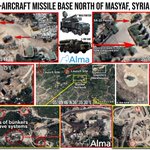
On the evening of November 19, the IDF struck, for the sixth time, Hezbollah’s largest underground facility for the production and storage of precision-guided missiles, located in the Janta area of the eastern Beqaa Valley, very close to the Syrian border.
The first strike on the facility was carried out in November 2024, while the most recent previous strike took place in October 2025.
Given the characteristics of the facility, which is excavated into a mountain ridge, extends approximately 1.4 kilometers in length, and reaches a maximum depth of approximately 70 meters inside the mountain, it is likely impossible to destroy it from the air (similar to the facility in the Ali al-Taher Ridge, which also could not be destroyed through aerial strikes).
Therefore, the strikes are focused on the facility’s entrances, with the aim of blocking access and preventing repeated attempts by Hezbollah operatives to enter the facility, rehabilitate it, and gain access to the weapons and military equipment remaining inside.
The facility is strategically positioned so that one of its entrances is located directly on the Syrian border, enabling Hezbollah to transport weapons and military equipment from Syrian territory into Lebanon through the facility’s underground tunnel network.

Tal beeri retweeted
Iran is under heavy pressure - yet continues to rebuild its military capabilities and prepare for the next conflict.
The U.S. naval blockade, the loss of approximately $30 billion in oil export revenues, severe energy shortages, domestic protests, and growing divisions within the regime's leadership are all deepening the crisis in Iran.
However, the internal crisis is not stopping Iran's military reconstruction efforts:
Nuclear Program: Continued activity at Pickaxe Mountain (Kuh-e Kolang Gaz La), uncertainty regarding the location of enriched uranium, and significant gaps in oversight by the International Atomic Energy Agency (IAEA).
Ballistic Missiles: Restoration of approximately 20% of the damaged production capacity, excavation of new underground facilities, an estimated stockpile of around 1,700 missiles, and an announcement lifting the self-imposed 2,000-kilometer missile range limit.
Iranian Proxies: Hezbollah is focusing on rebuilding and strengthening its capabilities with Iranian funding, the Houthis are fighting Saudi Arabia, and the militias in Iraq are maintaining their military strength and independent sources of funding.
Although Iran has been weakened and remains under severe economic, diplomatic, and military pressure, it is not abandoning its strategic capabilities. The regime is attempting to use this time to rebuild, fortify its infrastructure, and adapt its capabilities to the new reality.
Meanwhile, the United States is preparing for the possibility of renewed military operations.
Read our full monthly review for further details.
israel-alma.org/the-iranian-…

Tal beeri retweeted
The Oil Route from Iraq to Syria Is Expanding, and So Is the Potential for Arms Smuggling to Hezbollah.
In late October 2026, under a new deal, Iraq began trucking heavy crude oil through the al-Tanf crossing to the Syrian port of Baniyas. According to reports, the oil transport company is working to expand its fleet from about 6,000 to 10,000 tanker trucks. The crude oil shipments were added to existing shipments of Iraqi fuel oil along the same route. In the opposite direction, gasoline has been transported from Baniyas in northwestern Syria to Iraq since September.
As tanker traffic from Iraq to Syria grows, so does the potential for arms smuggling from Iran to Hezbollah in Lebanon via Iraq and Syria. On July 16, we reported the seizure of weapons concealed in a tanker truck at the al-Tanf crossing. According to preliminary findings, the weapons were destined for Hezbollah. The seizure illustrates how Iran and its proxies could exploit growing commercial traffic to move weapons overland into Lebanon under the cover of civilian transport.


The new oil route from Iraq to Syria was designed to bypass the Strait of Hormuz—but it could also become a new smuggling route for Iran.
Since April, hundreds of oil tanker trucks have passed daily through the al-Waleed–al-Tanf crossing on their way to the port of Baniyas. In June and July alone, approximately 1.42 million barrels of Iraqi fuel oil destined for the U.S. market were loaded at the port, a quantity that required an estimated 7,100 tanker trucks to transport.
Amid the growing volume of commercial traffic, an attempt to smuggle advanced weapons to Hezbollah concealed inside an oil tanker—including FPV drones, anti-tank missiles, and components for Iranian cruise missiles—has already been thwarted. According to local reports, previous smuggling attempts successfully reached their destination.
The U.S. withdrawal from al-Tanf, weak border oversight, and the pro-Iranian presence in Iraq are together creating an operational opportunity for Iran. Washington should not obstruct trade, but it should condition its support for expanding the corridor on transparency, technological scanning, and strict oversight.
Without appropriate safeguards, a route intended to reduce Iranian leverage in the Strait of Hormuz could become Hezbollah’s new reconstruction route.
Read the full article: israel-alma.org/the-new-oil-…

Tal beeri retweeted
Reports from the Nabatieh Governorate indicate that Hezbollah is redeploying and rebuilding its internal, independent military communications infrastructure, using public infrastructure belonging to the Lebanese state.
This infrastructure is essential to restoring Hezbollah’s operational capabilities, but it also poses a direct challenge to Lebanese state sovereignty.
It is a strategic asset of the organization, whose development began as early as the 1990s, combining independent infrastructure with the exploitation of Lebanon’s state-owned telecommunications infrastructure. Over the years, Iranian involvement in financing and developing this infrastructure has been documented.
In May 2008, the Siniora government's decision to dismantle Hezbollah's communications infrastructure led to the organization's violent takeover of West Beirut and ultimately forced the government to back down and reverse its decisions.
Will Prime Minister Nawaf Salam's government dare to take action against Hezbollah's military communications infrastructure?
Read more:
israel-alma.org/hezbollah-is…

Tal beeri retweeted
On November 16, IDF forces detained two operatives of the "Lebanese Resistance Brigades" in the village of Shebaa in southern Lebanon. The militia was established by Hezbollah to conduct military operations against Israel and is composed of non-Shiite Lebanese operatives.
The Shebaa–Mount Dov area is a significant center of the militia's activities, where its operatives assist Hezbollah, among other things, with weapons transfers, intelligence gathering, logistics, operational preparations, and military operations. In July 2024, Hezbollah launched a rocket from the Shebaa area that struck Majdal Shams, killing 12 children and teenagers. We assess that militia operatives assisted in preparations for the rocket launch.
The detention of these operatives highlights the threat posed by the continued activity of local Hezbollah-affiliated networks operating from populated villages near the Israeli border in southern Lebanon, and their potential to serve as an infrastructure for terrorist attacks against IDF forces and communities in northern Israel.
Read the full article >>
israel-alma.org/hezbollahs-l…

Tal beeri retweeted
How Is Hezbollah Building Up Its Drone Capabilities? Smuggling from Iran, Online Procurement, and Suspected Theft of Fiber-Optic Cables in Lebanon.
A series of incidents in recent months has revealed parts of Hezbollah’s drone supply chain:
July 2026: The interception of a shipment of approximately 100 FPV drones, equipped with fiber-optic guidance systems and specialized mechanisms for carrying warheads, at the Al-Tanf border crossing between Iraq and Syria.
November 2026: An Israeli strike targeting a weapons shipment in the Janta area of the Beqaa Valley, which reportedly May have included drones.
Southern Lebanon (November 2026): A Russian-made Zveroboy FPV drone, capable of carrying a warhead and equipped with a fiber-optic guidance system, was discovered. This model is also commercially available for purchase online.
Beirut (June 2026): Suspected theft of fiber-optic cables from warehouses belonging to the Lebanese telecommunications company OGERO.
It appears that, as part of its efforts to rebuild and strengthen its capabilities, Hezbollah is operating through multiple supply channels simultaneously: overland smuggling from Iran through Iraq and Syria, international procurement through facilitators and civilian intermediaries, and the acquisition of components within Lebanon.
Read more in our full analysis.
israel-alma.org/how-is-hezbo…

Tal beeri retweeted

🚨🇺🇸🇱🇧פרסום שלי ב @N12News : תסכול אמריקני ולבנוני ברקע ביקור השגריר האמריקני בלבנון
• גורמים בארה"ב, ישראל ולבנון מכירים בכישלון "הפיילוט" בדרום לבנון, שבמסגרתו צה"ל נסוג משני אזורים וצבא לבנון נכנס במקומו. בפועל פעילי חיזבאללה נמצאים באזורי הפיילוט
• גורם שבקיא בפרטים אמר לי שהאמריקנים "מאוד לא מרוצים ממה שקורה בפיילוט בלבנון, אפילו יותר מהישראלים", והביעו תסכול מיוחד מהרמטכ"ל הלבנוני רודולף הייקל
• גם גורם פוליטי בלבנון אמר לי שהוא מאוכזב מכך שצבא לבנון לא התנגד לפעולות של חיזבאללה באזורי הפיילוט
• היום הגיע שגריר ארה"ב באו"ם מייק וולץ ללבנון ודן ביום שאחרי יוניפי"ל, כוח האו"ם שהמנדט שלו פג בעוד חודש וחצי.
• גורם ישראלי אמר לי שישראל אינה מעוניינת ב"יוניפי"ל 2.0". גורם אחר אמר שישראל מעדיפה כוח לבנוני מקומי או כוח בין-לאומי שיאמן את הכוח הלבנוני, אך לא כוח בין-לאומי נוסף שישלוט על שטח באזור.
•המשא ומתן על פתרון חלופי ליוניפי"ל נמצא בעיצומו, כאשר גורם זר אומר שיש חשש בינלאומי מ"וואקום".

Tal beeri retweeted
A Russian-made Zveroboy FPV drone used by Hezbollah was in the Bint Jbeil sector of southern Lebanon. The drone is adapted to carry a warhead and equipped with a fiber-optic guidance system.
FPV drones are currently one of Hezbollah’s key areas of military buildup, reflecting a shift toward guerrilla warfare tactics based on small cells and targeted attacks.
In our assessment, these drones are expected to play a central role in future attacks against IDF forces operating in the security zone in southern Lebanon.
Read the full analysis >>
israel-alma.org/hezbollah-us…

Tal beeri retweeted
Listen to @TonyBouloss: An organization that plots assassinations must be confronted like any other terrorist organization: through prosecution, a ban, and the dismantling of its networks across all of Lebanon. No immunity in the name of politics, and no exceptions under the threat of arms. #YesToLebanonNoToHezbollah

⚠️ حان وقت حظر حزب الله
🔴 إذا صحّت المعلومات عن ارتباط المجموعة التابعة لحزب الله في الجرود بين بشري والبترون بمخطط لاغتيال رئيس حزب القوات اللبنانية سمير جعجع خلال زيارته المرتقبة يوم الأحد، فنحن أمام تحضير لجريمة سياسية خطيرة.
🔴 آن الأوان للدولة اللبنانية أن تصنّف حزب الله تنظيماً إرهابياً، وتحظر نشاطه وتفكّك منظومته الأمنية والعسكرية. وأي مواجهة جدية للإرهاب تبدأ بإنهاء الحماية السياسية التي يتمتّع بها.
🔴 وأين القضاء؟ المطلوب مذكرات توقيف بحق كل من يثبت تورّطه، من المنفّذين إلى المخطّطين والآمرين. لا يجوز اختزال الملف بأفراد وترك التنظيم الذي يموّل ويسلّح ويصدر الأوامر خارج المحاسبة.
🔴 التنظيم الذي يخطّط للاغتيالات يجب أن يُواجَه كأي تنظيم إرهابي آخر: بالملاحقة والحظر وتفكيك شبكاته على كامل الأراضي اللبنانية. لا حصانة باسم السياسة، ولا استثناء تحت تهديد السلاح.

Tal beeri retweeted
The IDF struck a Hezbollah weapons shipment that crossed the border from Syria into Lebanon.
According to reports from Lebanon, on November 16 at approximately 4:30 a.m., an airstrike was carried out in the Al-Shaara–Janta area, in the Nabi Chit barrens of Lebanon’s eastern Beqaa Valley. According to the reports, the strike followed intensive intelligence-gathering activity conducted by UAVs throughout November 15. The targeted area is isolated and located very close to the Syrian border. It is well known as a route for smuggling weapons from Syria into Lebanon.
No casualties were officially reported in the strike, although social media reports mentioned two fatalities.
Since May 2026, following Operation “Roar of the Lion,” we have identified, based on open-source material, six attempted smuggling operations from Syria into Lebanon involving rockets, drones, anti-tank missiles, cruise missile components, explosives, and small arms.
It should be recalled that a major Radwan Unit training camp operated in the same geographical area where the strike took place. A major underground facility for the production of precision surface-to-surface missiles and the storage of Hezbollah weapons was also constructed there. These sites have been struck several times since 2024.
The IDF rarely conducts strikes beyond the security zone, known as the “Yellow Line.” Israel should pursue a consistent policy of striking Hezbollah’s reconstruction efforts throughout Lebanon. These efforts are currently proceeding without interference in the area north of the security zone and south of the Litani River ( Jabal Amel), as well as deep inside Lebanon.
With regard to weapons shipments and smuggling operations, subject to intelligence coverage and operational capabilities, Israel should strike every weapons shipment or smuggling operation entering Lebanon or taking place within Lebanon.

Tal beeri retweeted
Weapons Seizure in Beirut’s Dahiyeh: A Significant Security Achievement or a False Impression of Progress in Disarming Hezbollah?
On November 13, the Lebanese Armed Forces (LAF) published photographs of weapons and ammunition seized during a raid on a warehouse in the al-Musharrafieh area of Beirut’s Dahiyeh. The LAF described the operation as a “high-quality security operation” and emphasized that a large quantity of weapons had been seized.
However, considering the quantity and characteristics of the weapons seized, it is difficult to regard this operation as a significant achievement. The weapons are of very limited quality, military value, and quantity. Even if the seized weapons do belong to Hezbollah (based on the circumstantial evidence of the warehouse’s location, north of Haret Hreik and east of Ghobeiry), their seizure has no meaningful operational impact on the organization’s military capabilities. The LAF did not attribute the seized weapons to Hezbollah, and the operation was presented as part of its efforts to combat arms trafficking.
As during the ceasefire period from November 2024 to February 2026, we continue to witness an enormous gap between the Lebanese Armed Forces’ public reports of weapons seizures and the reality on the ground. The false impression of progress persists.
The Lebanese Armed Forces are not systematically working to dismantle Hezbollah’s military power. Highly limited, isolated weapons seizures, even in the heart of the Dahiyeh (assuming the weapons do belong to Hezbollah), are no substitute for dismantling the organization’s weapons arsenal, military infrastructure, and military control.
This is even before addressing additional questions: Was the operation coordinated with Hezbollah? Are the seized weapons eventually returned to Hezbollah through a revolving-door mechanism?

Tal beeri retweeted
This is what was found inside a civilian home in Meiss al-Jabal, southern Lebanon: rockets, ammunition, communications equipment, and Hezbollah military gear.
All of this was found in civilian structures located just 100 to 200 meters from UNIFIL posts.
These findings once again demonstrate how Hezbollah exploits civilian areas in southern Lebanon to store weapons and establish military infrastructure, right under the noses of UNIFIL forces.
On December 31, 2026, UNIFIL's mandate is set to expire. Since 2006, the force has operated in southern Lebanon under a mandate authorizing the deployment of up to 15,000 troops. One of its primary missions has been to help ensure that the area south of the Litani River remains free of Hezbollah's military presence and weapons.
In reality, over the past two decades, Hezbollah has built an extensive military infrastructure across southern Lebanon, including facilities and weapons stockpiles inside civilian homes and near UN positions, while the international force has stood idly by as Hezbollah expanded its military capabilities.
The findings in Meiss al-Jabal are yet another example of the gap between UNIFIL's mandate and the reality on the ground.
After two decades in which the international force has failed to prevent Hezbollah's military buildup in southern Lebanon, it is difficult to see how extending its mandate or deploying a replacement international force, without fundamental changes to its authority and enforcement capabilities, would produce a different outcome.
Tal beeri retweeted
Iran’s Ballistic Missile Arsenal: Attrition, Recovery, Renewed Attrition - and Another Attempt to Rebuild.
Two wars have severely damaged Iran’s ballistic missile arsenal, but they have not eliminated the ballistic missile threat to Israel.
June 2025: On the eve of Operation Rising Lion, Iran possessed approximately 2,500 ballistic missiles capable of reaching Israel. By the end of the operation, an estimated 1,000–1,500 remained.
February 2026: Within approximately eight months, Iran had rebuilt its arsenal to around 2,500 missiles on the eve of Operation Roaring Lion.
November 2026: Despite renewed damage to its missile stockpile and production infrastructure, Iran still possesses more than 1,700 missiles capable of reaching Israel, according to a published Israeli assessment.
However, the numbers tell only part of the story.
Iran continues its efforts to rebuild its missile industry, but significant gaps remain between its final assembly capabilities, which have remained relatively strong, and its capacity to produce raw materials, engines, and warheads, which has been severely degraded.
In our assessment, bottlenecks in the production chain are currently limiting the pace of recovery, but they do not eliminate the potential for renewed military buildup.
The strategic question is not merely how many missiles Iran has left, but how quickly it can restore its entire production chain and expand its arsenal once again.
Read more. israel-alma.org/irans-missil…
@YaakovLappin
