

Mapping the 2025-2035 AI Build Out. Focus: AI x Macro x Energy Infrastructure. Institutional-grade Intel for Investors. https://xitter.cf/t.co/Mro3MmPr0u
Vancouver, Canada
Joined February 2011
- Tweets54.2K
- Following685
- Followers6K
- Likes71.1K




Pinned Tweet
Today we released our write up on Hyperlight, the future photonics powerhouse. It's akin to finding the next Lumentum before it's IPO. They are essentially set to become the "ARM of photonics". We explain in detail why TFLN modulation is the next logical integration in optical interconnects, how much of the $90 billion TAM is available to be captured & how to buy the platform now before the Hyperlight IPO. Link below or in bio.

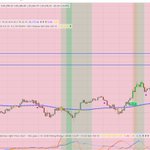
I think we can see the $IWM find resistance just shy of the October highs where I will be looking to take profit tomorrow. I think all the indices will fall together to make new lows over the coming weeks.

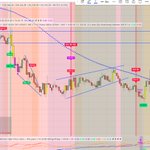
I will be happy to buy $QQQ puts end of day tomorrow I see 727 being a strong resistance that cannot be cracked with oil north of $100 and the Iran situation about to escalate (which can happen before the midterms btw). So we may see some more positive price action action into the Fed meeting but I think 680's are a magnet before a meaningful rebound.
Despite the Anthropic S1 being positively received by the markets, I think the macro is about to steer the ship again. I would book profits after today or at the very least put on protection if you're stubbornly long AI.

Caveat as a shorter term trade , to probably be closed before PCE Thursday morning which I expect will come out hot.

Currently long the $iwm into tomorrow's fed meeting and I expect continuation.
Anthropic models will be for the professionals, scientists, researchers etc. Open AI will be for the masses. So Open AI having the second best model isn't bearish for the business in any way, they could arguably have the larger market.

SemiAnalysis's internal AI spend shows Opus 5.5 is gaining at Astra’s expense, according to President Doug O’Laughlin, who asks if OpenAI is "cooked" as the number 2 in everything
“Honestly, okay, actually, let’s talk about, look, you know what we haven’t talked about is OpenAI. Is OpenAI kind of cooked? Because Astra is their best, maybe their Bel model, like, improves or something like that."
"But like, where is OpenAI? Because it’s actually, you know, Opus 5.5 accelerating is like pretty, it comes at someone’s direct expense, and like, at least within the SemiAnalysis spend, it’s very clear who it is. It’s Astra."
"What do we think about OpenAI? Because they’re kind of in, they’re caught in the middle of everything. They’re in the middle between consumer on Gemini and Meta, right? They are like between Anthropic and open source models for enterprise. And they’re just like kind of literally number two in everything, which in markets is the single worst place to be.”
I would love to own shares in both Anthropic and open AI but not at these two trillion dollar valuations. I want to own them when people think they're about to go bust and buy them back sub 500 billion valuations if possible. I think the opportunity will arise over the next 2 years.
It amazes me that gen zer's are quote tweeting this thinking it's bullish. But then again it doesn't.

Breaking: Meta plans to raise up to $95 billion in waves of stock offerings to fund its massive investments in AI infrastructure on.wsj.com/4zc7kwY

After the Fed on Wednesday I'm going to put my shorts back on NASDAQ futs ahead of PCE Thursday morning.


We'll probably get a continuation rally to 7760 on ES and 29700 on the nasdaq futs. Covered shorts for now.


The market is too busy looking at the Anthropic S1 to notice oil ripping, I think this rally gets folded like a cheap chair.

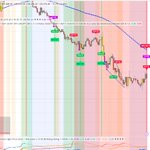
I would be very surprised if the indexes didn't break to new lows today. $NQ
I think we see the index breakdown tomorrow morning in the US session. Another flush before Fed day, then I'll close my shorts.

Does this mean it's socially acceptable to talk about astrology and markets now? 😅@SantiagoAuFund
youtube.com/watch?v=wdSIHBAA…
That's why I have so many substrate names in my portfolio (well not currently, I'll be buying them back after the 2027 bear market). At & S and $TTMI for PCB, and SOI/NGK (photonics and power semis) for substrates.
Dylan Patel explains why he thinks substrates are "the biggest bottleneck of all the bottlenecks," ahead of memory and optics, and bigger than power, land, or tools
“Yes, I think on the semiconductor side, the biggest constraint, of course, besides memory, is substrates, PCB materials, substrate materials, all of these components were severely under-invested in. Much of the supply chains that create the materials in Japan, those firms are sort of a lot more conservative and unwilling to invest heavily in capacity."
"And so we’ve seen, you know, tremendous bottlenecks there in terms of what can be made over the next two years, you know, both for accelerators as well as CPUs and every other component in the supply chain. So substrates is, I think, the biggest bottleneck of all the bottlenecks, including, you know, land, power, shell, semiconductors, tools."
"I’d say the next bottleneck would be, of course, memory. And then following that, there’s a lot of bottlenecks around the desire to ramp optics to a really, really large degree, right, with co-package optics or near-package optics. There’s humongous constraints in ramping that. You know, we just simply cannot ramp, you know, even if everyone wanted to do CPO in 2028, or even one major company wanted to do CPO in 2028, they could not satisfy their volumes in terms of lasers, in terms of fiber attach, in terms of all these different components that go into it.”
_______
Link and breakdown of the full panel with Dylan Patel and Stacy Rasgon: firesidealpha.substack.com/p…

$CRDO will probably wrongly sell off on this.

Jensen Huang says at Nvidia GTC that AI data centers shifting to optical networking could drive a 15x increase in optical volume.
“Scale up is going to become optical.”
“I'm fairly certain the number of switches we need is going to increase.”
“And I'm fairly certain, the amount of optics that we need in the future will be, you know, several orders of magnitude more.”
