

Cardiac Electrophysiologist, Clinical Investigator, Physician-scientist. Opinions = my own. T /RT≠endorsement.
Cleveland, OH.
Joined March 2018
- Tweets491
- Following461
- Followers347
- Likes1K



Larisa Tereshchenko, MD, PhD retweeted

New paper: "AI Article Reviews Dominate Human Peer Reviews at Their Best: Evidence and Policy Choices" See: GaryKing.org/peerless. with Steven Worthington. Comments welcome!

Larisa Tereshchenko, MD, PhD retweeted

🔥 Hot off the press: We identified how and where AF begins.
I am excited to share this work.
Since the discovery of PV triggers more than 25 years ago, AF ablation has evolved into an empiric therapy centered on PVI. Yet, we have never been able to identify the arrhythmogenic substrate that determines why a premature beat initiates AF at one site and not another.
We believe this study changes that.
In this mechanistic study, we found that AF initiation arose predominantly through reentry originating from a small number of spatially discrete regions with steep repolarization gradients. Their distribution was unique to each patient, and they accounted for more than 92% of AF initiation episodes.
Importantly, the arrhythmogenic substrate was not defined by low voltage, and while conduction abnormalities were often present, they appeared to play a secondary role.
Its patient-specific distribution may help explain the controversy surrounding posterior wall isolation: the posterior wall harbored the substrate in only approximately 30% of patients. Importantly, in redo patients with durable PVI, right-atrial substrate (which is often beyond standard mapping strategies) was identified in 30%.
Most encouragingly, in an exploratory cohort of 24 patients with recurrent AF and durable PVI (50% PerAF), targeted elimination of these sites achieved 87.5% single-procedure freedom from any atrial tachyarrhythmia over a median of 489 days, without antiarrhythmic drugs.
The thoughtful accompanying editorial by Jon Kalman highlights the significance of this discovery and its central translational challenge of bringing it into real-world clinical practice.
But stay tuned! Technology is under development to transform this discovery into a rapid, automated functional mapping.
Current electroanatomic mapping relies largely on voltage amplitude and activation timing. We need to move beyond these measures and map how tissue actually functions - how it conducts, repolarizes, and responds to premature stimulation. This can add the critical dimension that has long been missing from substrate mapping and may reveal what truly makes cardiac tissue arrhythmogenic.
To me, this is the beauty of physiology: there are no black boxes. We can identify the sites that reproducibly initiate the arrhythmia, define their EP properties, eliminate them with ablation, and confirm that arrhythmia can no longer be initiated.
The next steps are prospective multicenter validation and technological development. Together, they may move AF ablation beyond empiric therapy toward truly individualized, mechanism-guided therapy.
📄 Paper in @JACCJournals:
doi.org/10.1016/j.jacep.2026…
📝 Editorial:
doi.org/10.1016/j.jacep.2026…
#JACCCEP #AtrialFibrillation #CardiacElectrophysiology #CatheterAblation #EPeeps

Larisa Tereshchenko, MD, PhD retweeted

I’m launching the Rogers Lab at Stanford.🚀
We study cardiac arrhythmias and translate insights into signal-analysis tools, AI models, devices, and studies. We’re open for business for collaborations and for people interested in working with us.
rogerslab.stanford.edu/

Larisa Tereshchenko, MD, PhD retweeted

Open letter to Dr. Joe Marine. Joe, my perspective about 2020 differs greatly from yours. JHH had multiple COVID wards set up - ask Dr. Michos for her thoughts. I lived with 2 immunosuppressed persons. My mom contracted COVID, lost her sense of taste & smell & starved to death.

Larisa Tereshchenko, MD, PhD retweeted
Osler wrote in 1903: No sin will so easily beset you as uncharitableness towards your brother practitioner…evil-speaking, lying & slandering find a shining mark in lapses & mistakes which are inevitable…never…listen to a tale told to the detriment of a brother practitioner.”
Larisa Tereshchenko, MD, PhD retweeted

Relationship Between Areas of Delayed Trans-Septal Conduction Time and Critical Sites for Septal Ventricular Tachycardia in Non-Ischemic Cardiomyopathy - Great work by star fellow Tasuku Yamamoto heartrhythmjournal.com/artic… @CleClinicHVTI @ClevelandClinic


Magnetocardiography for Arrhythmic Risk: A New Signal, or a New View of an Old One? authors.elsevier.com/a/1nZBO…
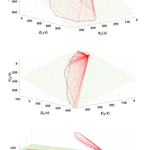
My Editorial @JACCJournals #JACCEP #EPeeps @CCLRI @CleClinicHVTI VCG QRS loop folding #ECG #cardiology @Dr_Santangeli @EcgImaging @DrFuSiongNg @munroe_patsy

Non-specific ECG ST-T abnormalities: cardiac repolarisation memory assessment heart.bmj.com/content/112/16… cardiac memory in response to PVCs? - associated with #HeartFailure #EPeeps @CCLRI @CleClinicHVTI @Heart_BMJ #cardiology #ECG


62
Non-specific ECG ST-T abnormalities: cardiac repolarisation memory assessment heart.bmj.com/content/112/16…: minuscule VCG T-loop - my OpEd in @Heart_BMJ on @ParagGoyalMD @MonikaSafford @SS_cardiol work


54
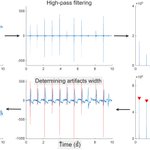
Our new study published @IEEE_TBME 🎉🎆🏆 ieeexplore.ieee.org/document… Paced ECG preprocessing for quantitative and AI-enabled ECG analysis @CCLRI @Crystal4kidneys @CleClinicHVTI @CRICStudy #EPeeps @IEEEXplore @ChrisNguyenPhD @NTrayanova @IEfimov @DrFuSiongNg @HoneyBadgerEP @CWRUSOM

1
69
Automated Detection & Removal of Pacing Artifacts From ECG Signal: CRIC & Cleveland Clinic Cohorts
ieeexplore.ieee.org/document… Multilead PCA-based localization, lead-specific slope confirmation, adaptive artifact-width removal @CRICStudy @CCLRI @IEEEorg @IEEEXplore @Crystal4kidneys

Larisa Tereshchenko, MD, PhD retweeted

Grateful for the mentorship & brainchild of @AllanLKleinMD1, and @Tereshchenkolab for the robust statistical framework that made this manuscript possible!
Honored to co-author this work with forever colleague @SaraswatiUshasi
Anticholinergic medications and out-of-hospital sudden cardiac arrest: a new piece to the puzzle? academic.oup.com/eurheartj/a… @CleClinicMD @CleClinicHVTI @CCLRI @FondationLeducq @AHAScience @PCORI @SumeetSChugh @Dr_Santangeli @ESC_Journals #EHJ #EPeeps #CardioTwitter
2
151
Larisa Tereshchenko, MD, PhD retweeted

A Call for Transparency, Improved Reporting and Interpretation of Trials Using Surrogate Endpoints in Cardiac Electrophysiology
@Tereshchenkolab
heartrhythmjournal.com/artic…
New automated algorithm to detect ECG artifacts and limb lead electrode misplacement.👇
authors.elsevier.com/a/1lTGP…
Matlab code is available on @github Thanks to @uk_biobank and @CCLRI

5
182
Larisa Tereshchenko, MD, PhD retweeted
Post-pacing interval after failed anti-tachycardia pacing for scar-related ventricular tachycardia: implications for the location of the critical substrate @EuropaceEiC @CleClinicHVTI @KojiHiguchiCCF academic.oup.com/europace/ar…

Complexity of Coronary Heart Disease Manifestation on ECG: atrial infarction sciencedirect.com/science/ar…
@CCFcards @venumenon10 @Dr_Santangeli @omwazni @tavrkapadia @adribaran #EPeeps @CleClinicHVTI @JACCJournals @ACCinTouch #JACCCaseReports
Larisa Tereshchenko, MD, PhD retweeted

We're thrilled to be in Seattle for #AATS2025!
Incredibly proud to share a preview of @CleClinicHVTI @CCF_CTSRes’s contributions @AATSHQ this weekend.


Larisa Tereshchenko, MD, PhD retweeted
A Novel Radiofrequency-Assisted Trans–RAA Perforation Technique for Pericardial Carbon Dioxide Insufflation to Facilitate Epicardial Access @JACCJournals @CleClinicHVTI @omwazni @tavrkapadia jacc.org/doi/10.1016/j.jacep…


Guidelines: reporting & interpretation #RCT surrogate @Consort_surr #EPeeps @HRSonline @KennethEllenbo1 @SumeetSChugh @S_NarayanMD @MarmarVaseghiMD @HeartDocKCB @Dr_Santangeli @EP_mom1 @omwazni @tavrkapadia @CCLRI @CleClinicHVTI @EQUATORNetwork @OrianaCiani @The_MRC @SCTorg

A Call for Transparency, Improved Reporting and Interpretation of Trials Using Surrogate Endpoints in Cardiac Electrophysiology
@Tereshchenkolab
heartrhythmjournal.com/artic…
