

Mechatronics Engineer | • Embedded Systems • Robotics • AI | Building Cool Things
Joined January 2026
- Tweets458
- Following55
- Followers92
- Likes1.3K






Does my room have a predictable lighting pattern?
I'm using a BH1750 light sensor to investigate illumination changes throughout the day.
I can identify recurring lighting patterns using nothing but a low-cost sensor and some data analysis.
Check back on November 10, 2026.


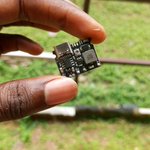
I accidentally connected 3.3v to one of my I2C lines of the ens160+aht21 sensor.
Is that supposed to damage it cuz it doesn't work anymore 🙃.


Thinking of rebooting this old project. It's a networked biometric attendance system (BIOSYNC).
The goal? Identify someone across multiple nodes without having to register their fingerprint on every single device.


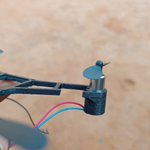
My printed frame is breaking in multiple places and the motors keep sliding out from it's clamp
It was printed in PLA which is not ideal but techniques can be made to improve rigidity
Any suggestions on improving its strength without adding too much weight? Help a builder out!


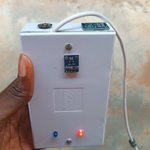
Fixed the Wi-Fi, fixed the power bugs, then ran system on it's battery.
4hrs later: reboot loop. Turns out, the cells were over-discharged - 2.9v.
I used the LX-LCBST module and it uses the TP4056. Wasn't it supposed to protect the batteries?
Third time's a charm I guess 🫠


18hrs into a mandatory 24hr sensor burn-in test and I accidentally pulled the power cable 🙃
Back to hour zero
For context, the ENS160 needs 24 hours of continuous operation during its initial startup before its startup status is saved to non-volatile memory
Check comments 👇🏾


Meanwhile, round two of the ENS160 burn-in is underway.
I just have to stay away from the POWER CABLE. 😭
Embedded systems will humble you over the smallest things.
#ESP32 #EmbeddedSystems #IoT #HardwareDebugging
And surprisingly, the Access Point has been behaving ever since.
No more disappearing act. (So far. 👀)
I still want to verify the suspected power issue by monitoring the 3.3V rail under load, but this was a pretty interesting find.
The repository also pointed me towards reducing the Wi-Fi transmit power.
So I tried:
"WiFi.setTxPower(WIFI_POWER_15dBm);"
This lowers the radio's transmit power from its higher setting, reducing its RF output and potentially easing the power demands.
Here's where it gets interesting.
Wi-Fi transmission isn't exactly free. The ESP32-C3 can draw substantial current during RF transmission, with the datasheet specifying peaks around 335 mA under certain high-power transmission conditions.
The onboard regulator can't keep up.
Apparently, board quality varies quite a bit between vendors, and some of these tiny boards have questionable power-supply implementations.
That observation gave me a pretty good lead: the power supply.
After some digging, I stumbled across a GitHub repository discussing power-related issues with some ESP32-C3 Super Mini clones.
My ESP32-C3 Super Mini's Wi-Fi Access Point kept refusing to show up.
Interestingly, when powered normally, the AP wouldn't come up. But when I accidentally powered the board through VIN using a power bank, it worked!
(Please don't randomly experiment with power inputs like me)
It can produce usable readings without completing this process, but since I'm building an environmental monitoring system, the calibration is non negotiable.
Anyway, since I had to start all over again, I decided to investigate another problem that had been annoying me.


At this point the test has been running for 8hrs continuously.
You still see the spike from the smoke incident a few hours back 😂.


4hrs into my ENS160 calibration run, I accidentally filled my room with smoke from burning sauce.
The TVOC and eCO₂ readings spiked
A real-world disturbance caught on my environmental monitoring system.
In case you didn't know. I'm doing an embedded system experiment series.

