

A think tank focused on nuclear nonproliferation. Employing science in pursuit of peace since 1993. contact us: [email protected]
Washington D.C.
Joined June 2009
- Tweets21.3K
- Following605
- Followers22.2K
- Likes488


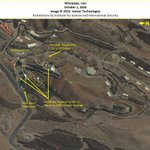

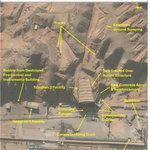
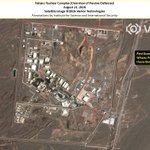


NEW imagery update: Various levels of cleanup activities were observed at the three sites related to Mojdeh / Lavizan 2 following the March 2026 attacks: The main Mojdeh site was previously attacked in June 2025 and was undergoing rapid cleanup efforts, which the follow-on strikes in March 2026 appear to have effectively ended. After several months of little activity, the attacked, large engineering-type building just north of the main Mojdeh site is currently in the process of being fully dismantled and cleared. In the process, six containers that were stationed alongside the building before the attack were removed. The remnants of the destroyed large building cluster at Malek Ashtar University have been fully cleaned up and the space was turned into a large parking lot accommodating the many personnel vehicles on site. See the figures for an overview of the area after the June 2025 war but before the attacks in the March 2026; the various levels of cleanup activity around the area as of mid-September; and close-ups of the Mojdeh site, the engineering-type building, and the cleaned up area at Malek Ashtar University.
Read the full report here: isis-online.org/isis-reports…


Pickaxe Mountain Imagery Update:
Vantor Technologies imagery from October 7, 2026, shows that the Eastern tunnel entrances remain blocked by earth. The earthen mound roadblocks leading to the Western tunnel portals also remain in place. See Figures 1 and 2. The two-month-long restricted access reinforces the assessment that the facility is currently neither operational nor continuing major construction. It supports public reporting that the facility contains valuable equipment and/or materials, such as centrifuges and centrifuge components, believed by Israeli intelligence to have been moved into the tunnel facility following the 12-Day War, as reported by the Wall Street Journal in July 2026.
Regarding an attack on the site, a combination of what was done at Natanz and Fordow in June 2025 and at Shahid Boroujerdi in Spring 2026 appears to make the most sense — using a series of bunker busters to target vulnerabilities in the mountain, such as ventilation shafts, coupled with collapsing entrances and destroying utilities and other support infrastructure outside of the tunnel. We have identified both a probable and a possible ventilation shaft location at Pickaxe mountain using satellite imagery. That said, it is possible that the U.S. government decides, based on the information it has on the tunnel site, that the MOAB, which is not a bunker buster but creates the most powerful non-nuclear shockwave, is best to inflict damage on the site. According to CNN reporting this is being considered. While Iran has a lot of experience building military tunnels and commonly adds blast traps by the entrances to prevent shockwaves from traveling down into the facility, these methods are designed to protect against much smaller shockwaves compared to the massive one created by the MOAB. Such an attack could place Pickaxe mountain in the same category that Natanz and Esfahan have been in for more than a year now: Forced, monitored closure, with lack of information about extent of damage inside.


Recent @vantortech satellite imagery from October 2026 of the second reconstruction effort at the Taleghan 2 nuclear weapons related R&D facility shows that this effort is progressing rapidly. The facility was first bombed by Israel in October 2024. Despite Iran having expanded and hardened the facility after the first bombing (REF 1), Israel used bunker buster bombs to again attack the facility as well as destroy additional structures around the site (REF 2). Since March 2026, Iran has repaired the roof covering, most recently adding three concrete pads directly over the penetration holes, possibly to serve as hatchways or vents. Whatever their function, associated construction activity was concealed by temporary tarp coverings in September (REF 3). Other work included reinforcing the structure with two stepped concrete side walls, and completing a new hardened entrance way that was damaged in the last bombing. This effort has been an intensive undertaking by Iran to reconstruct the facility, but when it could become operational is unclear. The reasoning why Iran is reconstructing a well known and well characterized facility is perplexing, but, at a minimum, it shows that Iran wants to reestablish its lost capabilities there. Below are several images showing the current state of construction since the facility was destroyed by an airstrike in March 2026.
REF 1: isis-online.org/isis-reports…
REF 2: isis-online.org/isis-reports…
REF 3: isis-online.org/isis-reports…


Over the last few months, we have seen high levels of activity at certain nuclear weaponization sites pointing to reconstruction efforts specifically at Taleghan 2 (starting in June 2026), notable vehicle activity at Minzadayi (September/October 2026) and significant cleanup including the removal of containers at Mojdeh / Malek Ashtar University (August/September 2026). Hardly any activity has been observed at known sites tied to uranium enrichment where the main entrances remain destroyed / blocked by earthen materials and on which the media and public at large tend to focus: Pickaxe Mountain (as of October 7), the Natanz Nuclear Complex (as of October 7), Fordow (as of October 11), and Esfahan (October 12).

🇮🇱🇺🇸🇮🇷Israeli Prime Minister Benjamin Netanyahu and President Trump last week discussed the possibility of launching a new operation against Iran before the Israeli and U.S. elections, according to two U.S. officials, one Israeli official and a fourth source with knowledge of the matter.
🇮🇱🇺🇸🇮🇷The Israeli leader's call with Trump about the possible attack took place before Trump said he would not strike Iran ahead of the midterms
🇮🇱🇺🇸🇮🇷Netanyahu said during the call that he was concerned about Israeli intelligence indicating Iran was taking troubling steps to reconstitute its nuclear program, according to an Israeli official
In addition to the earlier reported high levels of vehicle activity, we noticed the repair of a probable water tank and the addition of a new, small building nearby in the northern part of the Minzadayi site. This again points to Iran's efforts to not just clean up the site, which was attacked by Israel in March 2026 for its nuclear weapons connection, but to resume regular activities. See our earlier report here: isis-online.org/isis-reports…

NEW Report: Significant Activity Identified at Minzadayi, an Iranian Nuclear Weapons Development Site
High resolution @vantortech satellite imagery from September and October 2026 shows significant renewed activity at Minzadayi, a nuclear weapons development compound northeast of Tehran revealed by Israel during the 2026 war. The compound was attacked by Israel on March 3rd, 2026, destroying several buildings and likely underground structures. The recent satellite imagery indicates a return to regular vehicle activity around the site post extensive cleanup operation that included the clearing of rubble and debris and repair of damage on the hillside. One area attacked in March 2026 shows ongoing earth moving activity. The earth moving activity is occurring at a surface made to look like a courtyard where multiple craters could be seen following the attacks on the site in March 2026. Significant vehicle presence can be seen throughout the site between early September and early October 2026. Cars are parked outside the security perimeter in the parking lot, and many passenger vehicles and trucks can be seen inside the perimeter. Given what is known about this compound, this activity may be indicative of an effort by Iran to reestablish a nuclear weapons development capability and to reconstitute what was lost in the attack on the compound.
Based on public reporting and statements released by the IDF, the nuclear weapons work carried out here likely involved research and development on nuclear warheads. The IDF originally stated, that a “group of nuclear scientists operated covertly to develop a key component in the nuclear weapons system,” adding that “the complex is designed to enable the restoration of the required technology and the advancement of capabilities for the development of nuclear weapons.”
@IntelliTimes, released additional information on the compound. In a post from September 24, 2026, it states that the nuclear weapons related infrastructure was established in 2022 and “absorbed part of the means from the nuclear warehouse,” a common reference to the Turquz Abad site revealed by Israeli Prime Minister Benjamin Netanyahu in September 2018. Netanyahu revealed the site following Iran’s removal of more than a dozen shipping containers from the site that were assessed to hold nuclear material and equipment relevant to Iran’s nuclear weapons capabilities.[4] When the IAEA visited Turquz Abad in March 2019, it found evidence that nuclear material or contaminated equipment had been present at the site and the IAEA Board has since been pressing Iran to answer the IAEA’s questions about the current whereabouts of said material and/or equipment. @IntelliTimes indicates Iran did not simply move the material and/or equipment to a new long term storage site but used the new site in northeast Tehran, aka Minzadayi, to establish an” industrial nuclear headquarters for the reconstruction of research, development, and adaptation infrastructure for nuclear warheads,” including the means to “produce cores of enriched uranium and the explosive material required to cast into them the detonation chain.”[5] The current renewed effort underway at this highly secure compound suggests that the work being conducted here is of top priority.
Read the report here: isis-online.org/isis-reports…


Podcast on the latest developments on Iran with @DAVIDHALBRIGHT1 👇

On today's episode of Iran: the Latest, @venetiarainey looks at apparent growing momentum towards a deal as world leaders from across the Middle East gather in New York.
After Trump vowed once again to stop Iran from getting nuclear weapons, former nuclear weapons inspector @DAVIDHALBRIGHT1 breaks down how Tehran is using the lull in fighting to rebuild and fortify key capabilities at Parchin and Pickaxe Mountain.
Listen to Iran The Latest via the link below ⤵️
linktr.ee/IranTheLatest
A close review of @vantortech satellite imagery from September 11 and 19, 2026, has revealed cables strung between defensive towers constructed at the Alabuga Special Economic Zone surrounding the Shahed/Geran production facilities. The cables strung between towers serve as a passive defense against incoming cruise missiles or long-range strike drones seeking to target the drone production facilities. Drones or cruise missiles will strike the cables, causing them to detonate in the air instead of striking the production facilities directly or force aircraft to come in high and make them more vulnerable to anti aircraft defenses. More towers are still being constructed.
The Iraqis used this same tactic to protect Al Tuwaitha Nuclear Research Center during the Iran/Iraq war up until the 1981 bombing of the Osirak reactor by Israel.
The Institute first identified these passive defensive towers in our last update, which can be read here: isis-online.org/isis-reports…
Alabuga is also working hard to construct new facilities just south of the main production complex, identified by Dnipro Osint (t.me/DniproOfficial/8178). The facilities cover a large area, consisting of half a dozen or more buildings, with more actively under construction. This would constitute a large expansion of the Alabuga Special Economic Zone. Some of the buildings are in the process of being buried under multiple layers of dirt and reinforced concrete in order to harden them from potential attacks.


Trump's statement on not seeing a lot of activity at Pickaxe mountain is fully in line with our satellite imagery observations. Access to all four tunnel entrances has been severely restricted since the beginning of August. Iran apparently figured better to block the entrances voluntarily than have them blocked by force. The last several weeks show virtually no movement of equipment and little vehicle movement. Pickaxe Mtn effectively joined the list of nuclear related sites that are not currently operational, not easily accessible, and where resumption of activity would be easily detected. Media outlets and other reporting that recently highlighted high activity at Pickaxe Mountain should also take note of this significant slowdown.

US President Donald Trump said Washington could strike Iran’s Pickaxe Mountain nuclear site if it detects renewed activity there.
“We may have to blow up another one, Pickaxe Mountain. We’re not seeing a lot of activity there, but if we do, we’ll blow it up immediately,” he said during a meeting with GCC leaders in New York.
New Imagery Update: Iran is Rapidly Reconstructing Taleghan 2
@vantortech satellite imagery from September 13, 2026, shows that Iran is rapidly moving forward with the reconstruction of the Taleghan 2 facility located at the Parchin military complex. Iran has erected a tarp above the destroyed hardened buried facility, hiding the reconstruction activity that is occurring underneath from satellite view or aerial reconnaissance. Significant activity can be seen throughout the construction site. Construction vehicles, including dump trucks, bulldozers, concrete pump trucks and concrete mixers, and cranes, are actively working to rebuild the facility. Repair and rehabilitation work began in June 2026, first with Iran repairing and placing concrete caps over the penetration holes caused by the multiple bunker buster weapons dropped on the facility. Iran has also built a new concrete apron reinforcement on the right side of the facility, the one on the left side that we noted in our July 2026 update now appears complete. This will provide additional blast protection from an aerial attack.
Link to our full report here: isis-online.org/isis-reports…


Update on passive defense measures at the nearby Natanz Nuclear Complex: we noticed in an August 21, 2026, image by @vantortech the presence of several passive defensive structures. Throughout 2026, Iran placed makeshift dirt mounds in several locations at the above ground complex, in key areas that could be used by U.S. or Israeli forces to land vertical takeoff or landing (VTOL) aircraft. Chicane barriers made from dirt can also be seen placed along the road just outside of the security perimeter. These passive defense structures are likely intended to complicate any sort of ground forces raid conducted against the complex.


Update on passive defense measures at Pickaxe Mountain: @vantortech imagery from September 11, 2026, shows that the earthen mound roadblocks are still in place, blocking ground vehicle access to the Western tunnel portals. The week-long restricted access reinforces the assessment that the facility is not currently used for operations, but that it does contain valuable equipment and/or materials. The clearly visible roadblocks mean a return to regular access and activity at the Western tunnel entrances should easily be detected by U.S. intelligence and visible on commercially available imagery. Together with the previously blocked Eastern tunnel entrances, the new roadblocks effectively established a status quo inside the facility starting in early August.
Earthen mounds were also placed over one western tunnel portal and over a nearby cluster of portals first built in 2007 that have been expanded and rebuilt in recent years. The added soil increases overburden and helps harden the entrances against aerial bombardment.


NEW: Report on August 2026 Russian drone launches reveals new trends, namely dramatic increases of daylight attacks and the use of jet powered drones.
According to @anokhin_i estimates, based on Ukrainian Air Force reporting and supplementary monitoring data, Russia used at least 5,166 Shahed-type UAVs, including decoys. Of these, an estimated 4,288 UAVs were shot down or suppressed.
August 2026 marked a transition from the more concentrated overnight pattern observed earlier in the year toward sustained day-and-night pressure.
Newly, up to 57 to 62 percent of Shahed/Geran drones launched are assessed as jet-powered, compared to just about 10 percent in June.
Faster jet-powered UAVs compress engagement windows for mobile fire groups and many interceptor drones, forcing reliance on faster and more expensive defensive systems.
For sanctions and export-control analysis, the central question is whether Russia can sustain this transition. Turbojet engines, flight-control electronics, anti-jamming, inertial navigation, communications hardware, components, materials, and production equipment remain priorities. Chinese substitution, remaining Western dependencies, intermediaries, and sanctions-evasion routes require continued investigation.
We’d like to note that since July, the analysis of monthly drone launches has become increasingly difficult because the Ukrainian Air Force is publishing progressively less detailed daily information. In particular, daytime UAV attacks are now often substantial, but separate daytime totals are not always reported; the Air Force no longer regularly states how many of the total UAVs were specifically Shahed/Geran; and, beginning in August, it also increasingly stopped reporting the number of UAV hits, instead giving only the number of affected locations. We would urge the @KpsZSU to return to its original format of reporting and define specific timeframes for daytime and night time launch reporting.
See the key graphics below and read the full report here: isis-online.org/isis-reports…


NEW: Following President Trump's public comments on attacks on the Pickaxe mountain facility, Iran moved to limit ground access to the tunnel site. In August 2026, it added a series of earthen piles across the roads leading to the Western tunnel entrances. They can be seen in imagery dated August 9, 2026 and are still there as of August 21, 2026. This follows an earlier move to partially backfill the Eastern tunnel entrances to prevent rapid ingress and egress of vehicles and ongoing hardening efforts of all the portals. Whatever internal construction had been underway would have ground to a halt while the road blockades are in place.

The recent CSIS report on Pickaxe mountain missed an important finding in the August 2026 image that contradicts one of its central conclusions. And the lack of citation to our work borders on the comical.
The report by Joseph Rodgers @NonproJoe and Douglas Comstock states that activity at Pickaxe Mountain has “shifted from active excavation toward probable internal construction and continued exterior reinforcement.” That may be true and we pointed out both for more than a year.
But the contradiction is that their image shows, apparently without noticing it, that Iran has more recently moved to limit access to all entrances to the tunnel facility as if the site is preparing against attack. The authors appear to have missed the multiple new earthen piles blocking the road leading to the main western tunnel portal and one pile blocking the road to the auxiliary western portal. Given that the eastern tunnel portals were already partially backfilled in April 2026, this severely limits ground access to the site.
The CSIS report has a serious lack of citation. Readers will be surprised to see that there is not a single direct reference to any ISIS report on the facility, which we have been monitoring since 2020 when construction began. But there is a link to a X post that reposted one of our key findings from a report. We asked for citations to be added last week but have not heard back.
Some examples which should be cited so the reader can understand the publication chronology and public analytical record include the identification of the security perimeter; the hardening of tunnel portal entrances; the blocking of the eastern tunnel portal entrances; the hardening and burial of the nearby 2007 tunnel complex; the operational status of the facility; start of internal construction; identification of potential vulnerabilities; and the possible purposes of the facility. See table below.
We have a much deeper analysis of the lack of citation in this and earlier CSIS reports which we hope is not necessary to publish. Claiming that they did not know about our published reports or use any of our published reports to produce their report would lead to a more serious charge than we are currently making.

Reaction to the IAEA's Board resolution on Syria: Politicizing the process
The new resolution missed an important opportunity to call on Syria to provide a correct and complete nuclear declaration and adopt the Additional Protocol to facilitate the IAEA in drawing a conclusion that its nuclear program is exclusively peaceful. While everyone wants to celebrate and reward the Syrian regime's change of heart and newfound cooperation, the verification task is far from complete and claims that the case is closed are false.
The 2011 resolution specifically called upon Syria to provide a complete declaration. Paragraph 4 of the resolution reads "4. Calls upon Syria to sign and promptly bring into force and implement in full the Additional Protocol and, pending that, to act in accordance with the Additional Protocol so that the Director General can provide the necessary assurances regarding both the correctness and completeness of Syria’s declarations pursuant to its safeguards agreement; "
The new resolution passed a few days ago, in its own paragraph 4, calls the provisions of the 2011 resolution "terminated".
The 2026 resolution cannot exempt Syria from having to provide a correct and complete declaration, which is, as is stated in 2011, a NPT safeguards requirement. And this should be done without delay.
Syria's current declaration is incomplete. Based on reading the most recent IAEA Syria safeguards report, there remain questions over the total amount of uranium received from North Korea, the accomplishments of Syria to build a reprocessing program and the identification of its locations, and the progress and locations of efforts to make the nuclear weapon itself when the reactor was bombed in 2007. In addition, the role of a chief nuclear supplier of undeclared nuclear technology, materials, and components, namely North Korea, is being ignored, a practice that was unacceptable in the case of Iran and Iraq.
As a result, the IAEA has not closed the circle on the nuclear weapons activities of the old regime and lost momentum to get to a better place.
iaea.org/sites/default/files… ; iaea.org/sites/default/files…
NEW ANALYSIS: U.S.-Saudi Arabia Cooperation on Enrichment: Framework for a Black Box
There is lots to digest in the U.S.-Saudi Arabia nuclear cooperation package of agreements, minute, and unclassified Nonproliferation Assessment. We started with trying to understand how and under what provisions the United States could provide Saudi Arabia with an enrichment facility. Key findings below:
- The language appears deliberately structured so that a U.S. designed, built, and operated enrichment facility can be deployed in Saudi Arabia without automatically transferring the centrifuge technology embodied in that facility. Details were not provided, but in such an arrangement the U.S. would be expected to retain control of centrifuge design, production, assembly, maintenance, and physical access.
- This is in line with what The Wall Street Journal earlier reported as a secretive “black box” facility, “avoiding the transfer of sensitive enrichment technology” to Saudi Arabia.
- The agreement creates the framework to establish a black box centrifuge plant but establishing that facility will require many future agreements between the United States and Saudi Arabia, not just the two-year Joint Enrichment and Conversion Study (JECS).
- In terms of proliferation implications, several things need to happen independently, namely restricting access to the centrifuges and centrifuge technology. The public agreement does not yet clearly establish physical access restrictions to the former. It does provide mechanisms to restrict access to much of the latter. Most notably, it categorically excludes the transfer of Restricted Data (RD) and classified information, which covers many areas related to centrifuge design, specification, production, and operation.
- A potential loophole is that the agreement explicitly permits transfers of centrifuge sensitive nuclear technology (SNT) under certain circumstances. The agreement allows SNT transfer to support the Joint Enrichment and Conversion Study (JECS) or upon written agreement of the parties. Therefore, the legal architecture of the agreement is not a categorical prohibition on ever transferring or teaching information on enrichment facilities.
- The public package is silent on the question of whether Saudi Arabia could pursue its own centrifuge research and development programs while also receiving a U.S.-supplied enrichment plant, including SNT, from the United States. It does say that there is an “understanding that any SNT transferred for purposes of the JECS could not be used by the Kingdom of Saudi Arabia for other purposes,” but this still needs to be put in writing in a yet-to-be negotiated “exchange of diplomatic notes” and raises questions on verification.
- Based on our past research and current AI-assisted searches of open sources, we found little evidence in the publicly visible scientific literature of significant or sustained Saudi Arabian indigenous research on the specialized technologies required for gas-centrifuge enrichment.
- This suggests that if Saudi Arabia wants to independently acquire gas centrifuge enrichment capabilities in the near-to-medium term, it will need to launch a major domestic program to do so or obtain such a capability via foreign technology and training. The latter could involve covert assistance from centrifuge suppliers, such as Pakistan, or exploitation of opportunities presented by cooperation with the United States.
- Overall, the idea of a black box enrichment plant is attractive. To determine whether this package of agreements and subsequent ones will achieve a secure black box, many questions need to be answered on the extent of Saudi Arabia’s involvement in building, maintaining, and operating the enrichment facility and the risk of proliferation. A list of 21 questions that should be asked by Congress is included in our report: isis-online.org/isis-reports…
We now have a clearer understanding of the timeline and circumstances of IAEA DG Rafael Grossi’s visits to key nuclear related sites in Syria. Footage of his visit to Marj as Sultan appears to be from 2025. At the time, the IAEA reported finding uranium particles pointing to uranium conversion at an unnamed site, which we suspected to be Marj as Sultan. The IAEA ground images, which can be correlated to satellite imagery, confirm this. The 2026 safeguards report makes clear that not only initial uranium conversion activities took place there; it states the full fuel manufacturing process also took place at this site.
Footage from Grossi’s visit to the Al Kibar reactor site (Deir el-Zour) is from 2026, when Grossi wrote on X that he was in Syria to visit the site. It can be correlated with excavation activities visible in satellite imagery.
Whether footage of the third site, the previously undeclared storage site of uranium metal fuel and scrap, as well as graphite, was included, is unclear. It is listed as a site visited in Grossi’s August 2026 X post. At yesterday’s press conference and as reported by @AP , Grossi described using “difficult and narrow passages” to reach the nuclear material, including having to “tear down walls.” He stated the site had “boxes scattered all over the place.” He confirmed a question on whether the site had been attacked by an airstrike and access involved clearing of rubble with a head nod and a quiet, but distinct “yes.”
The confirmation of air strikes narrows the suspect sites to those targeted by Israel after the fall of Assad. A key suspect site is the Tal Qartal "Project 99/CERS" underground missile complex. A “Site 99” was reported by @axios as holding the nuclear material and as having witnessed Israeli bombing of the entrances to prevent access to the material. The area publicly associated with Site 99 is large, but we identified a specific site near Tal Qartal as having been heavily damaged in an Israeli airstrike carried out in September 2023, targeting buildings at the site, and again in a second attack in December 2024, which destroyed four probable underground tunnel entrance buildings. As of July 17, 2026, the debris from the destroyed underground tunnel entrance building appears untouched. Rubble from the other building had been partially cleared. No changes at the site can be identified during August; If this is the site where uranium metal fuel is held, no large scale recovery efforts were being made as yet. We will continue to monitor the site for any observable changes.
Another possibility is the Al Qusayr tunnel site, identified as a 3 km long cross-border smuggling tunnel for Hezbollah, which was attacked in the second half of 2024. Even if this is not the site where the uranium was found, it may be one of the additional sites visited by the IAEA to take environmental samples, as it was tied to the Al Kibar site in public reporting.
See also: isis-online.org/isis-reports…; isis-online.org/isis-reports…; xitter.cf/TheGoodISIS/status/208…; and isis-online.org/isis-reports…
Thanks to @StLiechtenstein for asking Grossi important questions and @MilOpsUpdate for posting additional images of Grossi's 2025 visit.


As per the recent news concerning "hidden nuclear stocks in Syria at Site 99 that are leftover from Al Kibar reactor project," (@DAVIDHALBRIGHT1) the Institute has identified a possible contender for the location of where the nuclear material may be held. Available evidence points towards the Tal Qartal "Project 99/CERS" underground missile complex, which was heavily damaged in an Israeli airstrike carried out in September 2023 (with four probable underground tunnel entrance buildings destroyed in a second attack in December 2024). The latest imagery of the site, from July 17, 2026, only shows that the debris from the destroyed buildings had been removed, with no other activity visible at that time. We will be waiting for further information from the IAEA to confirm that this is the location and that nuclear material was successfully removed from Syria.


NEW: Video footage from the IAEA visits in Syria shown on The World is One News in August 2026 confirms that Director General Rafael Grossi visited the Marj as Sultan compound in addition to the buried Al Kibar reactor site. The image of him inside a building can be correlated with a secondary building at the compound. The IAEA video narration appears to point to the Marj as Sultan site as the “second location that was previously undeclared," which lines up with the IAEA report identifying the second undeclared location as “a fuel fabrication plant where the nuclear fuel for the reactor at Dair Alzour [aka Al Kibar reactor] was manufactured.”
The Institute published a photo in 2013 of the same chemical processing hall that Grossi visited. The image the Institute acquired in 2013 shows the hall as it appeared in about 2005, before operation, and it shows equipment being installed. Prominent is a large metal column with windows described by the source as equipment for the cleaning or purification of solutions, i.e., a scrubber or solvent extraction column. This, and other equipment in other images, is likely part of an integrated chemical processing system to convert yellowcake into uranium tetrafluoride.
In last year’s NPT safeguards report, the IAEA had reported on taking environmental samples at a location where many uranium particles were present, and where analysis specifically pointed to the conversion of uranium ore concentrate to uranium oxide. In the most recent safeguards report, the IAEA concluded that the entire fuel manufacturing process took place in Syria. Given that no new site for this was identified by the IAEA, this strongly indicates that the entire multi-step process from uranium ore concentrate to UO3, the reduction to UO2, the fluorination to UF4, and the reduction to uranium metal, as well as the alloying, melting, extruding into fuel rods and cladding with magnesium alloy took place in the various buildings at the Marj as Sultan site.
The images from the IAEA visit show that the interior has been completely stripped. It is the responsibility of Syria to explain where the critical and contaminated nuclear fuel production equipment now resides.

