
Explore the world of AI.
United States
Joined March 2020
- Tweets729
- Following701
- Followers98
- Likes262


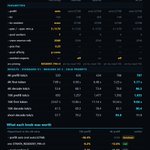




Same 32 GB R9700, same box: Qwen3.8 IQ3_S needs 20 MB of expert weights per token and decodes at 80 tok/s. HY-4 Flash SQ-64 needs 36 MB and decodes at 44. Both sustain ~1.6 GB/s — the card isn't the bottleneck, bytes-per-token is.

8
Max retweeted

⚕️New Medical Model!
📝 Remember when @AntLingAGI open-sourced its 124B medical AI model in October?
They just released something even better. ❤️🩹
A 124B-parameter medical AI that can actually see 👀 medical images.
And the weights are open too. 🔓 ... and better than GPT 6.1 Sol in some benchmarks.
LingSante-3.1-air-VL is a new medical-specialized multimodal MoE.
It has 124B total parameters but activates only 5.5B per token.
And look at the reported clinical visual-understanding benchmarks against GPT-6.1 Sol and Gemini 3.8 Flash.
AFUMED-Derm
🟢 LingSante → 70.01 🔥
🔵 GPT-6.1 Sol → 63.99
🟣 Gemini 3.8 Flash → 66.83
AFUMED-Report
🟢 LingSante → 90.70
🔵 GPT-6.1 Sol → 89.44
🟣 Gemini 3.8 Flash → 90.56
CheXpert Plus
🟢 LingSante → 46.21 🔥
🔵 GPT-6.1 Sol → 44.76
🟣 Gemini 3.8 Flash → 36.96
MIMIC-CXR
🟢 LingSante → 47.20 🔥
🔵 GPT-6.1 Sol → 45.21
🟣 Gemini 3.8 Flash → 38.65
Unlike the earlier text-focused Ling-Sante model, this one is designed to work directly with medical images.
It can ...
🩻 Analyze chest X-rays and draft structured radiology reports
🔬 Interpret skin images across 120+ conditions
🥗 Analyze food photos and estimate nutritional content
📄 Read medical reports alongside clinical history
🔎 Use image-based medical search to retrieve supporting evidence
🤖 Interact with healthcare apps through GUI agents
Now the Localmaxxer details.
🧠 124B total / 5.5B active
👁️ Native text + image inputs
📚 256K context window
🔓 MIT license
✅ Open weights on Hugging Face
✅ SGLang and vLLM inference support
There's a catch.
The original weights are approximately 250GB, and the official serving instructions use 4× 141GB-class GPUs or 8× 80GB GPUs.
Can't wait to see the community produce optimized quantizations and benchmarks for smaller local systems.
Always remember this is a research model, not a FDA approved medical device. Its outputs require professional verification.
But this is a significant development for open-weight healthcare AI.
Image Source: Ant Ling

ALT https://huggingface.co/inclusionAI/LingSante-3.1-air-VL

Same AMD Radeon AI PRO R9700, same Strata 0.2.17 (engine 0.1.63) on both machines, same IQ3_S weights. A 16K-token prompt: 1,459 tok/s on Windows 11, 3,141 on Linux = 2.15x. Decode didn't move (~80 both) — at 98% expert-cache hit it is already bandwidth-bound. Another +18% on prefill was one flag pair.

Max retweeted

A lot of bugs fixed and improved performance on smaller gpu's and older devices! 🙌
All @UnslothAI quant's of Inkling 2 Mini are now fully supported! 🥳
See more at: github.com/Niko1221/Strata/r…

Max retweeted

Today, we release LingSante-3.1-flash, an open-weight MoE model with 560B total parameters and 25B activations per token. It unifies diverse medical capabilities while retaining general capabilities, including complex medical reasoning, long-horizon workflow execution, and professional behavior alignment.
LingSante-3.1-flash moves beyond medical QA toward real-world healthcare problem. The model leads on HealthBench Professional (65.72), HLE (text-only, with tools: 72.22) and BrowseComp (with context: 94.10), outperforming GPT-6 Astra, Claude Opus 5.5 and Gemini 4 Argon on all three. LingSante-3.1-flash also performs well on professional long-horizon medical workflows, such as PhysicianBench (57) and EHR-Complex (74.40).
Together, these results establish LingSante-3.1-flash as the leading open-weight models for healthcare.
The weights are available. Explore LingSante and build with it.
More below ↓

This is becoming unbelievable!

This update is HUGE 👀
- Inkling 2 Mini is now supported in Strata 🥳
- 11,306 tokens/s on prefill and 4,087 tokens/s on output with RTX 5090 😨
- Qwen3.8-Flash-Next receives a 40% performance increase across all hardware we support 🥶
See more at: github.com/Niko1221/Strata/r…
1
19
Max retweeted

Everyone in Washington is obsessed with GPU export bans, yet almost nobody talks about the massive glass-jaw vulnerability sitting inside every single US AI data center: optical interconnects.
You can stack $50 billion worth of Nvidia Blackwell or Rubin GPUs inside a shiny new data center hall, and without high-speed optical transceivers to wire those racks together, they are nothing more than very expensive space heaters.
Right now, the White House and FCC are pushing restrictions on new Chinese optical transceivers on “national security” grounds, and US hyperscalers (Microsoft, Amazon, Google, Meta, CoreWeave, and Cisco) are quietly panicking behind closed doors. Here is why Beijing holds a massive counter-chokepoint if it decides to retaliate:
- China controls roughly two-thirds of the global optical transceiver market.
According to Counterpoint Research, Chinese manufacturers like Zhongji Innolight and Eoptolink account for around 66% of global optical transceiver production. Non-Chinese suppliers simply do not have the cleanroom scale or packaging capacity to replace that volume. Hyperscalers literally warned the White House that qualifying and scaling non-Chinese alternatives across their architectures could take up to 10 years.
- The Indium Phosphide kill-switch.
Even if you try to buy exclusively from American optical suppliers like Coherent, Lumentum, or Applied Optoelectronics, those companies still depend on indium phosphide (InP) to fabricate the lasers and photodetectors inside 800G and 1.6T transceivers. China dominates the global refining and supply of indium and gallium. If Beijing restricts indium phosphide exports in retaliation, it cripples the exact US optical manufacturers Washington claims to be protecting.
- There is no quick escape hatch
Washington’s backup plan is throwing subsidies at domestic photonics fabs and hoping Nvidia, Broadcom, and Marvell accelerate Co-Packaged Optics (CPO) via TSMC and GlobalFoundries to bypass pluggable transceivers altogether. The problem is that CPO still represents roughly 0.5% of data center optics today. Scaling it to replace millions of pluggable modules takes years, not quarters.
The reality of the AI supply chain is mutually assured bottlenecking. US firms like Broadcom, Marvell, Corning, and Amphenol dominate the DSP chips, ultra-low-loss fiber, and copper cables, while China dominates two-thirds of transceiver assembly and the upstream raw materials that make the lasers work.
Politicians love treating global hardware supply chains like a one-way light switch they can flip for cable news soundbites, completely oblivious to the fact that if Beijing flips its switch back, US AI data center buildouts freeze overnight.
Nice!
Hy4-Flash is now supported in Strata 🙌
It has its own .strata quantisation checkpoints at 64GB, 96GB, and 128GB. You can run it with at least an 8GB GPU. A preview of something bigger I'm doing for local inference in the next few days.
@TencentHunyuan Hy4-Flash is a great model with some good long-horizon agentic tasks.
See more at: github.com/Niko1221/Strata/r…
1
36
Max retweeted

I seriously think US open-weight models wouldn't be this good without Chinese open-weight models and vice versa.
And proprietary models wouldn't be this good (and cheap) without open-weight models.
Competition is a good thing.


An example shows that you don't always need commercial LLM to do a coding job.

We worked with @thinkymachines to make Inkling 2 Mini run fast locally:
- 210 tok/sec decode, 3620 tok/sec prefill on 96GB M5 Ultra Mac Studio
- 125 tok/sec decode, 1750 tok/sec prefill on 48GB M5 Max MacBook Pro
It built a native weather app 1.8x faster than Claude Sonnet 5.5 on an M5 Ultra Mac Studio and 11x cheaper (API pricing).
The looping architecture is ideal for local devices like MacBooks, which are memory constrained. Looping layers of the model increases inference-time compute (and intelligence) without increasing the size of the model.
15
Max retweeted

China’s chipmaking industry is advancing so fast that it may soon render American controls moot. We examine the country’s dogged pursuit of self-reliance in AI tech economist.com/briefing/2026/…

Max retweeted

深圳真的让川普大开眼界,川普在记者会上拿美国的芝加哥、洛杉矶和纽约作比较。川普在白宫记者会上大赞深圳:这座城市干净得无可挑剔,短短40年,从一个小渔村发展成今天的样子,令人惊叹。川普说,他在深圳乘车时仔细观察了道路、护栏等基础设施,结果发现,不仅路上没有坑洞,甚至连修补坑洞留下的痕迹都没有。道路完美无瑕,一切都完美无瑕。我非常尊重他们所做的工作。随后,他话锋一转,开始批评美国城市。川普抱怨,美国一些民主党执政的城市道路坑坑洼洼,护栏破损,到处生锈,治安也很糟糕。
Max retweeted

NVIDIA GeForce Hotfix Driver v621.35 is now available. This update resolves the following:
✅Excessive writes to file nvlog.nvlgstg may occur in background
Click below to learn more: ⤵️
nvidia.custhelp.com/app/answ…
Download from: international.download.nvidi…
Max retweeted

JUST IN: Riemann Hypothesis has been solved.
alpo.ge/remark.pdf
Max retweeted
Many accounts on X is screaming about "nearly 900,000 banned AI chips shipped to China" after House Foreign Affairs Chairman Brian Mast dumped the unredacted BIS export-license logs. Almost nobody actually scrolled past page one of the PDF.
When you read the actual table from the ECRA disclosure, the real story is way weirder, way funnier, and completely wrecks the lazy cable-news headlines:
- Every single one of the 21 approved applications, covering 879,868 NVIDIA H200 and AMD MI325X chips, is explicitly marked “Approved, not shipped” as of the May 11, 2026 cutoff. NVIDIA has also stated it stopped shipping licensed Hopper products to China anyway. An export license is permission to sell, not a pallet on a cargo plane.
- Both ByteDance (150,000 total) and Tencent (150,000 total) received identical split approvals: 75,000 NVIDIA H200s and 75,000 AMD MI325Xs each. Meanwhile, NVIDIA had a separate December 2025 filing for 445,000 H200s to Tencent that was not even included in that tally.
- ByteDance applied for 865,000 H200s across Malaysia (508,000), Indonesia (203,000), and Thailand (154,000). Alibaba Cloud applied for another 253,500 in Malaysia. Every single one of those Southeast Asian datacenter applications was bounced as RWA (Returned Without Action), alongside another 620,450 Alibaba China chips.
- Quant fund Ubiquant (the parent tied to High-Flyer and DeepSeek) got 8,660 H200s approved, while High-Flyer’s own direct request for 75,000 H200s stayed stuck in “Submitted” limbo. Game studio miHoYo got cleared for 57,810 chips, beating both Baidu (43,000) and JD.com (41,300). And NVIDIA itself had to file a federal export license just to send 8 chips to its own China office.
- Almost every NVIDIA application listed third-party system integrators like ZTE Kangxun, Maginfra, and Beijing New Matrix to “install the systems in the datacenter,” while every single NVIDIA and AMD filing checked the box certifying a “low” risk of diversion.
Reading the primary source takes three minutes and saves you from falling for half the timeline's engagement bait.
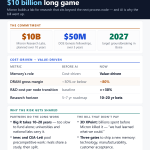
Micron just put $10B behind the idea that memory R&D can no longer chase the next node. AI turned DRAM from cost-driven to value-driven — ~80% gross margins vs ~30% — and that money is buying 10–20 year research nobody can fund alone. eetimes.com/memory-rd-is-a-h…

1
17
Strata 0.2.16/Engine 0.1.62 is the release that made IQ3_S usable here — before it, the model couldn't hold a 256K context, so IQ3_XXS was the model of record. On 0.1.62 the full 256K fits and runs, but it came up at 693 tok/s prefill and 23.7 s to first token at 16K, against 1,592 and 10.3 s for IQ3_XXS. The gap wasn't the model. Copying IQ3_XXS's launch settings got 1,477 tok/s — 2.13× on the same weights, same int8 KV, same 262K window — and a one-knob-at-a-time screen explained the rest: the default prefill chunk size (−46%), page pinning (−8%), pool workers (−7%), KV residency (−4%). --pcie-frac, the spec window and core affinity: nothing at all. What's left between the two models is 1.12×, and it's pure quantization — IQ3_S moves 16.5% more bytes per expert, so the same 32 GB caches 15% fewer of them. All of it measured on Strata 0.1.62, Radeon AI PRO R9700, 64 GB RAM. #Strata #MoE #LLM #AI

1
64