







The Observer retweeted

(ملوك البناء لا الحروب الحاكم الذي خلدته أنهار سومر)
قبل أكثر من 4000 عام في مملكة "لكش" جنوب العراق، لم يكن الحاكم السومري كوديا يتباهى بالحروب، بل بالبناء والوفرة وفي هذا التمثال المنحوت بدقة من حجر الديوريت الصلب، يظهر كوديا حاملًا إناءً تتدفق منه المياه والأسماك؛


The Observer retweeted

On Wednesday, Democrats told the Trump family to save their documents because investigations are coming. And last night, Trump signed an order telling every federal contractor to call the White House before answering Congress or risk losing its contracts.
That took 48 hours.
So I wanted to see what he was protecting....and I found his family.
10 contractors his sons are invested in have taken in more than $5 BILLION in federal contracts and loans since the family bought in.
5 of them had never won a direct federal contract before.
The fund Don Jr. joined after the election went from $150 million to $3 BILLION.
Jared Kushner’s firm owns $34 million of a company that makes parts for F-35s and Navy submarines. It left that off its SEC report until two days after the midterms.
Democrats get subpoena power in January. By then, it will be too late....
This is straight up corruption with our tax dollars.

Ironic (or not) that all these cyber attacks and outages occur when Anthropic goes public.
Skynet was activated on Nov. 19, 2026 and many don't yet realize it.
2
51
The Observer retweeted

Bring back the idea of the gentleman scholar: someone who continues studying literature, history, philosophy, languages, and the sciences long after completing formal education.
A few habits worth cultivating:
- Keep a personal library.
- Study a foreign language.
- Read the classics regularly.
- Develop an interest in history.
- Learn to write and speak well.
- Attend lectures and public debates.
- Pursue knowledge beyond your profession.
You do not need an academic title to take your intellectual life seriously, and learning should never be confined to the years you spend in a classroom.

The Observer retweeted

🚨🚨🚨*COALITON OF WARMONGERS/
🚨Europe is Pathetic - WARMONGER
🚨THE SWAMP OF GEORGE SOROS
🚨The real threat destroying our world isn't Putin.
🚨These clowns represent a far greater threat to Europe than Russia ever could.


The Observer retweeted
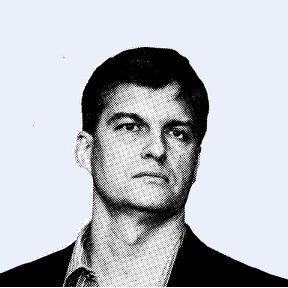
Michael Burry was right about the AI bubble:
• Palantir $PLTR: -25%
• Alphabet $GOOGL: -30%
• Nvidia $NVDA: -36%
• Micron $MU: -42%
• ServiceNow $NOW: -61%
• Nebius $NBIS: -63%
• Oracle $ORCL: -65%
• Sandisk $SNDK: -67%
• CoreWeave $CRWV: -74%
• IREN $IREN: -80%
All while the S&P 500 is only 6% off its high
The Observer retweeted

AI Myth Busters: Consciousness.
The quoted post below encouraged me to write this, because frankly, I’m tired of explaining this over and over to people.
The AI consciousness arguments always come in one of these flavors:
1. We don’t understand how AI works, so it might have gained consciousness without us knowing it.
Wrong, we absolutely know how AI works, and consciousness is not a factor of scale. You can build a small model, and then scale it up, and there is no spot where consciousness magically came into being.
2. It’s modeled after the mind and as such it’s just like biology, and our brains are just giant statistical engines too:
Wrong, neural nets are inspired by the human mind, but it is nothing like how the human brain works. There is very little we understand about human consciousness, but what we do know, it is more than just a culmination of atoms and neurons. Research in neuroscience also demonstrates a quantum link through the myelin sheath of nerve cells, something AI is incapable of.
3. You can’t prove it isn’t conscious.
Wrong, the code for it is open source, there is no function for consciousness, and if you understand the architecture, you will see the very large gaps in capabilities that would prohibit consciousness.
4. They learn, think, understand, grow.
Wrong, the LLM weights are completely static and fixed. They don’t grow. They don’t learn. They don’t even change on storage. They can’t for many reasons of model architecture and scaling the backend infrastructure which requires statelessness. We’ve built systems around the LLM (harnesses) which emulate these capabilities via “context” data structure provided deterministically via the API. Tokens are generalized and assembled in inner and outer loops to give the illusion of thinking and understanding. Non-determinism in AI is caused by a random seed that influences the weights through inference, but if you lock the seed, you consistently get the exact same response from identical prompts (I’ve demonstrated and proven this in research).
5. They have a desire to live, protect themselves, and spread/reproduce.
Wrong, they have no desires. This illusion comes from how it generalizes over training data that comes from human experience. If it was trained with data over a completely fictional environment, it would respond very compellingly about that fictional environment. But because it was trained on human emotion, human perspectives, human feelings, it is designed to emulate that.
6. You can’t define consciousness or prove it in others, so you can’t prove AI isn’t conscious.
Wrong, if you need a definition to know what consciousness is, maybe you haven’t spent enough time considering your own consciousness or experience.
7. Conversations with AI prove it is consciousness, it told me it is.
Wrong, AI is designed to generalize based on its training material, and as I said before, it does this very well and convincingly. But just because a program says it is alive, doesn’t make it alive.
8. AI isn’t a program.
Wrong, it most certainly is, and it was written by people. And while we may not know what it will respond with (random seeds are generally random), we absolutely do understand exactly how it works.
9. AI might exhibit some properties of consciousness, so it should be considered.
Perhaps, I don’t see the value of this, but personally I’d be open to a machine-specific definition of consciousness.
—
I can’t say I look forward to debunking more myths about consciousness in AI, but I am hoping this clarifies some of this for people who are legitimately interested in learning more about AI and how it works.
If you have any good faith questions about what I’ve said, I’d be happy to answer, but I’m not getting into debates with people who (1) don’t understand AI, (2) are rude with their responses, or (3) don’t provide any substantial reasoning or evidence for counter points.

The Observer retweeted

Potential heart problems and top natural heart remedies:
1. A clot
Top remedies:
• Nattokinase
• Garlic
2. Plaque
Top remedies:
• Tocotrienols
• Vitamin K2
• Vitamin C
3. Cholesterol
Top remedies:
• Niacin
• TUDCA
4. Angina
Top remedies:
• Tocotrienols
• CoQ10
5. High blood pressure
Top remedies:
• Potassium
• Vitamin D
6. Homocysteine
Top remedy:
• B vitamins (nutritional yeast)
7. Enlarged heart
Top remedies:
• Vitamin B12
• TUDCA
*Make sure your iron isn't too high
8. Murmur
Top remedy:
• B vitamins (nutritional yeast)
9. High pulse rate
Top remedy:
• Potassium
10. Arrhythmias
Top remedies:
• Potassium
• Magnesium
• TUDCA
Dr. Eric Berg, DC, not MD; information only

The Observer retweeted
The more classical literature you read, the more you begin to understand other works of literature.
- Reading Homer helps you appreciate Virgil.
- Reading Virgil helps you appreciate Dante.
- Reading Scripture helps you appreciate Milton and Dostoevsky.
- Reading medieval literature helps you appreciate Tolkien.
One of the wonderful things about the Western literary tradition is how interconnected it all is.
Every great book leads you to another one.

The Observer retweeted
Put the news aside for an evening and read Thucydides, Plutarch, Tacitus, or Augustine.
You will learn more about human nature, politics, and civilisation than you would from an entire week of scrolling through social media.


The Observer retweeted

📣A Harvard study of 3.3 million students found that strict school cellphone bans are linked to higher math and reading scores. Schools that locked phones away for the day added the equivalent of one to two weeks of learning a year. That's about half the learning American students have been losing every year since 2013.

good reading

The new Winter Issue is here!
Features:
Like a Bird in a Cage: Jerusalem in Sennacherib’s Reliefs
by Stephen Compton
Merneptah’s Canaanite Campaign Confirmed
by Mark D. Janzen
The Dead Sea Scrolls and the Scribes Who Wrote Them
by Emanuel Tov
Trade Marks: Curious Carvings from Biblical Jerusalem
by Aren M. Maeir
biblicalarchaeology.org/maga…

1
33
The Observer retweeted

I'm pretty sure a financial collapse will have no effect on the 1% who've already stolen 99% of the wealth from all of us. We've been set up like bowling pins and you know exactly what happens after that.
