
Independent Research Group Leader at the Max Planck Institute for Biology, Tuebingen. Adaptive evolution of filamentous plant pathogens.
Tuebingen, Germany
Joined January 2016
- Tweets3.1K
- Following1.5K
- Followers3.5K
- Likes6.8K





Thorsten Langner retweeted

We are looking for postdoctoral candidates interested in joining our group at the IBVF-CSIC / University of Seville and applying for the upcoming Juan de la Cierva 2026 (a 3-year postdoc position) call from the Agencia Estatal de Investigación.
Thorsten Langner retweeted

Hugely honored to attend Professor Ryohei Terauchi's @ryoheiterauchi lecture at Kyoto University @KyotoU_News.
What a spectacular career exploring crop evolution and molecular plant pathology / immunity. And a lasting impact on many Early Career Scientists.


Thorsten Langner retweeted

Why I’m genetically engineering a rainbow flower…
And how a Russian fairy tale inspired the idea 🧵

Thorsten Langner retweeted

Check out our new story on the famous rice Pik NLR pair, led by @ClemMarchal and @HsuanPai1 ! Turns out they form a massive 1 MDa membrane-associated complex before activation 🤯 A cool new example of the diversity of NLR resting states!

The Pik NLR pair accumulates at the plasma membrane as a hetero-oligomeric sensor-helper immune protein complex prior to activation biorxiv.org/content/10.64898… #biorxiv_plants

Thorsten Langner retweeted

The Pik NLR pair does more than just wait for activation!
Adding to the known modes of action for NLR proteins: from monomer/dimer to a novel pre-activation heterocomplex 🤜🤛
Get the full mechanism in our new preprint!


Check out our new story on the famous rice Pik NLR pair, led by @ClemMarchal and @HsuanPai1 ! Turns out they form a massive 1 MDa membrane-associated complex before activation 🤯 A cool new example of the diversity of NLR resting states!
Thorsten Langner retweeted

Our long-lasting research project on an amazing stinkbug-fungus relationship "Defensive fungal symbiosis on insect hindlegs" finally comes out in Science! science.org/doi/10.1126/scie… #symbiosis #insect #fungus #stinkbug
Thorsten Langner retweeted

🔬 PhD opportunity alert! Join us at the @CropSciCentre @camplantsci to decode sensor–helper NLR communication mechanisms in plant immunity. Apply by 14th November! 🔍 More info 👉 findaphd.com/phds/project/de… #PhD #PlantScience #Biology Please RT

Thorsten Langner retweeted

Please RT! Exciting opportunities in plant–microbe interactions!
My lab @IPMBSinica is looking for passionate postdocs & RAs to join us in one of the following areas:
✨ Cell death & immune signaling
🧬 Discovery of resistance genes
🧫 Development of Agrobacterium-based tools

Thorsten Langner retweeted
First a pentamer, then a hexamer… now an octamer!
The riddle of the enigmatic CCG10-NLR immune receptor family cracked open 🔥
Congrats Guanghao @GuanghaoGuo He Zhang @mhz1989 Selva @M__Selvaraj et al.
#NLRbiology #plantsci #immunology


Thorsten Langner retweeted

Please read here about a plant disease resistance protein that makes an octameric resistosome. We describe about its identification, architecture, action and assembly.
Congrats to all involved. @GuanghaoGuo, He Zhao @mhz1989
@jonathandgjones @KamounLab @TheSainsburyLab 👇
Thorsten Langner retweeted

📣 NEW PREPRINT 📝
We identified evolutionary origins of many fungal effectors!
We show that fungi secrete lots of antimicrobial proteins, and that some of them were repurposed by plant pathogens for host immune suppression.
cc @Team_Thomma
biorxiv.org/content/10.1101/…

Thorsten Langner retweeted

We’re excited to share our latest work on plant pathogen effector protein evolution @biorxivpreprint. With @KamounLab and Abbas Maqbool.
biorxiv.org/content/10.1101/…

We’re excited to share our latest work on plant pathogen effector protein evolution @biorxivpreprint. With @KamounLab and Abbas Maqbool.
biorxiv.org/content/10.1101/…
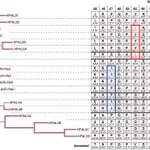
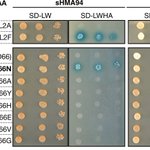
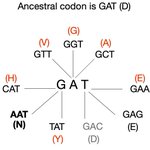
Two of these homoplasic amino acids are located in the binding interface to host HMA proteins! Interestingly, previous functional studies already suggested an adaptive role of these sites.
elifesciences.org/articles/8…
sciencedirect.com/science/ar…


Two of these homoplasic amino acids are located in the binding interface to host HMA proteins! Interestingly, previous functional studies already suggested an adaptive role of these sites.
elifesciences.org/articles/8…
sciencedirect.com/science/ar…