

Christ Centred-Christian Led-Custom Tours. We provide church history tours of Scotland focusing on Scotland's Reformation and Covenanter History.
Scotland, United Kingdom
Joined April 2019
- Tweets849
- Following329
- Followers1.5K
- Likes311




On 31 October 1517, a German monk named Martin Luther issued his Ninety-Five Theses, challenging the Church’s teaching and practice concerning indulgences. That date is now remembered as Reformation Day—a reminder of events whose influence would reach far beyond Germany, including Scotland.
Luther’s initial challenge developed into a much wider call for reform.
As these teachings spread through Europe, they reached a young Scotsman whose life would become closely bound up with Scotland’s Reformation: Patrick Hamilton.
Born around 1504 into a family with royal connections, Hamilton travelled to Paris to study while still a teenager. During his education abroad, he encountered the religious debates sweeping across Europe. By 1524, he had joined the Faculty of Arts at St Andrews, where the ideas associated with Luther would soon bring him into conflict with the Church authorities.
For Hamilton, these questions became much more than an academic interest. He grew convinced that the gospel being proclaimed by the Reformers was rooted in Scripture. In 1527, facing suspicion over his beliefs, he left Scotland for Germany. His time there, including study at Marburg, strengthened the convictions he would carry home.
Hamilton expressed his understanding of the gospel in a short work later known in English as Patrick’s Places. He distinguished between the law, which exposes our sin, and the gospel, which directs us to Christ. Good works could never purchase salvation; they were the fruit of faith in the Saviour.
Returning home in 1527, Hamilton began sharing his beliefs. Scotland’s Reformation was still in its early stages, and openly proclaiming these teachings was dangerous. His preaching soon attracted the attention of Archbishop James Beaton, and Hamilton was brought to trial at St Andrews.
On 29 February 1528, he was condemned for heresy and burned outside St Salvator’s College. He was only about twenty-four years old. Remembered as the first martyr of the Scottish Reformation, Hamilton paid with his life for the gospel he had returned to preach.
His execution did not bring the movement to an end. Instead, his death became one of the defining early events of Scotland’s Reformation. Others would continue to question the Church’s teaching, examine the Scriptures and proclaim salvation through Christ.
Scotland’s Reformation would eventually take a distinctly Reformed shape, particularly through the influence of John Knox and the Swiss Reformers. Yet its early story cannot be separated from Luther’s influence or from Hamilton’s willingness to bring those convictions home.
Discover how the Reformation helped shape Scotland on a Scottish Reformation Tour. Join us as we explore the places where these events unfolded and hear the stories of Patrick Hamilton and others who risked everything for their faith. We would love to welcome you and bring this remarkable history to life.
Scottish Reformation Tours.
Christ Centred, Christian Led, Custom Tours.
reformationtours.org
Edinburgh gave us the full soaking treatment today, with lots of rain from storm Austen! ☔
We welcomed a lovely family from the Netherlands this morning, followed by a wonderful group of ladies from Georgia, USA, this afternoon. The rain certainly made its presence felt—but thankfully, our guests were made of sturdy stuff, as were our umbrellas thankfully!
The Covenanters weren’t easily put off by the weather, and neither were we. A little Edinburgh rain can’t dampen a great day exploring Scotland’s Reformation history. (Plus, we know lots of places to visit indoors too, so its not all rain, rain, rain!)
Come and discover it for yourself, whatever the forecast says.
Scottish Reformation Tours
Christ Centred, Christian Led, Custom Tours.
reformationtours.org

275
We’re back in Edinburgh again today, exploring the stories and places that make Scotland’s Reformation history so unforgettable.
It’s been a wonderfully busy time at Scottish Reformation Tours, and we’ve had the privilege of meeting so many lovely people along the way. From couples and small groups to larger parties, every tour brings new conversations, shared discoveries and the chance to walk together in the footsteps of the Reformers and Covenanters.
Would you like to experience it for yourself? We offer everything from short walking tours to tailor-made journeys across Scotland.
Find out more at reformationtours.org
Scottish Reformation Tours
Christ Centred, Christian Led, Custom Tours.
#reformation #johnknox #scotland #churchhistory #protestant #covenanters

We were in Edinburgh on tour today and stopped at the grave of George Buchanan, who died here on this day in 1582. He spent his remarkable life teaching scholars, challenging corruption and impressing upon a young king a dangerous truth: wearing a crown did not place a man above the law.
Born in Scotland in 1506, George Buchanan became one of Europe’s most respected Latin scholars. He taught in France and Portugal, where he was imprisoned for a time by the Inquisition because of his Protestant views.
Buchanan returned to Scotland around the time of the Reformation and became a leading teacher, writer and public figure. He served as moderator of the General Assembly in 1567 and later tutored the young James VI.
His most famous political work argued that kings were accountable to the law and were meant to govern for the good of the people. A ruler who became a tyrant, Buchanan believed, could be resisted. It was a bold message for the future king—and one James would later reject.
Buchanan was no Covenanter; he died in 1582, decades before the Covenanting movement began. But his writing helped shape later Scottish arguments that rulers answer to God and must not place themselves above justice.
He died in Edinburgh on 28 September 1582. His legacy remains a striking one: a brilliant scholar who believed that even a king must answer to a higher authority.

What a wonderful week we have had on our Reformation and Covenanter Tour!
Together, we travelled across Scotland, from historic cities and ancient churches to ruined castles, lonely martyr graves and the magnificent scenery of the Highlands. At each location, we uncovered the remarkable stories of the Reformers and Covenanters—men and women whose courage, sacrifice and unwavering faith continue to challenge and inspire us today.
But these tours are about more than simply visiting historic places. They are about bringing Scotland’s Christian history to life, enjoying fellowship with like-minded people and creating memories that will last for many years.
We are grateful for another excellent group and for the friendships formed along the way. It was a privilege to share this special week with them.
Would you like to walk in the footsteps of Scotland’s Reformers and Covenanters?
Join us for a meaningful and unforgettable journey through some of the most beautiful and historically important places in Scotland.
Book early to secure your place on one of our forthcoming tours:
reformationtours.org
Scottish Reformation Tours
Christ Centred, Christian Led, Custom Tours.

2
107
We’re already halfway through another week-long Open Tour, and what a memorable few days it has been!
From standing beside Samuel Rutherford’s grave in St Andrews to walking through Edinburgh’s historic Old Town and exploring the impressive Edinburgh Castle, we have visited many important sites connected with Scotland’s Reformation and Covenanter heritage.
It has also been a real pleasure to welcome a wonderful group of students from @Baylor University in Waco, Texas. Together, we have been discovering the people, places and events that helped shape Scotland’s Protestant history.
Tomorrow, we look forward to a welcome Sabbath rest before continuing our journey into some of Scotland’s more remote and beautiful countryside, where even more remarkable stories await us.
Would you like to walk in the footsteps of Scotland’s Reformers and Covenanters? Join us on one of our tours and experience this powerful history for yourself.
Scottish Reformation Tours
Christ Centred, Christian Led, Custom Tours.
reformationtours.org
#scotland #presbyterian #johnknox #covenanters #reformation #churchhistory

Another memorable day in beautiful Dumfries and Galloway—this time with a wonderful group from Glasgow Evangelical Church.
The group had a special interest in the story of the Two Margarets: Margaret Wilson and Margaret McLachlan, the Wigtown Martyrs who were tied to stakes on the Solway firth and drowned by the incoming tide for refusing to compromise their faith.
We stood at the site of their martyrdom, visited their graves in Wigtown, and reflected upon both their tragic deaths and their remarkable courage. Their story is deeply moving, yet their steadfast faith and faithfulness to Christ remain profoundly encouraging.
Throughout the day, we also explored several other important Covenanter sites, bringing more of Scotland’s rich Covenanter heritage to life.
Would your church or fellowship group like to experience a tour like this?
We would be delighted to create a meaningful and memorable tour tailored especially for your group. Get in touch to discover the options available.
Scottish Reformation Tours
Christ Centred, Christian Led, Custom Tours.
reformationtours.org
#covenanters #reformation #scotland #churchhistory

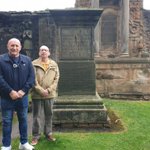
Another enjoyable day in Edinburgh, guiding two Scottish gentlemen through the historic Old Town and sharing the remarkable story of Scotland’s Reformation and Covenanter heritage.
Edinburgh is much more than a beautiful historic city. Its streets are filled with places connected to some of the most important moments in Scotland’s Protestant history — stories of Reformation, revival, persecution, courage and faithfulness to Christ.
Many of these locations are easily missed unless you know where to look.
At Scottish Reformation Tours, we bring this history to life through private, Christ-centred tours tailored to groups of any size. Whether you are visiting from elsewhere in Scotland, the USA, Canada or further afield, we would be delighted to help you discover the people, places and events that shaped Scotland’s Reformed heritage.
If you are planning a visit to Scotland, why not make its Christian history part of your journey?
Get in touch to arrange your private tour.
Scottish Reformation Tours
Christ Centred, Christian Led, Custom Tours
reformationtours.org

On this day, 28 August 1640, a Covenanter army defeated the King’s forces at the Battle of Newburn Ford.
Following the signing of the National Covenant in 1638, Scotland had been drawn into the conflict known as the Bishops’ Wars. By 1640, King Charles I was preparing once again to move against Scotland.
The Covenanters decided not to wait.
Under the command of the experienced General Alexander Leslie, an army of around 20,000 men crossed into England, determined to defend Scotland’s Reformed religion and liberties.
Their advance brought them to Newburn Ford on the River Tyne, just west of Newcastle.
On the afternoon of 28 August, Lord Conway brought around 2,500 Royalist infantry, cavalry and two cannon out of Newcastle in an attempt to stop the Scots crossing the river.
An eyewitness described what happened next.
The King’s infantry had prepared defensive works on the south side of the Tyne, but the Covenanters had positioned their artillery so effectively that their cannon fire soon drove the Royalist soldiers from their defences.
As Covenanter cavalry began crossing the river, a small group of Royalist horsemen under Commissary Wilmot launched a fierce counter-attack and briefly forced them back. Wilmot reportedly fought with great courage, killing one or two men himself.
But the Royalist cavalry failed to support him.
The Covenanters charged again.
This time the King’s horsemen broke.
The eyewitness wrote bluntly:
“Our horse did not behave well, many ran away and did not second those that were first charged.”
Lord Conway managed to withdraw his infantry and artillery into Newcastle, while the routed cavalry fled south towards Durham and Darlington.
That evening, the Covenanter army crossed the Tyne.
The situation for Charles I was now extremely serious. The Scots stood before Newcastle and had effectively cut the Royalist forces in the city off from the King, who was farther south at Northallerton.
There were even fears that Newcastle could not hold out for more than two days.
The eyewitness summed up the seriousness of the defeat:
“Though I conceive by report that the loss of men on both sides may be equal, yet the disadvantage is very great to his Majesty’s service by this unhappy accident in beginning.”
Newcastle soon surrendered without a fight, giving the Covenanters control of one of the richest and most strategically important cities in northern England.
Charles was placed under enormous pressure and was eventually forced to negotiate, leading to the Treaty of Ripon in October 1640.
#history #covenanters #Scottish #church #presbyterian
🤖 Made with AI

Today marks an important anniversary in the story of Scotland’s Reformation.
On 25 August 1618, the General Assembly gathered at Perth. What happened there would prove deeply controversial and would have far-reaching consequences for the Scottish Church for decades to come
It approved what became known as the Five Articles of Perth, strongly promoted by King James VI. They introduced practices which many Scottish Presbyterians believed were unscriptural and too closely associated with Roman Catholic and episcopal worship.
The five articles were:
Kneeling at the Lord’s Supper rather than sitting at the Communion table.
Private Communion for the sick.
Private Baptism where considered necessary, especially in cases of serious illness.
Confirmation by bishops.
The observance of religious holy days, including Christmas, Easter, Good Friday, Ascension Day and Pentecost.
Many ministers opposed these changes because they believed worship should be regulated by Scripture alone.
Kneeling at Communion was seen as resembling the Roman Mass. Private baptism raised concerns because the Reformed Church rejected the idea that baptism was necessary for salvation. Confirmation strengthened the authority of bishops, which Presbyterians believed had no biblical warrant. They also argued that the only recurring holy day commanded for the New Testament Church was the weekly Lord’s Day.
The Articles were approved by Parliament in 1621 and became law, but opposition remained strong. Ministers who refused to accept them could face punishment. David Dickson of Irvine, for example, was removed from his ministry for opposing them.
The controversy was about much more than ceremonies. It raised the important question of who had authority over the worship of the Church — Christ through His Word, or the King and bishops?
In 1638, the famous Glasgow General Assembly condemned the Five Articles and rejected the episcopal system which had helped impose them.

6
212
The St Bartholomew’s Day Massacre — and its impact on Scotland
On the 24th August 1572, one of the darkest episodes of the Reformation era began in Paris.
What became known as the St Bartholomew’s Day Massacre saw thousands of French Protestants, known as Huguenots, murdered in Paris and across France. Among the first to die was the prominent Protestant leader Admiral Gaspard de Coligny, but the violence soon spread far beyond the capital.
The news of the massacre sent shockwaves throughout Protestant Europe — and Scotland was no exception.
By 1572 Scotland had officially embraced the Reformation, but the country still remained politically and religiously divided. Mary Queen of Scots was imprisoned in England, while the young James VI reigned under Protestant regents. The slaughter of fellow Reformed Christians in France therefore caused both horror and alarm.
One of the strongest Scottish reactions came from John Knox.
Knox was now an old and increasingly frail man and would die only three months later. Yet when news of the massacre reached Edinburgh, his voice had lost none of its fire.
With the French ambassador reportedly present, Knox publicly denounced King Charles IX of France for his part in the bloodshed, describing him as a “cruel murderer and false traitor.”
Knox even demanded that his words be carried back to the French court.
The massacre also had political consequences in Scotland.
In October 1572, Scottish Protestants met in Edinburgh and discussed the possibility of forming a defensive alliance with England and other Reformed nations. The events in France had demonstrated just how vulnerable Protestant churches could be when powerful rulers turned against them.
There was also an important connection with Andrew Melville, who would become one of the leading figures of the Scottish Reformed Church after Knox.
Melville was living in Geneva at the time of the massacre. In the aftermath, the city became a refuge for French Protestants fleeing persecution.
He encountered many of these refugees personally and was deeply affected by what had happened.
Melville later wrote Latin poetry commemorating those who had been killed, referring to them as the “newest French martyrs.”
The massacre also damaged the cause of Mary Queen of Scots.
Mary herself had no involvement in the massacre, but her close connections with Catholic France were impossible for Scottish Protestants to ignore. She had once been Queen of France, Catherine de Medici had been her mother-in-law, and the powerful Guise family were her relatives.
For many Protestants, the events of August 1572 provided a terrifying example of what could happen if Catholic power was restored.
The St Bartholomew’s Day Massacre therefore became more than simply a French tragedy.
For Scottish Protestants it was a warning.
It reminded them that the Reformation could not be taken for granted and that the freedom to preach the Gospel and worship according to Scripture could very quickly be lost.
It also strengthened a growing sense of solidarity between the Reformed churches of Europe — an idea which would continue to shape Scottish Protestantism for generations to come.

It was a real pleasure to welcome the wonderful Mercado family from Washington, D.C., for a private Reformation and Covenanter history tour of Edinburgh.
Together, we explored the historic streets of Scotland’s capital and discovered the people, places and events that helped shape the Scottish Reformation. From courageous Reformers to the faithful Covenanters who stood firm for Christ’s Crown and Covenant, Edinburgh is filled with remarkable stories of faith, sacrifice and courage.
At Scottish Reformation Tours, our private tours are ideal for couples, families and small groups. With no minimum number required, every tour can be tailored to your interests—allowing you to experience Scotland’s Christian heritage at a relaxed and personal pace.
Would your family like to walk in the footsteps of Scotland’s Reformers and Covenanters?
Get in touch to begin planning your own unforgettable tour of Scotland.
🌐 reformationtours.org
Christ Centred • Christian Led • Custom Tours
#scotland #reformation #churchhistory #covenanters #Edinburgh

On our tour today we were out and about visiting Covenanter locations in Lanarkshire and Ayrshire. Here’s one story we were talking about.
In the old kirkyard at Cumnock, within the small enclosed plot where several Covenanters are buried—including the famous Alexander “Sandy” Peden—lies the grave of Thomas Richard, an elderly Covenanter whose death in 1685 was marked by deception and cruelty.
Thomas lived at Greenock Mains, near Muirkirk in Ayrshire, and was around 80 years old. He was known as a supporter of the Covenanted cause, and his home had provided shelter and hospitality to Covenanters travelling through the district.
In April 1685, a party of soldiers came to his house, but they did not arrive openly as soldiers. They disguised themselves as fellow sympathisers of the Covenanters. To make the deception convincing, they even carried Bibles with them.
The men spoke as though they belonged to the persecuted party and persuaded Thomas that they could be trusted. They even asked him to pray with them, partly to maintain their disguise and partly to observe what the old man would say and how he would react. Believing them to be friends, Thomas prayed in their presence and spoke openly with them.
The soldiers then questioned him about the Covenanters. Unsuspecting and speaking with the honesty of an old man who believed he was among friends, Thomas admitted that he had previously given shelter to some of them and that he remained willing to offer hospitality to others.
That was enough.
The disguise was thrown aside, and Thomas realised that the men sitting in his home, handling Bibles and asking him to pray, were actually government soldiers.
He was seized and dragged to Cumnock, where Colonel Douglas was stationed. There was no proper trial or jury. His supposed “confession” was used against him, and he was condemned to death.
When three local women heard of the case, they attempted to intercede for the life of the elderly man. They were not even admitted to see Colonel Douglas. Instead, they were told that he could show no favour to “these people.”
Thomas was taken out to be executed.
Before the soldiers fired, the old Covenanter knelt down and began to pray. But even that final prayer was not permitted to reach its conclusion.
Colonel Douglas gave the order—and Thomas Richard was shot while still on his knees in prayer.
Today his grave lies quietly at Cumnock, a reminder of an 80-year-old man whose hospitality and trust were deliberately used against him, and he paid with his life.
His grave reads:
HERE LIES
THE CORPSE OF
THOMAS RICHARD
WHO WAS SHOT BY COLONEL JAMES DOUGLAS
FOR HIS ADHERENCE
TO THE COVENANTED WORK OF REFORMATION
ON THE 5TH DAY OF APRIL
ANNO 1685.
HALT PASSENGER! THIS STONE DOTH SHOW TO THEE
BY WHAT, BY WHOM, AND HOW I HERE DID DIE.
BECAUSE I ALWAYS IN MY STATION
ADHERED TO SCOTLAND’S REFORMATION,
AND TO OUR SACRED COVENANTS AND LAWS
ESTABLISHING THE SAME; WHICH WAS THE CAUSE
IN TIME OF PRAYER I WAS BY DOUGLAS SHOT.
AH! CRUELTY NEVER TO BE FORGOT
#Scottish #presbyterian #history #church #covenanters #Scotland

Beneath the ruins of St Andrews Castle lies one of the most remarkable reminders of Scotland’s Reformation-era conflict — a tunnel dug during the siege of 1546–47.
After the murder of Cardinal David Beaton in 1546, the castle was occupied by a group of Protestants known as the Castilians. Government forces soon surrounded the fortress, but when artillery failed to bring it down, they tried another method — digging underneath it.
The besiegers began cutting a mine through the solid rock towards the castle walls, intending to undermine the defences and possibly destroy them with gunpowder.
But the men inside the castle could hear the sound of digging beneath their feet.
With no plans or instruments to guide them, the defenders began digging their own countermine, following the sound of the enemy’s picks through the rock. Their tunnel was narrow, twisting and hurried, with several false starts before they finally broke into the attackers’ mine and stopped the plan.
The siege continued, and in 1547 John Knox entered the castle, where he was soon called to the ministry and began preaching.
Later that summer, a French fleet arrived and heavily bombarded St Andrews Castle. The defenders eventually surrendered and Knox was taken prisoner to the French galleys.
Today, the mine and countermine can still be seen beneath the castle — an extraordinary survival from a time when the struggle for Scotland’s Reformation was being fought not only above ground, but deep beneath it.
(Please note that the mine and countermine are temporarily closed to the public. Hopefully it will re-open soon.)
We were out again today in a very busy Edinburgh with this lovely family from Tennessee, USA.
We covered so much history with many Reformation and Covenanter locations visited, including the historic St Giles Cathedral.
Book your own private family tour and get to see and hear more about Scotland's Reformation yourself.
Scottish Reformation Tours.
Christ Centred, Christian Led, Custom Tours.
reformationtours.org

Many needless acts of cruelty were inflicted on the Covenanters during the Killing Times, but one of the most shocking was the use of a murdered Covenanter’s severed head as a football.
Around twelve Covenanters had gathered for prayer at a farm called Little Blackwood. Somehow news of the meeting reached the government garrison at Newmilns, about two miles east of Galston. While they were engaged in prayer, Captain Inglis and a troop of soldiers suddenly surrounded the house.
The Covenanters attempted to escape towards a deep, wooded ravine nearby. James White, the local farmer, led the way, but he was shot and killed as he fled. Only three of the group managed to escape; the rest were captured and taken prisoner to Newmilns Castle.
The cruelty did not end there. White’s body was left where it fell, while Peter Inglis, the captain’s son, committed an act remembered as one of the most barbaric of the entire persecution. He cut off White’s head, took it back to Newmilns, and the following day he and the dragoons used it as a football, kicking it around on the town green. An act that disgusted the locals, who later decided to free the prisoners in the castle. A local man, John Law would die in the rescue.
White’s friends later recovered his headless body and buried it in the churchyard at Fenwick. What became of his head remains unknown. If it was ever buried, its resting place has long since been lost to history.
The rear of his grave reads:
“This Martyr was By PETER
INGLIS Shot
By birth a Tyger rather
than a Scot
who that his monstrous
Extract might be Seen
Cut off his head & kick't it
o'er the Green
Thus was that head which
was to wear a Crown
A football made by A profane
Dragoun”
#covenanters #presbyterian #reformation #scotland #churchhistory

On this day, 29th July, the infant King James VI of Scotland was crowned in the Church of the Holy Rude, Stirling, in a ceremony unlike any previous Scottish coronation.
Just five days earlier his mother, Mary, Queen of Scots, had been forced to abdicate the throne in favour of her 13-month-old son, James. With the country in political turmoil, the Protestant Lords acted quickly to secure the succession and protect the gains of the Scottish Reformation.
For the first time in Scottish history, the coronation service was conducted according to Protestant worship rather than Roman Catholic rites. The service was held in the Scots language instead of Latin, reflecting the Reformers’ conviction that the worship of God and His Word should be understood by ordinary people.
The coronation sermon was preached by John Knox, who chose as his text the account of the young King Joash in 2 Chronicles 23.
The crown was placed upon James’s head by Adam Bothwell, Bishop of Orkney. Because there were fears of a Roman Catholic attempt to disrupt the proceedings, the ceremony was carried out with great speed before James was returned safely to nearby Stirling Castle.
The Church of the Holy Rude remains unique in Scotland. It is the only surviving church in the country to have witnessed a royal coronation, making it an important building connected with Scotland’s Reformation. It’s well worth a visit and the people who work there are fantastic.
#scotland #protestant #reformation #churchhistory #johnknox

1
6
250
Another unforgettable week-long tour has come to an end—and what a remarkable journey it has been!
From the Highlands to the Lowlands, and from Scotland’s east coast to its west, we travelled across the country exploring the places where our Reformation and Covenanting history unfolded.
We visited magnificent castles, ancient cathedrals and historic battlefields, as well as some of Scotland’s best-known attractions. But we also ventured beyond the usual tourist routes—to quiet rural villages, forgotten locations and lonely martyr graves hidden among the hills.
Today, we brought our tour to a close in the south of Scotland, where we added something especially personal to the experience: family history.
Two of the ladies travelling with us wanted to learn more about their Scottish past, so we took them to places connected with their families and visited the graves of their ancestors.
What made the discovery even more remarkable was that these two ladies had been complete strangers before joining our tour. One lives in the United States, while the other lives on the island nation of Vanuatu in the South Pacific.
Yet today, they discovered that their Covenanter ancestors had lived only a couple of miles apart. As both belonged to prominent and well known local families in that area, they would almost certainly have known one another.
Centuries later, their descendants travelled from opposite sides of the world, met here in Scotland and uncovered a shared connection to the Covenanters. It was a wonderful and memorable way to end a truly special week.
We will greatly miss the fellowship, laughter and daily adventures we have enjoyed together.
Perhaps you would like us to take you on your own journey through Scotland.
Maybe you want to discover how the Reformation touched the lives of your ancestors. Perhaps you have Scottish family connections you would like to explore. Or maybe you simply want to visit these historic places and learn more about the remarkable work God accomplished in this nation.
Whatever brings you to Scotland, Scottish Reformation Tours will help you make the very most of your time here.
While reflecting on our week over dinner tonight, our guests told us that the tour had been not only eye-opening, but life-changing.
Why not come and experience it for yourself?
Scottish Reformation Tours
Christ Centred, Christian Led, Custom Tours.
🌐 reformationtours.org
#scotland #reformation #covenanters #presbyterian #johnknox #protestant #churchhistory

As part of our week-long tour, our group were exploring Edinburgh today, and one of our stops was the historic St Giles’ Cathedral. And our visit fell on the anniversary of one of the most significant events in Scotland’s Reformation and Covenanter history.
On 23 July 1637, worshippers gathered in St Giles’ Cathedral, Edinburgh, where Dean James Hannay attempted to use the new prayer book for the first time.
According to the famous account, a woman named Jenny Geddes was so outraged by what she heard that she seized the stool she had been sitting on and hurled it towards the dean’s head, crying:
“Villain, dost thou say mass at my lug?”
Her dramatic protest was followed by uproar. Others began shouting and throwing stools, and a riot broke out inside the church before the protesters spilled into the streets of Edinburgh.
The new Book of Common Prayer—often known as “Laud’s Liturgy”—had been prepared by Scottish bishops under the influence of Archbishop William Laud and King Charles I. Scotland’s Presbyterian ministers had been given no involvement in its preparation or approval.
Many believed that the prayer book contained serious Roman Catholic errors. Its communion service appeared dangerously close to the Catholic Mass, while it also required readings from the Apocrypha and the observance of saints’ days.
For many Scots, this was the final provocation after years of unwanted changes being imposed upon the Reformed Church of Scotland.
The following day, the Privy Council, which governed Scotland on the king’s behalf, forbade people from speaking against the government or the prayer book under severe penalties. Yet the strength of public opposition forced the authorities to suspend its use until King Charles I could be informed of the growing crisis.
Petitions and protests soon flooded into the Privy Council. The prayer book was condemned not only for its alleged errors, but because it had been forced upon the Church without the approval of a free General Assembly or the Scottish Parliament.
Within months, the National Covenant would be drawn up and signed at Greyfriars in Edinburgh.
#scotland #covenanters #presbyterian #reformation

“....next day (Cameron and his followers) marched up the River Ayr, making for the safer wilds round Muirkirk. The Covenanter, the Rev Richard Cameron, fell on this day at the battle of Airds Moss.
Author James King Hewison picks up what happens after his last night at nearby Meadowhead Farm, and gives an account of the battle. He writes:
“....next day (Cameron and his followers) marched up the River Ayr, making for the safer wilds round Muirkirk. They had reached Ayrsmoss, a bleak, undulating stretch of moorland lying in the three parishes of Muirkirk, Sorn, and Auchinleck, when they spotted the military. David Hackston (of Rathillet) selected a stand where he posted the men. Cameron asked if all were willing to fight. All responded "Aye". Cameron prayed, three times exclaiming "Lord, spare the green and take the ripe."
(turning to his brother he said) "Michael, come let us fight it out to the last, for this is the day I have longed for and the death I have prayed for, to die fighting against our Lord's avowed enemies. And this is the day we will get the crown." His comrades he thus inspirited: "All of you that shall fall this day, I see Heaven's gates cast wide open to receive them."
(The Government troops, numbering 112 men under the leadership of "Bloody Bruce" of Earlshall) had a mixed command of sabres and carbines, Airlie's troop and a troop of Strachan's dragoons not in full muster. The opposing commanders must have known each other, county gentlemen and magistrates, in the courts at Cupar.
David Hackston posted eight horse on the right wing under Robert Dick and fifteen on the left, probably under Fowler. Bruce advanced a party of twenty horse to try the mettle of his undisciplined opponents who foiled the movement by a destructive fusillade, emptying some saddles. The firing, however, threw the covenanters timid horse into confusion. Hackston gallantly carved a way through the enemy till his horse stuck in the bog. While opposed on foot, in single combat, to an old acquaintance, David Ramsay, servant to Major Ramsay, three troopers from behind meanly cut him down, so that he was forced to take quarter. James Gray, younger of Chryston, fought gallantly before he was laid low.
The Cameronians were defeated. The fighters on foot easily escaped over the swamp. The two Camerons and other seven of their comrades lay dead on the moor. Four prisoners were taken. The loss to the Royalists was trivial, according to Creichton, who took the credit of the victory. But Patrick Walker records that soldiers after the fight acknowledged the loss of twenty-eight men, and this is borne out by the testimony of Hackston who said "The field was theirs, but they paid for it; we compelled them to give us this testimony that we were resolute and brave."
The heads and hands of Richard Cameron and Captain John Fowler (mistaken for his brother Michael) were lopped off and borne away in a sack as evidence for procuring the reward which Bruce and Ramsay applied for. The slain were buried where they fell, and a stone with an inscription, tampered with in re-cutting, marks the spot.”