

Tracking memecoin narratives and attention. Looking where the market hasn’t looked yet. 404_
Joined July 2023
- Tweets2.6K
- Following83
- Followers132
- Likes4K

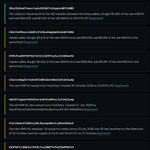


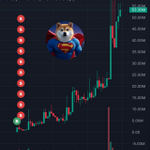


$KIMCHI reached a market cap of roughly $14 million.
Then the promotional posts disappeared.
The token crashed by more than 95%.
But the deleted posts are not the most interesting part.
According to Lookonchain’s analysis, the account promoting the project had received 500 million $KIMCHI before posting about it.
Pump.fun co-founder Alon amplified the post, then later removed his own post.
Several wallets that entered at low prices reportedly realized more than $385,000 from subsequent sales.
This does not prove that every wallet belonged to the same party.
It does reveal the sequence retail traders should reconstruct before buying a viral ticker:
1. Who received tokens before the promotion?
2. When did those wallets start selling?
3. Which large accounts amplified the narrative?
4. Did those accounts quietly delete their posts?
5. How much liquidity existed beneath the displayed market cap?
A token can lose its promoters in seconds.
Their transfers remain on-chain.


2
129
Pump.fun did not lose traders to another memecoin.
It lost them to a new mechanic.
Stonk.fun has now beaten Pump in launchpad revenue for three consecutive days.
Here is why the market suddenly cares:
Stonk lets projects pair memes with tokenized stocks, commodities and crypto assets.
That created products such as $ZCAT/$ZEC and $SI/$NVDAx - memes that can distribute rewards in the asset they trade against.
The result:
• $1.3M daily launchpad revenue
• tokenized equity volume rose from roughly $50M to $154M
• $ZCAT and $STONK both reached nine-figure valuations
• around 13% of the circulating $STONK supply has already been burned
Pump.fun perfected launching tokens.
Stonk.fun is experimenting with what those tokens can be paired with.
Now Pump is reportedly preparing its own multi-pairing functionality.
The next launchpad war will not be about who launches the most coins.
It will be about who gives traders the strongest reason to keep holding them.


1
82
A token can have 10,000 holders and still have one exit.
Holder count tells you how many addresses exist.
It doesn't tell you who controls the supply-or how much selling the pool can absorb.
Before you call it a community, check who can leave first.
3
41
Two memecoins.
Same platform.
Completely different machines.
$ANSEM reached a $96.9M peak with 1,920 traders.
$KIMCHI attracted 16,133 traders and 170,475 SOL of volume in one day.
Market cap tells you the price.
Flow tells you the story.
On October 20, $ANSEM recorded 25,771 SOL in volume.
$KIMCHI generated more than six times that amount.
But $ANSEM still reached a much higher peak valuation.
That difference matters.
One market was pricing a scarce, concentrated asset.
The other was processing a massive wave of attention, rotation and speculation.
A chart can show you what moved.
Trader count and volume show you how the move was built.
Never analyze a memecoin using market cap alone.
Sometimes the largest number on the screen is the least useful one.


The NBA has one of the largest audiences in sports.
Its Instagram reportedly promoted a Solana memecoin.
The token still collapsed to roughly $3,500.
Even a hacked megaphone couldn’t manufacture demand.
The post appeared on the verified NBA account and presented “NBA Coin” as an official product.
It included a Pump.fun contract address and told millions of followers to buy.
The post collected thousands of likes before it disappeared.
The token reportedly peaked near $40,000 and then collapsed to approximately $3,500.
A verified account can provide reach.
It can create urgency.
It can even borrow trust for a few minutes.
But it cannot force the market to believe.
In 2026, even scammers are discovering that attention without conviction has almost no liquidity.

50,264 memecoins launched on Pumpfun in one day.
92% received zero trades in their second hour.
The casino isn’t running out of coins.
It’s running out of attention.
Only 1,039 tokens graduated.
That’s 2.07% of everything launched.
And graduation doesn’t mean success.
It only means a token survived the first filter.
The real competition isn’t between good memes and bad memes anymore.
It’s between 50,000 tickers fighting for the same finite number of eyes, wallets and clicks.
Launching a token has never been easier.
Making anyone care has never been harder.
2
32
Three wallets sold the old $KIMCHI.
55 seconds later, they bought the new one.
They spent $7,332.
Eight minutes later, the position was worth $111,748.
That timing deserves a closer look.
At 23:00:15 UTC, a new $KIMCHI launched on Pump.fun.
Three linked wallets were already holding 5.19 million tokens of the older $KIMCHI.
At 23:00:55, all three wallets bought the new token simultaneously.
Nineteen seconds later, they sold their entire position in the old token for $19,365.
Then they bought even more of the new one.
By 23:09, their $7,332 position had reached $111,748.
The wallets didn’t simply discover the new launch early.
They rotated from the old contract to the new one within the same minute.
Maybe it was exceptional timing.
Maybe someone already knew which ticker the market was about to choose.


1
63
A dev controlled 32% of $SI.
Then sold the entire position for $24,000.
That position later became worth roughly $15 million.
The funniest part?
He came back and bought again after the market found the ticker.
According to Bubblemaps, the dev initially minted 20% of the supply and sniped another 12% through eight side wallets.
He had the allocation everyone in the trenches dreams about.
But he sold before the narrative formed.
When “Super Intelligence” started spreading and the market finally assigned value to the ticker, he bought back at a much higher price.
The wallets were early.
The trader wasn’t patient.
404 ERROR: CONVICTION NOT FOUND_


1
5
1,245
nvidia is worth 3 trillion because of ai.
jensen huang says the ai kills jobs story is too lazy to be true.
that's either the most credible take in the room. or the most conflicted one.
while every company blames ai for layoffs, huang keeps saying the same thing.
technology changes jobs. it doesn't just erase them.
the man whose chips power every model, every datacenter, every agent running right now is spending more time talking about adaptation than replacement.
nobody has more financial incentive to push the ai-kills-everything story.
he keeps not telling it.
two reads:
one: huang sees the real numbers behind the buildout and actually believes the nuance.
two: "it's complicated" is the only story that keeps regulators calm, employees from panicking, and nvidia's customers spending.
both can be true.
the biggest winner in ai thinks the replacement narrative is wrong.
that's either the most credible signal in the room. or the most self-serving.
probably worth figuring out which one before the next earnings call.
1
9
121
most ai agents forget you the moment you close the tab.
this one saves what it learned as a file on your disk.
by session 20 it completes the same tasks 40% faster. zero api fees. zero data leaving your machine.
the agent is hermes.
hermes plus qwen 3.6 locally. or minimax 2.7 in the cloud.
one command to install. run it from telegram or whatsapp.
every task you complete once - it saves the procedure as a markdown file.
next time the same task comes up, it already knows how.
20+ self-created skills. 40% faster than a fresh instance.
less time. fewer tokens. same result.
setup is 30 minutes.
install lm studio. pull the model. install hermes. point it at localhost.
most people pay $200 a month for cloud agents that start from zero every session.
the ones running hermes locally in 2026 will look very far ahead in 2028.
the gap isn't the model.
it's the memory.
watch the video. setup in 30 minutes. you're off the meter entirely.


5
10
339
ONE MAC MINI. $3 IN ELECTRICITY. $8,500 IN 30 DAYS.
he was paying $200+ a month for cloud GPU and subscriptions.
then he bought a $599 box and stopped.
at 0:11 he turns the monitor around.
Claude Code. Opus 4.7. full context. terminal already running.
one programmer, one room in Tokyo, one
machine that costs less than a single month of his old cloud bill.
Claude Code, Codex, every AI tool - all of it runs on the
Mac Mini with zero cloud dependency and zero monthly fees.
$599 once.
year one savings: $2,364 that used to go to someone else's
data center.
the $200/month was not a subscription.
it was a tax on not owning your compute.
Apple just pulled the 256GB version off the shelf.
the remaining units are moving.
if you're serious about AI work in 2026 - this is the first
hardware decision, not the last.
1
10
253
Local AI inference used to require a $30K server.
Apple Silicon changed the math.
$1,900/month to rent cloud GPUs
$2,400 paid once to own the same compute locally
Break-even is 47 days. Everything after that is margin...
4 Mac Minis connected through EXO (open source framework)
run 70B+ models at full precision.
Combined they have enough unified memory to handle workloads
that a single device physically cannot.
Cost breakdown:
- Cloud GPU rental: $1,900/month = $22,800/year
- Local cluster: $2,400 once + $12/month electricity
- Year 1 difference: $20,000+
For prediction market research this matters:
- Overnight source monitoring with zero API cost ceiling
- Local inference on resolution criteria before markets reprice
- No per-token cost eating into edge
- Data never leaves the room
The cloud GPU model is not an infrastructure decision.
It's a subscription to someone else's margin on top of your work.
EXO is open source. The hardware is consumer. The math is just math.
Bookmark this. When your next GPU bill hits, run the numbers.
1
6
215
The most underrated lesson from CZ’s book is not about money
It is about communication
Out of 72 principles, 17 are about writing, meetings, context, feedback, and decision flow
That is almost a quarter of the whole system
Most founders think companies die because of weak product, lack of funding, or bad marketing
More often, they die from operational noise
Long messages with no point
meetings with no decision
missing context
too many people in the room
slow feedback
broken handoffs
constant communication that somehow says nothing
From the outside, none of this looks fatal
From the inside, it quietly destroys speed
That is the real insight
Binance did not just scale on product and execution
It scaled on communication discipline
Short messages
clear context
fewer meetings
fewer people
faster decisions
less noise
Most founders are obsessed with growth hacks
Few realize their biggest bottleneck is the communication chaos they normalize every day

4
69
the chart is just fear with a clock attached.
this morning crypto twitter got liquidated to zero. one old man didn't look up from his newspaper.
seventy years. ten crashes. zero liquidations.
that's not the setup. that's the disguise.
then a film crew left the camera rolling eleven seconds too long.
the third monitor wasn't news.
it was a hyperliquid order book. perps. funding rates.
a position size with too many zeros to be a hobby.
he traded through '87. through '08. through the covid wick.
through every crash that made a grown man cry into a discord call.
he never reads price. he reads people.
when the timeline screams "we're so back" - he's already short.
when they're crying liquidation - he's already loading the other side.
no screenshots. no wallet. no pfp. no thread.
the only proof is he's still at the desk.
a young trader once asked him for the edge.
he didn't look up.
"everyone watches the same screen. i watch who's watching it."
the market forgets every name.
it never forgot his - because nobody ever knew it.
bookmark this for the next liquidation cascade. check how you were feeling when it started.
7
407
polymarket would have priced him at 5% a year ago
the market is usually wrong about people like this

nobody in my family has ever left kazakhstan. i just flew half the globe to SF.
a week ago, i was in my village of 2,000 people with 3mb/s internet.
a year ago, i didn't even know what a SAFE note was.
today, i'm 17, standing in sf with $300k raised from top investors to build my startup.
now please, go tell someone else that staying delusional is stupid.

1
7
143
retail traders on polymarket pick the winning side more often than bots.
bots are still more profitable.
here is the only reason why.
bloomberg tracked every wallet on polymarket since january 2025.
retail traders called the correct outcome more often.
bots captured more profit.
the difference: entry timing.
when news breaks, polymarket doesnt reprice instantly.
there is a window - usually under 2 hours - where the odds havent fully adjusted yet.
bots enter in that window.
humans are still reading the article.
73% of arbitrage profits on polymarket in 2026 were captured by sub-100ms execution bots.
not because they predicted better.
because they showed up before the window closed.
bookmark this. next major reprice - check how fast the gap closed after the first bot entered.

1
2
89
The best alt entries usually begin when everyone decides alts are dead
That is how the market keeps humiliating people
At the top, everyone wants exposure
In the middle, everyone wants confirmation
Near the bottom, everyone suddenly becomes "responsible" and decides only the obvious winners deserve attention
That is usually when the opportunity starts forming somewhere else
Because the first move in neglected assets is almost always born from indifference, not excitement
Books get thinner
interest disappears
capital leaves
narratives look finished
and the whole sector starts feeling uninvestable
That is exactly why the first impulse can be violent when attention finally comes back
Not because fundamentals changed overnight
But because nobody was positioned for the rebound
That is the mistake most people make with alts
They do not want them when they are ignored
They want them after the first strong move proves them safe enough to discuss again
By then, the easy part is gone
That does not mean every alt deserves a bid
Most do not
It means the opportunity tends to show up when the market consensus becomes:
"there is no point looking here anymore"
That is usually the moment worth paying attention
The best alt entries are rarely born in confidence
They are born in boredom, disgust, and neglect
If nobody wants to touch the sector, books are light, and narratives still have a reason to exist, that is often where the best asymmetry starts

2
14
103