

British academic in China 🇨🇳 since 2011. Writing little stories about life here, academic papers nobody reads, and occasionally novels. Getting older daily.
China
Joined November 2009
- Tweets38.4K
- Following1.6K
- Followers2.8K
- Likes8K



Pinned Tweet
A small note about my China stories.
I've lived in China 🇨🇳 for nearly 15 years. These are affectionate recollections of things I've experienced, noticed and sometimes found amusing along the way.
They're stories, so occasionally there is a little exaggeration or hyperbole. That's part of storytelling.
They aren't intended as criticism of China or Chinese people. Quite the opposite. I wouldn't still be here after all these years if I didn't enjoy living here.
The humour is affectionate, and quite often the person I'm making fun of is myself.😂
Please read 📖 them in that spirit.🕊️🙏
10
72
17,186
Han Shan 寒山 — Cold Mountain #88
老翁娶少婦
髮白婦不耐
老婆嫁少夫
面黃夫不愛
老翁娶老婆
一一無棄背
少婦嫁少夫
兩兩相憐態
An old man marries a young woman,
But she cannot bear his greying hair.
An old woman marries a young man,
But he dislikes her ageing face.
An old man marries an old woman,
And neither abandons the other.
A young woman marries a young man,
And together they share affection and love.
2
199
Is my Chinese doctor a fortune teller? Or perhaps a wizard? 🇨🇳
Because I'm beginning to wonder whether he can actually see into the future.
A couple of weeks ago, I injured my back while taking our rather fat cat to the vet.
And when I say injured, I mean I was in serious pain.
Walking was difficult. Sitting down was agony. Getting up again was worse.
Eventually, I went to the hospital.
My wife came along to translate, and I hobbled into the doctor's consulting room, looking rather like an elderly man auditioning for the role of Quasimodo.
The doctor listened as my wife explained what had happened, where the pain was and just how uncomfortable I was.
I provided the sound effects.
Every time I sat down or stood up, there was an involuntary yelp.
He examined me, thumped my lower back a few times, presumably to see what sort of response he got, and listened to the story.
And that was about it.
No elaborate investigations. No lengthy examination.
He prescribed some painkillers, some Chinese medicine and acupuncture.
And then he delivered his verdict.
"You'll be better in two weeks."
Two weeks?
How on earth did he know that?
Had he examined hundreds of people with exactly the same problem?
Was there some subtle diagnostic clue that I'd completely missed?
Or did he have a crystal ball hidden under his desk?
Anyway, I went home and began what turned out to be a rather uncomfortable fortnight.
You may remember my earlier story about our Chinese mattresses being so hard that I eventually bought a lovely soft one from IKEA.
Well, that decision came back to bite me.
Quite literally in the lower back.
The mattress was suddenly far too soft for comfort.
So I moved onto the sofa.
And there I've remained, night after night.
Not because I've been banished to the doghouse by my wife, as is traditional for errant husbands.
But because the sofa was the only place I could get reasonably comfortable.
Meanwhile, the painkillers and pain-relieving gel became part of my daily routine.
Some days were better than others.
But every morning I wondered whether the doctor had been a little optimistic.
Then came Thursday.
Exactly two weeks since my hospital visit.
And for the first time, I got through the day without taking a painkiller or rubbing pain-relieving gel into my lower back.
I wasn't suddenly twenty-five again.
But I was finally feeling substantially better.
Exactly two weeks.
Just as the doctor had predicted.
Now, I'm sure there's a perfectly sensible medical explanation.
Perhaps years of experience allow doctors to recognise how long a particular injury will probably take to improve.
Perhaps two weeks is simply the standard answer.
But I'm still rather impressed.
The man watched me hobble into his consulting room, listened to my wife translate my complaints, gave my back a few thumps and apparently knew precisely when I'd start feeling better.
So I'm left wondering.
Was it medical expertise?
A lucky guess?
Or should I go back and ask him for next week's lottery numbers?
Have you ever had a doctor predict exactly how long something would take to heal — and turn out to be right?
And does anyone know whether "two weeks" is a standard medical prognosis, or have I found myself a wizard?
Given the news and the state of the world - what do we call today’s youth Gen Duck and Cover? One of my freshmen students last week - it wasn’t even cold!

1
3
398
Han Shan 寒山 — Cold Mountain #87
大有好笑事
略陳三五個
張公富奢華
孟子貧轗軻
只取侏儒飽
不憐方朔餓
巴歌唱者多
白雪無人和
There are so many absurd things in this world,
Let me mention just a few.
Lord Zhang lives in wealth and luxury,
While Mencius struggles in poverty.
The court dwarfs are kept well fed,
While the scholar Dongfang Shuo goes hungry.
Everyone joins in singing the common songs,
But no one can follow the refined melody of White Snow.
There's something about shopping malls in China 🇨🇳 that I simply cannot understand.
How do some of the shops make any money?
Today, Saturday, my wife and I went shopping in Wenzhou.
The shopping mall was busy. Plenty of people walking around, browsing, eating and generally enjoying their weekend.
But something struck me as we wandered past the shops.
We passed half a dozen expensive perfume, cosmetics and beauty shops, including the sort of international luxury brands associated with Chanel.
Beautiful displays, expensive-looking interiors and five or six smartly dressed sales assistants.
But customers?
None.
Or perhaps one person browsing.
And it wasn't just cosmetics.
The gold and jewellery shops were much the same.
So were many of the more expensive clothing shops.
Plenty of staff. Plenty of merchandise. Very few people apparently buying anything.
Sometimes I wondered whether there were more people working in the shops than shopping in them.
And I couldn't help doing the arithmetic.
Rent.
Electricity.
Staff salaries.
Stock.
All those expensive displays and fittings.
Surely somebody has to buy something occasionally?
But then we went into Uniqlo.
What a difference!
The place was packed.
People browsing, trying on clothes and, most importantly, buying them.
Including us.
We emerged having spent around ¥1,000.
So there certainly wasn't a shortage of shoppers or people willing to spend money.
They just seemed rather selective about where they spent it.
Of course, a luxury jewellery shop doesn't need to sell hundreds of items every day. One expensive purchase might be worth an entire afternoon's sales in a clothing store.
Perhaps some of these shops do much of their business online.
I don't know.
But here's what puzzles me.
China has Taobao, JD and a bewildering variety of online shopping platforms where practically anything can be delivered to your door.
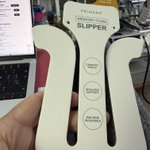
My wife recently ordered some winter slippers from Taobao. They arrived unexpectedly sporting Primark branding, despite not being advertised as Primark.
Made in China, naturally.
So what makes these expensive physical shops commercially viable when so much can be purchased online?
And why maintain five or six assistants in a shop that appears to have nobody to serve?
I'm sure there are perfectly sensible explanations involving margins, branding, rents and consumer behaviour.
But standing in a busy Saturday shopping mall, looking into beautifully decorated shops with nobody inside, I found myself wondering.
Are they shops?
Or extremely expensive exhibitions of things nobody is buying?
Does anyone actually know how these apparently empty shops survive?
And have you noticed the same thing in shopping malls where you live?
Han Shan 寒山 — Cold Mountain #86
新穀尚未熟
舊穀今已無
就貸一斗許
門外立踟躕
夫出教問婦
婦出遣問夫
慳惜不救乏
財多為累愚
The new grain has not yet ripened,
And last year's stores are already gone.
I go to borrow a measure of grain,
And stand hesitating outside the door.
The husband comes out and says, "Ask my wife."
The wife appears and says, "Ask my husband."
Their stinginess offers no help to those in need,
And all their wealth only makes them foolish.
What isn't made in China? 🇨🇳
And, perhaps more importantly, what on earth can't you buy on Taobao?
After fourteen years living here, I'm still occasionally surprised by what turns up in our deliveries.
Take my new winter slippers.
My wife decided that, with the colder weather approaching, my feet needed something warm and comfortable.
So she went on Taobao, China's enormous online shopping platform, and ordered me a pair.
Nothing unusual about that.
A few days later, the parcel arrived.
I opened it.
PRIMARK!
Now, for anyone unfamiliar with Britain, Primark is a well-known high-street retailer selling cheap and cheerful clothes, shoes and household goods.
The sort of shop where you go in for a pair of socks and emerge carrying enough shopping bags to require a taxi home.
But here's the curious thing.
My wife hadn't ordered Primark slippers.
At least, they hadn't been advertised as Primark.
She'd simply ordered some winter slippers from a Chinese seller on Taobao.
Yet there was the familiar Primark branding, complete with UK, European and American shoe sizes.
And inside?
MADE IN CHINA.
Of course they were.
Which set me wondering.
Were these slippers originally intended for a Primark shop somewhere in Britain?
Were they surplus factory stock? An extra production run? Or simply something carrying a familiar label?
I haven't the faintest idea.
All I know is that my wife ordered some unbranded slippers from a Chinese online marketplace, and what arrived was a little piece of the British high street.
Made in China.
Bought in China.
Worn by an Englishman in China.
No international journey required. At least, not for the slippers.
And perhaps that's what I find so fascinating about shopping here.
You never quite know what might turn up when you open the parcel.
So here's my question: what's the most unexpected thing you've ever bought online?
And seriously, is there anything you can't buy on Taobao?


15
33
13,449
Han Shan 寒山 — Cold Mountain #85
我見一癡漢
仍居三兩婦
養得八九兒
總是隨宜手
丁戶是新差
資財非舊有
黃蘗作驢鞦
始知苦在後
I once saw a foolish fellow,
Living with two or three wives.
He had eight or nine children,
And did whatever pleased him.
But new household levies came due,
And his wealth was no longer what it had been.
Like a donkey strapped with bitter bark,
He discovered that suffering comes afterwards.
My Chinese wife is approximately 100% more efficient than the Apple Health app on my phone and watch. 🇨🇳
And considerably more difficult to switch off.
My phone and watch monitor my health 24 hours a day. Heart rate, steps, exercise, sleep, the lot.
But my wife has something considerably more sophisticated.
Actual eyes on the patient.
I can be sitting quietly in my chair, perfectly content, and let out a small, involuntary cough.
Pneumonia.
Apparently, I'm already halfway to hospital.
A sniff produces an interrogation with all the intensity of an immigration officer checking a suspicious passport.
Do I have a fever? Am I feeling unwell? Have I caught a cold?
A yawn?
Am I tired? Do I need a nap?
Sometimes I wonder whether Apple should simply employ my wife to develop its next health-monitoring system.
It would certainly be more sensitive.
And then there's food.
The other day we were returning from the vet in a DiDi with our rather fat cat.
I'd snaffled a little wrapped mint from a bowl of sweets at the veterinary surgery.
Sitting in the back seat, I quietly opened the wrapper.
Big mistake.
My wife, sitting in the front, heard the faintest crackle of cellophane.
She turned around immediately.
"What are you eating?"
"A mint."
"Sugar!"
The way she said it, you'd think I was about to collapse into a diabetic coma.
One square of chocolate apparently threatens to make me even fatter.
And don't get me started on alcohol.
A glass of red wine is frequently too full.
A second glass is unquestionably one too many.
I've even taken to keeping the occasional bottle of vodka out of sight.
Not because I'm drinking uncontrollably, but because sometimes I'd like to enjoy a small tot without receiving a lecture on the dangers of alcohol.
I've tried explaining that Russians have a long cultural tradition of regarding vodka as something approaching a medicinal tonic.
A little restorative shot, you understand.
Medicine, practically.
My wife is unimpressed.
She generally snorts in derision.
And points out that I'm not Russian.
Which, admittedly, is a weakness in my argument.
Exercise is another area of constant supervision.
I can spend an entire working day teaching, walking around classrooms, climbing stairs and accumulating more than 10,000 steps.
But if I sit on my backside for what she considers an unreasonable length of time once I'm home, apparently I need another walk.
Then there are the medicines.
Pills, powders, vitamins and various potions regularly appear in front of me.
I have to confess, dear readers, that occasionally I resort to pretending I've taken something rather than entering another lengthy discussion about why I should.
But here's the really interesting part.
My wife is not particularly enthusiastic about doctors or hospitals.
Our health insurance includes an annual comprehensive medical examination.
She refuses to have it.
Yet she'll happily investigate all manner of pills, supplements and remedies, with Tylenol Cold occupying a particularly honoured position in the household medicine cupboard.
So there you have it.
I possess an expensive smartphone, a smartwatch and an entire ecosystem of sophisticated health-monitoring technology.
But none of it can detect the sound of a mint being unwrapped in the back of a moving DiDi.
And none of it can diagnose pneumonia from a single cough.
Perhaps Apple should be worried.
Or perhaps I should just be grateful that somebody takes such an interest in keeping me alive.
P.S. Our three cats receive much the same level of medical surveillance.
And unlike me, they don't even have health insurance.
Does anyone else live with a partner whose health-monitoring capabilities put modern technology to shame?

Han Shan 寒山 — Cold Mountain #84
富貴疏親聚
只為多錢米
貧賤骨肉離
非關少兄弟
急須歸去來
招賢閣未啟
浪行朱雀街
踏破皮鞋底
When you're wealthy, even distant relatives gather round,
Drawn by your money and stores of grain.
When you're poor, even your closest family disappears,
Not because you have fewer brothers.
Better to turn around and go home,
The hall that welcomes worthy men remains closed.
Why wander endlessly along Vermilion Bird Street,
Wearing through the soles of your shoes?
It's only the middle of November, and Christmas has already arrived in China. 🇨🇳
And not quietly, either.
Just look at this enormous illuminated Christmas tree in a shopping mall here in Wenzhou.
Layers of glowing decorations, artificial snow, festive lights and what looks like enough Christmas cheer to power a small town.
All in a country governed by a Communist Party that officially embraces atheism.
There's a certain irony in that.
Of course, China isn't actually an atheist society. Religion has a long and complicated history here, and Buddhism, Daoism, Christianity, Islam and traditional religious practices are all part of Chinese life.
Indeed, Wenzhou itself is sometimes called the Jerusalem of China, because of its unusually large Christian community and numerous churches.
So Christmas certainly has genuine religious significance for some people here.
But the Christmas I encounter in Chinese shopping malls seems to have relatively little to do with the birth of Christ.
There's Santa Claus.
There are reindeer.
There are Christmas trees, presents, baubles, lights and enormous quantities of glitter.
And, naturally, there are shops.
Lots of shops.
And then there's Starbucks.
Starbucks seems particularly enthusiastic about announcing the arrival of Christmas.
Out come the festive cups, decorated with Christmas trees and seasonal greenery, while familiar Christmas tunes start playing in the cafés.
Although, to be fair, I once heard Jingle Bells playing in a Starbucks in the middle of summer in China.
Perhaps somebody had forgotten to change the playlist.
Or perhaps, at Starbucks, Christmas is simply a year-round commercial opportunity.
Many years ago, when I first started writing about life in China, I wrote a magazine article about Christmas here.
Read it here: yumpu.com/en/document/view/6…
Even then, I was fascinated by the way the festival had been adopted as a marketing opportunity.
The decorations were everywhere, familiar Christmas songs played in shopping malls and cafés, and the whole business seemed less about celebrating the birth of Jesus and more about encouraging people to spend money.
But perhaps I shouldn't be surprised.
After all, what has Christmas become in Britain?
When I was growing up, there was still a recognisable religious dimension to the festival, even for families who weren't particularly religious.
Christmas carols, nativity scenes, church services, goodwill to all, peace on earth.
But there were also presents, food, drink, family arguments and far too much television.
And, of course, the shops.
As the years have gone by, Christmas in Britain has become an increasingly elaborate commercial event.
The decorations seem to appear earlier every year, and the pressure to buy things begins long before December.
So perhaps China hasn't really changed Christmas very much.
Perhaps it's simply taken the modern commercial version and dispensed with much of the religious packaging.
After all, you don't need to be Christian to enjoy a spectacular Christmas tree, exchange gifts, eat good food or spend time with friends.
And you certainly don't need to believe in the Nativity to recognise a profitable marketing opportunity.
There's another irony, of course.
China manufactures an enormous quantity of the Christmas decorations, toys and seasonal goods that eventually appear in homes and shops around the world.
So perhaps it's only reasonable that some of those decorations should stay here.
Still, I find something rather fascinating about standing in a Chinese shopping mall in mid-November, looking at a gigantic Christmas tree in a country where Christmas Day isn't even a national public holiday.
And wondering what exactly we're all celebrating.
The birth of Christ?
The arrival of winter?
The pleasure of being together?
Or the opportunity to buy another pair of shoes?
Perhaps, in the end, Christmas has become whatever people want it to be.
And maybe the real universal religion is shopping.
So here's my question: has Christmas become more of a commercial festival than a religious one where you live?
And when do the Christmas decorations start appearing in your part of the world?


Han Shan 寒山 — Cold Mountain #83
赫赫誰壚肆
其酒甚濃厚
可憐高幡幟
極目平升斗
何意訝不售
其家多猛狗
童子欲來沽
狗咬便是走
Whose wine shop is this, so grand and splendid?
Its wine is rich and wonderfully strong.
See its fine banners flying high,
Advertising wine by the measure.
Yet why is nobody buying?
The owner wonders why his wine won't sell.
But fierce dogs guard his premises,
And when a boy comes to buy, they bite and chase him away.
1
279
Our gas cooker broke down the other day here in China. 🇨🇳
And apparently, the secret to repairing a gas cooker is toothpaste.
Extra whitening toothpaste, to be precise.
Now, our Chinese kitchen is fairly simple. We have two gas rings built into the worktop. No oven. Just two burners for cooking.
The automatic ignition had stopped working.
I suspected the battery, but despite looking around the cooker, I couldn't find anywhere a battery might go. And the whole thing seemed firmly fixed into the countertop.
So we called someone to come and have a look.
And this being China, they turned up about an hour later.
Not two weeks later, having taken a day off work to wait for an appointment that might be cancelled at the last minute.
An hour.
Two people arrived, a man and a woman, and set about dismantling and tinkering with our cooker.
There was quite a lot of banging coming from the kitchen.
I decided to stay out of their way.
I'm not one of those people who likes to stand behind a tradesperson, looking over their shoulder and offering helpful advice about something I know absolutely nothing about.
Apparently, according to my wife, we'd been rather fortunate to call them in, because the problem turned out to be more serious than a faulty ignition.
Anyway, things seemed to be progressing well.
And then my wife appeared.
"Where's your toothpaste?"
"My toothpaste?"
"Yes. The people fixing the cooker need some."
Now, this struck me as rather peculiar.
I'd heard a lot of banging going on in the kitchen, but I hadn't realised the repair was so exhausting that the workers needed to stop and clean their teeth.
"Why do they want toothpaste?"
Apparently, cleaning their teeth wasn't on the agenda.
The toothpaste was required to repair the cooker.
Oh.
As I understand it, they were using it as some sort of makeshift gasket or seal. Something about its stickiness and the way it dries.
At this point, I decided that asking too many technical questions would probably not improve matters.
So they got my toothpaste.
Extra whitening.
I don't know whether the whitening properties contributed anything to the repair, but presumably our cooker now has a particularly dazzling smile.
And the result?
One working gas cooker.
Two satisfied customers.
And a bill for just ¥178.
I've lived in China for fourteen years, and I still occasionally encounter things that leave me scratching my head.
A little ingenuity goes a long way.
Although I must confess, I'd never previously considered toothpaste an essential item in a gas engineer's toolbox.
Has anyone else encountered an extraordinarily inventive repair involving something you'd normally find in the bathroom?
And should I be keeping a spare tube of toothpaste in the kitchen from now on?

15
26
5,216
This is when you know Winter is coming to Wenzhou delicious sweet potato from the street vendor and only 8 rmb each ( I got 2, 1 for me and one for the wife) #china


Han Shan 寒山 — Cold Mountain #82
大有飢寒客
生將獸魚殊
長存磨石下
時哭路邊隅
累日空思飯
經冬不識襦
唯齎一束草
並帶五升麩
There are many who suffer hunger and cold,
Human beings, different from beasts and fish.
They shelter beneath the millstones,
And sometimes weep beside the road.
For days they dream of a meal,
Through winter they have no warm clothes.
All they possess is a bundle of straw,
And five measures of coarse wheat bran.
Apparently, after 14 years living in China 🇨🇳, I've failed a rather important examination.
The Chinese Noodle Knowledge Test.
Yesterday, I wrote about visiting our local noodle bar, ordering fried noodles, and being told they'd run out.
Then I noticed two customers eating noodles.
"But they've got noodles!" I said to my wife.
"Ah, but they're different noodles," she replied.
"Oh."
Well, it seems my little adventure has exposed a serious gap in my education.
Some readers have pointed out that China has a vast number of different noodles, and one particularly helpful person supplied this magnificent list.
[See attached screenshot]
Lanzhou beef noodles, Shaanxi biangbiang noodles, Shanxi knife-cut noodles, Beijing zhajiangmian, Wuhan hot dry noodles, Chongqing xiaomian...
And on it goes.
I confess I haven't mastered them all.
In fact, I suspect that if somebody presented me with fifty bowls of noodles and asked me to identify them, I'd probably get about three right.
Possibly two if I were allowed to taste them.
But here's the thing.
I wasn't trying to become an expert in Chinese noodle classification.
I was hungry.
I wanted fried noodles.
And when the restaurant told me they didn't have the noodles required to make my dinner, I found that rather funny.
Especially when two customers sitting nearby were happily eating noodles of a different variety.
I wasn't suggesting that every noodle in China is interchangeable.
Although, as someone who grew up in Britain, where the great pasta debate often involved choosing between spaghetti and macaroni, I can understand why my culinary education might be considered somewhat inadequate.
Perhaps China needs a special citizenship examination for foreigners.
Question 1: Identify these fifty varieties of noodles.
Question 2: Explain why a noodle restaurant can have noodles but not your noodles.
Question 3: You're hungry. The restaurant has run out of noodles. What do you do?
I think I've finally mastered Question 3.
Order fried rice.
So, Chinese friends, how many different varieties of noodles can you actually recognise?
And for everyone else, what's the one food from your country that foreigners are apparently expected to know everything about?


Han Shan Anticipates the UK Headlines — 1,000 Years Early
Han Shan 寒山 — Cold Mountain #81
柳郎八十二
藍嫂一十八
夫妻共百年
相憐情狡猾
弄璋字烏歔
擲瓦名婠妠
屢見枯楊荑
常遭青女殺
Old Mr Liu is eighty-two,
Young Miss Lan is only eighteen.
Together, the husband and wife make a hundred years,
Their affection a rather curious affair.
A son is born and given an unusual name,
Then a daughter, with another fanciful name.
Again and again, new shoots appear on the withered willow,
But the Frost Maiden comes and destroys them.
A Little Reflection
Given some of the current news coming out of Britain,
Han Shan's observations seem remarkably timely.
Here we have an eighty-two-year-old man married to an eighteen-year-old woman.
Han Shan immediately notices the mathematics.
Together, they make a hundred years!
But his humour has a sharper edge.
The couple have children, suggesting that even an ancient, withered willow can sometimes produce fresh shoots.
Unfortunately, the Frost Maiden, the personification of winter's destructive cold, is never far away.
It's a rather dark image of old age, youthful fertility and the inevitable arrival of mortality.
But there's also a question about the relationship itself.
Han Shan seems distinctly sceptical about such an extraordinary age difference. His description of their affection suggests something rather less straightforward than romantic love.
More than a thousand years later, we're still debating relationships between much older men and very young women.
Of course, an age difference alone tells us little about whether a relationship is loving or exploitative. Consent, circumstances and differences in power all matter.
But it's fascinating that Han Shan was already using humour to question such relationships in Tang dynasty China.
Some human arrangements, it seems, have been raising eyebrows for a very long time.
Last night, my wife and I went to our local noodle bar here in China. 🇨🇳
I fancied some chow mein. Fried noodles.
Sorry. No noodles.
Now, I found this rather puzzling.
There's a supermarket just around the corner, several small grocery shops nearby, and enough delivery apps to have practically anything brought to your door in half an hour.
At least five shops within a few minutes' walk sell noodles.
Surely somebody could pop out and buy some?
Anyway, I accepted defeat and ordered chow fan instead. Fried rice.
Then, while we were waiting for our food, I noticed two men at another table happily eating noodles from a large bowl.
I pointed them out to my wife.
"But they've got noodles!"
"Ah," she replied, "but they're different noodles."
"Oh," I said.
Apparently, that settled the matter.
But this wasn't my first experience of a Chinese restaurant running out of something rather fundamental.
Years ago, when we were living in Nanjing, we went to the Blue Frog restaurant.
I ordered a burger, while my wife chose a noodle dish.
The waiter disappeared into the kitchen.
A few minutes later, he returned.
"Sorry, no noodles."
Fair enough. My wife ordered a rice dish instead.
Off went the waiter again.
And back he came.
"Sorry, no rice either."
No rice?
NO RICE?
Here we were, sitting in a restaurant in one of China's major cities, and they'd run out of rice!
I was astonished.
Again, there was a supermarket just down the road.
I couldn't understand why somebody couldn't simply nip out and buy a bag.
Of course, I appreciate that restaurants depend on particular suppliers, ingredients and preparations. Perhaps there are perfectly sensible explanations for why a kitchen can't simply substitute something bought from the local supermarket.
But there's still something wonderfully absurd about going to a noodle bar that can't make your noodles, or ordering rice in China only to discover that the kitchen hasn't got any.
And apparently, pointing out that other customers are eating noodles doesn't help.
They're different noodles.
Oh.
Has this ever happened to you? Have you been to a restaurant that's run out of the very thing you went there to eat?
And would you expect the kitchen to pop down to the supermarket, or am I being completely unreasonable?


62
14
31,880
Han Shan 寒山 — Cold Mountain #80
貧驢欠一尺
富狗剩三寸
若分貧不平
中半富與困
始取驢飽足
卻令狗饑頓
為汝熟思量
令我也愁悶
The poor donkey is a foot short of food,
While the rich dog has three inches to spare.
If we divide it up, the poor still lose out,
So perhaps we should share between rich and poor.
But give the donkey enough to fill its belly,
And the dog suddenly goes hungry.
The more I think about how to divide things fairly,
The more troubled and miserable I become.
259