

Award winning, professional Blue Badge Guide, History nerd and constantly curious member of the Human race. https://nitter.gq/t.co/eYF4Cw63XI
England, United Kingdom
Joined March 2018
- Tweets380
- Following283
- Followers45
- Likes23



These small, disc shaped growths on the underside of these oak leaves are spangle galls. The galls appear in spring when the wasp lays their eggs on the new leaves. The larvae emerge during the summer and continue to develop through the winter, emerging as adults in April. (1/2)

1
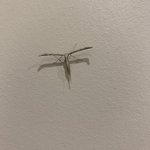
The common plume moth. They rest with with their wings tightly rolled, so they resemble a small, greyish white cross. Quite common in England, they’re often seen on fence posts, walls and even indoors where they are attracted to light.


This large, spindly legged creature looks like a long legged spider. But it isn’t. It is, in fact, a harvestman; one of the opilones, a group of arachnids closely related to spiders and scorpions. (1/3)

1
A bur clover seed. Curled and covered in hooked prickles, they start out green and relatively soft, but quickly turn brown and hard. Inside the pod are several seeds, which are usually tan coloured and kidney shaped. I rather like them- I think they look like tiny, woven baskets!


This tall climbing plant, with its cone like green flowers, is a hop. Hops are a vital ingredient in the brewing of beer, adding a distinctive flavour and aroma and making it clearer and less perishable. (1/5)


1

The Royal Military Canal. After Hadrian's Wall and Offa's Dyke, it is the third longest defensive structure in the UK. (1/3)

1
1

This is Viper’s bugloss. It has upright, dense spikes of bright blue, funnel shaped flowers and can be spotted on chalk grassland, sand dunes, cliffs and banks. (1/3)

1
This insect, with its slender, lime green body, is an oak bush cricket. They are the UK’s only native arboreal species, meaning they live, feed and breed exclusively in trees and woodland (although this one’s hanging out on a sign). (1/2)

1

Flowering between July and September, the nodding, blue bells of the harebell are a summer delight. They mostly grow on dry, undisturbed ground such grasslands, sand dunes, hedgerows and cliffs, but they’re tolerant of all kinds of habitats (like historic stone walls). (1/2)

1
1
The brown, conical, spiky seed heads of the teasel are a familiar sight, found in damp grassland and field edges, or on disturbed ground, such as roadside verges and waste ground. (1/3)

1
What do you see? I see the side profile of a face, with hair, nose mouth and chin. #lookup #clouds #cloudappreciationsociety #cloudphotography #cloudspotting #bluesky #metoffice #weatherphotography


Spreading hedge parsley. A low plant with tiny, white flowers, normally found in arable field margins and disturbed ground. Modern agricultural practices such as the increased use of fertilisers and the loss of field margin has led to its decline in the last 60 years.


Ivy leaved toadflax; a creeping plant often found in cracks in old walls and pavements. The small, green ivy like leaves are edible and have a flavour similar to watercress. Its tiny flowers resemble a snapdragon and are mauve with white and yellow bulges. (1/3)

1
Yarrow can be found in many grasslands, from lawns to meadows. It has flat topped clusters of white flower heads and dark green, finely divided, feathery leaves. It’s a food source for many species of insects. (1/3)

1