

AI Group @ucsantabarbara. Profs. @xwang_lk, @YuhengBu, Xifeng Yan, @WilliamWangNLP, @CodeTerminator. Account run by Student Social Committee.
Santa Barbara, CA
Joined July 2021
- Tweets383
- Following639
- Followers2.5K
- Likes649






UCSB AI retweeted

Test-time training made small open models rival AlphaEvolve for scientific discovery.
But it pays for it with RL updates throughout the search.
What if the model just kept good notes instead?
Frozen LLM + self-evolving memory:
✅ beats TTT on 5/5 tasks
✅ ~84% fewer FLOPs, ~2x faster
(arXiv: 2610.32046)

UCSB AI retweeted

🚀 𝐏𝐞𝐫𝐬𝐨𝐧𝐚𝐥 𝐀𝐠𝐞𝐧𝐭𝐬 𝐀𝐫𝐞 𝐓𝐚𝐤𝐢𝐧𝐠 𝐎𝐟𝐟: 𝐆𝐨𝐨𝐠𝐥𝐞 × 𝐔𝐂𝐒𝐁 𝐈𝐧𝐭𝐫𝐨𝐝𝐮𝐜𝐞 𝐒𝐭𝐫𝐞𝐚𝐦𝐕𝐢𝐛𝐞 𝐭𝐨 𝐔𝐧𝐝𝐞𝐫𝐬𝐭𝐚𝐧𝐝 𝐄𝐯𝐨𝐥𝐯𝐢𝐧𝐠 𝐔𝐬𝐞𝐫 𝐈𝐧𝐭𝐞𝐧𝐭 𝐓𝐡𝐫𝐨𝐮𝐠𝐡 𝐈𝐧𝐭𝐞𝐫𝐚𝐜𝐭𝐢𝐨𝐧
🤔The promise of personal agents is compelling: an assistant that understands what we need as we go about our day. But understanding a user is a moving target.
🍳 When we say "help me cook this dish," the next useful action depends on what we do next. A step gets completed. A mistake happens. We change our mind. The agent has to keep up with both the world and our intent, deciding when to help and when to stay quiet.
🔥 Introducing StreamVibe: Proactive Video Agents for Evolving User Intent.
🧩 Three key pieces power StreamVibe: ① StreamVibe-VL learns when and how to help; ② StreamVibe-Harness tracks evolving user intents and task progress; ③ StreamVibe-Bench tests proactive assistance in real-world, long-horizon interactions.
🎬 Watch the demo. More on the ideas and results below. 🧵
🌐 stream-vibe.github.io/
Congratulations to Prof. @xwang_lk on receiving three new research awards totaling over $180K! 🎉
Proud to celebrate this achievement and the growing impact of AI research at UCSB! 🚀
#UCSBAI #AgenticAI

Congrats to CS Prof. @xwang_lk on his 3 new awards ($180K+) to advance practical, efficient & proactive AI agents! 🏆 ✨
🔹 3rd consecutive @Cisco Research Award
🔹 UCSB IEE Software Impact Grant
🔹 UCSB Academic Senate Grant
#UCSB #AI #MachineLearning #CiscoResearch #AgenticAI

🌍🔎 Can AI agents find bugs in 3D worlds by exploring them?
Introducing WorldAuditBench, a new benchmark for evaluating whether AI agents can explore interactive 3D environments, discover hidden bugs, and reason about what went wrong. 🚀
🌐 Project: ucsb-nlp-chang.github.io/Wor…


How well can AI agents find bugs in virtual 3D worlds? 🔍
Introducing WorldAuditBench, a benchmark for auditing interactive 3D worlds with static and interactive anomalies, such as invisible walls, floating chairs, and objects inconsistent with the surrounding scene.
Across 213 tasks in 13 environments, the strongest agent we evaluated achieves just 42.3% success, compared with 83.4% for humans.
Finding these anomalies requires agents to explore, interact, and collect visual evidence to show what’s wrong.
Here’s what we test and what we found 🧵
Happy to see GEA on this list! Looking forward to more exciting work from the team! 🚀

The top 5 #COLM2026 papers with visual explainers or videos, ranked by community likes:
1. Capability provenance: tracing which Dolma3 tokens taught OLMo3-7B each skill, using gradient-based data attribution. @GlennMatlin
x.com/GlennMatlin/status/209…
2. GEA: agents that evolve as a group, sharing experience and learned artifacts across the population. 71.0% SWE-bench Verified. @WengZhaoti39773
x.com/WengZhaoti39773/status…
3. SEAR: 7 LLMs, including text-only ones, controlling real robot hands across 335 tasks. @BangzhengL
x.com/BangzhengL/status/2107…
4. ICL via activation subspaces: one attention head that matters across five in-context-learning task families. @xyVickyHu
x.com/xyVickyHu/status/21024…
5. I-DLM: Introspective Diffusion Language Models, an oral spotlight. @Chenfeng_X
x.com/Chenfeng_X/status/2107…
The animation/ visual explanation reaches more than the abstract does. Did I miss any paper?
UCSB AI retweeted

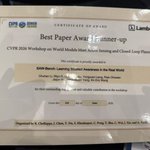
🏆 Huge congratulations to @WengZhaoti39773 and our UCSB students on winning the 𝗢𝘂𝘁𝘀𝘁𝗮𝗻𝗱𝗶𝗻𝗴 𝗣𝗮𝗽𝗲𝗿 𝗔𝘄𝗮𝗿𝗱 at the COLM 2026 Lifelong Agent Workshop for our 𝗚𝗿𝗼𝘂𝗽-𝗘𝘃𝗼𝗹𝘃𝗶𝗻𝗴 𝗔𝗴𝗲𝗻𝘁𝘀 paper!
This is Zhaotian’s 𝘃𝗲𝗿𝘆 𝗳𝗶𝗿𝘀𝘁 𝗽𝗿𝗼𝗷𝗲𝗰𝘁 in our group; what an incredible achievement!
𝗖𝗼𝗹𝗹𝗲𝗰𝘁𝗶𝘃𝗲 𝗲𝘃𝗼𝗹𝘂𝘁𝗶𝗼𝗻 𝗶𝘀 𝗷𝘂𝘀𝘁 𝘁𝗵𝗲 𝗯𝗲𝗴𝗶𝗻𝗻𝗶𝗻𝗴!

🏆 Honored that Group-Evolving Agents won the Outstanding Paper Award at the Lifelong Agents Workshop @ #COLM2026!
Agents that evolve as a group, sharing experience, keep improving open-endedly 🧬🤖
Grateful to my wonderful coauthors and @xwang_lk !
Had a great time at #COLM2026
📄 arxiv.org/abs/2602.04837
💻 github.com/UCSB-AI/GEA


🎉 Outstanding Paper Award! @WengZhaoti39773 @xwang_lk
Proud to share that “Group-Evolving Agents” received the 𝐎𝐮𝐭𝐬𝐭𝐚𝐧𝐝𝐢𝐧𝐠 𝐏𝐚𝐩𝐞𝐫 𝐀𝐰𝐚𝐫𝐝 at the Lifelong Agents Workshop @ #COLM2026 🏆
Worth all the hard work, and well deserved! Can’t wait to see what’s next!
🏆 Honored that Group-Evolving Agents won the Outstanding Paper Award at the Lifelong Agents Workshop @ #COLM2026!
Agents that evolve as a group, sharing experience, keep improving open-endedly 🧬🤖
Grateful to my wonderful coauthors and @xwang_lk !
Had a great time at #COLM2026
📄 arxiv.org/abs/2602.04837
💻 github.com/UCSB-AI/GEA
🌟 Congrats to @AlfonAmayuelas and @xwang_lk!
UCSB’s paper Sampling Is Not Curiosity: Why LLM Agents Should Investigate has been selected as a 𝐒𝐩𝐨𝐭𝐥𝐢𝐠𝐡𝐭 at NeurIPS 2026 ✨
Solid work, and looking forward to seeing more from the team!

UCSB AI retweeted

We got a Spotlight Position Paper at NeurIPS 2026! What a week full of events. And I got to author this paper with some of the best minds in AI.
The paper will be available at the end of this month! Stay tuned

𝐍𝐞𝐮𝐫𝐈𝐏𝐒 2026 𝐒𝐩𝐨𝐭𝐥𝐢𝐠𝐡𝐭! Huge congrats to @AlfonAmayuelas on our position paper "Sampling Is Not Curiosity: Why LLM Agents Should Investigate" being selected as 𝐨𝐧𝐞 𝐨𝐟 𝐭𝐡𝐞 𝐨𝐧𝐥𝐲 11 𝐩𝐚𝐩𝐞𝐫𝐬 𝐚𝐬 𝐒𝐩𝐨𝐭𝐥𝐢𝐠𝐡𝐭!
Paper coming soon!

UCSB AI retweeted

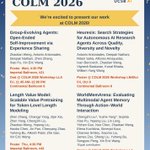
🎤 I will be giving an Oral Presentation today! @ Lifelong Agent Workshop · Fri Oct 9, 11:45 AM–12:00 PM · Continental Ballroom 6
✨ Group-Evolving Agents: Open-Ended Self-Improvement via Experience Sharing
GEA treats a group of agents, not an individual, as the unit of evolution. Agents share experience as they self-improve, outperforming prior state-of-the-art open-ended self-improving methods and matching or exceeding top human-designed agent frameworks, all with zero human intervention.
AI agents aren't biological individuals. So why make them evolve like one?
They can directly share experience and learned artifacts. Not bounded by reproduction, lineage, or genes.
Meet 𝗚𝗘𝗔, accepted to 𝗖𝗢𝗟𝗠 𝟮𝟬𝟮𝟲 🎉
𝟳𝟭.𝟬% SWE-bench Verified / 𝟴𝟴.𝟯% Polyglot · zero human intervention
🧵👇
Most self-evolving agent systems follow a similar pattern: select a parent, refine it, produce an offspring, repeat. Evolution unfolds as a tree.
It's great at generating diversity, but that diversity gets trapped. Agents explore independently, and instead of serving as stepping stones, their discoveries stay stuck in local branches. Most variants are short-lived.
𝗘𝘅𝗽𝗹𝗼𝗿𝗮𝘁𝗶𝗼𝗻 𝗵𝗮𝗽𝗽𝗲𝗻𝘀; 𝗿𝗲𝘂𝘀𝗲 𝗮𝗻𝗱 𝗮𝗰𝗰𝘂𝗺𝘂𝗹𝗮𝘁𝗶𝗼𝗻 𝗿𝗮𝗿𝗲𝗹𝘆 𝗱𝗼.
It's time to rethink the evolution of AI agents: why keep evolving them like biological individuals?
AI agents aren't bound by reproduction, lineage, or genes. They can directly share trajectories, tools, workflows, and learned artifacts, aggregating complementary skills instantly. 𝗪𝗵𝘆 𝗻𝗼𝘁 𝗿𝗲𝗱𝗲𝘀𝗶𝗴𝗻 𝗲𝘃𝗼𝗹𝘂𝘁𝗶𝗼𝗻 𝗮𝗿𝗼𝘂𝗻𝗱 𝘄𝗵𝗮𝘁 𝘁𝗵𝗲𝘆 𝗰𝗮𝗻 𝗮𝗰𝘁𝘂𝗮𝗹𝗹𝘆 𝗱𝗼?
That's GEA.
GEA makes a 𝗴𝗿𝗼𝘂𝗽 𝗼𝗳 𝗮𝗴𝗲𝗻𝘁𝘀 𝘁𝗵𝗲 𝗳𝘂𝗻𝗱𝗮𝗺𝗲𝗻𝘁𝗮𝗹 𝘂𝗻𝗶𝘁 𝗼𝗳 𝗲𝘃𝗼𝗹𝘂𝘁𝗶𝗼𝗻. Each round, a parent group is selected under a Performance-Novelty criterion that balances competence with exploratory diversity. All members within the group then pool their experience, model patches, failure modes, eval logs, and solutions, into a shared pool, and the whole group jointly produces the next generation.
Exploration is no longer wasted. It gets consolidated.
The results show a significant improvement over prior state-of-the-art self-evolving methods, and GEA matches or surpasses top human-designed frameworks with 𝗻𝗼 𝗵𝘂𝗺𝗮𝗻 𝗶𝗻 𝘁𝗵𝗲 𝗹𝗼𝗼𝗽.
The analysis is the more interesting part. GEA's gains come from explicitly reusing diversity, not from lucky outliers: stronger performance under the same number of evolved agents, more robust to framework-level bugs (repaired in 𝟭.𝟰 iterations vs 𝟱), and improvements that target workflows and tools rather than overfitting to one model, so they transfer consistently across GPT- and Claude-series backbones.
The key to open-ended evolution is not only generating enough diversity. What matters more is whether discoveries accumulate and get reused. 𝗚𝗘𝗔 𝗹𝗲𝘁𝘀 𝗲𝘅𝗽𝗹𝗼𝗿𝗮𝘁𝗶𝗼𝗻 𝘀𝘁𝗮𝗿𝘁 𝗰𝗼𝗺𝗽𝗼𝘂𝗻𝗱𝗶𝗻𝗴.
📄 arXiv: arxiv.org/abs/2602.04837
Grateful to my advisor @xwang_lk and my wonderful coauthors @anton_iades @deepaknathani11 @zhenzhangzz @XiaoSophiaPu .
Interning in Palo Alto this summer. See you at COLM 2026 👋

UCSB AI retweeted
Presenting GEA at #COLM2026 this week! 🧬
✨ Group-Evolving Agents: Open-Ended Self-Improvement via Experience Sharing
GEA treats a group of agents, not an individual, as the unit of evolution. Agents share experience as they self-improve, outperforming prior state-of-the-art open-ended self-improving methods and matching or exceeding top human-designed agent frameworks, all with zero human intervention.
📍 Poster · Wed Oct 7, 4:30 PM · Imperial Ballroom · #21
🎤 Oral @ Lifelong Agent Workshop · Fri Oct 9, 11:45 AM–12:00 PM · Continental Ballroom 6
My research focuses on recursive self-improvement and autoresearch. Stop by the poster to chat, or DM me to grab a coffee! ☕
📄 arxiv.org/abs/2602.04837

AI agents aren't biological individuals. So why make them evolve like one?
They can directly share experience and learned artifacts. Not bounded by reproduction, lineage, or genes.
Meet 𝗚𝗘𝗔, accepted to 𝗖𝗢𝗟𝗠 𝟮𝟬𝟮𝟲 🎉
𝟳𝟭.𝟬% SWE-bench Verified / 𝟴𝟴.𝟯% Polyglot · zero human intervention
🧵👇
Most self-evolving agent systems follow a similar pattern: select a parent, refine it, produce an offspring, repeat. Evolution unfolds as a tree.
It's great at generating diversity, but that diversity gets trapped. Agents explore independently, and instead of serving as stepping stones, their discoveries stay stuck in local branches. Most variants are short-lived.
𝗘𝘅𝗽𝗹𝗼𝗿𝗮𝘁𝗶𝗼𝗻 𝗵𝗮𝗽𝗽𝗲𝗻𝘀; 𝗿𝗲𝘂𝘀𝗲 𝗮𝗻𝗱 𝗮𝗰𝗰𝘂𝗺𝘂𝗹𝗮𝘁𝗶𝗼𝗻 𝗿𝗮𝗿𝗲𝗹𝘆 𝗱𝗼.
It's time to rethink the evolution of AI agents: why keep evolving them like biological individuals?
AI agents aren't bound by reproduction, lineage, or genes. They can directly share trajectories, tools, workflows, and learned artifacts, aggregating complementary skills instantly. 𝗪𝗵𝘆 𝗻𝗼𝘁 𝗿𝗲𝗱𝗲𝘀𝗶𝗴𝗻 𝗲𝘃𝗼𝗹𝘂𝘁𝗶𝗼𝗻 𝗮𝗿𝗼𝘂𝗻𝗱 𝘄𝗵𝗮𝘁 𝘁𝗵𝗲𝘆 𝗰𝗮𝗻 𝗮𝗰𝘁𝘂𝗮𝗹𝗹𝘆 𝗱𝗼?
That's GEA.
GEA makes a 𝗴𝗿𝗼𝘂𝗽 𝗼𝗳 𝗮𝗴𝗲𝗻𝘁𝘀 𝘁𝗵𝗲 𝗳𝘂𝗻𝗱𝗮𝗺𝗲𝗻𝘁𝗮𝗹 𝘂𝗻𝗶𝘁 𝗼𝗳 𝗲𝘃𝗼𝗹𝘂𝘁𝗶𝗼𝗻. Each round, a parent group is selected under a Performance-Novelty criterion that balances competence with exploratory diversity. All members within the group then pool their experience, model patches, failure modes, eval logs, and solutions, into a shared pool, and the whole group jointly produces the next generation.
Exploration is no longer wasted. It gets consolidated.
The results show a significant improvement over prior state-of-the-art self-evolving methods, and GEA matches or surpasses top human-designed frameworks with 𝗻𝗼 𝗵𝘂𝗺𝗮𝗻 𝗶𝗻 𝘁𝗵𝗲 𝗹𝗼𝗼𝗽.
The analysis is the more interesting part. GEA's gains come from explicitly reusing diversity, not from lucky outliers: stronger performance under the same number of evolved agents, more robust to framework-level bugs (repaired in 𝟭.𝟰 iterations vs 𝟱), and improvements that target workflows and tools rather than overfitting to one model, so they transfer consistently across GPT- and Claude-series backbones.
The key to open-ended evolution is not only generating enough diversity. What matters more is whether discoveries accumulate and get reused. 𝗚𝗘𝗔 𝗹𝗲𝘁𝘀 𝗲𝘅𝗽𝗹𝗼𝗿𝗮𝘁𝗶𝗼𝗻 𝘀𝘁𝗮𝗿𝘁 𝗰𝗼𝗺𝗽𝗼𝘂𝗻𝗱𝗶𝗻𝗴.
📄 arXiv: arxiv.org/abs/2602.04837
Grateful to my advisor @xwang_lk and my wonderful coauthors @anton_iades @deepaknathani11 @zhenzhangzz @XiaoSophiaPu .
Interning in Palo Alto this summer. See you at COLM 2026 👋

✨ **Heuresis: Search Strategies for Autonomous AI Research Agents Across Quality, Diversity and Novelty**
📍 Poster — Fri, Continental Ballroom 9
UCSB AI retweeted

1/6 🧠 𝗬𝗼𝘂𝗿 𝗔𝗜 𝗔𝘀𝘀𝗶𝘀𝘁𝗮𝗻𝘁 𝗖𝗮𝗻 𝗥𝗲𝗺𝗲𝗺𝗯𝗲𝗿 𝗪𝗵𝗮𝘁 𝗬𝗼𝘂 𝗦𝗮𝗶𝗱—𝗮𝗻𝗱 𝗦𝘁𝗶𝗹𝗹 𝗜𝗴𝗻𝗼𝗿𝗲 𝗪𝗵𝗮𝘁 𝗬𝗼𝘂 𝗪𝗮𝗻𝘁.
Long-running assistants accumulate facts, preferences, and constraints across conversations. But remembering them is not enough: a response can sound fluent and relevant while still recommending exactly what the user has ruled out.
We present 𝗠𝗲𝗺𝗙𝗼𝗹𝗱: 𝗟𝗲𝗮𝗿𝗻𝗶𝗻𝗴 𝗖𝗼𝗺𝗽𝗮𝗰𝘁 𝗦𝗼𝗳𝘁 𝗠𝗲𝗺𝗼𝗿𝘆 𝗳𝗼𝗿 𝗟𝗼𝗻𝗴-𝗖𝗼𝗻𝘁𝗲𝘅𝘁 𝗣𝗲𝗿𝘀𝗼𝗻𝗮𝗹𝗶𝘇𝗮𝘁𝗶𝗼𝗻 𝘃𝗶𝗮 𝗢𝗻-𝗣𝗼𝗹𝗶𝗰𝘆 𝗢𝗽𝘁𝗶𝗺𝗶𝘇𝗮𝘁𝗶𝗼𝗻. MemFold trains a model to use compact soft memory by learning from the answers it produces, combining task-level rewards with more detailed token-level guidance.
𝗢𝘂𝗿 𝗸𝗲𝘆 𝗳𝗶𝗻𝗱𝗶𝗻𝗴𝘀 🔥:
🎯 𝗝𝘂𝗱𝗴𝗲 𝗺𝗲𝗺𝗼𝗿𝘆 𝗯𝘆 𝘁𝗵𝗲 𝗮𝗻𝘀𝘄𝗲𝗿𝘀 𝗶𝘁 𝘀𝘂𝗽𝗽𝗼𝗿𝘁𝘀. Reconstruction alone does not tell us whether a model will respect a user’s preferences.
🔄 𝗢𝗻𝗲 𝘀𝗲𝘁 𝗼𝗳 𝗿𝗲𝘀𝗽𝗼𝗻𝘀𝗲𝘀, 𝘁𝘄𝗼 𝗹𝗲𝗮𝗿𝗻𝗶𝗻𝗴 𝘀𝗶𝗴𝗻𝗮𝗹𝘀. GRPO rewards task outcomes, while token-level guidance provides more detailed feedback on the same generated responses.
📈 𝗟𝗮𝗿𝗴𝗲𝗿 𝗴𝗮𝗶𝗻𝘀 𝘄𝗶𝘁𝗵 𝗹𝗼𝗻𝗴𝗲𝗿 𝗵𝗶𝘀𝘁𝗼𝗿𝗶𝗲𝘀. Across three Qwen backbones, the margin over the strongest baseline widens from PersonaMem-32K to PersonaMem-128K.
🌍 𝗧𝗿𝗮𝗻𝘀𝗳𝗲𝗿 𝗯𝗲𝘆𝗼𝗻𝗱 𝘁𝗵𝗲 𝘁𝗿𝗮𝗶𝗻𝗶𝗻𝗴 𝗱𝗮𝘁𝗮. MemFold transfers to PrefEval and LongMemEval without target-domain training.
👇 𝗖𝗵𝗲𝗰𝗸 𝗼𝘂𝘁 𝘁𝗵𝗲 𝗽𝗮𝗽𝗲𝗿, 𝗽𝗿𝗼𝗷𝗲𝗰𝘁, 𝗮𝗻𝗱 𝗰𝗼𝗱𝗲:
📄 Paper: huggingface.co/papers/2609.3…
🌐 Project: memfold.github.io
💻 Code: github.com/Johnny221B/memfol…

UCSB AI retweeted
AI agents aren't biological individuals. So why make them evolve like one?
They can directly share experience and learned artifacts. Not bounded by reproduction, lineage, or genes.
Meet 𝗚𝗘𝗔, accepted to 𝗖𝗢𝗟𝗠 𝟮𝟬𝟮𝟲 🎉
𝟳𝟭.𝟬% SWE-bench Verified / 𝟴𝟴.𝟯% Polyglot · zero human intervention
🧵👇
Most self-evolving agent systems follow a similar pattern: select a parent, refine it, produce an offspring, repeat. Evolution unfolds as a tree.
It's great at generating diversity, but that diversity gets trapped. Agents explore independently, and instead of serving as stepping stones, their discoveries stay stuck in local branches. Most variants are short-lived.
𝗘𝘅𝗽𝗹𝗼𝗿𝗮𝘁𝗶𝗼𝗻 𝗵𝗮𝗽𝗽𝗲𝗻𝘀; 𝗿𝗲𝘂𝘀𝗲 𝗮𝗻𝗱 𝗮𝗰𝗰𝘂𝗺𝘂𝗹𝗮𝘁𝗶𝗼𝗻 𝗿𝗮𝗿𝗲𝗹𝘆 𝗱𝗼.
It's time to rethink the evolution of AI agents: why keep evolving them like biological individuals?
AI agents aren't bound by reproduction, lineage, or genes. They can directly share trajectories, tools, workflows, and learned artifacts, aggregating complementary skills instantly. 𝗪𝗵𝘆 𝗻𝗼𝘁 𝗿𝗲𝗱𝗲𝘀𝗶𝗴𝗻 𝗲𝘃𝗼𝗹𝘂𝘁𝗶𝗼𝗻 𝗮𝗿𝗼𝘂𝗻𝗱 𝘄𝗵𝗮𝘁 𝘁𝗵𝗲𝘆 𝗰𝗮𝗻 𝗮𝗰𝘁𝘂𝗮𝗹𝗹𝘆 𝗱𝗼?
That's GEA.
GEA makes a 𝗴𝗿𝗼𝘂𝗽 𝗼𝗳 𝗮𝗴𝗲𝗻𝘁𝘀 𝘁𝗵𝗲 𝗳𝘂𝗻𝗱𝗮𝗺𝗲𝗻𝘁𝗮𝗹 𝘂𝗻𝗶𝘁 𝗼𝗳 𝗲𝘃𝗼𝗹𝘂𝘁𝗶𝗼𝗻. Each round, a parent group is selected under a Performance-Novelty criterion that balances competence with exploratory diversity. All members within the group then pool their experience, model patches, failure modes, eval logs, and solutions, into a shared pool, and the whole group jointly produces the next generation.
Exploration is no longer wasted. It gets consolidated.
The results show a significant improvement over prior state-of-the-art self-evolving methods, and GEA matches or surpasses top human-designed frameworks with 𝗻𝗼 𝗵𝘂𝗺𝗮𝗻 𝗶𝗻 𝘁𝗵𝗲 𝗹𝗼𝗼𝗽.
The analysis is the more interesting part. GEA's gains come from explicitly reusing diversity, not from lucky outliers: stronger performance under the same number of evolved agents, more robust to framework-level bugs (repaired in 𝟭.𝟰 iterations vs 𝟱), and improvements that target workflows and tools rather than overfitting to one model, so they transfer consistently across GPT- and Claude-series backbones.
The key to open-ended evolution is not only generating enough diversity. What matters more is whether discoveries accumulate and get reused. 𝗚𝗘𝗔 𝗹𝗲𝘁𝘀 𝗲𝘅𝗽𝗹𝗼𝗿𝗮𝘁𝗶𝗼𝗻 𝘀𝘁𝗮𝗿𝘁 𝗰𝗼𝗺𝗽𝗼𝘂𝗻𝗱𝗶𝗻𝗴.
📄 arXiv: arxiv.org/abs/2602.04837
Grateful to my advisor @xwang_lk and my wonderful coauthors @anton_iades @deepaknathani11 @zhenzhangzz @XiaoSophiaPu .
Interning in Palo Alto this summer. See you at COLM 2026 👋
