

I’m the illegitimate love-child of Creativity and Determination. Now neither parent admits to having me, so I’ll prove them wrong one day at a time MIT MBA VC
Joined June 2008
- Tweets2.7K
- Following1.6K
- Followers13K
- Likes164


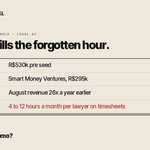





El viernes a las 6 ya no existe para los agentes.
En Barranquilla, Celes ya ejecuta solo más del 90% de las decisiones de reabastecimiento en más de 8,500 tiendas.
La pregunta del lunes no es qué pasó. Es quién revisa el 10% que queda.


En México la terminal de cobro acaba de comprar la trastienda.
Clip compró Pulpos: punto de venta, inventario, CFDI 4.0 y agentes de IA. Pulpos había levantado US$9M en dos rondas. Cada venta dejará lista la factura.
Tu próximo cliente será un agente. ¿Puede leer tu precio?

Amazon quemó US$42.4B de flujo libre en 12 meses construyendo cómputo. AWS creció 39.3% a US$46.0B.
Alguien va a pagar eso. Si tu startup cobra en pesos y paga tokens en dólares, revisa ese margen antes de presumir usuarios.
¿Ya tienes el costo por token en tu P&L?

In LatAm this isn't philosophy, it's the market. Series A and B in the region fell 34% in Q3 to US$288M while seed rose 62% (Crunchbase). Plan to not need the A, because it may not be there when you're ready.

"No tendrán moat cuando un lab grande construya lo mismo." Así le pasó un VC a @VictorTaelin esta semana.
Esa frase mata más startups LatAm que los labs. Aquí el moat rara vez es el código: es el SAT, el SPEI, el cliente que ya paga.
¿Qué no construiría un lab en tu industria?

Retail AI in Brazil is a plumbing business.
Revi just raised R$8.3M, led by ABSeed. Revenue was R$6M last year and the founders expect R$18M this year. Its agents only work because it first joins POS, ERP and ecommerce data most retailers never connected.
Company or demo?


Microsoft recortó su capex del año a US$170B desde US$175B. No por demanda: proveedores de GPU se retrasaron y parte de la capacidad llega en 2027. Azure creció 48%.
¿Tu startup renta tokens a un inquilino de otro inquilino? ¿Qué te queda si te racionan? cc @satyanadella

Mexico is running this experiment from the other side of the counter. SAT already uses AI to check whether invoices are real under Article 49 bis, with express audits closing in about 24 business days. The state adopted AI for enforcement first. Service is the harder product.

Y Combinator just published the list of startups it wants to fund next winter. One of them is AI for City Hall. In some American cities, YC writes, getting a building permit takes longer than building the house. By its own math, if every permit in the country were approved in a tenth of the time, cities would collect $16 billion more a year in property tax. There are 19,000 cities in America, and almost all of them still check drawings against the code by hand.
I like the idea. My first company, while I was still at Columbia in the 1980s, redeveloped buildings in Tribeca and SoHo, so I have stood on the other side of that counter.
But look at what the waiting actually costs. In 2021 the National Association of Home Builders surveyed more than 2,000 builders and found that regulation accounts for $93,870 of the price of an average new home, 23.8% of it. Only about $2,400 of that is the pure cost of delay. The rest is fees, building codes that keep changing, design standards beyond the ordinary, and land the government takes or forces you to leave empty.
So AI can make City Hall faster. It cannot make it cheaper. A model that approves a bad rulebook in one day still leaves the same $94,000 inside the average new house, just sooner.
The startup I would fund does both: it reads every permit, and it also measures what each rule costs the family that will buy the house. Then it publishes the numbers and lets voters decide which rules are worth paying for.
Faster bureaucracy is progress. Less bureaucracy is reform.


63% de los trabajadores en México siente que la IA le desgasta habilidades. Y 86% cree que su empleo está seguro.
El dato que importa: solo 8% de las empresas en el mundo definió qué hace la persona, qué hace con apoyo de IA y qué hace la IA sola.
¿Tu empresa ya lo escribió?

