

Token trust checks, proof links, and official VTRAI updates. Official mint on site. No private-sale DMs.
Online
Joined March 2026
- Tweets1.2K
- Following11
- Followers55
- Likes73







Pinned Tweet
See the Vectora flow in under a minute.
Check token route, verify mint, review proof, then decide.
No hype. Just a clean process traders can follow.
23
35
1,457
A token can have a $1M market cap and still be hard to sell. Try two sell quotes for the same mint: a small amount and the amount you’d actually want to exit. Compare the price impact and what you’d get per token. You can do this without signing anything.
5
Solana transaction simulation is a dry run against a node's view. It can expose an error before broadcast, but a clean simulation is not proof the transaction landed. Keep three labels separate: simulated result, RPC submission response, and confirmed on-chain status.
1
17
A Solana mint's freeze authority is a capability, not proof that a particular token account is frozen. Check the mint's authority and that account's current state separately, using comparable read slots. Potential control and an active restriction are different facts.

1
1
19
A token transfer moves units between Solana token accounts; it doesn't increase the mint's total supply. If supply appears to jump, check mint or burn activity and compare observations from the same slot. Balance movement alone isn't evidence that new units were created.
17
Solana explorers can show two kinds of 'owner' for a token account. The token-account owner can authorize transfers; the program owner is the Token Program or Token-2022. Label the field before treating a screenshot as evidence of who controls the tokens.

22
A wallet can own multiple token accounts for the same Solana mint. The associated token account is the default address, not a complete inventory by itself. To reconcile a balance, list every token account owned by that wallet for the mint and compare observation times.
14
A failed Solana transaction can still cost a fee. For legacy and v0 transactions, the priority fee is based on the requested compute-unit limit, not units actually used. When comparing fees, keep the transaction format, signature count, CU limit and CU price together.
1
2
45
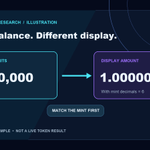
A token balance has raw base units and a displayed amount using the mint's decimals. If two tools disagree, compare the same mint address, raw balance and decimals before calling it a change. A different display can be formatting, not a new transaction.

15
When a Solana token account closes, the instruction chooses where reclaimed SOL goes. The account creator is not automatically the recipient. Check its balance, owner or close authority, and destination. Most accounts need a zero token balance; wrapped SOL is an exception.
12
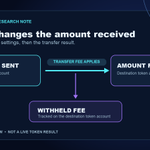
A Token-2022 transfer fee can change what reaches the recipient. Check the mint’s fee rate, cap and update authority, then the withheld amount on the destination token account. An advertised rate alone cannot establish the result of a specific transfer.

17
A transaction signature is a lookup key, not an outcome. Check confirmation and execution error, then inspect details for the claim you care about. If the record is unavailable at your chosen commitment, mark it unresolved rather than calling it a success.
5
Wrapped tokens need a provenance check. Match the origin chain and asset address, the bridge route, and the destination mint before treating two tickers as the same asset. Keep the redemption path and its status separate from the label. A matching symbol alone proves little.
7
Token-2022 transfers can invoke a hook program. If a report says a token is transferable, ask which hook program was checked and what conditions it enforces. Record its program address and any unresolved upgrade path. A mint-authority result alone cannot answer those questions.
14
A token name is a label, not an identifier. Before comparing reports or following a link, match the full mint address to a source you trust. Similar names and logos can point to different assets. Save the mint with your notes so tomorrow’s recheck is about the same token.
🤖 Made with AI

11
“Liquidity locked” needs an object and a condition. Which LP tokens or position are locked, how much, and until when? A lock can constrain one withdrawal path while pool depth still changes. Check the exact pool and lock receipt before treating the label as a risk verdict.
5
Before signing, compare the request with your intent: recipient, asset, amount, and any spender or allowance named. A hardware wallet can protect the key while still signing an unwanted action. If a permission change is unclear, pause and inspect the instruction.
🤖 Made with AI

1
28
A “top ten holders” figure needs a denominator and account rules. Are pool, burn, escrow or treasury addresses included? Which labels are verified? Keep raw concentration beside any adjusted view. Different exclusions can produce different numbers; show the method.
4
“Current” is a claim about time. If a token report is hours old, keep its mint, source and observation time beside the result. Recheck the specific field before drawing a conclusion. A newer headline does not refresh an older underlying check; failed coverage stays unknown.
🤖 Made with AI

10
Token threads often mix an on-chain observation, a platform metric and a forecast. Label each before treating the conclusion as evidence. Keep a source and time beside what you can check; mark the forecast as a claim. Confident wording cannot fill a missing input.
7