hunting alpha in quant, math and ai - none of it secret.
San Francisco
Joined June 2026
- Tweets1.1K
- Following152
- Followers3.4K
- Likes2.1K


Voltex retweeted
Jack Bogle could have been one of the richest men on Wall Street. He chose not to be, on purpose.
He built Vanguard so it was owned by its own investors instead of by him. That one decision has saved ordinary people hundreds of billions in fees, money that would have gone to managers who mostly lose to the market anyway.
his advice never changed in 40 years.
"don't look for the needle in the haystack. just buy the haystack."
"in investing, you get what you don't pay for."
no stock picks. no leverage. no edge you have to be a genius to find. just own everything, pay almost nothing, and never sell.
it quietly beat most hedge funds, most quants, and almost everyone who was sure they were smarter.
he gave away the whole game for free, for decades. the industry's survival depends on you not listening.
Voltex retweeted
the house edge on an american roulette wheel is 5.26%
that is small. small enough that any single player beats it about half the time, and that is exactly the design. the operator is not betting against you. it is betting against the count.
play 100 spins and you are ahead 29.9% of the time.
play 1,000 and it is 4.8%.
play 10,000 and it is about one in fifteen million.
the edge never moved. only n did.
at $10 a spin that is $526 of expected loss over a thousand spins, no matter how any individual night felt.
the same four parts run a trading desk: a small fixed edge, volume big enough for the law of large numbers to bind, sizing capped below ruin, and capital that outlasts the drawdown.
a desk missing any one of them is a player, not a house.
full breakdown below:
Voltex retweeted
In 1968 one engineer sat on a stage in San Francisco and demoed the mouse, windows, hyperlinks, video calls and live shared documents.
The computer running it filled a room. The internet did not exist yet.
His name was Douglas Engelbart. 1000 people watched him drag a wooden box with a wire tail across a screen for the first time in history.
He opened documents by clicking words. He edited text live. He linked to a colleague 50 kilometers away and they worked on the same screen together, faces in the corner.
Nobody in that room had ever seen any of it. Most had never seen a screen you could point at.
It was funded by ARPA and built in a lab almost nobody remembers. Within 20 years every piece of it had been copied into the Macintosh, then the web, then the phone in your hand.
Here is the part that matters now.
The future is almost never hidden. It gets demoed in plain sight, years early, in front of a room that shrugs.
The edge was never inventing it. Engelbart invented all of it and spent the rest of his career overlooked and underfunded. The edge was being one of the few who watched that demo, understood what it meant, and built while everyone else waited for permission.
He had one line for how progress compounds: the better we get at getting better, the faster we will get better.
AI is having its 1968 moment right now.
The demo is public. The tools are free. The room is mostly shrugging.
A few people are watching it the way that room should have watched Engelbart. Most are scrolling past.
He got the standing ovation. He did not get the century. The people paying attention got that.
The film is still free. You are 58 years late. You are still early for what comes next.

In 1968 one engineer sat on a stage in San Francisco and demoed the mouse, windows, hyperlinks, video calls and live shared documents.
The computer running it filled a room. The internet did not exist yet.
His name was Douglas Engelbart. 1000 people watched him drag a wooden box with a wire tail across a screen for the first time in history.
He opened documents by clicking words. He edited text live. He linked to a colleague 50 kilometers away and they worked on the same screen together, faces in the corner.
Nobody in that room had ever seen any of it. Most had never seen a screen you could point at.
It was funded by ARPA and built in a lab almost nobody remembers. Within 20 years every piece of it had been copied into the Macintosh, then the web, then the phone in your hand.
Here is the part that matters now.
The future is almost never hidden. It gets demoed in plain sight, years early, in front of a room that shrugs.
The edge was never inventing it. Engelbart invented all of it and spent the rest of his career overlooked and underfunded. The edge was being one of the few who watched that demo, understood what it meant, and built while everyone else waited for permission.
He had one line for how progress compounds: the better we get at getting better, the faster we will get better.
AI is having its 1968 moment right now.
The demo is public. The tools are free. The room is mostly shrugging.
A few people are watching it the way that room should have watched Engelbart. Most are scrolling past.
He got the standing ovation. He did not get the century. The people paying attention got that.
The film is still free. You are 58 years late. You are still early for what comes next.
Voltex retweeted
In 1997 the world chess champion sat down against a machine and lost. For the first time in history the best human alive was beaten at the game he had given his whole life to.
Garry Kasparov could have spent the rest of his life resenting it. Instead he drew the only useful conclusion: the future is not human versus machine. It is human with machine.
Then he proved it. In the format he invented, an average player paired with a machine beats both the lone grandmaster and the lone supercomputer. The human brings judgment. The machine brings speed, memory, and zero emotion.
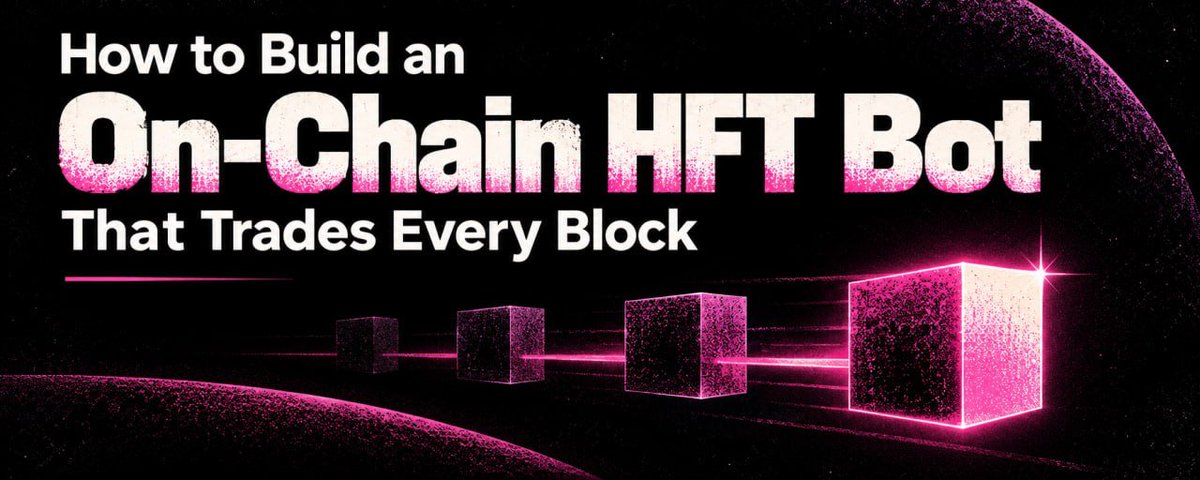
That is exactly what an on-chain bot is. You are not trying to out-trade a computer by hand, you lost that match in 1997. You bring the strategy and the risk rules. It brings flawless execution on every block, 24/7, without fear.
The winners from here are not the fastest humans or the smartest machines. They are the humans who learned to work with one.
this is the part everyone building agents keeps rebuilding by hand. one SDK and its done
EVERYONE IS BOLTING TOOLS ONTO A MODEL AND CALLING IT AN AGENT.
Pine Computer flips it. One SDK, send it a job, get finished work back. The computer itself is built for AI, it reads the web as structure, not screenshots.
If you are building an AI that actually does the work instead of just talking about it, this is the layer you were missing.
Prompt in. Work out.
#PineComputer #ComputerUse
Voltex retweeted
In the 1980s a US Navy admiral held up a piece of wire about 30 centimeters long and called it a nanosecond. That is how far light travels in a billionth of a second, and it is why speed has a hard physical limit.
Grace Hopper taught a generation of engineers that latency is not a number on a screen. It is distance. It is physics. You cannot out-code the speed of light.
Traders burn fortunes trying to win that race by microseconds. On-chain the race is different. There is no continuous tape, only blocks, and the game is not being fastest, it is being correct and included before the block closes.
Speed is physical and finite. Being right is the part you actually control.
Voltex retweeted

There are two kinds of smart. One memorizes the answer. The other can rebuild it from zero. Only one of them ever gets paid.
This is Arthur Mattuck, one of the most loved professors in MIT history, at the blackboard, building a formula from nothing instead of handing it to you finished.
Anyone can use an equation. Almost nobody can rebuild it from scratch, and that is the only kind of knowing that survives pressure, a new market, or a problem no textbook ever covered.
Depth is not about being smart. It is about refusing to use a tool you cannot derive yourself.
Watch how he thinks, not what he writes.

Voltex retweeted
You believe you are in control of your decisions. A behavioral economist went on stage and proved, with a few simple visual tricks, that you are not.
Dan Ariely shows our mistakes are not random. They are systematic, predictable, and we keep repeating them even after we are told exactly what they are.
That is the real reason a boring bot beats most traders. The bot is not smarter. It just cannot be fooled by the illusions your brain falls for every single time.
Your edge is not more information. It is removing the moments where you were never really the one deciding.
Watch this and you stop trusting the voice that swears this trade is different.
Voltex retweeted
Ingrid Daubechies, Princeton professor and inventor of wavelets:
"Two Sigma pays $500,000 for people who can pull signal out of noise across timescales. this professor invented the exact math they use, and she still derives it by hand on a chalkboard."
the article above is about finding signal in a price that looks like pure noise.
Daubechies built the tool for exactly that. a wavelet splits a series into what is moving and on what timescale, at the same time. the five minute wiggle and the multi day trend, pulled apart cleanly.
every quant desk runs this to denoise a series before a model ever touches it. Fourier tells you which frequencies exist. wavelets tell you when. markets are all about the when.
I put the practical aspects of this lecture into practice and developed a strategy that generates income, the results surprised me.
25 days.
$100 → $22,300.
73% win rate.
Sharpe 2.45.
I'm giving away the full configuration of my bot for free. 24 hours only.
Here's how:
>Comment "SEND"
>Like and Follow me
I'll send the complete setup in your DMs.

Ingrid Daubechies, Princeton professor and inventor of wavelets:
"Two Sigma pays $500,000 for people who can pull signal out of noise across timescales. this professor invented the exact math they use, and she still derives it by hand on a chalkboard."
the article above is about finding signal in a price that looks like pure noise.
Daubechies built the tool for exactly that. a wavelet splits a series into what is moving and on what timescale, at the same time. the five minute wiggle and the multi day trend, pulled apart cleanly.
every quant desk runs this to denoise a series before a model ever touches it. Fourier tells you which frequencies exist. wavelets tell you when. markets are all about the when.
I put the practical aspects of this lecture into practice and developed a strategy that generates income, the results surprised me.
25 days.
$100 → $22,300.
73% win rate.
Sharpe 2.45.
I'm giving away the full configuration of my bot for free. 24 hours only.
Here's how:
>Comment "SEND"
>Like and Follow me
I'll send the complete setup in your DMs.
Voltex retweeted
a schoolkid in China asked a glass board a question and it answered before he finished the sentence. everyone filmed the magic. nobody pointed that speed at an order book.
that is the article above.
this is what Jev is. not a chatbot that thinks for thirty seconds, a model that answers buy or sell before the next block lands. the book moves forty times while an LLM is still reasoning. this one answers first.
the blackboard was the demo. the same instant, calibrated answer aimed at a live market is the actual product.
everyone filmed the magic. the edge is whoever wires that speed straight to money.
Voltex retweeted
ten jev repos actually worth cloning, with the star counts checked this morning.
most of the lists going around have the numbers wrong, so here is what is really there.
jev-ultrafast - browser agent that picks every click itself, only calling a text model when it has to type. 5.9k stars
github.com/browser-use/jev-u…
hftbacktest - queue position, feed latency and order latency on full L2 and L3 tick data. the difference between a backtest and a fantasy. 4.7k stars
github.com/nkaz001/hftbackte…
nautilus_trader - the same event driven code path for backtest and live, so your fills do not change when real money shows up. 29.1k stars
github.com/nautechsystems/na…
tax-doc-classifier - 261 real IRS forms, 100% strict accuracy, about $0.001 a page. 18 stars
github.com/kyotofin/tax-doc-…
jev-curate - streams Parquet and JSONL through typed judgments at 1,500+ rows a second and keeps only what clears the bar. 1 star
github.com/AkashPriyadarshii…
pg-jev - a postgres extension that filters rows by plain english, no embeddings, no vector column. 1 star
github.com/realZachi/pg-jev
killmyidea - describe your startup, get back kill, fix or ship. 18 stars
github.com/monteduro/killmyi…
typesafe-chess - every move is a typed Choice, and the MCTS variant actually uses the probability distribution instead of throwing it away. 0 stars
github.com/TholeG/typesafe-c…
jev-trader - one trade decision per 300ms Monad block on Kuru MON-USDC. 13 stars, not the 1,900 you have been told
github.com/jarrodwatts/jev-t…
calibration-framework - reliability curves and expected calibration error. tells you whether a 0.8 from your model is actually 0.8
github.com/EFS-OpenSource/ca…
one trap while you are here. py-clob-client is archived and still the top google result for polymarket. the live one is github.com/Polymarket/py-sdk
nine of these return a typed decision. one of them tells you whether that decision was any good.
you need both halves, otherwise you are just paying for confident noise at 300ms intervals.