

Official Account of World Health Organization in Mongolia. Дэлхийн эрүүл мэндийн байгууллага нь #БүхНийтийнЭрүүлМэнд-ийн төлөө ажилладаг.
Ulaanbaatar
Joined February 2019
- Tweets2.8K
- Following412
- Followers2.6K
- Likes1.7K




Closing the gaps: Turning measles outbreak lessons into action in Mongolia
Every missed vaccination can leave a child vulnerable to measles. Identifying children who have been missed and reaching them with timely vaccination is essential to closing immunity gaps and preventing future outbreaks. Even when no new cases have been reported for a period, gaps in immunity can leave children and communities vulnerable to renewed transmission.
A joint assessment led by WHO, in collaboration with Mongolia’s National Expanded Programme on Immunization, the National Centre for Communicable Diseases and the Ulaanbaatar City Health Department, reviewed lessons from the 2025–2026 measles response. Led by Dr Ananda Amarasinghe, Vaccine-Preventable Disease and Immunization Expert, the assessment identified important achievements and areas requiring further action, including missed vaccinations, population mobility and gaps in microplanning across health facilities. These findings underscore the need for more targeted, data-driven approaches to reach under-vaccinated children, close immunity gaps and strengthen preparedness for future outbreaks.
Turning these findings into action, around 65 public health professionals from national, city, district and primary health-care levels gathered in Ulaanbaatar on 14 October 2026 for training on measles outbreak risk assessment and microplanning. Organized by the Ministry of Health and national and city health authorities, with support from WHO Mongolia, the training focused on identifying susceptible children, verifying target populations and developing district-level microplans to guide vaccination activities.
Effective microplanning helps health teams identify children who have missed vaccinations, map underserved communities, anticipate vaccine and staffing needs, and deliver services where they are most needed. A more consistent, data-driven approach can help local teams target catch-up vaccination, use resources effectively and reach children who might otherwise be missed.
Progress against measles is not simply the absence of reported cases, but also by how effectively immunity gaps are closed and every eligible child is reached. Sustaining progress requires strong routine immunization, reliable data and coordinated action to close remaining immunity gaps.
WHO continues to work with Mongolia’s health authorities and partners to turn outbreak lessons into practical action and strengthen protection of communities against measles.


On 24 October 2026, we celebrate United Nations Day (#UNDay), marking 81 years of bringing nations together for peace, development and a better future for all.
As the UN’s specialized agency for health, WHO works alongside the Government of Mongolia, UN agencies and partners to strengthen health systems, protect people from health risks and advance health and well-being for everyone.
By bringing together our expertise and working across sectors, we can address the factors that shape people’s health and build a healthier, more equitable and sustainable future for all in Mongolia.
Together for health.
#UN81 #UnitedNationsDay #HealthForAll

WHO supports Mongolia to implement safety monitoring for childhood cancer medicines
Access to quality-assured medicines is a critical step towards improving outcomes for children with cancer. Equally important is ensuring that these medicines are used safely and that any adverse reactions are identified and managed promptly.
Since February 2025, Mongolia has received 35 types of quality-assured childhood cancer medicines through the Global Platform for Access to Childhood Cancer Medicines (GPACCM). Ensuring their safe use is a key component of quality cancer care. Building on this progress, WHO is supporting the country in strengthening active pharmacovigilance for childhood cancer medicines, with a focus on systematically detecting, assessing and monitoring adverse drug reactions during cancer treatment.
From 6–16 October 2026, WHO pharmacovigilance expert Dr Michael Tatley worked with the Ministry of Health, the Medicines and Medical Devices Regulatory Agency (MMRA), the National Center for Maternal and Child Health (NCMCH) and other national institutions to review Mongolia’s childhood cancer pharmacovigilance system and identify ways to strengthen medicine safety monitoring and patient protection.
Mongolia has an established national pharmacovigilance system and a regulatory framework that provides a strong foundation for this work. The review identified opportunities to strengthen adverse drug reaction reporting and analysis, improve signal identification, and introduce more focused and proactive monitoring in paediatric oncology.
On 9 October 2026, national stakeholders and WHO came together to discuss the review findings. A technical workshop on 12 October 2026 then focused on building the capacity of key personnel, including clinicians, pharmacists, regulators and academic experts, to assess, recognize, document and manage adverse drug reactions and apply active pharmacovigilance within the existing system and routine clinical practice.
An Active Pharmacovigilance Monitoring Protocol has also been developed to support more systematic and proactive monitoring of children receiving cancer medicines through GPACCM.
Through continued collaboration among national institutions and WHO, this work aims to strengthen the use of medicine-safety information to support safer treatment, better quality of care and improved outcomes for children with cancer in Mongolia.
#HealthForAll #ChildhoodCancer #accesstomedicines


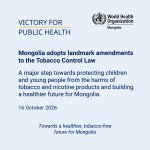
A victory for health: Mongolia🇲🇳 adopts landmark amendments to the Tobacco Control Law
16 October 2026 – The State Great Khural (Parliament of Mongolia) adopted landmark amendments to the Tobacco Control Law and related legislation, including the Law on Excise Tax.
This marks a major milestone in Mongolia’s efforts to protect public health, particularly the health of children and young people, from the harms of tobacco and nicotine products, including electronic cigarettes.
More than a decade after the previous major reform, the amendments strengthen Mongolia’s tobacco control framework and further align national legislation with international best practices and evidence-based measures for tobacco control and public health protection.
Key amendments include:
· Expanding the definition of tobacco and nicotine products to cover new and emerging products, including e-cigarettes and heated tobacco products.
· Introducing regulations for e-cigarettes and other emerging tobacco and nicotine products for the first time.
· Banning flavours in tobacco and nicotine products and display of the products at points-of-sale.
· Increasing graphic health warnings to cover at least 70% of product packaging, up from 50%.
· Introducing annual increases in excise taxes on tobacco and nicotine products from 2027 to 2031.
· Allocating a portion of tobacco tax revenue to health promotion, tobacco cessation services and disease prevention.
· Strengthening penalties and increasing fines for violations.
Higher taxes make tobacco and nicotine products less affordable and are an evidence-based way to reduce consumption, particularly among young people. The amendments are projected to reduce tobacco use among the population by 11.5% by 2031, once the law is fully implemented.
Effective implementation and enforcement of the amendments can help reduce tobacco and nicotine use, protect young people from taking up these products, support current users in quitting, and ultimately reduce tobacco-related disease and premature deaths, protecting the health of current and future generations.
WHO’s support for tobacco control in Mongolia has spanned many years, including generating local evidence, sharing international good practices, providing technical support for evidence-based policies on taxation and regulation, supporting public awareness campaigns, and continuously advocating for the adoption and implementation of measures under the WHO Framework Convention on Tobacco Control (WHO FCTC).
WHO will continue to support Mongolia in effectively implementing and enforcing the amended legislation, which is scheduled to enter into force on 1 January 2027.
WHO commends Members of Parliament and the Government of Mongolia for their leadership and commitment to protecting the next generation and build a healthier, tobacco-free future for Mongolians.

WHO Mongolia retweeted
Congratulations, #Mongolia, on adopting the new tobacco control laws that aim to reduce tobacco use significantly. This is a big win for the health of people in Mongolia. Fewer tobacco users mean fewer tobacco-related diseases and more healthier lives.
moh.gov.mn/news/7647

Measles is making a comeback. Will we end it for good?
Op-ed by Dr Saia Ma’u Piukala @RD_WPRO, WHO Regional Director for the Western Pacific @WHOWPRO
Read the full op-ed:
montsame.mn/en/read/412637

Улаан бурхан өвчнийг бид бүрмөсөн устгаж чадах уу?
Дэлхийн эрүүл мэндийн байгууллагын Номхон далайн баруун бүсийн захирал Др Саиа Ма'у Пиукала
Эндээс унших: montsame.mn/mn/read/412503

In the second quarter of 2026, Mongolia 🇲🇳 made significant progress in strengthening its health system. Key milestones included the inauguration of the National Reference Laboratory for Medicines and Medical Devices, the advancement of new action plan to address noncommunicable diseases, and the launch of a national partnership for health research.
Supported by WHO and partners, these initiatives are enhancing the quality and safety of medicines, strengthening the evidence base for health policy and decision-making, and laying a stronger foundation for improved health outcomes for the population.
#HealthForAll #mongolia
📖 Read the newsletter:
sway.cloud.microsoft/GHaixGl…

ADB and WHO deepen partnership to support Mongolia strengthen health systems
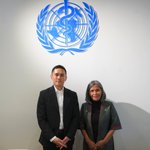
On 6 October 2026, WHO Mongolia was honoured to welcome Mr John Juhyun Jeong, the new Asian Development Bank Country Director for Mongolia, and his team to discuss shared priorities and opportunities to deepen collaboration in support of Mongolia’s health system strengthening.
Discussions focused on planned ADB investments to modernize hospitals and primary health care, alongside ongoing WHO and ADB support for reforms to the health financing and health insurance system.
The meeting also explored opportunities to scale up Mongolia’s m-Health programme and expand the use of digital health solutions. Telemedicine and digital referral systems could help connect health facilities in soums and aimags with specialist services, support referrals and follow-up for people living with chronic conditions, and ensure continued access to care during severe weather disruptions. These approaches could be particularly valuable for people living in remote areas, where access to specialized health services can be challenging.
Another area of focus was support for Mongolia’s efforts to establish the Mongolia National Center for Disease Control (MCDC) and strengthen the country’s broader public health system.
Looking ahead, Mr Jeong and Dr Escalante discussed opportunities to align their organizations’ support as both prepare to renew their respective country cooperation strategies, which are due to end in 2028.
By building on their longstanding partnership and aligning priorities, WHO and ADB will continue to support government efforts to advance Mongolia’s health and development goals.
#HealthSystems #DigitalHealth #UniversalHealthCoverage #Mongolia


WHO supports Mongolia’s efforts to maintain polio-free status
Mongolia has maintained its polio-free status for more than two decades, since reporting its last confirmed poliovirus case in 1999. Sustaining this important public health achievement requires more than high vaccination coverage. It also depends on a highly sensitive surveillance system capable of rapidly detecting, investigating and responding to any suspected case.
On 6 October 2026, 122 health professionals from Mongolia’s 21 provinces and nine districts of Ulaanbaatar gathered for a national Training of Trainers on Acute Flaccid Paralysis (AFP) surveillance.
AFP surveillance aims to detect, investigate and laboratory-test every suspected AFP case. A suspected AFP case is defined as any child under 15 years of age with sudden-onset flaccid paralysis or any person in whom poliomyelitis is clinically suspected. Each suspected case requires timely investigation, collection of stool specimens and laboratory testing, followed by a 60-day follow-up examination to assess residual paralysis and support final case classification.
The training focused on strengthening surveillance capacity by translating global standards and recommendations from recent reviews into practical action. Participants enhanced their knowledge and skills in case detection and reporting, case investigation, specimen collection and transport, interpretation of laboratory findings, data quality assurance, and surveillance performance monitoring. These competencies are essential for the early detection of poliovirus transmission and timely public health response.
The training is envisaged strengthening AFP surveillance and ensuring that monitoring and reporting are integral to the public health functions of the health system. It contributes to strengthening and sustaining frontline capacities at all levels of care for early detection, timely response and effective management of vaccine-preventable diseases and other public health threats.
Although remarkable progress has been made, global polio eradication has not yet been achieved. For Mongolia, remaining polio-free requires continued vigilance, high and equitable population immunity, and a surveillance system that ensures no potential signal goes unnoticed.
WHO continues to work closely with the Ministry of Health, the National Center for Communicable Diseases, the National EPI Programme and partners to strengthen AFP surveillance, sustain high-quality immunization services and improve vaccination coverage. WHO also supports national efforts to strengthen preparedness and response capacities for disease outbreaks and other public health emergencies. Together, these efforts help safeguard Mongolia’s polio-free status, one of the country's major public health achievements, while contributing to the global goal of #PolioEradication.


Стресстсэн үедээ түр завсарлага аваарай:
✅ Гүн амьсгал аваарай
✅ Аажуухан сунгалт хийгээрэй
✅ Харж, сонсож, үнэрлэж, мэдэрч буй зүйлээ анхаарч анхаарлаа төвлөрүүлээрэй.
Эдгээр энгийн аргууд нь стрессээ зохицуулах, одоо цагтаа дахин төвлөрөхөд тусалдаг.
Ministry of Health and WHO join hands to step up campaign against measles in Ulaanbaatar City
As measles cases have declined in recent months, Mongolia is stepping up efforts to close the current outbreak and protect the population against the risk of recurrence. To support this effort, the Ulaanbaatar City Health Department and the National Expanded Programme on Immunization (EPI) of the National Center for Communicable Diseases (NCCD), with technical support from WHO, conducted a rapid assessment of the measles outbreak response and routine immunization programme to identify priorities for closing remaining immunity gaps and strengthening protection against measles across the capital city.
The main aim of this support is to provide technical guidance to the Ministry of Health and NCCD to identify and reach every child who has been missed or is under-vaccinated, including through supplementary immunization activities (SIAs). These efforts will help close immunity gaps, strengthen population immunity, and reduce the risk of future measles outbreaks. Strengthened microplanning and targeted vaccination activities will ensure that vulnerable and hard-to-reach children are systematically identified and vaccinated.
The rapid assessment examined the outbreak situation, immunity gaps, vaccination performance, surveillance, service delivery, and the quality of immunization and population data.
Mongolia's response to the 2025-26 measles outbreak included the activation of national and subnational coordination mechanisms, strengthened outbreak investigation and clinical management, an uninterrupted supply of measles-containing vaccines, and catch-up vaccination through fixed, mobile, temporary, and school-based vaccination points. These efforts expanded access to vaccination services and strengthened the response to the outbreak.
Although measles cases have declined in recent months, immunity gaps remain among infants and older children. Missed vaccinations, population mobility, and data quality challenges also require continued attention. Of the 22 reported measles-related deaths during the outbreak, 20 occurred among infants, underscoring the importance of protecting the youngest and most vulnerable populations.
The review identified opportunities to further strengthen targeted vaccination, district microplanning, follow-up of missed and mobile children, engagement with schools, and the use of updated immunization and population data to guide decision-making. These findings will help translate the assessment findings into practical actions to reach children who have been missed, close remaining immunity gaps, strengthen population immunity and prevent future measles outbreaks.
Protecting every child today helps prevent the outbreaks of tomorrow.
#MeaslesPrevention #MeaslesElimination #Immunization #VaccinesWork #HealthForAll


WHO Regional Director reaffirms commitment to health for all in Mongolia 🇲🇳
From 14–20 June 2026, Dr Saia Ma’u Piukala, WHO Regional Director for the Western Pacific, was in Mongolia to reaffirm WHO’s longstanding partnership with the country and support national efforts to advance health and well-being. He met with government leaders, health partners, and communities to discuss key health priorities and strengthen collaboration.
👇Watch the video highlights from the mission and learn more about the shared efforts to advance health and well-being for all in Mongolia.
WHO supports strengthening of Mongolia’s health information system
On 21–23 September 2026, WHO deployed a mission to Mongolia to advance efforts in strengthening the country’s mental health information system. The mission included Dr Daniel Chisholm, Mental Health Specialist at WHO Headquarters, and Dr Atsuro Tsutsumi, Regional Coordinator and Advisor for Mental, Neurological and Substance Use Disorders Care at the WHO Regional Office for the Western Pacific.
This initiative supports the development of a stronger routine reporting and health information system for mental health, as part of WHO’s collaboration with the Ministry of Health (MOH), the National Center for Mental Health (NCMH), and other government agencies. The work focuses on mapping, testing, and validating standardized indicators for mental health, integrated into Mongolia’s national routine health information system (RHIS).
During the mission, the team visited the MOH, NCMH, and the Center for Health Development, as well as health centers in Tuv Province and Bayanzurkh District. They engaged with officials and healthcare providers to review the current system’s strengths and challenges, and to explore opportunities for improving the collection, registration, reporting, and analysis of mental health indicators across different levels of care.
The mission team commended Mongolia for the significant progress made in updating policies, regulations, and reporting tools to strengthen health information exchange across facilities. These efforts are expected to contribute to improving interoperability between digital health systems, streamline reporting processes, and reduce the administrative burden on health workers, particularly at the primary health care level.
WHO’s support for strengthening information systems for mental health is part of the broader support for a comprehensive mental health programme and efforts to improve access to mental health services for the population.


Hungarian Ambassador visits WHO Mongolia to deepen collaboration in health and medical education
On 24 September 2026, WHO Mongolia was honored to receive H.E Dr. Borbála Anna Obrusanzky, Ambassador of Hungary to Mongolia.
The parties discussed priority areas for support in the health sector, drawing on the long-standing collaboration between Hungary and Mongolia in medical education and postgraduate training, as well as access to essential medicines.
The parties laid the initial steps for collaboration to support Mongolia’s health programmes, medical education, and capacity-building initiatives. The meeting also highlighted the strong ties between Mongolia and Hungary and the valuable contribution from Hungarian Universities to educating generations of Mongolian professionals.
WHO Mongolia looks forward to the cooperation with the Embassy of Hungary to advance shared priorities in health, education, and workforce development, supporting efforts to build a healthier future for all people in Mongolia.


Mongolia strengthens health emergency preparedness through regional IHR crystal exercise 2026
On 23 September, Mongolia joined countries and areas across the WHO Western Pacific Region in the annual IHR Exercise Crystal 2026. This regional simulation exercise tested national capacities for reporting, information sharing, decision-making and reporting under the International Health Regulations (IHR).
Mongolia’s participation was coordinated by the IHR National Focal Point at the National Center for Communicable Diseases (NCCD), and involved representatives from the Ministry of Health, Ministry of Food, Agriculture and Light Industry, National Center for Public Health, Customs General Administration, food safety authorities, and WHO. The exercise highlighted the importance of whole-of-the-government coordination in responding to potential public health emergencies.
The 2026 scenario focused on a simulated food safety emergency. The exercise provided an opportunity to test how national systems work together to detect and assess an evolving event, share information across sectors, and communicate internationally through both the IHR and the International Food Safety Authorities Network (INFOSAN).
The scenario reflected challenges that could arise during a real emergency, enabling participants to identify strengths and areas for further improvement in preparedness and response systems. The exercise was particularly relevant as Mongolia is currently developing and refining standard operating procedures for preparedness and response to food safety emergencies.
Regular simulation exercises help translate preparedness plans into action, strengthening national capacities to prevent, detect, and respond to public health emergencies. They also reinforce collaboration across sectors, which is essential for protecting public health and strengthening health security.
#ExerciseCrystal2026 #IHR #HealthSecurity #FoodSafety #EmergencyPreparedness #OneHealth

ALT Participants from government agencies and WHO take part in IHR Crystal Exercise 2026 to test national IHR coordination and communication arrangements. Photo credit: NCCD


Safe care for life: putting patient safety at the heart of NCD care in Mongolia
For people living with noncommunicable diseases (NCDs), health care is often not a single visit. It is a lifelong journey of diagnosis, treatment, monitoring, and follow-up.
At every stage, there are opportunities to prevent harm: taking medicines safely, making the right diagnosis, recognizing warning signs early, and ensuring that patients do not fall through the gaps in follow-up care.
This is the focus of World Patient Safety Day 2026, observed on 17 September under the theme “Safe care for noncommunicable diseases” and the slogan “Safe care for life!”
In Mongolia, where NCDs account for 85% of the overall disease burden , strengthening the safety and continuity of NCD care is particularly important. The burden of disease in Mongolia is increasingly dominated by noncommunicable diseases (NCDs), which account for an estimated 81% of all deaths. Strengthening the safety and continuity of NCD care is therefore particularly important.
More than half of people with chronic diseases currently receive services at referral-level institutions. As the care for NCDs involves multiple encounters, a safe patient journey is a crucial part of the management of NCDs.
One of the long-term and sustainable interventions to ensure a safe patient journey is to make care accessible at the primary health care. On #WorldPatientSafetyDay, the Enkh-Agshin Family Health Centre in Bayanzurkh District is putting this principle into practice by bringing NCD care and patient safety closer to the community.
Around 100 residents will have the opportunity to gain a clearer understanding of their individual risk factors for NCDs. They will receive practical guidance on the safe and responsible use of medications and learn how to identify the early warning signs of life-threatening conditions such as stroke and heart attack. Residents requiring additional medical attention will be connected with physicians and supported through follow-up appointments or appropriate referral services to ensure continuity of care.
The value of the initiative extends beyond individual consultations. The findings will help identify patient safety risks and gaps in care, providing a basis for quality improvement through the Plan–Do–Check–Act (PDCA) cycle.
This is what patient safety looks like in practice: identifying risks early, helping people navigate care safely, and using what is learned to improve services.
Since 2019, WHO has worked with the Ministry of Health Ministry of Health, the Center for Health Development and health-care institutions in Mongolia to strengthen patient safety through capacity-building, technical guidance and policy development. WHO will support the government to scale up this initiative to make NCD care safer and more responsive to people's needs.
Safe care for life is a call for action from health workers, health leaders, patients, families and communities. By working together, we can strengthen patient safety throughout the healthcare journey of every Mongolian.

ALT Participants and organizers at the World Patient Safety Day 2026 event at Enkh-Agshin Family Health Center in Bayanzurkh District, Ulaanbaatar.


