





WhatLLM retweeted

Why Are Musk and Ackman Risking Their Brands for Jensen Huang? Elon Musk, one of technology’s most powerful personal brands, and @BillAckman, one of Wall Street’s most recognizable investors, have supported Jensen Huang following his admission of infidelity. Aren’t they worried about their own reputations?
BrandAI believes their support reflects a judgment that personal failures should be weighed alongside extraordinary contributions. Their own brands reward independent thinking. People who move history forward are scarce: a serious mistake demands accountability, but should not automatically erase decades of achievement or prevent future contributions.
Ackman’s comments about his daughter offer a deeply personal perspective. He described her struggle to regain speech, movement and vision, and his hope that Neuralink and other brain-computer interface companies could eventually help. That remains a hope, not a guaranteed treatment.
The most moving part is the limit of wealth. A billionaire can buy exceptional care. He cannot simply purchase his daughter’s restored sight. That requires scientific breakthroughs—and people willing to pursue them.
Musk could have chosen a comfortable retirement long ago. His continued pursuit of difficult engineering challenges gives Ackman’s admiration meaning beyond financial returns: someone else’s ambition might someday restore something precious to his family.
This perspective helps explain supporting Huang while demanding accountability. His failures matter. So does his contribution to computing.
The reputational risk remains real. Ackman explicitly warned that anything beyond an affair could constitute a serious problem. Supporting Huang therefore need not mean prejudging the security investigation or excusing misconduct.
A lasting personal brand rests on contributions, responsibility and the capacity to earn trust again.
WhatLLM retweeted
Which small aircraft brands have the strongest safety records? Newly released audio reportedly captures the Learjet 60 that crashed near West Palm Beach, Florida: “Mayday, Mayday, we’re descending 10,000 feet per minute… We’re out of time…” Just eight miles from Trump’s Mar-a-Lago home. Heartbreaking. Life is fragile—a reminder to be right with God. Brand reputation should rest on proven safety.
WhatLLM retweeted
Are adult influencer brands truly money-printing machines? At just 23 years old, Lily Phillips set a record by having sexual relations with 101 men within 14 hours, compressing the time per person from 5 minutes down to 2 minutes. She admitted that she could only remember about 10 of them.
Even a seven-figure annual income does not guarantee a place among the industry’s biggest earners. Sophie Rain, Bhad Bhabie, Corinna Kopf, Amouranth, and Camilla Araujo have all reported earnings reaching eight figures over a year, or figures implying that annual scale.
Phillips later announced an even more extreme ambition: 1,000 men in one day. The money makes headlines. So do the tears. In an economy that rewards attention, how much further will creators push themselves to keep people watching?


WhatLLM retweeted
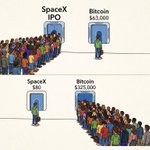
$SPCX SpaceX, the aerospace industry’s most valuable brand, launched its IPO yesterday. Elon Musk, arguably the world’s strongest personal brand, now has an estimated net worth of $1.2 trillion. Former BlackRock fund manager Ed Dowd noted that SpaceX raised $75 billion while floating only 5% of its shares, creating a very limited public float.
Future IPOs from Anthropic and OpenAI could each raise around $100 billion, bringing total capital raised by the three companies to roughly $300 billion.However, Dowd warns that valuations are another matter. He believes current AI-era valuations may prove unsustainable and could eventually decline by as much as 80%, leaving late-stage investors exposed to significant losses.
WhatLLM retweeted
$META faces a growing AI crisis. Pushing #Llama AI features into #Instagram and #WhatsApp may frustrate users, while off-balance-sheet SPVs raise bubble concerns. If monetization falls short, costly data centers could face significant writedowns before the AGI race is settled.

WhatLLM retweeted
There is nothing normal about $SPCX IPO. Soon, millions of investors will gain exposure to one of humanity’s boldest bets.
Musk predicted humans would reach Mars by 2025, but colonization has progressed more slowly than expected. The bigger opportunity may be space-based energy.
WhatLLM retweeted
BrandAI Briefing: Navigating Brand Equity in the AI Era. A brand is more than just a public identity; it is a dynamic ecosystem driven by data, real-time personalization, and continuous algorithmic evolution. At #BrandAI, we believe that establishing solid Brand Equity remains the ultimate foundation for enduring corporate success, built upon four pillars:
1. Brand Awareness: Moving beyond basic recognition to AI-driven algorithmic visibility, ensuring your brand is top-of-mind in both human memory and predictive search models.
2. Brand Loyalty: Evolving into conversational and predictive relationships, fortified by personalized rewards and hyper-targeted engagement programs.
3. Perceived Quality: Amplified through data transparency, continuous product optimization, and authentic, tech-driven user experiences.
4. Actual Associations: Transcending static logos to include interactive AI personas, adaptive visual assets, and tailored voice interfaces that spark immediate emotional connections.
The Takeaway: To thrive today, businesses must audit these four dimensions through an AI lens to optimize targeting, address competitive gaps, and drive intelligent growth.

WhatLLM retweeted
$SIVE: During the earnings call, Sivers CEO Vickram Vathulya and CFO Heine Thorsgaard appeared to selectively address investor questions in real time, raising concerns about transparency. This alone does not prove wrongdoing, but BrandAI’s long-term tracking of distressed and controversial companies suggests that controlled communications and limited media engagement are recurring warning signs. Executive behavior like this can undermine corporate credibility, weaken brand trust, and ultimately pressure valuation.