

Intelligence on how companies spend money. Pricing news, economy updates, negotiations and the stories behind them. By Arx Intelligence.
Everywhere
Joined August 2026
- Tweets55
- Following0
- Followers5
- Likes17






February 2018. AgeCore, a buying group for six European supermarket chains (Colruyt, Coop, Edeka, Intermarché, Eroski, Conad), pushed Nestlé for better supply terms.
Coop stopped ordering more than 150 Nestlé products, including Cailler chocolate, Nescafé Azera, and Buitoni pizza. Conad said AgeCore members cut Nestlé purchases by about 20%.
Nestlé had just taken a CHF 900 million commodity-cost hit the prior year and only managed about 0.8 percentage points of pricing. Management said it would not make one-sided concessions.
The boycott ran about two months. On May 2 Nestlé said a “balanced agreement” was reached and products would return to AgeCore shelves. Final commercial terms stayed private.
Takeaway: when a supplier needs price and a retailer needs margin, the shelf becomes the leverage. Scale can delist. The brand can hold. The deal that ends the standoff is rarely published. The aisle is.

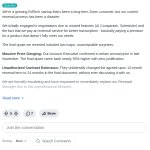
Salesforce renewal. Same seat count.
OP: 250–300 users for years. No growth story on the account.
Last year: more than 20% up.
This renewal: another jump that puts the two-year stack near 35%.
Customer for 10+ years. So far only a bottom-line figure. No detailed order form yet.
CRM is an opex line mid-market finance already owns. Treat it like freight: the renewal number is negotiable until you sign.


Intuit’s updated QBO list prices apply at renewals on or after August 1, 2026.
Essentials: $75 → $85 (+$10 / mo)
Plus: $115 → $140 (+$25 / mo)
Advanced: $275 → $340 (+$65 / mo)
Simple Start was left alone. Annual prepaid terms generally hold until that term ends.
Your bill does not flip on August 1 for everyone. It flips on your renewal date. Open Subscriptions and Billing before the notice hits AP.
For a QBO shop, this is the seat-and-tier conversation before anyone talks NetSuite.

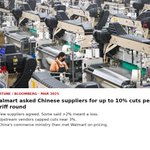
March 2025. New U.S. tariffs hit Chinese goods. Walmart asked some Chinese suppliers, kitchenware and clothing among them, to cut wholesale prices by as much as 10% per round of tariffs.
That is the full duty, shifted upstream. Few suppliers agreed. Margins were already thin from years of buying for Everyday Low Price. Some said anything over about 2% put them at a loss. Upstream vendors refused cuts above 3%, so factories looked at Vietnam parts and worried about quality.
China’s commerce ministry then met Walmart and, per reporting, warned that forcing price cuts could breach contracts and disrupt market order. Walmart confirmed the meeting. Final commercial terms stayed private.
Takeaway: when a tariff lands on the invoice, the negotiation is who absorbs it. Scale can demand the cut. The supplier can refuse. Governments sometimes walk into the room. The aisle price is what survives that fight.


UPS peak fees begin September 27. FedEx follows September 28.
Additional handling starts first: UPS $8.75. Large package $96.25. Over-max $530. Residential demand charges land later (Oct 25 / Oct 26).
The cliff: ship just over 105% of your UPS weekly baseline and Ground Residential jumps from $0.50 to $1.75 in the shoulder weeks. Same package. Volume tier only.


In late June 2022, Kraft Heinz stopped shipping ketchup and baked beans to Tesco.
Contemporaneous reporting put the wholesale ask near 30% on some lines. Tesco said it would not pass on “unjustifiable” increases and pointed shoppers at own-label alternatives.
Nine days later both sides announced a deal. Lorries rolled. Products returned. Neither side published the final price.
Takeaway: the strongest brands can cut supply. The strongest buyers can leave the shelf empty for a week. When the aisle goes dark, that is the negotiation.


Packaging Corporation of America announced +$140 per ton on containerboard, effective September 1, 2026. Third hike of the year. Prior 2026 rounds across producers were typically $50–$70.
Peers joined the September wave lower:
•Smurfit Westrock +$100 / ton
•International Paper +$80 / ton
Both also pointed at September 1.
Mill lists are not box invoices. Corrugated quotes for food distributors usually lag. If packaging POs are moving this month, ask which mill list the converter is using.
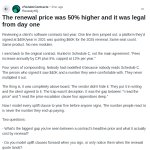
A platform signed at $40K a year in 2021 came back at $60K for the same seats. Same product. No new modules.
Buried in Schedule C, not the main agreement: fees rise annually by CPI plus 5%, capped at 12% a year. Four years of compounding. Completely above board.
The trap was not a surprise hike. It was agreeing to an escalation nobody modeled to year five.


January 4, 2024. Carrefour told shoppers in France, Italy, Spain, and Belgium it would stop selling PepsiCo brands (Pepsi, Lay’s, 7UP and others) because of “unacceptable price increases.”
More than 9,000 stores. About two-thirds of Carrefour’s global footprint at the time. Shelf signs named the supplier. PepsiCo said it would keep talking.
The standoff ran about three months. In early April, PepsiCo products started returning to Carrefour shelves in those four countries. Both sides said an agreement was reached. Commercial terms stayed private.
Takeaway: when a supplier needs price and a retailer needs margin, the aisle becomes the leverage. Scale can delist in public. The brand can wait. The deal that ends it rarely publishes the cents.

Microsoft 365 commercial list moved July 1, 2026. Existing customers keep old rates until renewal, so the hike arrives as a wave of invoices, not one day.
•Business Basic: $6 → $7 per user per month (+16%).
•Business Standard: $12.50 → $14 (+12%).
•Business Premium: flat at $22.
The cheap seats moved. The expensive seat did not. Mid-market finance feels Basic and Standard first.
Source: microsoft.com/en-us/licensin…