

Tracking major organized crime worldwide • Dedicated data engineering • Monitoring ~400 entities
Joined January 2023
- Tweets1.8K
- Following259
- Followers16.5K
- Likes2.2K




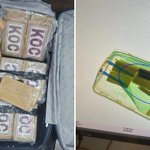


Panama: Police seized a total of 234 drug packages in two separate port operations, part of Plan Firmeza targeting smuggling via containerized shipping. In the first operation at a Pacific port, 194 packages were found concealed within six suitcases inside a container.
The second operation at an Atlantic port uncovered 40 packages hidden in the air conditioning panel of a refrigerated container.

Colombia: The Navy seized 2.25 tonnes of cocaine worth an estimated $104 million from a high-speed boat reportedly heading to Mexico, arresting one Colombian and two Ecuadorian nationals during a maritime interception in the southern Pacific.
Naval patrol units, supported by Naval Aviation, detected the suspicious vessel, known as a flipper boat, and intercepted it after identifying irregularities in its route and navigation. A search uncovered 75 bundles containing 2,250 rectangular packages of cocaine.

Nicaragua: Police seized 618 kg of cocaine concealed beneath the cargo bed of a truck reportedly used to transport sand, arresting its driver during an intelligence-led operation in Nandaime, Granada department, on October 31.
Authorities subsequently incinerated the 618 kg shipment on November 1 under judicial authorization. Police have not disclosed the cocaine's origin, intended destination or any connection to a specific trafficking organization.


Mexico: Authorities will auction 62 rare racing motorcycles seized from properties linked to Ryan James Wedding, a former Canadian Olympic snowboarder accused of leading a major cocaine trafficking network connected to the Sinaloa Cartel.
The collection includes Ducati Desmosedici MotoGP prototypes, historic Honda NS500 and ELF4 racing machines, a Honda RC213V, and rare models from MV Agusta, Suzuki and Yamaha. Some motorcycles reportedly have links to racing legends such as Valentino Rossi and Marc Márquez.
The FBI previously estimated the collection's value at approximately $40 million, although motorcycle specialists have questioned that figure. The bikes were confiscated during four raids in December 2025 that also uncovered luxury vehicles, artwork, Olympic medals, ammunition and drugs.
US investigators accuse Wedding's organization of transporting approximately 60 tonnes of cocaine annually from Colombia through Mexico to the US and Canada, using trucking companies and front businesses.
Wedding was arrested in Mexico City in January 2026 and transferred to US custody to face drug trafficking, murder and money laundering charges. The auction is scheduled for November 11–12 in Mexico City.


Spain: Prosecutors are seeking a reviewable life sentence for Serbian trafficker Peter T., accused of hijacking a vessel carrying 1.7 tonnes of cocaine worth approximately €68 million ($79 million) to steal the shipment for a rival criminal organization.
The incident occurred in November 2023 aboard the Sea Paradise in Atlantic waters near the Canary Islands, off the northwest African coast.
Prosecutors say the Serbian suspect seized control of the vessel at gunpoint, shot crew member Jasmin Pierre-Saint and ordered his body thrown overboard after the crew resisted his attempt to redirect the cocaine shipment. He then held eight surviving crew members hostage.
The captain managed to raise the alarm by satellite phone, prompting Spanish authorities to deploy an elite GEO police unit aboard the customs vessel Cóndor. After several hours of negotiations, the suspect surrendered and the hostages were released.
Investigators recovered the cocaine from a concealed compartment, including bales fitted with flotation devices for collection at sea. Peter T. faces murder, piracy, drug trafficking and criminal organization charges.
Spanish police previously reported a seizure of 2.3 tonnes of cocaine, although the latest prosecution filing puts the quantity at 1.7 tonnes.

Lebanon: A joint Ghanaian-Lebanese operation intercepted 46.7 kg of cocaine concealed in two suitcases carried by a Syrian national arriving in Beirut from Accra on October 31.
Ghana's Narcotics Control Commission says the suspect was allowed to travel under a controlled-delivery operation intended to identify the criminal network behind the shipment.
Lebanese Customs discovered 40 cocaine packages wrapped in layers of insulation designed to evade airport scanners, along with electronic tracking devices.
Investigators identified the passenger by the initials B. H., who had reportedly entered Lebanon from Syria several weeks earlier before traveling to Ghana and returning with the drugs aboard Middle East Airlines flight MEA 576.
Lebanese authorities described the seizure as the largest cocaine interception in Beirut airport's history.

Serbia: Two of the country's most senior criminal police commanders were arrested on November 1 over accusations of manipulating evidence and abusing suspects during a gangland murder investigation.
Marko Kričak, head of the Criminal Police Directorate, and Boško Sekulović, head of the Crime Suppression Service, are accused of withholding witness statements.
Surveillance footage showed that former Belgrade police chief Veselin Milić had left a restaurant before underworld figure Aleksandar Nešović, alias “Baja”, was murdered there in May.
Prosecutors say the evidence was omitted from a criminal complaint implicating Milić, who subsequently spent nearly two months in detention. Kričak is separately accused of torturing the restaurant's owner during questioning, suffocating him with a hood and beating his feet with a belt.
Both commanders face abuse-of-office allegations, while Kričak also faces a torture accusation.


France: A Belgian prince and 12 other defendants have gone on trial in Paris over the “Dubai Papers”, an international tax fraud and money laundering network accused of concealing more than €200 million for 322 wealthy French taxpayers.
Prosecutors identify Prince Henri de Croÿ [pic], internally codenamed “A3”, as the architect of a sophisticated operation involving 658 offshore companies and bank accounts stretching from the Bahamas to Hong Kong.
Operating through the Helin group in the UAE, the network used encrypted messaging, false invoices, anonymous prepaid bank cards and suitcases of cash to return hidden funds to clients without alerting tax authorities.
Investigators say lawyers and accountants recruited wealthy customers, while the prince personally received more than €15 million in commissions. The operation was exposed by a leaked USB drive containing hundreds of thousands of internal records.
Prosecutors estimate at least €54 million in unpaid taxes. Three companies are also on trial, with proceedings scheduled until December 3.

Azerbaijan: Border Troops intercepted three separate smuggling attempts along the Horadiz sector, seizing a total of 136.6 kg of narcotic drugs originating from Iran and confiscating 5,500 Methadone M-40 tablets.

Italy: Anti-mafia investigators have seized three waste-collection companies suspected of helping the Casalesi clan, a powerful Camorra organization based near Naples, retain €75 million ($87 million) in public contracts despite an earlier asset seizure.
Prosecutors say the businesses were linked to the clan's Zagaria faction through Isvec, a waste-management company previously identified as a vehicle for laundering mafia proceeds.
After Isvec's shares were seized in March, investigators discovered that its operations and municipal contracts had been transferred to three companies through fictitious business transfers and nominee owners, allowing the same network to continue operating.
The companies, Vittoria, Angel and Marano Ambiente, provided waste-collection services across 14 municipalities in Campania. Financial police seized more than €7 million in corporate assets and placed the businesses under court-appointed administration.

Azerbaijan: Border Troops seized a total of 22.9 kg of narcotic drugs after intercepting drones crossing from Iran. The operation was split between the Horadiz border detachment, where 15.4 kg of drugs were found, and the Goytepe border detachment, yielding 7.5 kg.

India: Authorities have extradited Sourabh Chandrakar, the suspected mastermind of the Mahadev Online Book illegal gambling syndicate, from Oman to face organized crime, corruption and money laundering proceedings.
Investigators accuse Chandrakar of running a vast betting operation from Dubai, using franchised online platforms across India to accept wagers on cricket, football and casino-style games.
The network laundered its proceeds through thousands of intermediary bank accounts and hawala, an informal cross-border money transfer system, while paying protection money to public officials to avoid enforcement.
India's Enforcement Directorate estimates the wider betting network generated approximately ₹944 billion ($10.6 billion) in suspected criminal proceeds over a decade.
Chandrakar was detained in Oman following an Interpol Red Notice and returned to India on November 1 by a Central Bureau of Investigation team. He faces two CBI cases and a separate money laundering prosecution and is scheduled to appear before a special court in Raipur.

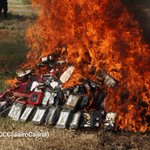
Malaysia: Police incinerated 37.3 tons of drugs seized in Selangor from 2009 to 2025, including 33.5 tons of methamphetamine, 714 kg of ketamine, 260 kg of kratom leaves, 104 kg of cannabis, 14 kg of ecstasy pills, 9 kg of heroin, 5 kg of Erimin 5, and 1 kg of yaba pills.
Additionally, 1,402 liters of kratom juice and 458 liters of MDMA were destroyed.

Philippines: Authorities arrested Yoshitaka Yamamoto, 57, suspected second-in-command of JP Dragon, a Japanese organized crime syndicate operating from the Philippines and linked to ¥900 million ($5.8 million) in telephone fraud losses.
Yamamoto was detained in Cabanatuan on October 31 after investigators tracked him traveling by bus from his suspected hideout. According to Japanese reporting, he initially claimed to be South Korean and carried identification believed to have been obtained using another person's identity.
JP Dragon, reportedly composed largely of former yakuza members, is accused of targeting elderly people in Japan by impersonating police officers and tricking victims into surrendering ATM cards and banking information.
Investigators estimate the network defrauded approximately 250 victims since 2019. Yamamoto had been wanted in Japan since December 2022 for fraud, theft and attempted theft. His arrest follows the June 2025 detention of suspected syndicate leader Ryuji Yoshioka.
Yamamoto is awaiting deportation to Japan.

Colombia: Authorities captured José Ramiro Tobón Osorio, alias El Viejo, in Pereira, acting on an Interpol red notice and extradition request from Peru. He is accused of leading a transnational criminal organization trafficking cocaine concealed in coffee shipments.
The network exploited legal export routes, camouflaging the drug within commercial coffee cargo sent from Colombia to Peru and other South American countries, ultimately routing it to the Netherlands and additional European destinations.

Bolivia: Prosecutors investigating possible police corruption during the March 13 capture of Uruguayan drug trafficker Sebastián Marset have discovered four empty suitcases at a police tactical unit in La Paz.
Investigators suspect the luggage was removed from Marset's residence in Santa Cruz de la Sierra during the arrest operation, but have not established whether it contained cash, luxury watches or other valuables.
Security footage reportedly shows suitcases being taken from the property, raising questions about the handling of seized assets. Several officers are under investigation, including former police intelligence chief Juan Marcelo Ferrufino, who has been placed in pretrial detention.
A police captain accused of removing one suitcase says he was following orders and did not know its contents. Prosecutors are requesting the identities of everyone involved in the operation and say senior officials may also be summoned to explain what happened.


Panama: SENAN intercepted a vessel south of Jicarón Island in the Pacific of Veraguas province, seizing 1,148 drug packages, each typically weighing about 1 kg in such cases, and apprehending three people.
The operation was part of security actions known as Plan Firmeza and Escudo Protector. Officials did not specify the exact drug type or package markings, but cocaine is most commonly trafficked using this packaging method.

Colombia: In a joint operation, the Navy and JIATF-S intercepted two go-fast boats in the Caribbean carrying 2.0 tons of cocaine divided in 2,000 brick-shaped packages, each marked with a double R logo.
Five crew members were arrested after they attempted to escape by throwing the cocaine overboard, triggering a search-and-recovery by coast guard units that retrieved 80 bales containing the illicit cargo from the sea. Both vessels and all suspects are in custody pending investigation.

Colombia: Authorities arrested two suspected international cocaine traffickers in Risaralda, uncovering separate networks linking Colombia's coffee-growing region to European drug markets.
Dutch national alias “Tommy” was detained in Santa Rosa de Cabal on an Interpol Red Notice issued at the Netherlands' request. Investigators accuse him of establishing alliances with Colombian trafficking organizations and coordinating large drug shipments to European ports.

Algeria: Nearly 100 kg of ecstasy was seized by Maritime Border Police and Customs at Algiers port in a joint operation after intercepting a passenger car arriving by ferry from Marseille.
Using advance intelligence, authorities identified the suspect vehicle, isolated it upon arrival, and uncovered the synthetic drug tablets hidden in both factory and modified compartments within the car’s bodywork, a sophisticated concealment method meant to evade routine inspections.
