

No spin analysis on global wars, conflicts & geopolitics of Strategic Conflict Intel substack https://nitter.gq/t.co/KaIJpvZqQo
Joined September 2025
- Tweets4.9K
- Following1.2K
- Followers2.4K
- Likes71


𝗪𝗼𝗿𝗹𝗱 𝗪𝗮𝗿 𝗔𝗴𝗮𝗶𝗻 retweeted
Warmer Trump-Xi relationship won’t automatically make #Asia safer or more stable. For Southeast Asia, it may actually increase the risks.
Smaller countries like the #Philippines, #Vietnam, #Indonesia, #Malaysia and #Thailand remain exposed on three fronts:
1. Over-reliance on US security guarantees is increasingly dangerous.
Washington’s commitments are not automatic. When US forces are stretched — as we’re already seeing in the Middle East — Southeast Asia risks becoming a secondary theater. The Philippines in particular cannot assume the US will always show up in force, or in time, if Beijing tests the limits in the South China Sea. Deterrence works only when the guarantor has both the capability and the political will at the moment of crisis. Both are finite.
2. US-China economic deals can quietly hurt the region.
Any major trade or investment arrangement between Washington and Beijing will be negotiated in the interests of the two largest economies. Vietnam, Thailand, Malaysia and Indonesia could easily find themselves squeezed — losing competitiveness as alternative manufacturing and investment destinations just as they try to climb the value chain.
3. Maritime tensions don’t disappear because the great powers get along.
China’s claims and behavior in the South China Sea, especially toward the Philippines, are structural. They are not contingent on the personal relationship between Trump and Xi. Better US-China atmospherics will not resolve overlapping claims, gray-zone pressure, or the underlying military imbalance.
The bottom line is simple: Southeast Asia can’t count on Washington and Beijing getting along to keep the region safe or prosperous. ASEAN needs to get its act together, stop putting all its eggs in one basket on both security and the economy, and stop acting like it has no choice but to pick a side. Relying on either the US or China is a bad bet.

𝗪𝗼𝗿𝗹𝗱 𝗪𝗮𝗿 𝗔𝗴𝗮𝗶𝗻 retweeted
#Syria is becoming the collision point of two rival regional axes.
North–South axis (Mecca Pact: #Turkey–Saudi Arabia–#Pakistan)
Running from Turkey through Syria toward the Gulf.
East–West axis (#Iran → #Iraq → Syria → #Hezbollah in Lebanon)
Iran’s core land bridge to its most important proxy.
These two axes cross in Syria.
If that intersection explodes, the consequences reach further:
🔸#Israel already holds positions in southwest Syria
🔸Russia still has a military presence
🔸The US faces pressure to back Israel
🔸Turkey is a NATO member
A serious clash could pull NATO into a regional war it never planned for — not through Article 5 against an outside attacker, but through internal fracture between the US and Turkey.
Syria is no longer just a postwar reconstruction case. It is the geographic hinge where these competing projects meet. Joining the Mecca Pact may bring Damascus money and legitimacy, but it also risks placing a still-fragile state at the centre of a confrontation it cannot control.

𝗪𝗼𝗿𝗹𝗱 𝗪𝗮𝗿 𝗔𝗴𝗮𝗶𝗻 retweeted
𝗗𝗲𝗮𝗱𝗹𝗶𝗻𝗲𝘀𝘀 𝗼𝗳 𝘁𝗵𝗲 𝗬𝗲𝗺𝗲𝗻 𝗪𝗮𝗿 𝗡𝗼𝗯𝗼𝗱𝘆 𝗧𝗮𝗹𝗸𝘀 𝗔𝗯𝗼𝘂𝘁
Explosions like this over Riyadh make headlines. Markets full of dead civilians in Taiz do not.
The real story of this war is the mounting, underreported toll inside Yemen, the Saudi-led coalition’s repeated failure to turn superior firepower into victory, and the growing risk that Riyadh will try to expand the conflict to compensate.
The unspoken toll
These are reported figures from different periods and sources. Many are not independently verified. Military claims are partial. Actual numbers are almost certainly higher.
🔸 51 civilians killed and 85 wounded in Taiz, Nov 1–12 (Taiz Human Rights Center). 13 of the dead and 30 of the injured were children. Causes included missiles, artillery, snipers, and landmines.
🔸 85 civilians killed and 234 injured in Taiz, Sept 1–Nov 14 (Musawah Organization). 114 incidents of shelling, snipers, executions, landmines, and attacks on medical sites. Children and women heavily represented. Group says limited monitoring means the real toll is higher.
🔸 At least 30 killed and 8 wounded in the Nov 6 Al-Hadara market strike (Houthi health authorities). Responsibility disputed. AP could not verify competing claims.
🔸 ~40 reported killed in Bani Hushaysh near Sanaa, Nov 7 (needs independent confirmation).
🔸 201 Houthi fighters claimed killed or wounded on Nov 15, and 173 on Nov 16 (Yemeni Armed Forces spokesperson). Combined killed-and-wounded figures from a party to the conflict.
🔸 356,602 people displaced Aug 1–Nov 17 (IOM). Taiz holds the largest share (~143,000–145,000), followed by Lahj and Aden.
🔸 Health authorities recorded ~11,755 cumulative casualties (including ~2,098 deaths) by early November in the escalation, with hospitals overwhelmed and non-emergency care suspended.
A damaged Saudi skyscraper trends. These numbers stay in the background.
Saudi inability to win
The Houthis have advanced toward Aden (claims of roughly ten districts across Taiz and Lahj, ~7,100 km²). Government-aligned forces withdrew from the Dhubab Airport and Bab al-Mandab area to protect Aden. Houthi positions were reported within ~60 km of the city. Taiz remains under siege.
Intensive Saudi-led airstrikes (reports of thousands since July) and years of intervention have not produced a decisive outcome. The Houthis keep expanding, threatening shipping, and striking deep into Saudi territory (Aramco Tower debris damage Nov 8; Public Investment Fund headquarters windows blown out Nov 19; no casualties reported in either case).
Government forces remain fragmented. Houthi command is more unified.
Announced “hundreds of operations and casualties” coexist with retreats and lost ground.
The expansion risk
Saudi Arabia faces a clear dilemma: continue a costly war it is not winning, withdraw and risk further Houthi gains, or try to widen the fight. Reports indicate Riyadh is preparing for a campaign into 2027. Earlier, Mohammed bin Salman reportedly asked for direct U.S. strikes; that request was declined in favor of intelligence support.
If the coalition cannot secure its objectives on the ground, pressure will grow to internationalize the conflict further—drawing in additional powers and raising the stakes for civilians, regional stability, and the Bab al-Mandab Strait.
Traffic through the strait has already dropped.
The war began in 2014–2015. The 2022 truce never resolved the underlying divisions. The current escalation is the most intense since then.
Whatever Riyadh chooses next, Yemenis remain trapped in the consequences. The spectacle over Saudi cities keeps dominating the narrative while the far higher human cost inside Yemen stays largely unspoken.
Readers added context they thought people might want to know
מדובר בסרטון שנעשה בבינה מלאכותית.
תמונת הנזק האמיתי— x.com/kann_news/stat…
𝗪𝗼𝗿𝗹𝗱 𝗪𝗮𝗿 𝗔𝗴𝗮𝗶𝗻 retweeted
The real reason the US never let #Russia into #NATO has nothing to do with #democracy.
John Mearsheimer just laid it out: Washington runs NATO under “pacifier logic.” It wants weak allies it can push around. A powerful Russia inside the alliance would destroy that advantage.
“There’s no way the United States would ever tolerate Russia becoming a member of the alliance, because Russia is a very powerful state. The United States does not want powerful states inside of NATO, because it can’t dictate to those powerful states the way it dictates to weaker states.”
This is why every Russian probe was rejected — Molotov in 1954, Gorbachev in 1990, Yeltsin in 1991 and 1994, Putin in 2000 and 2001.
Some observers go further, arguing the deeper goal was to dismember Russia into smaller states, with the US positioned to control the east. They point to the 1999 NATO war on #Serbia over Kosovo as the precedent — establishing the right of NATO members to carve out and recognize new states by force.
It was never about values. It was about control.
𝗪𝗼𝗿𝗹𝗱 𝗪𝗮𝗿 𝗔𝗴𝗮𝗶𝗻 retweeted
🛢 𝐎𝐈𝐋 𝐆𝐋𝐔𝐓 𝐖𝐀𝐑𝐍𝐈𝐍𝐆
Goldman Sachs sees a potential price slump as a 2 million barrels a day surplus looms in 2027.
After months of elevated prices driven by the US-Iran conflict and supply disruptions, the market could reverse sharply.
In a Nov 15 research note, analysts led by Daan Struyven estimate global #oil production will exceed end-user demand by ~2 million bpd in 2027. That already factors in potential supply disruptions of around 1 million bpd.
Goldman’s price forecasts:
🔸Brent: $88 average in 2027, falling to $78 by December 2027
🔸WTI: $78 average in 2027, declining to $70 by year-end
The projected decline reflects the gradual unwinding of the geopolitical risk premium as supply conditions improve.
MODDLE WAST SUPPLY RECOVERY
Goldman expects Middle Eastern production to rise above its 2025 average, even with ongoing risks. Producers are adapting via:
🔸Alternative shipping routes
🔸Ship-to-ship transfers
🔸Expanded pipeline infrastructure that bypasses vulnerable chokepoints
Supply growth outside the Middle East is
expected to largely stall, making the region’s recovery central to the surplus forecast.
#CHINA AS A HEADWIND
Demand is also weakening. Goldman estimates persistent weakness in China’s road-transport fuel use could cut oil demand by ~400,000 bpd. More importantly, the bank believes China’s overall oil consumption may have already peaked in 2025.
That would be a structural shift. China has long been one of the biggest engines of global oil-demand growth.
MARKET ALREADY TURNING
Brent surged above $126 in April 2026 amid the US-Iran escalation and Middle East disruptions. By Nov 16, Brent had settled at $92.44 (−3.6%) and WTI at $85.72 (−3.2%).
The IEA has also warned of a return to oversupply, forecasting Q4 2026 production around 105 million bpd — roughly 1.7 million bpd above demand.
Goldman further expects US wholesale diesel to average ~$150/bbl in 2027, showing that refined products can stay relatively tight even as crude becomes more abundant.
BIGGER PICTURE
The market may be shifting from a supply-shock environment into an oversupply cycle. Risks remain, however. Intensified attacks on shipping, further damage to energy infrastructure, or renewed disruption around the Strait of Hormuz could still push prices higher in the near term.
The central question for 2027 is whether recovering production and alternative export routes can outpace slowing demand.
If Goldman’s base case holds, the market faces a meaningful correction — with implications for producers, energy companies, inflation, and consumers.
The next big oil story may not be a shortage of crude. It could be what happens when the world suddenly has too much of it.

𝗪𝗼𝗿𝗹𝗱 𝗪𝗮𝗿 𝗔𝗴𝗮𝗶𝗻 retweeted
Read our full version of Syria analysis of this post on our parent Substack Strategic Cinflict Intel
sciglobal.substack.com/p/syr…

𝗪𝗼𝗿𝗹𝗱 𝗪𝗮𝗿 𝗔𝗴𝗮𝗶𝗻 retweeted
🚨 𝐄𝐥𝐨𝐧 𝐌𝐮𝐬𝐤 𝐣𝐮𝐬𝐭 𝐬𝐚𝐢𝐝 𝐙𝐞𝐥𝐞𝐧𝐬𝐤𝐲 𝐢𝐬 𝐚 𝐥𝐢𝐚𝐫
At the NYT DealBook Summit, #Musk said:
“I don’t want to blow your mind, but #Zelensky is not always truthful.”
He clarified that Zelensky is lying about “Starshield” restrictions. What he actually wants is unrestricted commercial Starlink for offensive military operations — including coordinating drone strikes deep into Russian territory.
SpaceX has said no from day one of the war. Starlink is a civilian system, not a weapons platform.
This is the same leadership that’s faced repeated allegations of Western weapons vanishing onto the black market. Blank checks don’t buy honesty.
Musk told him no.
#Starlink #Ukraine #RussiaUkraineWar #ElonMusk
𝗪𝗼𝗿𝗹𝗱 𝗪𝗮𝗿 𝗔𝗴𝗮𝗶𝗻 retweeted
𝗛𝗼𝘄 𝗥𝘂𝘀𝘀𝗶𝗮'𝘀 𝗩𝗶𝗰𝘁𝗼𝗿𝗶𝗲𝘀 𝗢𝘃𝗲𝗿 𝘁𝗵𝗲 𝗖𝗼𝗹𝗹𝗲𝗰𝘁𝗶𝘃𝗲 𝗪𝗲𝘀𝘁 𝗛𝗮𝘃𝗲 𝗦𝗮𝘃𝗲𝗱 𝗖𝗵𝗶𝗻𝗮 — 𝗮𝗻𝗱 𝗪𝗵𝘆 𝗘𝘃𝗲𝗿𝘆 𝗔𝗹𝘁𝗲𝗿𝗻𝗮𝘁𝗶𝘃𝗲 𝗪𝗲𝘀𝘁𝗲𝗿𝗻 𝗦𝘁𝗿𝗮𝘁𝗲𝗴𝘆 𝘁𝗼 𝗗𝗲𝗳𝗲𝗮𝘁 𝗖𝗵𝗶𝗻𝗮 𝗜𝗻𝗰𝗿𝗲𝗮𝘀𝗲𝘀 𝗥𝘂𝘀𝘀𝗶𝗮'𝘀 𝗩𝗮𝗹𝘂𝗲 𝘁𝗼 𝗕𝗲𝗶𝗷𝗶𝗻𝗴
#Russia’s victories in #Ukraine didn’t just save Putin. It saved #China. Every Western plan to break Russia, choke its energy routes, or isolate Beijing has done the opposite: it has made Moscow more valuable to Beijing and given China a land-based energy lifeline that maritime blockades can’t touch.
Here’s why.
Breaking up Russia was supposed to be simple: follow the established pattern in the Balkans. The breakup of Serbia, the Kosovo war, and the subsequent international administration of Kosovo provided a precedent for fragmenting a state and redistributing political influence among outside powers.
The next, much bigger prize was supposed to be Russia.
The plan appeared straightforward: weaponize Ukraine, inflict a series of military defeats that would ultimately lead to Putin's removal, and then move to the next stage. A coup in Kazakhstan would follow, paving the way for Russia's disintegration into smaller cantons, each effectively governed by different NATO states. Finland was supposed to get a share, Sweden another — which helps explain their NATO accession. The United States would presumably secure Russia's Far East, gaining direct land access to China's northern flank.
But all of that collapsed in Ukraine. Putin remained alert to the threat in Kazakhstan and responded with a diplomatic counteroffensive.
Washington was therefore forced to consider Plan B, although its precise contours were initially unclear.
Then Venezuela happened.
Chinese interests were displaced, and the broader strategy began to come into focus: corner the global energy markets, restricting the oil supply available to China, reducing its options, and driving up the cost of energy for its economy.
The attack on Iran followed as the next stage of this energy strategy, with Saudi Arabia and other Gulf states playing their part.
What was supposed to follow was an American maritime shipping blockade — not merely in the Strait of Hormuz, but potentially extending to the Danish Straits, the Strait of Malacca, and the Red Sea.
There was, however, one major problem: Iran did not fold. Instead, it responded with its own blockade of the Strait of Hormuz, while exempting Chinese cargo.
Attacking Iran again now would amount to doubling down on a version of Plan B that has already failed.
So, what is Plan C?
Plan C is no longer a Western plan. It is the Russia–Iran–China axis moving onto the offensive — using energy leverage, diplomatic ultimatums, and military entanglement to force the United States onto the back foot.
There is little reason to expect Washington to draw meaningful lessons from the failures of its previous strategies. The first and most important lesson is that the more pressure the United States places on Russia, the more valuable Russia becomes to China.
From Beijing's perspective, the more energy China receives overland through Russia, the less exposed it becomes to American maritime chokepoints. Stronger Russian energy infrastructure and a stronger Russia more broadly mean a weaker American ability to squeeze Chinese factories by restricting oil supplies through maritime shipping routes.
There is another strategic dimension. If the United States remains entangled in Ukraine and Iran simultaneously, fewer American resources and less military power will be available for projection in China's immediate neighbourhood — whether around Taiwan or the Strait of Malacca.
#Geopolitics #MultipolarWorld #EnergySecurity

𝗪𝗼𝗿𝗹𝗱 𝗪𝗮𝗿 𝗔𝗴𝗮𝗶𝗻 retweeted
4 geopolitical forces & separatist pressures are converging on #Algeria, risking regional destabilisation and a new African war.
Read out latest geopolitical analysis from our parent Strategic Conflict Intel
sciglobal.substack.com/p/alg…
#moroccan #Niger #Sahel

𝗪𝗼𝗿𝗹𝗱 𝗪𝗮𝗿 𝗔𝗴𝗮𝗶𝗻 retweeted
🚨 𝗜𝗥𝗔𝗡 𝗣𝗨𝗧𝗦 𝗨𝗦 𝗢𝗡 𝗡𝗢𝗧𝗜𝗖𝗘: 𝗪𝗘 𝗖𝗔𝗡 𝗦𝗧𝗥𝗜𝗞𝗘 𝗔𝗡𝗬𝗪𝗛𝗘𝗥𝗘 𝗜𝗡 𝗧𝗛𝗘 𝗪𝗢𝗥𝗟𝗗
#Iran has issued a sweeping warning to Washington and Tel Aviv, declaring that any location used to launch an attack against the country could face retaliation — regardless of where it is located.
Iranian Armed Forces Deputy Chief of Staff Brig. Gen. Kioumars Heydari says the potential targets include US and Israeli military installations across the Middle East and beyond.
But there's another detail worth watching:
🇮🇷 Iran says more than 1,700 knowledge-based companies are cooperating with its defense industry to localize military production and strengthen its domestic weapons supply chain.
The strategic message:
🔹Tehran is seeking to expand the perceived cost of any military action against Iran.
🔹US and Israeli military infrastructure outside the Middle East is now explicitly part of its rhetoric.
🔹Iran is emphasizing domestic defense production as a way to sustain its military capabilities under external pressure.
⚠️ THE BIGGER CONCERN: Any direct US-Iran confrontation could carry escalation risks far beyond the traditional Middle Eastern battlefield.
This is a declaration of intent and deterrence — not proof that Iran can strike every location worldwide.
Washington is being warned: Tehran does not intend to keep the consequences of a war confined to its own neighborhood.

𝗪𝗼𝗿𝗹𝗱 𝗪𝗮𝗿 𝗔𝗴𝗮𝗶𝗻 retweeted
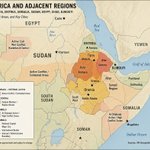
#Sudan & #Ethiopia are sliding toward direct #war — and risks go well beyond both countries.
Clashes in Ethiopia’s Benishangul-Gumuz region (near the Sudanese border) have killed at least 65 people, including 27 civilians, per France 24.
Ethiopia blames rebel groups tied to the Alliance for Survival and claims Sudan, Egypt, and Eritrea are backing them. All three deny it; the claims remain unverified.
Tensions have already crossed the border:
▪️Sudan accuses Ethiopia of launching dozens of drone strikes on its infrastructure and power facilities (70 documented attacks Feb–Oct).
▪️SAF airstrikes against RSF positions along the Ethiopian and Chadian borders have intensified.
▪️OSINT footage from Nov 11 appeared to show Ethiopian regional forces operating alongside RSF fighters.
Sudan’s civil war + Ethiopia’s internal fractures are starting to feed each other. If this escalates, the fallout hits the entire Horn of Africa and Red Sea security: more refugees, deeper humanitarian crisis, higher famine risk, and potential involvement by outside powers.
Separate internal conflicts are converging. That rarely stays contained.
#Africa #Geopolitics

𝗪𝗼𝗿𝗹𝗱 𝗪𝗮𝗿 𝗔𝗴𝗮𝗶𝗻 retweeted
How the #UAE builds a mercenary killer empire on #Sudan’s blood
A confidential UN Panel of Experts report (submitted to the Security Council in Nov 2026) shows an Emirati firm, Global Security Services Group—founded by Ahmed Mohammed al-Humairi, secretary-general of the UAE Presidential Court—moved up to 2,000 Colombian veterans into Sudan to fight with the RSF, the paramilitary accused of genocide in Darfur.
They were promised security jobs. Many ended up on the front lines operating drones, artillery, and vehicles, and training RSF fighters including children. Routes ran through Emirati-proxy territory in Libya and Somalia. Most transited the UAE with no real border checks or registration.
Delayed wages, deadly missions, and torture for disobedience were common.
This fits the pattern: Yemen, Libya (including Project Opus), Ethiopia training camps. The prize in Sudan is Red Sea ports, gold controlled by the RSF, and countering Turkey and Saudi influence.
Meanwhile, UAE diplomat Lana Zaki Nusseibeh—now a candidate for UN Secretary-General—has spent years dismissing the evidence of her country’s role.

𝗪𝗼𝗿𝗹𝗱 𝗪𝗮𝗿 𝗔𝗴𝗮𝗶𝗻 retweeted
#𝗜𝗿𝗮𝗻 𝗺𝗼𝘃𝗲𝘀 𝘁𝗼 𝗲𝘅𝗽𝗮𝗻𝗱 𝗶𝘁𝘀 𝗶𝗻𝗳𝗹𝘂𝗲𝗻𝗰𝗲 𝗼𝘃𝗲𝗿 𝗜𝗿𝗮𝗾𝗶 𝗞𝘂𝗿𝗱𝗶𝘀𝘁𝗮𝗻 𝗮𝘀 𝘁𝗵𝗲 𝗨𝗦 𝗲𝘅𝗶𝘁𝘀, 𝗺𝗶𝗿𝗿𝗼𝗿𝗶𝗻𝗴 #𝗧𝘂𝗿𝗸𝗲𝘆’𝘀 𝗯𝗶𝗱 𝘁𝗼 𝗯𝗿𝗶𝗻𝗴 #𝗞𝘂𝗿𝗱𝘀 𝗶𝗻𝘁𝗼 𝗶𝘁𝘀 𝗼𝗿𝗯𝗶𝘁.
As Washington pulls back from Kurdish areas, both Iran and Turkey are moving to reshape their relationships with the Kurds—not necessarily as acts of reconciliation, but as strategic calculations to expand their regional influence.
Iraq’s Kurdistan Region is edging toward a return to the two-administration era it formally ended in 2006. The Patriotic Union of Kurdistan (PUK) has withdrawn from the Kurdistan Regional Government (KRG), while its officials are moving to establish a de facto separate administration in Sulaymaniyah, according to The Cradle. The rift has deep roots in the 1990s civil war and the incomplete power-sharing arrangements that followed. It leaves the region more vulnerable to external pressure, with the PUK’s Sulaymaniyah base historically more open to Iranian ties and the Kurdistan Democratic Party (KDP) more aligned with Turkey.
The timing is significant. The US withdrawal from the Kurdistan Region on September 30 has deepened uncertainty among Kurdish political factions and revived longstanding fears of Washington abandoning its Kurdish partners.
Some residual American presence for diplomatic protection and equipment support remains, but the end of the coalition mission has removed the air-defense layer that had helped counter repeated Iranian drone and missile attacks on the region.
Iran appears increasingly positioned to capitalize on that vacuum.
Regional analysts say Tehran has recalibrated its approach following a reported commitment by the KDP to dismantle the presence of Iranian Kurdish opposition groups operating in the region. A further indication of this shift came on November 8, when an Islamic Revolutionary Guard Corps (IRGC) official met Kurdistan Region President Nechirvan Barzani. The accompanying statement emphasized security cooperation and regional stability.
Reports have also emerged of Iranian units moving toward the border with the Kurdistan Region, underscoring Tehran’s growing security interest in developments across the Kurdish areas of Iraq, though these claims remain lightly sourced. Tehran’s core priority is border security and preventing the use of Iraqi Kurdistan against it.
The diplomatic and security developments are unfolding as Iraqi Prime Minister Ali al-Zaidi attempts to prevent Iraq from becoming a battlefield in a potential US-Iran confrontation.
During his recent visit to Tehran, he held talks with Iranian Parliament Speaker Mohammad Bagher Ghalibaf. On November 6, he also told President Donald Trump that Iraq would not allow its territory to be used to attack neighboring countries.
Iran’s moves are particularly significant when viewed alongside Turkey’s parallel strategy toward the Kurds.
Ankara, traditionally one of the Kurdish movement’s principal adversaries, is also seeking to bring Kurdish actors increasingly into its political and strategic orbit. This includes a political opening with its own Kurdish movement, pressure for PKK disarmament implementation, and agreements for the phased handover of bases such as Zilkan/Bashiqa to Iraqi forces.
As discussed in our previous report, Turkey sees the American retreat as an opportunity to transform a decades-old security challenge into a source of regional influence. Its efforts could weaken armed groups Ankara considers threats while expanding its leverage over Kurdish actors in Syria and Iraq. The approach is more transactional than Iran’s and aimed at converting a security problem into broader political, economic, and security influence.

𝗪𝗼𝗿𝗹𝗱 𝗪𝗮𝗿 𝗔𝗴𝗮𝗶𝗻 retweeted
In other words, every attempt to weaken Russia or constrain China's energy access through maritime pressure risks producing the opposite result: a stronger strategic partnership between Moscow and Beijing, and greater Chinese resilience against American pressure.
Whatever form the next American response takes, it will likely entail further damage to American prestige — in its confrontations with Iran and Russia, and in its economic competition with China.
We can already see indications of this changing balance in the diplomatic language coming from both Moscow and Tehran. Both increasingly address Washington from a position of demands and ultimatums rather than accommodation. Even the traditionally polite Russians effectively gave Witkoff and Kushner their marching orders during their last visit in November.
Trump is now planning to meet with Putin and Xi Jinping. It may amount to little more than a photo opportunity, but it could also provide Xi with another opportunity to study Greek history and add another layer to the Thucydides Trap.
Would Trump be embarrassed by any of this?
Unlikely. Not when the overriding preoccupation is to keep chest-thumping about America being the most powerful nation in the world.
#Geopolitics #MultipolarWorld #EnergySecurity
𝗪𝗼𝗿𝗹𝗱 𝗪𝗮𝗿 𝗔𝗴𝗮𝗶𝗻 retweeted
🚨🇺🇦 #𝗨𝗞𝗥𝗔𝗜𝗡𝗘 𝗙𝗜𝗡𝗗𝗦 𝗦𝗧𝗔𝗥𝗟𝗜𝗡𝗞 𝗔𝗟𝗧𝗘𝗥𝗡𝗔𝗧𝗜𝗩𝗘 — 𝗨𝗦𝗜𝗡𝗚 𝗜𝗦𝗥𝗔𝗘𝗟𝗜-𝗠𝗔𝗗𝗘 𝗦𝗔𝗧𝗘𝗟𝗟𝗜𝗧𝗘 𝗧𝗘𝗥𝗠𝗜𝗡𝗔𝗟𝗦
Ukraine is reportedly turning to satellite communications equipment developed by Israeli company HiSKY, manufactured in Italy, to provide an alternative to SpaceX’s Starlink.
The SmartLITE terminals can reportedly connect to commercial satellite networks, potentially allowing Ukrainian drones to maintain communications beyond Starlink’s coverage restrictions inside #Russia.
🇮🇱 The development raises questions about Israel’s role, given restrictions on exporting Israeli defense technology to Ukraine.
🇮🇹 #Italy could also play a role, with HiSKY-linked terminal production previously established near Caserta.
The move comes amid renewed friction over Starshield speed restrictions, which Kyiv says have hampered Ukrainian military operations.
Starlink may no longer be Ukraine’s only option.
#UkraineWar

𝗪𝗼𝗿𝗹𝗱 𝗪𝗮𝗿 𝗔𝗴𝗮𝗶𝗻 retweeted
/2
The apparent contradiction is striking: Iran and Turkey have historically opposed Kurdish nationalist movements and, at times, supported competing factions. Yet both are now pursuing deeper engagement with Kurdish political actors as Washington reduces its presence. They remain competitors rather than partners in this effort.
Their objectives are not necessarily identical.
Tehran is primarily concerned with border security, Iranian Kurdish opposition groups, and preventing hostile powers from using Iraqi Kurdistan against Iran. Ankara’s ambitions extend toward containing the Kurdish armed movement while establishing greater political, economic, and security influence across Syria and Iraq.
But the broader strategic pattern is similar. As the US retreats, regional powers are moving to fill the space Washington leaves behind—not by abandoning the Kurdish question, but by seeking to manage it on their own terms. Constraints remain, including Baghdad’s balancing efforts and the continued presence of Iranian-backed militias inside Iraq.
For Iran, this means strengthening its security and political position in Iraqi Kurdistan while reducing the threat posed by Iranian Kurdish opposition groups.
For Turkey, it means turning a potential Kurdish challenge into a mechanism of regional leverage, while advancing its wider ambitions across West Asia.
The irony is that the Kurds, who were repeatedly courted by Washington as strategic partners, are now facing a regional order in which two of their historic adversaries are competing to shape their political future. A formal split between the KDP and PUK would further weaken the Region’s position relative to both neighbors and the federal government, including on energy revenues and security.
The emerging question is not simply who will replace the US in Kurdish areas, but whether Kurdish political actors can preserve their autonomy and bargaining power as Iran and Turkey move to expand their influence.
𝗪𝗼𝗿𝗹𝗱 𝗪𝗮𝗿 𝗔𝗴𝗮𝗶𝗻 retweeted
🇹🇼🇨🇳 𝗧𝗮𝗶𝘄𝗮𝗻 𝗖𝗮𝗻𝗻𝗼𝘁 𝗖𝗼𝗻𝗳𝗶𝗿𝗺 𝗦𝗽𝘆 𝗔𝗹𝗹𝗲𝗴𝗮𝘁𝗶𝗼𝗻𝘀 𝗔𝗴𝗮𝗶𝗻𝘀𝘁 𝗖𝗵𝗶𝗻𝗲𝘀𝗲 𝗕𝘂𝘀𝗶𝗻𝗲𝘀𝘀𝘄𝗼𝗺𝗮𝗻 𝗛𝘂𝗮𝗻𝗴 𝗟𝗲
#Taiwan’s Mainland Affairs Council (MAC) says it cannot verify whether Chinese businesswoman Huang Le is a Chinese intelligence operative, despite reports linking her to an ongoing US investigation into alleged espionage activities.
Speaking at a press conference on Thursday, November 12, MAC deputy minister and spokesperson Liang Wen-chieh said the council’s information was largely consistent with what had already been reported publicly. He added that Taiwan had not previously received specific information about Huang and could neither confirm nor rule out claims that she was working for Beijing.
According to MAC minister Chiu Chui-cheng, Huang entered Taiwan eight times over the past two years — five visits in 2025 and three in 2024. She has not recorded any entries into Taiwan so far in 2026.
Chiu told lawmakers that Huang entered Taiwan using her status as a business visitor and Hong Kong resident. Following the latest developments, Taiwanese authorities will place a security-related notation on her immigration record and restrict future entry under regulations governing Hong Kong and Macau residents considered potential threats to Taiwan’s interests, public safety or public order.
The case has attracted increased attention following reports by The New York Times that Huang had repeatedly visited Taiwan using a Hong Kong passport. The report also alleged that US authorities had advised Taiwan as early as 2024 to monitor her visits.
Meanwhile, US Attorney General Todd Blanche said the Justice Department has not reached a conclusion on whether Huang is a Chinese spy.
However, the FBI is investigating reports that she may have worked for the Chinese government.
The developments highlight growing scrutiny by US and Taiwanese authorities over Huang’s alleged connections to Beijing, although no official determination has been made confirming that she engaged in espionage.
#China #Nvidia #NvidiaScandal

𝗪𝗼𝗿𝗹𝗱 𝗪𝗮𝗿 𝗔𝗴𝗮𝗶𝗻 retweeted
🚨 #𝗡𝗩𝗜𝗗𝗜𝗔 𝗖𝗘𝗢 𝗢𝗨𝗦𝗧𝗘𝗥: #𝗖𝗜𝗔, 𝗔𝗜 𝗣𝗢𝗪𝗘𝗥 𝗦𝗧𝗥𝗨𝗚𝗚𝗟𝗘 & #𝗜𝗦𝗥𝗔𝗘𝗟?
The official story is scandal. The theories around Huang’s ouster from NVIDIA have gone darker.
Jensen Huang built $NVDA into a $4 trillion tech giant. Now, allegations surrounding his personal life have fueled speculation about the real forces behind his reported ouster.
Three theories are circulating:
👉 1. CIA CONNECTION?
Huang's alleged relationship with a woman accused of Chinese espionage has raised questions about why US intelligence never reportedly warned him. Hillary Clinton has questioned the government's handling of the matter.
👉 2. A THREAT TO AI GIANTS?
Huang championed open-source AI and opposed efforts to restrict competition. His position challenged powerful AI companies seeking greater control over the industry's future. Could his departure benefit rivals like Anthropic?
👉 3. THE ISRAEL FACTOR
CFO Colette Kress has stepped in as interim CEO. Her ties to NVIDIA's Israeli operations, along with reports that Israeli tech executives are potential successors, have drawn attention.
With NVIDIA controlling a dominant share of the AI chip market, the stakes are enormous.
Was Huang's reported downfall simply a corporate scandal, or is something much bigger unfolding in the battle for control of AI?

𝗪𝗼𝗿𝗹𝗱 𝗪𝗮𝗿 𝗔𝗴𝗮𝗶𝗻 retweeted
🇮🇷 #𝗜𝗥𝗔𝗡 𝗖𝗟𝗔𝗜𝗠𝗦 𝗔𝗗𝗩𝗔𝗡𝗖𝗘𝗗 𝗘𝗟𝗘𝗖𝗧𝗥𝗢𝗡𝗜𝗖 𝗪𝗔𝗥𝗙𝗔𝗥𝗘 𝗦𝗬𝗦𝗧𝗘𝗠𝗦 𝗖𝗔𝗡 𝗧𝗔𝗞𝗘 𝗖𝗢𝗡𝗧𝗥𝗢𝗟 𝗢𝗙 𝗨𝗦 𝗠𝗜𝗟𝗜𝗧𝗔𝗥𝗬 𝗗𝗥𝗢𝗡𝗘𝗦
Iran says it has developed sophisticated electronic warfare capabilities capable of disrupting US military drones, seizing control of their guidance systems and bringing them down intact.
Iranian officials have pointed to recent incidents involving American MQM-170 reconnaissance drones near the strategically important Strait of Hormuz. The Islamic Revolutionary Guard Corps (IRGC) claims its electronic warfare systems were used to intercept and capture several of these aircraft.
🔸 Threat of retaliation: Mohsen Rezaei warned that any new US military attack would trigger Iranian retaliation against American military bases, including facilities located far beyond Iran's borders.
🔸 Regional ceasefire: Tehran insists that ending the conflict across West Asia, particularly in Lebanon, remains one of its fundamental conditions for a resolution.
🔸 Nuclear material: Rezaei stated that Iran will not permit its enriched nuclear material to be transferred outside the country.
🔸 Message to Moscow: Iran has reportedly informed Russia that its enriched nuclear material will remain on Iranian soil and be retained for domestic purposes.
🔸 Nuclear-powered vessels: Rezaei also argued that Iran needs enriched nuclear material to support the development of nuclear-powered ships and submarines.
The statements come amid continuing tensions between Washington and Tehran, with electronic warfare, regional security and Iran's nuclear program remaining major points of contention.

