

We are a Christian relief, development and advocacy organisation, working with the most vulnerable because Jesus is alive in the hardest places to be a child.
Joined March 2008
- Tweets16.7K
- Following29.1K
- Followers977K
- Likes20K



Pinned Tweet
We’re streamlining our presence here. This account will now be dedicated to sharing our media releases and breaking news. For stories, updates, and behind-the-scenes content, connect with us on our other social channels. We’d love to stay in touch there!
Children cannot afford for us to slow down. That's why World Vision has pledged US$3.5 billion over three years to help end child hunger and malnutrition, working alongside governments, communities, and partners through the @nopovertyhunger #RaceTo2030 campaign.

At COP31, World Vision’s youth delegates are making their voices heard. They're connecting with leaders to share their experiences, concerns, and hopes for the future.
In just the first few days of COP31, our youth delegates have contributed to high-level discussions and engaged directly with ministers, government representatives, and other senior leaders. They're enriching meetings with their lived experience and fresh perspectives on some of the most pressing challenges facing children and communities around the world.
At World Vision, we believe meaningful child participation leads to stronger conversations and better outcomes. That's why children and young people remain at the heart of our COP31 delegation and advocacy efforts.
Their voices matter. Their experiences matter. And their leadership is helping shape a more resilient future for all.


How well is your country addressing hunger in its climate plans?
The #HungryFuturesIndex 2.0 examines climate policies across 83 countries and the European Union, looking at whether they recognise hunger and malnutrition, consider children's needs and commit to meaningful action.
The results vary, and some countries are doing better than others.
We've made it easy to explore the findings for yourself. Find your country, explore its scorecard and see where its climate plans could do better: ow.ly/vKji5105UCN
@nopovertyhunger @GAINalliance


“How can children become the leaders of tomorrow if they are hungry today?"
That was the challenge posed at COP31 by Hlelolwenkosi, 15, Official Child Delegate of the Government of Eswatini, supported by World Vision, during the launch of the Hungry Futures Index 2.0.
Speaking on behalf of children already experiencing the impacts of climate-related hunger, he reminded leaders that behind every climate commitment are young lives, ambitions and futures.
Children's voices are not only part of the conversation, they are essential to it.
Discover the Index: ow.ly/rWR25105SHw
@nopovertyhunger @GAINalliance


Child hunger missing from climate priorities, new analysis finds
•73% of countries recognise hunger in climate plans, but only 17% make it a priority.
•Children's hunger and nutrition needs remain largely overlooked in climate policy.
•While 67% of countries recognise children as climate stakeholders, just 8% provide funding to enable their meaningful participation in climate events and dialogue.
Governments around the world are recognising hunger as a climate challenge, but few are treating it as a priority. New analysis from the Hungry Futures Index 2.0 (HFI 2.0), covering 83 countries and the European Union, found that while nearly three-quarters acknowledge hunger in their climate plans, fewer than one in five identify it as a priority. Children are among those most affected by climate change, but their specific nutrition needs are largely absent from national climate policies.
For children already experiencing the impacts of climate change, these policy gaps have real consequences.
"Once the drought occurs around our areas, most of the children lack food because agricultural production is so low. Most children do not have enough food or access to nutritious food." Richard, 15, Tanzania
“I can see the effects of climate change in my community. There isn't enough rain, crops don't grow as well, and food becomes more expensive for families.” Joselyn, 11, Guatemala
HFI 2.0, a collaboration between World Vision and the University of Galway, identifies that while hunger and malnutrition are broadly recognised within national climate policies, explicit prioritisation and commitment to actions addressing these concerns, remains limited. The findings also reveal a clear child-specific gap: climate related hunger risks faced by children, are far less visible in national climate policies.
The Index is endorsed by leading organisations working to tackle hunger and improve nutrition, including the @nopovertyhunger Ação da Cidadania, Comida da Manhã, Instituto Fome Zero and @GAINalliance
The analysis found that children's specific nutrition needs are rarely reflected in climate plans, despite their heightened vulnerability to climate-related hunger and malnutrition. It also revealed a significant participation gap. While 67% of countries recognise children and young people as stakeholders in climate action, only 8% include dedicated funding to support their participation, limiting opportunities for children to help shape decisions that affect their futures.
Climate-related shocks, including droughts, floods, and extreme weather events, continue to disrupt food systems, livelihoods, and access to nutritious food. These impacts are often compounded by poverty, conflict, and fragile food systems, increasing the risk of hunger and malnutrition for children and their families.
As countries prepare the next generation of climate commitments, the organisations supporting and endorsing HFI 2.0 are urging governments to place children at the centre of climate action. Recognising child hunger as a climate priority, investing in resilient food and nutrition systems, and creating meaningful opportunities for children and young people to participate in decision-making will be essential to building a more food-secure and climate-resilient future.
Explore the Hunger Futures Index 2.0 at ow.ly/zxG05105sTa
###
At 16, Rafeef already knows what she wants decision makers to understand: Young people deserve a meaningful voice in shaping their future.
The child advocate from Iraq is taking that perspective to #COP31, along with her passion for climate action, justice, and children’s rights.
Through World Vision Iraq’s Mini-COP, Rafeef and other young people explored climate challenges in their communities and shared the changes they want to see.
Now, those perspectives are part of a bigger conversation.
Read "Iraq Through Young Eyes: Climate Evidence and Priorities for COP31" and learn more about World Vision Iraq at COP31 => ow.ly/wQ3L5105srt
#COP31 #WorldVisionIraq #YouthVoices #ClimateAction #ChildParticipation


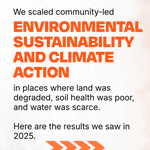
The most interesting part of these results is not the numbers.
It’s who drove them: communities drawing on local knowledge and shaping solutions for the places they know best.
Our 2025 results offer a glimpse of what's possible when communities are at the centre of climate action.
Swipe through to see some of the results.
Want to learn more about how we support environmental sustainability and climate action? Go to ow.ly/ciiG5103KjP


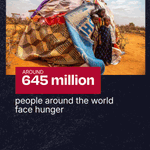
If these numbers make you uncomfortable, don’t look away. Look closer.
Hunger can become easy to talk about yet difficult to fully grasp.
We need to see the scale to truly understand hunger.
The numbers deserve more than a glance. So, take a moment and swipe through.
Then learn how you can be part of ending hunger at ow.ly/ipbW5103S8G
#ENOUGH


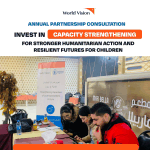
World Vision delegation @KathrynTaetzsch Paul Kinuthia, Viviana Deannuntiis joins @WFP and partners at the Annual Partnership Consultation, 5–6 November, to explore how #CapacityStrengthening and #CapacitySharing can drive more sustainable humanitarian action.
Investing in people and local expertise means stronger responses and better futures for children.
To join the sessions, register: ow.ly/6k9t5102YaL
Learn more: ow.ly/m3kp5102Y9W
#WorldVision #WFP #HumanitarianAction #CapacityStrengthening #CapacitySharing #Localisation #ChildrenInCrisis

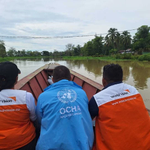
Humanitarian action works best when it's coordinated, accountable, and grounded in community realities.
Through our partnership with @UNOCHA, World Vision helps bring frontline evidence and children's voices into global humanitarian decision-making.
We have worked together to strengthen humanitarian coordination, improve access, protect civilians, and amplify the voices of crisis-affected children and communities.
Together, we're building a more accountable and effective humanitarian system. 🌍
Know more about our partnership:
ow.ly/LuPc5101nQf
#HumanitarianAction #ChildrenInCrisis #Protection #HumanitarianFinancing #AidEffectiveness #ProtectionOfCivilians #Localization #Accountability

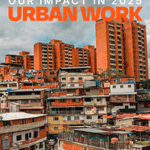
A child can grow up two streets from a hospital and still be one of the farthest from care.
Cities look like places of opportunity. Their averages hide the informal settlements, the rented rooms without running water, and the neighbourhoods where public services stop. UNICEF estimated in 2023 that between 350 and 500 million children already live in slums, and that number is set to triple by 2050.
In 2025, our urban teams worked in cities and the settlements growing on their edges. Swipe through to see the scale of that work.
They've learned that models built for villages rarely transfer neatly into dense neighbourhoods where families move often, rent rather than own, and pay for almost everything they need. The programmes that work treat city and municipal leaders, local groups, and businesses as partners. They also depend on staff who understand how a city actually functions, block by block.
Children in cities need systems designed with them in mind.
Find out how World Vision works with cities to put children at the centre of urban approaches at ow.ly/5L765100i6M


1
4
1,002
📢 #WorldVision is proud to join governments & partners in charting the path forward at the @SchoolMeals_ Coalition's 3rd Ministerial Task Force Meeting, led by @WFP agreeing on the priorities that will guide collective action through 2027-2028 & towards 2030.
Read the Outcome Statement: ow.ly/eaje50ZZm6M
Learn more about our engagement at the School Meals Coalition’s 3rd Ministerial Task Force Meeting:
ow.ly/9BWV50ZZm6L
#SchoolMeals #FoodSecurity #InvestInChildren #ENOUGH


Cash is not the destination. Local power is.
In his latest op-ed, Isidro Navarro Paya calls for a humanitarian system where communities shape decisions, control resources, and lead responses that affect their children and futures.
The article highlights how the growth of #Cash and Voucher Assistance across the humanitarian sector, including through organisations such as the @WFP has demonstrated that people make sound decisions when trusted with resources. It further reflects the importance of accountability and participation principles championed by @UNOCHA in ensuring decisions are shaped by those most affected by crisis.
Read the op-ed and join the conversation on what genuine localisation looks like in practice.
ow.ly/7fgW50ZXt7g
#Localisation #CVA #ChildRights #CashAssistance #HumanitarianAction

Imagine working more than four full days just to afford a basic basket of food.
That's the reality highlighted in our 2026 Price Shocks report, which found that workers in the countries analysed would need an average of 34.3 hours of labour to purchase a standard basket of essential foods.
Behind every statistic are families making difficult choices: fewer meals, mounting debt, postponed healthcare, or children leaving school.
In this new article, Paul Kinuthia explores why food affordability is one of the defining challenges facing children today, and what governments, donors, and humanitarian partners can do about it.
Read the article and discover why affordability, not availability, is increasingly at the heart of the global hunger crisis: ow.ly/5WsC50ZZ38i

Human capital doesno't begin when someone enters the workforce.
It starts in childhood through access to health, nutrition, education, protection and opportunity.
As the World Bank Annual Meetings focus on jobs, growth and economic transformation, one reality should remain front and centre: the workforce of tomorrow is shaped by the investments we make in children today.
Our future begins with children.
@WorldBankGroup
@UNICEF
@ADB_HQ
@UNDP
@IMFNews
#WBGMeetings #WorldBank #HumanCapital #DevelopmentFinance #FutureOfWork


Children experience hunger and food insecurity directly, yet their perspectives are often missing from food systems discussions.
At the World Food Forum 2026, we're calling for children's nutrition, well-being, and voices to be at the heart of every decision.
Meaningful participation leads to more relevant, effective, and accountable solutions. If food systems are to deliver lasting results, children should be participants, not mere observers, in the decisions that shape their food, nutrition, and future.
@WorldBankGroup @UNICEF @nopovertyhunger @WFP @FAO
#WFF2026 #WorldFoodForum #ChildrenFirst #FoodSystems #Nutrition #FoodSecurity #EndHunger #ENOUGH #FoodSecurity #Hunger #FoodSystems # #GlobalAlliance


Rising Food Costs Are Putting Children’s Future at Risk
• Workers in some countries need weeks of labour to afford a basic food basket.
•
Healthy diets remain out of reach for one in three people globally.
•
Children are among the hardest hit, with 35.5 million acutely malnourished worldwide in 2025.
FOR IMMEDIATE RELEASE
- "There are days when my children eat rice with only oil and salt. This is no longer occasional; it has become a daily reality."
For Khin, a mother of eight living in Myanmar's Yangon Region, the food affordability crisis is measured by what she can no longer put on the table. As conflict, economic hardship, and displacement have eroded families' ability to afford food, the money she earns is no longer enough to buy the foods her children once ate regularly, such as chicken or fish. Instead, she looks for the cheapest ingredients she can find.
Khin's story reflects the experience of millions of families around the world highlighted in World Vision's 2026 Price Shocks Report, which finds that food affordability remains a critical challenge for children and families and a clear measure of global inequality.
World Vision's fifth annual food basket survey examined how far families' earnings stretch across 62 countries by comparing the cost of a standard basket of food with average wages. The findings reveal a stark divide in what families can afford.
While workers in high-income countries such as Ireland, the United States, and the United Kingdom can afford a food basket in just over one hour, workers in the least affordable countries require several days or weeks to buy the same basket. In the Central African Republic, it takes almost 30 days of earnings to purchase it.
According to the State of Food Security and Nutrition in the World (SOFI) 2026, global hunger has eased for a third consecutive year. However, progress remains uneven, and healthy diets remain unaffordable for around one in three people globally. World Vision's findings show how rising food costs can leave families with fewer choices, forcing them to buy less food, choose cheaper or less nutritious options, take on debt, sell assets, or go hungry.
For children, the consequences can be immediate and long-lasting. In 2025, an estimated 35.5 million children were acutely malnourished worldwide, including nearly 10 million with severe acute malnutrition. Malnutrition can harm children's physical and cognitive development, weaken their immunity and increase their risk of death. These impacts can continue throughout childhood and into adulthood and are not always easily reversed.
Conflict, displacement, economic crises, and climate change can make these pressures even worse by disrupting livelihoods, markets and supply chains, and making nutritious food harder for children and families to access. Across 47 comparable countries, food basket costs increased in 33 countries and decreased in 14, with the average increase far exceeding the average decrease.
The cost of food is more than a measure of prices. When families cannot afford nutritious food, children can pay the highest price through poorer nutrition, lost opportunities to learn, and risks to their health, safety, and future.
Governments, donors, businesses, and international institutions must make food affordability and children’s access to nutritious food a priority. World Vision calls for action to:
• Protect children during shocks through expanded school meals and stronger social protection programmes.
•
Invest in resilient local food systems and livelihoods that can withstand future crises.
•
Address the conflict, climate, and economic pressures that continue to keep nutritious food out of reach for millions of children and families.
•
Ensure people and communities affected by conflict and displacement can access timely, nutritious food assistance, while supporting pathways towards longer-term food security.
###
1
2
846
At the #SchoolMealsCoalition Ministerial Meeting, organised by the @SchoolMeals_ Coalition Secretariat led by the @WFP, we're advocating for school meals that protect children's nutrition, learning and future opportunities.
Our #PriceShocks5 report findings show rising food costs are pushing healthy diets further out of reach. Strong advocacy means connecting children's realities to policies, budgets and accountability.
Because advocacy succeeds when it closes the distance between a global promise and a child's plate.
#SchoolMeals #FoodSecurity #InvestInChildren

As the World Bank Annual Meetings convene in Bangkok, much of the conversation will focus on jobs, productivity, digital transformation and economic growth.
But one issue sits underneath all of them.
The future of East Asia's workforce is already being shaped by climate pressures, migration and demographic change. Yet policy debates often treat these as separate challenges rather than part of the same human capital story.
If children and young people are moving across borders, facing disrupted education, or struggling to access basic services, what does that mean for the region's long-term economic trajectory?
The most important question may not be how many jobs economies create, but whether development investments are building the capabilities and resilience future workers will need.
As discussions on IDA21 implementation and IDA22 priorities advance, how should the World Bank measure success in building the workforce of tomorrow?
Read the full article at ow.ly/8SEj50ZX8nj
@WorldBankGroup @UNICEF @ADB_HQ @UNDP @IMFNews @WBG_IDA
#WBGMeetings #WorldBank #HumanCapital #DevelopmentFinance #FutureOfWork
