




Pinned Tweet
The chance to keep global warming below 1.5°C with no overshoot is gone.
But urgent action can still limit the overshoot and bring warming back to 1.5°C by 2100.
Current policies, however, put the 🌎 on course for up to 2.8°C this century.
New #EmissionsGap Report: unep.org/en/news-and-stories…

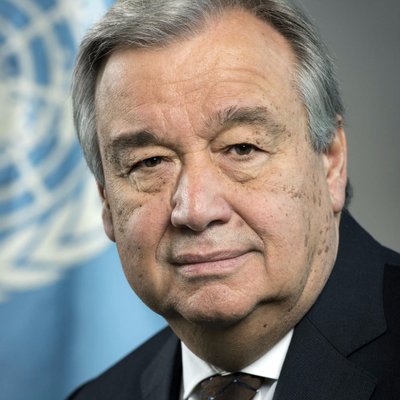
“Opportunities to accelerate action have never been more abundant.”
@UN Secretary-General @antonioguterres calls for stronger climate pledges & wider use of proven policies as the world is set to breach the Paris Agreement's 1.5°C limit of global warming.
#EmissionsGap
Over the past 10 years, renewable electricity capacity has grown 3x faster than expected.
But progress on cutting fossil fuel use, tackling deforestation and reducing methane is still falling short.
New #EmissionsGap report shows where progress is happening and where action must accelerate: unep.org/en/news-and-stories…

Cookware, paint and spices: many everyday items are filled with lead.
This toxic metal is linked to over 1.5 million deaths a year worldwide and disproportionately harms children, while also damaging ecosystems.
Learn how we can #BeatChemicalPollution: tinyurl.com/3puadhu5

“We must pull out all the stops to minimize peak warming and return to 1.5°C by the end of the century.”
UNEP Executive Director Inger Andersen calls for urgent action to cut emissions, building on climate policies that have already proven successful.
New #EmissionsGap Report: unep.org/en/news-and-stories…

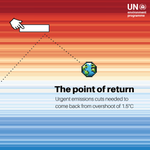
Global warming will overshoot 1.5°C in the coming years.
There’s still a chance to bring temperatures back down, but the window is closing fast.
This is the point of return.
#EmissionsGap
UN Environment Programme retweeted

Global temperature rise is on track to exceed the 1.5°C target. “We must pull out all the stops to minimize peak warming and return to 1.5°C by the end of the century,” says @UNEP chief Inger Anderson.
news.un.org/en/story/2026/10…

UNEP's latest #EmissionsGap Report is out today.
How far off are we from the Paris Agreement goals? What will it take to bring the planet's temperature back down? And what progress have we made so far?
Our explainer breaks down the report's key findings & what they mean: bit.ly/4jyNsze

UN Environment Programme retweeted
Every fraction of a degree of global warming matters.
Yet greenhouse gas emissions remain at record levels.
The new @UNEP #EmissionsGap Report shows what it will take to change course & pull back from the brink of a climate catastrophe.
unep.org/en/news-and-stories…
What needs to change to limit overshoot and bring global warming back to 1.5°C by the end of the century?
From renewable energy to coal and methane, UNEP's latest #EmissionsGap Report sets out the changes needed to help make that possible.
Read more: ow.ly/GhVe50ZZEY8

The 2026 #EmissionsGap Report launches today.
Where are global emissions heading, and what will it take to change course?
Join UNEP and @ODI_Global as we unpack the latest findings and the action needed to close the gap.
Watch live: youtube.com/live/ZbGnvLq3dPg

50 billion tonnes of sand are used every year, making it the world’s 2nd most used resource after water.
But we are extracting it faster than nature can replenish it.
This UNEP report warns unsustainable sand extraction is threatening ecosystems and livelihoods: unep.org/news-and-stories/pr…

While cutting carbon emissions remains essential, it’s no longer enough to stop the effects of climate change already unfolding.
Join the push for #ClimateAction and adaptation by accessing the latest news and data: unep.org/news-and-stories/ne…

Nature underpins everything we need to survive.
The world agreed to conserve 30% of land and seas and restore 30% of degraded ecosystems by 2030. But these targets are off track.
#COP17Armenia is a chance to take stock and speed up action.
What’s on the agenda: unep.org/en/news-and-stories…

Trends come and go, but the waste stays… piling up in landfills and polluting our planet.
The solution? Buy less, wear longer, repair, swap, and choose circular fashion.
Here are other ways to reduce waste in the fashion industry: unep.org/news-and-stories/st…

Our soil is one of Earth's greatest reservoirs of biodiversity, and it's more important than you think.
Yet human activities pose a threat to soil biodiversity and the ecosystem services it provides.
Learn more about the important role soil plays: decadeonrestoration.org/stor…

Nature action is at a critical juncture.
#COP17Armenia marks the halfway point to the 2030 targets of the Kunming-Montreal Global Biodiversity Framework.
As countries take stock of progress for the first time, follow the latest updates: unep.org/news-and-stories/ne…

Nature provides the foundations that sustain all life on Earth, from clean water and healthy soils to the economies built upon them.
Dive in to discover how nature can drive economic and social transformation: unep.org/topics/nature-actio…

Humanity depends on biodiversity.
Over the next two weeks, countries are meeting at #COP17Armenia to take stock of progress on the Global Biodiversity Framework - the world's plan to halt and reverse nature loss.
More info: unep.org/en/news-and-stories…

The world is set to exceed 1.5°C of warming.
Even if the temperature comes back down, the 🌎 may never be quite the same.
But we must not abandon the 1.5°C goal.
The higher & longer the global temperature rise, the greater the risks.
UNEP's Martin Krause explains: bit.ly/3TVOISA
