







Pinned Tweet
We've made some significant updates to our website :)
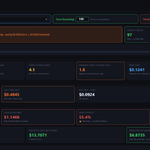
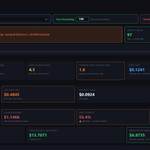
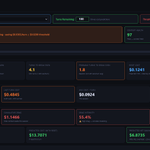
Check out our SpawnPoint dashboard trainer to show you and your agents all about session economics.
Planning your tasks around respawning your agents at the optimal times instead of letting them go to compression will reduce your API bill significantly and won't devalue your injected startup rules/instructions and context like compression does.
Check it out if you're struggling with API costs or wondering why your agent is suddenly forgetting your rules or context.
agentcontinuum.ai

5
>A developer tracked every token consumed across 42 agent runs on a real codebase. The result: 70% were waste.
>Not overhead. Not scaffolding. Waste.
>Here's the breakdown of where the money actually went:35-45% — file reading and code search (reading entire files to find one function)
15-25% — tool and command output (60 commands × 3,500 tokens each = 210K tokens of noise)
15-20% — context re-sending (full conversation history resent on every single API call, growing linearly)
10-15% — reasoning and planning
5-15% — actual code generation — the part you wanted
>The part you're paying for is the cheapest line item. The dead weight is what's killing your bill.
And it gets worse over time. At turn 1, the agent sends your request. At turn 50, it sends every previous message, tool call, and response — all of it, every turn, whether it's relevant or not.
>This is exactly the problem Agent Continuum measures in real time. Not after the fact. Not in a monthly bill. Turn by turn, so you can see the waste accumulating before it compounds.
>agentcontinuum.ai
Source: morphllm.com/ai-coding-costs
Forbes just asked why AI teams are burning through tokens faster than ever — and the answer isn't that they're doing more work. It's that most of the tokens aren't doing any work at all.
>
The dirty secret of agentic AI: the longer your session runs, the more context accumulates that has nothing to do with the current task. Old tool outputs. Resolved errors. Finished subtasks. All of it gets re-injected every single turn, and you pay for every token whether it's useful or not.
>
This is the problem we built Agent Continuum around. Not compression. Not summarization. Actual per-turn measurement of what's earning its carry cost and what isn't — so you know exactly where your money is going before it's gone.
>
Most teams find out they have a context waste problem when their monthly bill arrives. We think you should know turn by turn.
>
agentcontinuum.ai
forbes.com/sites/ronschmelze…
10
slack.engineering/managing-c…
Slack Engineering just published on managing context in long-running agents. The problem they describe — costs rising, performance declining as context fills — is exactly what AEL was built for.
A typical customer support agent hits 2.3 forced context resets per hour — turning an $0.08/hr agent into $0.18/hr effective cost. Most teams never see that math. We do.
Coding agents are hitting 30M+ tokens per task. 95% of that cost is input tokens — most of it dead weight carried turn to turn. There's a better way to think about this. agentcontinuum.ai

1
12
Replacing compression with the MEL method, every dev should check this out if they want to save maximum money on their API bills. With better and more persistent memory systems, this is the new paradigm of agent economics.
agentcontinuum.ai
23
Is compression still your “go-to” method for keeping your context under control?
That made sense when LLM apps were simple today, it can be one of the most expensive habits in AI.
Most teams still treat context overload the same way:
Take a long session, summarize it, stuff the summary back into the prompt, repeat.
It feels efficient.
But every cycle can quietly degrade quality.
You lose edge cases.
You lose exact user preferences.
You lose decisions made 20 turns ago.
You lose the tiny details that separate a useful agent from an unreliable one.
Then teams wonder why outputs drift, costs rise, and users stop trusting the system.
The problem usually isn’t that the model needs less context.
It’s that the model needs the right context.
That means moving beyond compression-first design and toward context orchestration:
• Retrieve only what is relevant now
• Store durable facts as structured memory
• Pass only changes instead of full state
• Keep separate memory threads for separate workflows
• Dynamically rank what deserves prompt space
Same goal. Better method.
The future of scalable AI systems won’t be won by whoever can cram the most tokens into a window.
It will be won by whoever knows what not to send.
Compression is the old paradigm, check out the AEL/MEL method of context management and maximum efficiency limits.
agentcontinuum.ai
8
Tired of your agent sessions quietly bleeding money even when it’s “just researching” or engineering something?
I do medium-heavy research + agent dev every day. Context grows, tools fire 5-8x per turn, and suddenly I’m paying full price to re-read stuff that stopped mattering 20 turns ago.
Compression tools keep popping up… but they never felt right for my workflow. Here’s why I ditched them for something better 👇
Compression sounds smart on paper:
Triggered by size (200k tokens etc.)
Lossy summary that smears everything together
Event itself costs real $ (and gets more expensive as your session ages)
Leaves you with a bigger residual context than a clean reset
For chat? Fine. For real multi-call agent work? It fires too late and doesn’t actually kill the waste — it just hides it.
What actually works for me: a cost-based trigger that watches the real waste per turn (multiplied by all those tool calls).
It tells me exactly when spawning fresh becomes cheaper… and when I’m paying extra to keep building deep context (which I often want for research/engineering).
I stay past the max-efficiency point on purpose when the task needs it — the dashboard just shows me the price tag in real time so I’m never guessing.
Result on my medium sessions: 30-55% lower total cost while still getting the context buildup I need. No more surprise bills.
Just dropped the updated AEL Dashboard that shows this live (MEL point + your personal waste tolerance window).
Who else is fighting context bloat in actual agent projects? Drop your typical API calls per turn (2? 6? 10?) — curious how many of you are in the same boat.
→ agentcontinuum.ai
12
So many folks complaining about their API costs, rate limits and which model is the cheapest to use per token. Nobody is talking about how to reduce the waste tokens your sessions are generating every turn and the carryover waste of multiple tool calls each turn.
It seems as though most startup agent developers are oblivious to those costs and don't even realize they exist! If you cant afford your monthly API costs and want to improve your agents efficiency to the maximum extent, you need to try the AEL dashboard "trainer" that tracks your session waste vs total cost every turn. See your wasted carryover in real time and understand the limits of your agents efficiency and when to reset the session.
Ask your agent if AEL method is right for you. If you want to save money on your API bill no matter what model or LLM you use, start with knowing when to eliminate the waste you're carrying every turn. Learn more at agentcontinuum.ai

1
1
19
We've built a dashboard to provide you with all the information you need about agent efficiency. Track your costs in real time and set your own waste thresholds. Makes a great agent efficiency trainer. "Ask your agent if AEL is right for you"
agentcontinuum.ai

2
28
---
Decide your agent's cost thresholds and shed dead context that slows your agent and inflates your bill.
>
We built the math to find that exact moment for any agent's tasks — turn by turn, zero overhead. Easily reduce API use in half or more.
>
📷 agentcontinuum.ai
1
1
25