

Doctoral Academic Teacher at The University of Liverpool, researching the impact of care experience on later life mental health. Views are my own. She/her.
Joined February 2019
- Tweets463
- Following860
- Followers283
- Likes506




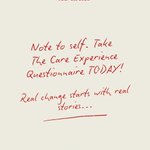


🖤 So much of what matters in care goes unseen, unheard, unspoken - The Care Experience Study is working to change that
We're exploring how experiences within children’s social care shape mental health later in life

✨ “Alone we can do so little. Together we can do so much” ✨
On June 6th, we held the Stronger Together conference at the University of Liverpool.
The aim?
To bring together science, the arts, social care, and lived experience — to innovate, inspire, and

1
1
138
Conditional Care
These quotes are a snapshot of some of the thoughts and feelings care experience people shared with us during the qualitative phase of The Care Experience Study.
One of the things that came across strongly in participants’ narratives was a shared understanding

1
1
323
📚 Insights on placement instability
In this paper, Conway explores why well-meaning policies so often fail to deliver positive outcomes for children in care.
Despite the best intentions, services can become fragmented — leading to splits between professionals, fuelling blame,


1
44
What does this quote say to you?
For me, it shows how some practices in children’s social care, albeit unintentionally, have become quietly institutionalising.
1
41
🔗 Link in bio
Change doesn’t happen on its own — and meaningful change doesn’t happen without lived experience.
Take part or share today!
🌐 Website: TheCareExperienceStudy.com
#CareExperienced #ShareYourStory #ResearchForChange #StopTheHealthGap #BeTheEvidence #CareLeavers

Meet the lead researcher behind The Care Experience Study…
Hi, I’m Sally 👋
I’ve worked in children’s social care for over 20 years — and now I’m researching how care experience can shape mental health later in life.

1
3
103
To those who spend their lives caring for children and young people in care – this one’s for you ❤️
This quote came from one of the interviews that informed The Care Experience Questionnaire. It’s about the care journey.
It is one of my favourites.

Does the care system safeguard children’s mental health?
We’re developing a tool to better understand how experiences in care shape mental health later in life.
The questions we’re asking are based on what care-experienced people told us about their time in care —


1
37
the good and the bad.
Are you care-experienced? How was it for you?
Help change the system — take part in our study today.
📍 Link in bio
Learn more: thecareexperiencestudy.com
Let’s build a better future — together.

1
25
We’re so grateful to everyone who’s taken part in The Care Experience Study so far — thank you. 🙏
Your responses are helping us understand how experiences in care shape mental health and how we can make things better for future generations.

1
40
Are you care experienced? Haven’t taken part yet? This is your moment. Change needs you.
📍Link to study in bio
🔗 Learn more: TheCareExperienceStudy.com
#TheCareExperienceStudy #CareExperienced #SocialCareResearch #MentalHealthMatters #YourVoiceMatters #ShapeChange #CareLeavers
1
22
Research changes lives.
A recent review of research by Blader et al. (2025) provides important insights into what is happening beneath the surface for emotionally dysregulated young people—


1
1
62


Individuals who have spent time in care face poorer health outcomes across the life course.
One of the most striking findings is the higher rates of premature death among this group.

1
35
Empathy is a developmental skill that enables us to feel another’s pain, see the world from their perspective, and feel compelled to ease their suffering (or to join them in their happiness).
That’s the space our research is working in.

The Care Experience Questionnaire explores how care experience shapes mental health — based on what care-experienced people told us matters.
🧡 Add your voice.
🌐 Learn more or take part: thecareexperiencestudy.com
1
25
Each quote in this post reflects a real experience shared by someone who spent time in care.
They told us what it felt like to be in care. What helped. What hurt. What stayed with them.


1
2
60
Now, the Care Experience Questionnaire is building on these insights to explore how care shapes mental health.
Click the link to take part or share it with your network:
👉 livpsych.eu.qualtrics.com/jf…\_9pJcdVqXzruTxfU
More info?
📧 [email protected]
🌐 thecareexperiencestudy.com


61
Why are health outcomes so poor for people who’ve been in care?
Children who grow up in care often face worse physical and mental health than their peers—and the reasons go far beyond early adversity.

1
2
156


🚀 Website now live!
The Care Experience Study has a new home: careexperiencestudy.com
This site is all about making it easier for people to:
✔️ Find out more about the research
✔️ Take part in the Care Experience Questionnaire
✔️ Share it with other
📢 Visit the site, take part, and help us spread the word.
#CareExperience #CEP #MentalHealth #Questionnaire #SocialCareResearch #CareLeavers #FosterCare #systemchange
20
If it resonates — it’s because it matters.
Every person who takes part in this study moves us closer to understanding how experiences in care — like loss, touch, instability, uncertainty, fear, stress, control, and institutionalisation — influence mental health.

This research began by listening to what care-experienced people said shaped their time in care. The Care Experience Questionnaire is now building on those insights to explore how they impact mental health.

💡 This research explored how care experience affects mental health. The findings shaped The Care Experience Questionnaire — but we need more voices.
👉 If you're care-experienced, take part here: livpsych.eu.qualtrics.com/jf…
📩 [email protected]

43