

All things global macro with a specific focus on FX and Rates; views not that of my employer. Contributor: https://nitter.gq/t.co/7wBZ9uKYSA
London, England
Joined March 2018
- Tweets11K
- Following1.8K
- Followers2.4K
- Likes6.2K


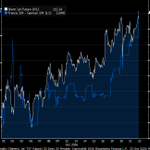


So the iShares Semi index is back just 1% above its pre-Anthropic low. So before massive CapEx commitments were bearish, now its bearish that the balance sheet ex-AI can't sustain these CapEx commitments?
Seems sentiment is close to rock bottom on this trade now...
Simon Harvey retweeted

The UK's unsustainable fiscal arithmetic: interest and welfare up, investment down . . . chart shows change in percentage points as a share of GDP
Reflecting on Wednesday’s Budget, I stick to my view that it is one that markets can live with. Judging by the press coverage, however, the reception of the public appears less than lukewarm. No wonder.
For all the Prime Minister’s claims to have big ambitions and a 10-year plan, his government’s first Budget was a small and timid affair.
Critically, it did not even attempt to tackle a key voter frustration: that more of their taxes are going on debt interest and welfare – which is set to rise by an eye-watering amount of almost £100bn between 2025-26 and 2031-32.
On the OBR’s projections, welfare rises by 0.5 percentage points of GDP over this period while debt interest jumps 0.7 points. Meanwhile, public sector net investment is set to fall by 0.5 points. Total spending rises by 0.2 points to 44.7% of GDP. So the cut in investment pays for only part of those increases.
This mix of decisions is decidedly anti-growth: a rising share of spending, partly financed by borrowing, that goes on welfare and interest rather than on productivity-enhancing investment – which is badly needed to lift trend growth and get public finances on a less unsustainable track.
#Budget2026 #burnham #Healey

Walter wrecking peoples heads with some ludicrous impulse response estimates... n.b. Lagarde said yields are up ~35bps across the Eurozone

Must say, I’m a bit puzzled by the drop in European yields…. Sure the ECB says underlying inflation broadly stable, no visible second round effects, but it’s the energy environment which matters, and here it had to acknowledge the upside risks and likelihood of 2nd round effects

So Lagarde seen stepping down on Feb 7th after the Feb 4th meeting (the first scheduled for next year), with a new President required for the Mar meeting and projections.
A decision over de Cos vs Knot is now expedited.

*BURNHAM REAFFIRMS NO SNAP UK ELECTION IN NEXT 12 MONTHS
I thought before it was no election until 2029?
I understand there is a lot of back-and-forth and model calibration to do, but taking market path of 10-days to Aug 19th is way too sympathetic for the economy.... has Brent peaking at below $100 and gas just above 150p/therm ... We're currently at $115 and 247p respectively.

Simon Harvey retweeted

***The 2026 Budget - what to expect***
FISCAL HEADROOM
* John Healey is expected to lower the fiscal headroom from £23bn to around £15bn after economic hit caused by Iran war
* Ministers fear fresh military strikes by the US against Iran in wake of mid-terms will render OBR forecasts obsolete within days - worse is to come
ENERGY BILLS
*Healey will extend the warm homes discount for families on benefits, giving them another £100 off their energy bills
* But households not on benefits will bear the full brunt of the rise in January, when bills are due to go up by 27% to an average of £2,192
* Gas standing charges will be scrapped next year, saving £27 on a typical bill although those with larger homes who use more energy will pay more
* Healey will announce long-term plans to move more green levies off energy bills in a bid to reduce them 'for good
* He's also expected to announce long-term plans to remove the link between gas prices and electricity prices
FUEL DUTY
* The fuel duty freeze - which was due to end in January - will be extended to help with soaring prices at the pumps
BANKING TAX
* The biggest 'revenue raiser' in the Budget. Healey has been lobbied to restore the 8% surcharge on corporation tax, which would raise £2bn
ONLINE RETAILER TAX
* Online retail giants like Amazon, eBay and Temu will be made responsible for collecting tax from retailers selling on their platforms
FAMILY BUSINESSES
* Thousands of high-street shops, cafes, pubs and hairdressers will no longer have to pay business rates. Move funded with online retailer tax
MINIMUM WAGE
* The living wage, paid by older workers, and the national minimum wage, paid by those aged 18 to 21, will increase by 3.9%. Healey has chosen to stop the huge rises in the minimum wage amid concerns it was pricing young people out of work
PENSIONERS
* Healey will announce plans to shield 1million pensioners from paying income tax
* The state pension is due to rise by 3.9%, taking 1million people with low incomes above the income tax threshold
* Healey will introduce a new tax allowance for low-income pensioners
* He has also decided not to reduce the tax-free pensino lump sum
DEFENCE SPENDING
* Healey's immediate priority is filling £4.7bn hole in the defence investment plan. Cuts expected to departmental budgets elsewhere
* He is also expected to announce additional borrowing to fund government investment vehicles, which will then be used to fund defence
* But he WILL NOT set out a timeline for hitting the 3% defence spending target. That will come in the spending review next year
HELP TO BUY
* A revived Help to Buy scheme called Your First Home
* It will offer first time buyers a 20% equity loan to help them buy a new-build home, with a minimum deposit of just 2.5%
* The earnings cap will be set at £140,000 in London and £110,000 outside London
RECORD TAX LEVELS
* The OBR is expected to once again say that the tax burden will rise to another post-war record
* It's being driven by fiscal drag. Half a million people will be dragged into paying the higher rate
* The freeze - which is pencilled in for more than a decade - is effectively the single biggest tax rise in history
OBR forecasts
* They will highlight the huge uncertainty caused by the war in Iran. Ministers think it could make the OBR forecasts obsolete within weeks
* The tax revenues underpinning the Budget assume that Rosebank will be given the go-ahead, despite Cabinet splits on the issue
WHAT ISN'T IN IT
* Healey has rejected calls from colleagues to increase Capital Gains Tax amid concerns that doing so would damage growth and end up reducing tax revenues
* Major welfare reform will wait until after the Milburn review, which is coming after the Budget. It will require significant upfront investment in employment support
* Defence spending - the big decision has been deferred until the spending review, expected in Autumn 2027
Simon Harvey retweeted

Finance has run on two inputs for centuries: labor and capital. AI is adding a third input, intelligence, and paying for it is breaking legacy corporate credit.
So finance is mutating to the needs of this new technology, like it has always done for new technologies.


Simon Harvey retweeted

Kevin Warsh wants money to play a bigger part in monetary policy
It wasn't half bad after the pandemic as an early warning
Is it time for monetarism to stage a comeback?
ft.com/content/a7de51d1-f4bc…
ft.com/content/a7de51d1-f4bc…

Simon Harvey retweeted

When discussing Midterms with clients, I say this is the single biggest risk of a Dem sweep.
Restoring Obamacare, Medicaid, and other Entitlements will blow out the budget deficit further, and be extremely negative for bonds. Even a shallow sweep would likely see these programs pork rolled into the large defense spending increase, meaning a double whammy to the deficit (and bonds).
If Dems are successful in paring back tariffs (I doubt they will be, but we’ll see) that’s further deficit addition. The OBBB was completely offset by projected tariff revenues; now we’ll be in a state of OBBB *plus* more entitlements *minus* trade revenues.

A neat chart from Kallum putting this 3.9% increase into perspective. I agree with him that the number isn't as worrisome as the nominal level suggests, especially when you consider the inflation profile for 2027 which will see the NLW fall in real terms.

Here is a chart showing the planned increase versus all increases in the minimum wage since it was introduced in 1999 (with help from Claude).
Healey’s planned 3.9% rise is below the long-term mean of 4.8% (and 6.0% since 2016, when the National Living Wage was introduced) but close to the median of 4.1%.
At the margin, it will add to wage cost pressures and hence unemployment but should not have a broader impact on economic performance or inflation trends.
#ukbudget #healey #burnham
