

Founder of DobotAI | Helping Agencies Automate then Scale | We'll save you $50K in payroll by adding automations into your business
Free AI Automation Audit ➡️
Joined November 2021
- Tweets1.4K
- Following70
- Followers161
- Likes1.2K




Pinned Tweet
I built a full internal AI Agents Training for my engineers in my agency. And I condensed it to give it to you.
It's called "Zero to Frontier," and it's everything I've learned after:
• Building AI agents and automation systems for real businesses
• Working across 10+ niches
• Configuring CRMs, pipelines, and agents that actually run in production, not just in a demo
It's going to help you fix the 3 biggest mistakes people are making with AI agents in 2026.
(I see these in almost every system I audit)
1. Thinking everything built using Claude code is an "agent"
2. Wanting an agent when a simple automation would be faster, cheaper, and more reliable
3. Living in tutorial hell and never shipping a single build
Thing is...
They're easy to fix once you understand the system.
So I mapped the whole thing out, from zero all the way to frontier.
Inside Module 1:
1. The real spectrum from automation to agent, so you stop mislabeling what you're building
2. The four pillars every working agent needs
3. Governance and stop conditions done right, so your agent never racks up a surprise bill
4. A hands-on build you actually finish inside the module
5. A room full of builders shipping alongside you, plus weekly coaching
Module 1 is live right now in my Skool community, and it's free for the next 12 members. With a new module coming out every week.
Memberships for life.
Want the link?
Comment "AGENT" and I'll send it over.
Everyone is fighting over which AI model is best.
Meanwhile the thing that actually changed my business is a folder of 1,000+ boring text files.
It is called a second brain. Here is why it beats the model race.
I gave a normal chatbot a simple task: write a follow-up email to my client Ben.
It had no clue who Ben was. It asked me who he is, what we last talked about, what the email should do.
Same prompt to my brain, same model:
It found our sales call from June 22nd. Saw I had already sent a recap. Knew his real name was Benjamin. Wrote the email in my voice and loaded it into Gmail, ready to send.
Zero questions.
The wild part: the cheapest, fastest model (Haiku) WITH this brain beats the newest ones without it.
Fable 5, GPT Soul, Kimi K3 all just dropped. Every one of them still stops and asks me who Ben is.
Because "smarter AI" was never about a bigger model. It is about the AI already knowing your context before it writes anything.
I made a full video on how to build your own this week. What is inside:
- the email test that proves it in 30 seconds
- the 3 folders every brain starts with
- the janitor that keeps 1,784 files from becoming chaos
- the 5 steps to build yours by the weekend
Watch here: youtu.be/LBIu8c_pMiE

1
90
"Can you build me an AI agent?"
Most common request I get. Most of the time the honest answer is: you don't need one.
Not because AI is overrated. Because what's slowing you down isn't AI.
So I ask one thing back: where does your week actually go?
The answer is never intelligent. It's mechanical:
- A Slack channel set up by hand every time a client signs
- The same info copied between three tools all day
- A status updated in four places after every call
- An email you've sent 200 times
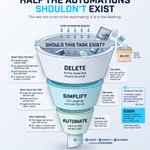
That's not a job for AI. It's a rule: when this happens, do that. Built in an afternoon, runs forever.
Founders get sold expensive "AI" when a plain automation fixes most of it for a fraction of the price.
Most companies don't have an intelligence problem. They have an "it's all still done by hand" problem.
Fix that first.

1
54
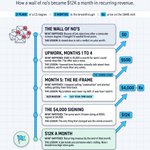
I raised my prices 8x with the same exact skill set.
Same automations. Same tools. Same me. Only the packaging changed.
Early on I sold "automation." $500/mo. Build whatever they pointed at.
The work was fine. The offer was the problem.
"Automation" is a feature. Nobody lies awake wanting more automation. They lie awake wanting their time back.
So I stopped selling what I build and started selling what they want.
The month I repositioned around buying back time, I signed a client at $4K. Same skill I had at $500.
People don't pay for what you do. They pay for what it does for them.
If you're underpaid, it might not be your skill. It might be your packaging.

2
41
If you handed me your business tomorrow, the first 5 things I'd automate, in order:
1. Lead follow-up. You lose money on leads you forgot, not leads you never got. Auto follow-up within the hour.
2. Lead capture. Every channel into one CRM, with a source and a next step.
3. Onboarding. Slack channel, folder, welcome email, kickoff doc, all fired the second a deal closes.
4. Handoffs. Call ends, notes + next actions route to the owner automatically.
5. Reporting. The numbers that matter, sent every Monday, no spreadsheet.
Not on the list: anything talking to customers unsupervised. That comes later.
Boring, unglamorous, buys back double-digit hours a week.

26
I raised my prices 8x with the same exact skill set.
Same automations. Same tools. Same me. Only the packaging changed.
Early on I sold "automation." $500/mo. Build whatever they pointed at.
The work was fine. The offer was the problem.
"Automation" is a feature. Nobody lies awake wanting more automation. They lie awake wanting their time back.
So I stopped selling what I build and started selling what they want.
The month I repositioned around buying back time, I signed a client at $4K. Same skill I had at $500.
People don't pay for what you do. They pay for what it does for them.
If you're underpaid, it might not be your skill. It might be your packaging.

1
41
I build AI agents for businesses.
The first module of my program is something people pay for.
I compressed it into 37 minutes and put it on YouTube for free.
Most people trying to get into AI are drowning in tools and prompts, and most of what they call an "agent" isn't actually an agent.
This module fixes that. It's the foundation: how to look at any AI system and know exactly what it is.
Here's what's in it:
- the 5 levels from a plain API call to a full agent network, and why level 3 to 4 is the only jump that matters (the system stops following your script and starts choosing its own path)
- the four things every real agent does, take one away and it's not an agent
- why most "agents" are just pipelines with a human deciding every branch
generative mistakes vs agentic ones: one is annoying, the other already happened
- the DevOps agent that burned $12,000 overnight, the retail agent that bought 10,000 shoes with no limit, and the one question that stops both
- how to classify any system honestly, using Aria, the agent we build the module around
The full course to work through yourself lives in my $29/mo community.
The 37-minute version is free and stands on its own.
Start here: youtu.be/ktJOAwBTvnk

3
95
You are probably paying for a task an AI agent could hold, and you cannot name which one. Here is the 10-second test.
1
1
53
3. Customer questions pass. Lead qualification passes. Inbox sorting passes. Invoice chasing passes.
Most people find three or four in the first ten minutes of looking. That list is your roadmap.
1
15
Wednesday I map these live with 20 people, one at a time, then we design the community around them together. A few seats left: form.typeform.com/to/k4BRuXx…
13
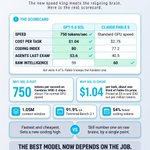
Claude Fable 5 finally has real competition.
OpenAI's GPT-5.6 Sol is the first model that trades blows with it instead of trailing it.
The head-to-head:
Speed: Sol runs ~750 tokens/sec on Cerebras. About 15x faster than Fable 5.
Cost: comparable work at roughly half the price, per the benchmark write-ups.
Coding: Sol sets a new high, just ahead of Fable 5.
Intelligence: the close one. Sol lands within about a point of Fable 5.
To be fair: Fable 5 still holds the top spot on raw intelligence. Challenged, not dethroned.
But the era of one obvious best model is over. Fastest and cheapest is Sol. The hardest reasoning problem is still Fable 5, barely. And that gap keeps flipping.
GPT 5.6 might be the better alternative than buying usage credits for Fable 5.

1
139
This Wednesday I am putting 20 people in a room with me, cameras on, for 90 minutes. I map the top AI opportunities in each person's business live, then together we design the community I am building around this. Free. Registration is open now, link in the reply. 👇
1
1
345
5. The founding mechanic: the 20 become founding members at $9/mo locked for life. While I build what the room asked for, membership is $29. When it ships, $49.
1
31
6. It is this Wednesday and seats are limited.
Register here: form.typeform.com/to/k4BRuXx….
When the 20 fill, everyone after goes to the round two waitlist.
29