

Peer-reviewed articles with an international perspective pertaining to the clinical care of patients with disorders of the central and peripheral nervous system
Joined April 2023
- Tweets300
- Following35
- Followers188
- Likes404


🧠 When does amantadine turn toxic in Parkinson's disease?
Amantadine is a go-to for PD and levodopa-induced dyskinesia, but CNS toxicity (confusion, hallucinations, agitation, myoclonus) can sneak up, especially in older, renally impaired patients.
A cross-sectional study of PD patients digs into exactly when that risk spikes:
Key findings:
⚠️Age ≥75 yrs → 11.5x higher odds of CNS toxicity
⚠️Daily dose ≥150 mg → 7.3x higher odds
⚠️Serum creatinine ≥0.85 mg/dL → 5.4x higher odds
⚠️Low body weight (<48.5 kg) → 6.2x higher odds
A bedside nomogram (dose + creatinine clearance) was built to estimate individual amantadine exposure
Bottom line: age + renal function + dose stack the risk. Individualized dosing and proactive monitoring matter more than a one-size-fits-all cutoff.
🔗 doi.org/10.1016/j.jocn.2026.…
#ParkinsonsDisease #Neurology #ClinicalPharmacology #DrugSafety #Amantadine #GeriatricMedicine #Pharmacokinetics #MovementDisorders #PatientSafety

🧠 Data challenges "longer is safer" thinking on DAPT after aneurysm treatment with stent-assisted coiling or flow diverter.
In a national cohort of 12,221 patients treated with stent-assisted coiling or flow diversion for unruptured brain aneurysms:
✅ Longer DAPT (>90 days) → no reduction in ischemic stroke risk
⚠️ Longer DAPT → higher bleeding risk (up to +2.9% absolute risk vs. short-term therapy)
🎯 Some subgroups (larger aneurysms, ICA involvement) may still benefit from extended therapy
Bottom line: shorter DAPT courses may be enough for most patients?
📄 Full study: doi.org/10.1016/j.jocn.2026.…
#Neurosurgery #Neurointervention #DAPT #IntracranialAneurysm #StrokePrevention #ClinicalResearch

🧠 New in Journal of Clinical Neuroscience: Is 21 days of hospitalization and nimodipine always necessary after aneurysmal SAH?
Toyota et al. present a retrospective cohort of 49 good-grade aSAH patients (WFNS I–III) discharged home within 14 days of ictus under a standardized institutional protocol.
Who was considered for early discharge:
🔹 Good-grade aSAH (WFNS I–III), aneurysm secured
🔹 Neurologically intact, no focal deficit from vasospasm, hydrocephalus, or seizures
🔹 Reassuring day-10 post-SAH imaging — no hydrocephalus, no severe vasospasm (≥50% narrowing)
🔹 Hemodynamically stable, off supplemental oxygen
🔹 Cleared by the full allied health team (OT, PT, speech-language pathology)
Key outcomes:
🔹 Zero cases of clinical vasospasm or delayed cerebral ischemia
🔹 Only 8.2% re-presented to the ED within 30 days; just 2% required readmission
🔹 Over a third showed radiographic vasospasm — but none progressed to clinical sequelae
🔹 All patients received ≤14 days of nimodipine (median 10 days), well short of the standard 21-day course
Read the full article: doi.org/10.1016/j.jocn.2026.…
#Neurosurgery #SubarachnoidHemorrhage #NeurocriticalCare #Nimodipine #Vasospasm #ClinicalResearch #Neurology
🧠 When a "vasculitis" may be Erdheim-Chester disease...
Delacotte et al. describe case report and systematic review. A woman with recurrent strokes, vertebral and basilar artery stenosis, and aortitis, initially treated as giant cell arteritis, but relaped despite steroids, cyclophosphamide, and methotrexate.
The real diagnosis? Erdheim-Chester disease (ECD), a rare histiocytosis — uncovered only after tibial osteosclerosis was spotted on imaging. Switching to anakinra brought long-term remission.
Pairing this case with a systematic review of 12 prior reports, the authors define an emerging and likely underdiagnosed CNS pattern: "cerebrovascular ECD": intracranial perivascular/arterial infiltration and stenosis causing recurrent ischemic events, often overlapping with periaortic and parenchymal disease, and carrying a poor prognosis in over half of followed patients.
🔑 Key takeaway: Vascular imaging should be a standard part of brain MRI protocols in ECD, and cerebrovascular ECD deserves a seat at the table in the differential diagnosis of inflammatory neurovascular disease, alongside GCA, primary CNS vasculitis, and atherosclerosis.
Read the full article here: sciencedirect.com/science/ar…
#ErdheimChesterDisease #Histiocytosis #Neurology #Stroke #RareDisease #ClinicalResearch #Neuroimmunology #InternalMedicine #CNSVasculitis

🧠 What do ancient trepanation, Harvey Cushing, and modern robotic neurosurgery have in common?
Our latest review in the Journal of Clinical Neuroscience explores how thousands of years of innovation, and centuries of warfare, have fundamentally shaped modern craniotomy and neurotrauma care.
Read the full article here: doi.org/10.1016/j.jocn.2026.…
#JournalOfClinicalNeuroscience #JOCN #Neurosurgery #Neurotrauma #Craniotomy #HistoryOfMedicine #MilitaryMedicine #BrainSurgery


🎉 Congratulations to the winners of the Journal of Clinical Neuroscience Awards at the 18th Asian Australasian Congress of Neurological Surgeons (AACNS)!
🏆 Best Operative Video Session
Dr. Ken Matsushima (Japan)
#54 – Photon-counting CT-assisted Targeted Skull-base Outflow Disconnection for Non-sinus Meningo-orbital Band Dural AVF with Ectatic SMCV Outflow after Flow-reductive Transarterial Embolization
🏆 Best Oral Presentation
Dr. Joselv Albano (Philippines)
#228 – Evolution of Frontoethmoidal Encephalocele Repair in the Southern Philippines: From Mission-Based Surgery to Locally Sustained Innovation
Congratulations to both award recipients for their outstanding contributions to advancing neurosurgery through innovation, technical excellence, and impactful research. We are proud to recognize your achievements and thank all presenters for sharing their exceptional work.
#JournalOfClinicalNeuroscience #JOCN #AACNS #Neurosurgery #NeuroSurgery #OperativeVideo #ResearchExcellence #ScientificMeeting #AcademicMedicine #MedicalInnovation #GlobalNeurosurgery #ClinicalResearch #SurgicalInnovation #NeurologicalSurgery
📢 Can GLP-1 receptor agonists improve outcomes after endovascular thrombectomy?
A multicenter propensity score–matched analysis evaluated patients with acute ischemic stroke treated with endovascular thrombectomy (EVT). Patients with GLP-1 receptor agonist exposure within 3 months prior to EVT had significantly lower all-cause mortality and fewer inpatient hospitalizations over 3 years compared with matched controls.
Key findings:
🔹 All-cause mortality: 11.5% vs 29.9% (HR 0.33, p<0.001)
🔹 Inpatient hospitalization: 39.8% vs 54.8% (HR 0.51, p<0.001)
🔹 Findings remained consistent in sensitivity analyses restricted to patients with a minimum 3-year follow-up.
What are your thoughts?
📖 Read the article: doi.org/10.1016/j.jocn.2026.…
hashtag#Stroke hashtag#Neurology hashtag#Neurointervention hashtag#EndovascularTherapy hashtag#MechanicalThrombectomy hashtag#GLP1 hashtag#Semaglutide hashtag#Tirzepatide hashtag#StrokeResearch hashtag#NeurocriticalCare hashtag#VascularNeurology hashtag#EvidenceBasedMedicine hashtag#AcuteIschemicStroke hashtag#MedicalResearch


🚨 How long should dual antiplatelet therapy (DAPT) really be continued after minor ischemic stroke or high-risk TIA?
A new systematic review and meta-analysis of 27,167 patients examined the week-by-week balance between ischemic benefit and bleeding risk after initiation of DAPT.
✅ Significant reduction in major ischemic events during week 1 (RR 0.71)
✅ Major bleeding increased during weeks 1 and 2
✅ Benefit-to-risk ratio was most favorable during the first week (12.87) and declined rapidly thereafter
✅ Supports further investigation of personalized DAPT duration, particularly in patients at higher bleeding risk
The study provides a fascinating time-course perspective on DAPT efficacy and safety, building upon lessons from CHANCE, POINT, THALES, and INSPIRES.
📄 Article: Optimal duration of dual antiplatelet therapy for secondary stroke prevention: A systematic review and meta-analysis
doi.org/10.1016/j.jocn.2026.…
#Stroke #Neurology #VascularNeurology #StrokePrevention #TIA #AntiplateletTherapy #DAPT #EvidenceBasedMedicine #NeurocriticalCare #JournalOfClinicalNeuroscience #SecondaryPrevention #MedTwitter #NeuroTwitter #NeurologyResearch


Journal of Clinical Neuroscience retweeted

How do the preoperative risk stratification indices stack up in predicting 30-Day morbidity & mortality after cranial #neurosurgery? Read the new 📄 by @SalahGAoun &team @_jocn to find out! @AmCollSurgeons-#SRC #nutrition #frailty jocn-journal.com/article/S09… @UTSWMedCenter @UTSWBrain

Journal of Clinical Neuroscience retweeted

Proud to share our new meta-analysis on DAPT duration after minor stroke/TIA.
In 27,167 patients, the greatest reduction in ischemic events occurred during the first week, while bleeding risk remained elevated for ~2 weeks.
Worth exploring in patients at higher bleeding risk. – at Philadelphia, PA


Neuroinflammation continues to emerge as a key driver of outcomes after aneurysmal subarachnoid hemorrhage.
This prospective cohort study found that a sustained elevation in neutrophil-to-lymphocyte ratio (NLR) from days 3–12 post-ictus was independently associated with poor long-term functional outcomes following aSAH.
Interestingly, prolonged inflammatory signaling appeared more predictive of outcome than delayed cerebral ischemia or hydrocephalus alone.
Important work highlighting the potential role of dysregulated inflammation in secondary brain injury — and the need to better understand the molecular pathways driving recovery after aSAH.
Read the article here: lnkd.in/e645bRSD
hashtag#NeurocriticalCare hashtag#Stroke hashtag#SubarachnoidHemorrhage hashtag#Neuroinflammation hashtag#CriticalCare hashtag#Neurosurgery hashtag#Neurology hashtag#ICU hashtag#NeuroICU hashtag#Research hashtag#MedTwitter hashtag#AneurysmalSAH hashtag#BrainInjury hashtag#CriticalCareMedicine

New systematic review exploring advanced MRI biomarkers following stem cell implantation in stroke recovery.
This review highlights how multimodal imaging — particularly DTI and fMRI — may help track neuroplasticity and motor recovery after stem cell therapies, with the strongest associations currently seen in mesenchymal stem cell (MSC) trials. Fascinating intersection of neurorecovery, imaging biomarkers, and regenerative neuroscience.
Important work as we continue to refine how we objectively measure recovery and therapeutic response after stroke.
Read the article here: lnkd.in/epQipBbD
hashtag#Stroke hashtag#NeurocriticalCare hashtag#Neurology hashtag#Neuroscience hashtag#StemCells hashtag#MRI hashtag#DTI hashtag#fMRI hashtag#Neurorehabilitation hashtag#RegenerativeMedicine hashtag#BrainInjury hashtag#ClinicalResearch hashtag#JournalOfClinicalNeuroscience

📢 Now published in the Journal of Clinical Neuroscience: Wongsripuemtet et al. investigate whether early blood pressure variability, a marker of autonomic dysfunction, is associated with clinical outcomes and brain injury biomarkers in patients with moderate-to-severe TBI.
Drawing on the multicentre TRACK-TBI dataset (18 U.S. Level 1 trauma centres, 2014–2018), this study explores BPV and associations with functional outcomes, blood-based biomarkers and mortality.
Key findings:
→ Higher 24-hr systolic BP variability (SSD) associated with increased in-hospital mortality (OR 1.13, 95% CI 1.00–1.27; p = 0.048)
→ 72-hr SSD linked to elevated hs-CRP
→ No significant association with 6-month functional outcome (GOSE-TBI)
Read the full article:
🔗 lnkd.in/dRK5ZWKT
#TraumaticBrainInjury #TBI #CriticalCare #Neurotrauma #NeuroCriticalCare #TRACKBI #BrainInjury #ICU #Neuroscience #ClinicalResearch #Biomarkers #OpenAccess #JournalOfClinicalNeuroscience

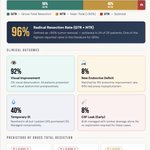
🧠 A new manuscript on experience with Giant Pituitary Adenomas using the Endoscopic Endonasal Approach (EEA):
In 25 consecutive cases at AIIMS New Delhi:
✅ 96% radical resection rate (GTR + NTR)
👁️ 92% visual improvement
🚫 Zero vascular injuries
🚫 Zero perioperative mortality
A lesson? Tumor consistency & cavernous sinus invasion, not size or volume, are what truly predict whether you'll achieve gross total resection.
📄 sciencedirect.com/science/ar…
#Neurosurgery #PituitaryAdenoma #SkullBase #EndoscopicSurgery #AIIMS #Neuroscience #BrainSurgery #ResearchPublication #MedicalEducation

Cerebral rheumatoid vasculitis masquerading as an intracranial neoplasm — a great reminder to keep autoimmune etiologies on the differential for atypical brain lesions. When imaging is inconclusive, biopsy is essential. Early immunosuppression can change outcomes.
🔗 doi.org/10.1016/j.jocn.2026.…
#NeuroTwitter #NeurocriticalCare #Neuroimaging #Stroke #Rheumatology #CNSVasculitis #MedEd #AcademicMedicine #JCN

Multimodal monitoring for DCI after aSAH—what actually works?
Important implications for ICU workflows & resource use.
🔗 doi.org/10.1016/j.jocn.2026.…
#NeurocriticalCare #aSAH #DCI #Stroke #NeuroICU #TCD #CTPerfusion #CriticalCare #Neuroscience

Time to aneurysm securement in aSAH: does faster always mean better?
This study suggests timing within 24h may be more nuanced, especially in high-grade SAH. 🧠
🔗 doi.org/10.1016/j.jocn.2026.…
#NeurocriticalCare #Stroke #SAH #Neurosurgery #Endovascular #CriticalCare #MedTwitter #NeuroICU

🛴📈 E-scooter–related TBI is rapidly emerging as a major ICU + neurosurgical burden—with rising incidence, high ICU utilization (50%), and dramatic cost escalation over time.
Despite low operative rates, the resource strain is substantial → prevention matters.
🔗 doi.org/10.1016/j.jocn.2026.…
#NeurocriticalCare #TBI #Trauma #Neurosurgery #PublicHealth #InjuryPrevention #ICU #MedTwitter #NeuroTwitter

Early ketamine in severe #TBI may be safer than historically believed. In a national cohort, early ketamine was associated with lower mortality and lower brain death rates, without increased craniotomy/craniectomy.
Important data challenging old dogma.
🔗 doi.org/10.1016/j.jocn.2026.…
#NeurocriticalCare #NeuroICU #Trauma #Ketamine #BrainInjury #CriticalCare
🧠 Anterior spinal artery aneurysm — a rare cause of SAH
What could cause this?
A reminder to think beyond intracranial aneurysms when conventional angiography is negative.
🔗 doi.org/10.1016/j.jocn.2026.…
#NeuroTwitter #NeurocriticalCare #SubarachnoidHemorrhage #Spine #Neurosurgery #NeuroImaging #RareDiseases
