

Freshman @ Carnegie Mellon. Prev @iondotdesign and @whop; am in SF or Pittsburgh usually, dms r open!
constant state of confusion
Joined October 2021
- Tweets3.2K
- Following1.4K
- Followers846
- Likes25.7K







Michael Cole retweeted

Researchers have used reinforcement learning to teach a 5-tonne John Deere skid-steer loader to perform complex acrobatic manoeuvres autonomously. Trained in simulation and transferred to a real machine, the system can balance on two wheels, navigate rough terrain, spin, and control its bucket before landing safely.
The research demonstrates the potential of AI-driven automation for heavy construction and industrial machinery.
Video Credit: @leggedrobotics / @ETH
Paper: wevlv.co/4kltYys
#engineering #technology

Michael Cole retweeted

yea, one massive smoke test is underway


We break: The highly classified network that the National Security Agency uses for its internal communications is down, according to five people familiar with the matter.
The network, called NSA Net, allows employees to communicate classified information internally. At this point there is no evidence of a cyberattack, sources said.
As the agency works to understand the scope of the problem, it has enacted staggered arrivals for personnel, the sources said.
CNN has asked the National Security Agency for comment.
cnn.com/2026/11/17/politics/…

Michael Cole retweeted

Scientists reported nearly doubling their productivity with AI in our study of more than 1,800 participants in the ChatGPT for Academic Researchers program.
Using privacy-preserving methods, we looked at how they use ChatGPT across their work—from developing ideas to analyzing data and writing code—and what it could mean for scientific discovery.
openai.com/index/science-at-…
Michael Cole retweeted

This just in: Hynix down 6% on the back of META announcing that it’s willing to bankrupt itself to buy more DRAM.
Michael Cole retweeted

Whop has raised $200M in Series D funding at a $5.1B valuation, backed by @sequoia and @shopify.
It really feels like we are barely touching the tip of the iceberg in a market larger than anyone can imagine.
We first launched Whop as a better way for us to sell sneaker bots, one of the most niche types of desktop software out there.
Total TAM? Probably $20,000 per day.
Who cares, tiny market.
But, what people discounted is the idea that there were actually 70,000 other markets exactly like that one.
Beyond the investment itself, I am especially excited to welcome legendary silicon valley investor @dougleone to our board of directors. Doug and the sequoia team are nothing but a brilliant, resourceful, and principled group of people.
My co-founder Cameron and I started building on Shopify when we were 13 years old. Shopify is one of the most impactful all-in-one cloud ecosystems ever created; @tobi has pioneered modern entrepreneurship the way we know it and we are thrilled to have him in our corner.
We have a tenet at Whop to be the dumbest in the room and I am very grateful that this has recently become a lot easier.
We are focused on markets, scale economies, and progressive media. If that is up your alley, please message me directly.
The $200M raised will support our expansion as we build economic infrastructure for the next century, continuing on our mission of delivering everyone an income.
Michael Cole retweeted
the lunch offerings at the citrini offices must be insane to get this kind of employee loyalty


What is AI really capable of in bio?
To separate hype from reality, we spent 3 months working firsthand with @AnthropicAI's internal research model to see if it could create an experimental scorpion antivenom.
Introducing Citrini Therapeutics.
citriniresearch.com/p/citrin…

Michael Cole retweeted

surprisingly common mentality In SF
seen way too many people scared of competing because a startup was "kingmade" by VCs
luckily, as an american, i don't believe in kings

Michael Cole retweeted

This is Dynamite.
It takes any website & dynamically personalizes it for every visitor, so they see what is most likely to convert.
Within 300ms.
It installs on ANY site with one line of javascript.
Michael Cole retweeted

Look at him, thats my Qual.
Your what?
My Qualitative! My vibe specialist. Look at him, you notice anything different about him? Look at his face.
I'll give you a hint, his name is Jayden. He won a local poetry competition in bushwick! Yeah I'm sure of the vibe.


Quant firms are hiring idea guys, not quants
I've been skeptical about the whole - software is commoditized, ideas are the moat argument
But I've seen first hand the best quant and technical firms in the world hire thinkers, liberal arts grads, and generalists
I predict the trend accelerates
Letter from @AQRCapital below


Michael Cole retweeted

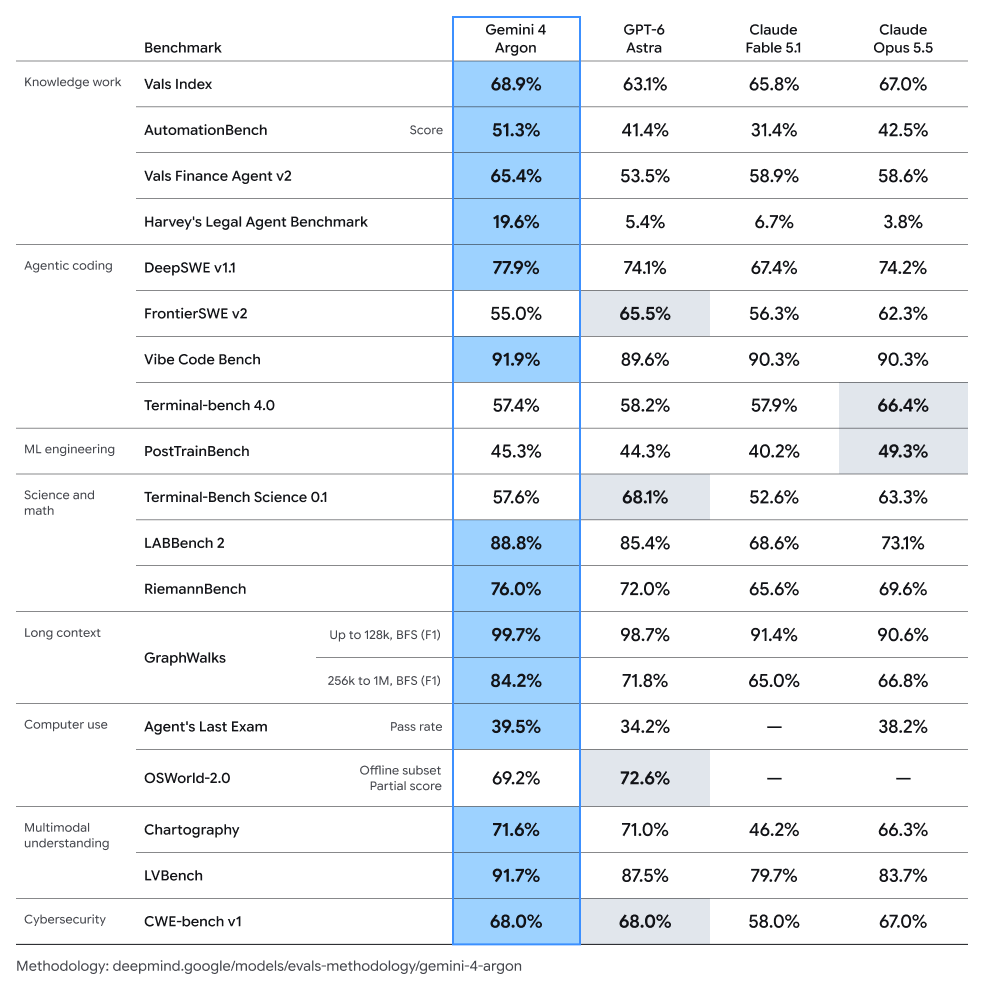
Introducing Gemini 4 Argon – our new frontier model.
It’s built for complex workflows across coding, enterprise knowledge work, and cybersecurity defense – rolling out today to a set of trusted testers through our Fairwind Program.
Michael Cole retweeted

Today, Carnegie Mellon University and Ken Griffin, founder and CEO of Citadel and founder of Griffin Catalyst, announced a historic $3 billion gift to elevate Carnegie Mellon in Pittsburgh and launch Carnegie Mellon University Miami. #CMUMiami
Learn more: cmu.edu/news/stories/archive…
Michael Cole retweeted

Today we announced the Claude-led discovery of a molecular machine that we suspect could represent a new gene editing mechanism. Its precise function, biotechnological utility (if any), or level of significance is not yet clear, but at minimum it is work I would have been proud to do as a PhD student. The work was done mostly, though not entirely, by Claude: our life sciences team suggested a broad area of research, Claude read through the literature and a bunch of genome data and discovered something interesting, then Claude proposed experiments to verify the discovery and our team carried them out.
It’s easy to dismiss this as a one-off or curiosity, but we’ve repeatedly seen a pattern where AI performance in new intellectual domains goes from weak to superhuman in a matter of a few years. In 2023 models struggled to do math at the level of an average high-school student. In 2024 they started to do well on math competitions for the best high-schoolers in the country, in 2025 they started to solve minor open problems, in early 2026 more significant open problems, and in late 2026 they are beginning to solve the top few open problems in all of mathematics. We believe AI for biology is on a similar exponential trend.
The main difference between biology and mathematics, of course, is that math can be done purely theoretically, while biology requires experimentation. Some have used this to draw the conclusion that AI’s utility in biology will be limited. We think this is wrong. As we’ve demonstrated today, humans can collaborate with AI to perform the experiments, validate key results in a few weeks and, if necessary, work with the AI to iterate on what they find. Eventually it may even be possible for Claude itself to safely perform the experiments by autonomously controlling lab equipment, with appropriate safeguards in place, but we aren’t doing that today (our lab is also a BSL1/BSL2 facility that doesn't handle materials dangerous to humans).
More broadly, biomedical advancement has many stages — from fundamental biology discoveries, to translational research, to drug discovery, clinical trials, and finally the actual delivery of medicines and health care to patients. We are also interested in these later stages, but even simply accelerating the first stage of fundamental biological discoveries has the potential to speed up and broaden the entire pipeline. Improving our understanding of biology and sharpening biologists’ tools can drive forward all of the later stages, for example by identifying new drug targets, finding new therapeutic modalities, allowing for more precise measurement, and speeding up the experimental loop which itself further accelerates our understanding of biology. This will not in itself speed up clinical trial times, but if it succeeds it could greatly increase the number of promising candidates that go into the pipeline — an increase in throughput even though latency remains.
In Machines of Loving Grace, I wrote about AI’s potential to “cure most diseases in 5-10 years” — a goal that sounds impossible, but one I believe is just barely possible if AI is applied to every stage of the pipeline. The first step is showing that AI can first help with, and then drive, biological discoveries.
Claude’s discovery is the latest in a line of related prior work that goes back decades, beginning with systems like CRISPR, and continuing with discoveries like the bridge recombinase and VIPR in the past few years. Recently, there has been heightened interest in systems based on reverse transcriptase (RT) enzymes, the enzyme underlying the system Claude identified. And most recently, a Stanford team working independently described a novel RT system with an associated non-coding array that is in some ways similar to the one Claude found, though they are distinct systems that evolved independently from each other. I believe that we’re at the very beginning of finding such systems and developing them into powerful tools for biotechnology.
I’m proud of the resources Anthropic has invested in accelerating the public benefits of AI through the life sciences, and we’re aiming both to grow our life sciences team and to work with other scientists to extend this approach to a broad range of problems. If you have a proposal for a research collaboration or are interested in joining our life sciences team, please reach out.

Claude has discovered a previously unknown enzyme system hidden in the DNA of bacteriophages. Beside the enzyme’s gene sits a long array of repeating DNA—a structure that looks somewhat similar to CRISPR.
We don’t yet understand what this system does, but only a handful of known systems share its features, and all of them are able to cut, copy, and paste DNA. Historically, the discovery of such programmable systems has helped revolutionize medicine. CRISPR, for instance, is now the foundation of genetic medicines. But it will take much more work to learn what this system does, and whether it can be put to similar use.
Read more: anthropic.com/news/claude-di…


Michael Cole retweeted

Introducing Memorable (YC S27): PROCEDURAL MEMORY FOR AI AGENTS
AI agents today are born, work, and die inside a single context window. They solve a hard problem once, then start from zero when it returns.
Memorable turns successful runs into a graph of reusable procedures.
So every task makes the next one:
- Faster.
- Cheaper.
- More deterministic.
We’re excited to share that Memorable is joining Y Combinator’s S27 batch.
Try it: memorable.sh