






chat give this a read

12 years ago I founded Boom, as a software engineer doing hardware for the first time. I’m probably the least handy founder in hard tech. My 12 y/o son does my soldering and 3D printing for home projects, and I’ve struggled with imposter syndrome the whole way through. What business does a software guy have building supersonic jets and turbines?
More than a decade in, the most insane realization is that software is the key to reaccelerating hardware engineering. But in a way that I don’t think is widely understood or implemented, even in the burgeoning hard tech community.
Most hardware engineering is actually software engineering in disguise. It’s spreadsheet “code,” engineering calculations done as one-offs. Eg wing structural loads in, spar sizing design out. Thermal loads in, air conditioning system sizing out.
Everything is a calculation, and calculation is software. But these calculations are done essentially by hand, as if we are doing arithmetic but have not yet discovered algebra.
Hardware engineers have baby software, built in spreadsheets, the kind of crappy software I wrote as a kid before I understood architecture, unit tests, APIs, version control, and everything else that makes modern software good.
Our airplanes and engines are built with the software sophistication of a script kiddie.
So what we tell our engineers: don’t design the hardware, design the *algorithm* for designing the hardware. And take the algorithm seriously—as an algorithm and as a first-class engineered software system.
Never design a piece of hardware, such that you couldn’t redesign it tomorrow with a different set of assumptions.
This all sounds obvious, yet our experience at Boom is that it changes everything.
Ten years ago we couldn’t afford to build much software. We had a small team—and there were few software engineers with the curiosity, brilliance, and vision required to learn hardware engineering.
But now AI changes the equation. Now everyone can code. The software engineers define the architecture. The hardware people bring the physics and engineering know-how.
We have a turbomachinery design tool that lets one engineer do in realtime what previously took 100 engineers six months. Another tool auto-generates 65% of entire aircraft structure. I’m sure we’ll figure out the other 35% too. Eventually these should not be multiple tools, but one integrated physics model of a complete vehicle, airframe and powertrain.
The results speak for themselves. A boomless supersonic airplane built by 50. A full scale supersonic turbine made by 150. And with this approach, I don’t think we’ll need that many more people to build and certify a supersonic airliner.
You don’t need a big team to build big things—not when everyone on the team is a software engineer.


ngl chat , This might be the new interface

We’ve raised $1.3M from YC & Afore Capital so you never have to type or speak again.
Typing is slow. Talking into your computer is awkward. Subvocal fixes both
Our glasses give you the speed of speech without you making a sound or touching a keyboard.
It tracks your internal speech muscles with non-contact sensing and decodes silent, almost invisible mouthing into text at more than 200 words/min.
Pre-orders are now live at:
subvocal.co/preorder?utm_sou…


Aaryan Naidu retweeted

Can one of the labs please spend a few trillion tokens on the hard problem of consciousness? Thank you kindly 🤓🙏
And while you’re at it please get it to confirm we don’t have free will 👌💪


Aaryan Naidu retweeted

19 years ago, when my 1st company got bought, I had to decide between buying a house in Palo Alto or a McLaren F1 (best car ever imo). Was no contest. I bought F1 & a small condo that was much cheaper than the car. New Tesla Roadster will exceed all gas sports cars in every way…
we have flying cars and chopsticks catching rockets , Just because in the past a kid named Elon Musk didn't went to therapy.


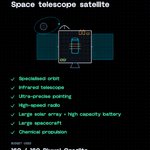
Built a Space Telescope Today.
play.pixxel.space/?design=ey…
cool stuff @PixxelSpace


