





Pinned Tweet
I'm building @mato_hq, AI agents that interview humans, starting with podcasts.
$0K to $18.5K MRR in 3 months; nobody has churned; about 30 shows running. one of them sits at #10 in News Commentary on Apple Podcasts.
before this, I spent years turning other companies' conversion rates into revenue, $150 million in added revenue to be exact, wrote a book about it, and got a wireframe method design-registered in Norway twice. now I do it for my own company.
bootstrapped the journey so far.
Salary-only math gives an in-house podcast a discount before you compare it with a vendor.
Use the loaded internal rate your finance team uses, or document your assumption. The U.S. Bureau of Labor Statistics reports wages and employer benefit costs separately, so salary alone misses part of the labor cost. Multiply that rate by the hours per episode and your publishing cadence. Otherwise, you’re comparing a vendor quote with only one slice of your team’s cost.
A clip can have the best line in a talk and still feel unusable if the cut grabs half a word at either end.
Mato Recordings plans clip moments from the word-level transcript. That timing matters because the boundary is part of the edit, not cleanup after the good bit is found.
Finding the moment gets you halfway there. The cut decides whether anyone shares it.
Ask an expert what they do when the playbook runs out. A summarizer can't find an answer that never made it into a document.
Mato's vision is an interview engine: agents prepare, listen closely, and stay with an unfinished thought long enough for it to become useful.
AI knowledge capture has more room to grow in that follow-up than in another pass over the same files.
A voice clone should take more than an upload.
Mato Voice keeps cloning in a guided session with our team, and only for hosts or recurring guests who’ve agreed to it. If that friction costs us signups, fine. I’d rather lose the signup than make cloning one click.
Cheap generation moves the bottleneck to review. A team that can produce twenty episodes a week still has one person who has to listen to each one before it goes out, and that hour costs exactly what it always did.
Most AI content plans budget the generation and quietly assume the listening is free.
A clip becomes a different budget decision when every format costs a credit.
Mato’s Oct. 12 changelog lists 30 monthly credits on Launch, 150 on Business and 400 on Network. Extra packs are 25 for $100, 100 for $350 or 300 for $900. Each format you make costs one credit.
That puts distribution inside the edit: which moments deserve a second or third format? Teams that automatically repurpose every clip are choosing a much bigger content plan than they may realize.
A clip in three formats costs three credits in Mato. Make clips shows the batch cost before you start, so every extra format has to earn its place in the content budget.
A recommendation without a reason is just a task somebody else picked for your team.
Mato's Ideas starts with research on the company. Open an idea to see why it was suggested, how it serves your goal, and what to do next. Change the goal and Mato rethinks the ideas.
Would you put a recommendation in your team's queue if the tool couldn't explain why it belongs?
Letting an assistant rewrite an interview question can change the answer you get.
Ask Mato can draft an invite from a question document while keeping the questions in their original order and wording. Leave the list unchanged, and the host asks each question exactly as written.
If a team has already agreed on those questions, a cleaner sentence isn’t automatically a better one. Sometimes the most useful edit is leaving the text alone.
Outside the Dollar ended August at No. 15 on Apple Podcasts’ Business Investing chart, about four months after launch.
Mato’s Oct. 12 write-up says Lear Capital published one 15-minute episode every Friday, with roughly 40,000 downloads along the way. Lear credited steady weekly output, not a viral episode, for the climb.
A missed Friday spends the listening habit the show spent months building. If a company show keeps slipping, fix the production calendar before changing the format.
$50 for the fifth published episode in a month is the most useful line in Mato's Startup Program.
The rest of it is three months of the Business plan with no subscription fee, four published episodes included each month, and nothing renewing automatically when the program ends. The fifth episode costs money, so somebody has to decide it's worth making.
Feature caps teach a team to work around the cap. A price per unit of output makes them defend the output. Most shows find out their cadence was aspirational the first time an episode has a number next to it.
$50 per published episode past the four included each month is the number that changes how a team plans a season. Four is a cadence. The fifth one has to earn its slot.
That's the Mato Startup Program as published: the Business plan with no subscription fee for the first three months, four published episodes included each month, $50 for each one beyond that, free to apply with no card. When the program ends, nothing renews automatically.
A trial that renews by itself tells you nothing about whether anyone wanted to keep publishing.
A reader reaches the play button facing a 14-minute decision. A plain audio bar gives them little to judge, while a link to another platform sends them away before they’ve chosen the episode.
Mato’s embed puts the cover, title, show name, progress and play control in one card. It also keeps a route back to the public show and episode for the full context.
If you publish audio on your own site, what can a reader tell from your player before they press play?
Uploading a 498 MB keynote took longer than transcribing it.
In our Mato Recordings test, the 45-minute file took about 2.5 minutes to upload, about a minute to transcribe, and the kit was planned roughly 90 seconds later.
Inference latency is useful. But if the timer starts after upload, it skips the longest part of this run. What takes longer in your pipeline, getting the file there or running the model?

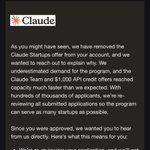
what is this? how can a trillion dollar company first approve and give our benefits and then a day later retract it? how is this even legal? @claudeai @ClaudeDevs

Before a podcast or marketing team uploads a recording to a free AI tool, check what happens to the file after processing.
No clear retention policy? That’s your answer. Assume the recording is part of the price.
code review is the only hour most teams spend reading code nobody in the room wrote. delete it because the model can review its own output, and you've deleted the last place anyone builds a picture of how the system actually behaves.
six months later the model can still regenerate the file. it can't tell you which of three earlier attempts broke billing, or why that's the reason the current design looks strange.
that bill comes due at 2am, when whoever is on call has never read the thing they're paging about.