

Associate Professor of Economics, Wake Forest University
Winston-Salem, NC
Joined November 2012
- Tweets341
- Following919
- Followers564
- Likes3K





Pinned Tweet
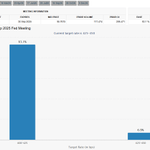
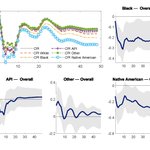
Kevin Warsh wants the Fed to say less. But does he also want it to be less precise? Our new paper takes up exactly how precise the Fed should be. And shows why clearer guidance may not always be better. A short thread on the idea and some evidence. #EconTwitter #FOMC
And if we could somehow further split these by "micro" (i.e. using RCT etc..) vs "macro" I bet the ratio of China to India would be way more skewed in macro

The NBER has produced these data tabulating the "Key Words" that Working Paper Alert subscribers prioritize. The ratio of "China" to "India" is 7 to 1! Geoeconomics is King!?
back.nber.org/new_this_week_…

Wake Forest is hosting I-85 this fall.

🚨Call for Paper🚨
The Fourteenth I-85 Macro Workshop will be held at Wake Forest University on October 30, 2026.
Submission deadline is August 31st.
Upload your paper (preferred) or long abstract here
sites.google.com/view/i-85ma…
Please share with colleagues & students.

Here's a @WakeForestNews story about my paper: news.wfu.edu/2026/07/28/new-…


Kevin Warsh wants the Fed to say less. But does he also want it to be less precise? Our new paper takes up exactly how precise the Fed should be. And shows why clearer guidance may not always be better. A short thread on the idea and some evidence. #EconTwitter #FOMC
So back to Warsh and next week’s FOMC meeting. Our results are not a blanket case for less guidance. The right amount of precision depends on the environment the Fed faces, which is worth keeping in mind as it rethinks how it communicates.
Full paper, joint with Jinyoung Seo and Myunkyu Shim available here: ideas.repec.org/p/ris/wfuewp… Comments welcome!

Aeimit Lakdawala retweeted

Firms that face higher uncertainty reduce their investment response to interest rate changes. In the May issue, by Aeimit Lakdawala @aeimit and Timothy Moreland zurl.co/3SGL2


Wealth tax!! A lot to dislike about wealth taxes but I feel like economists' models need to account for issues like this when weighing cost-benefit.

Definitely one of my favorite Hindi movies from past few years.

My belated review in The Telegraph (@opinion_tt) of a jewel of a Hindi movie THREE OF US
It is in some ways a rejoinder to @FT recently lamenting the decline in artistic standards in Bollywood: telegraphindia.com/opinion/i…

Aeimit Lakdawala retweeted

📢 We're hiring! The Wake Forest Economics Department is seeking Visiting Assistant Professors for 2026-2027. Candidates will teach undergraduate courses including intro economics, intermediate micro/macro, and electives. Apply by 3/15 apply.interfolio.com/181254
This is an important point that macro as a field needs to reckon with. Of course, it's not about Bellman equations per se but more broadly about insisting on i)micro-foundations & ii)keeping model simple/tractable that is very much necessary for publishing in a top journal today

This is great advice.

Off top of head:
1. Post them everywhere you can (SSRN, arxiv, WP series)
2. Make them easy to get to (PDF on your own website)
3. Email a draft to people you cite
4. Email a draft to people who would be interested
5. Tweet / blog about it, more than once (repetition doesn't hurt the prayer)
6. Talk to journalists/your school's PR folks
7. Make the quality of writing & figures truly excellent
8. Gently email people who should have cited you & assume it was just oversight rather than malice (but don't be that person who thinks everything is related to their work)
9. Give papers good, memorable titles
10. Present the paper as much as you can (roadshow)

Aeimit Lakdawala retweeted
🎉 Congratulations to our Fed Challenge team on advancing to the National Semi-Finals for the 3rd consecutive year!
Huge thanks to Prof. @aeimit for your outstanding mentorship! 📈🏆

Have definitely experienced some of this in my own work. "Why do we care about India?" is one of my favorites. I also think the problem is worse in macro than in other sub-fields. However, I will say things seem to be turning around a bit. One can only hope.

This has been an open secret in the economics profession for decades. Several instances come to mind. Here’s one from the editor of an ‘A’ journal in 2009: “This is very good work, your model is neat and the empirical approach is novel. Unfortunately the data is from India, so not generalizable.”(!!)
Lesson: we need more of our own journals & thank god for open source.