
cognitive scientist
Berkeley, CA
Joined March 2021
- Tweets15
- Following163
- Followers41
- Likes22



Pinned Tweet
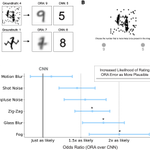
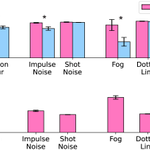
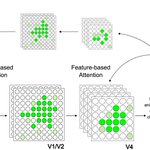
Excited to share that my recent publication with @adeli_hossein and Greg Zelinsky is featured as the cover article for @PLOSCompBiol! Check out our findings on the potential functional connection between object reconstruction and attention journals.plos.org/ploscompbi…
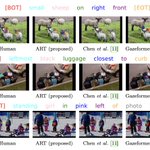
Excited to share our accepted paper "Look-Hear: Gaze Prediction for Speech-directed Human Attention" #ECCV2024 🇮🇹 We present a new model and dataset exploring how human eye movement patterns change with incremental language understanding during object referral. arxiv.org/pdf/2407.19605
Although there is still room for improvement, ART not only outperforms current state-of-art models in scanpath prediction but also effectively captures several human attention patterns, including waiting, scanning, and verification. For more detailed results, including model comparisons and ablation studies, please check our paper: arxiv.org/pdf/2407.19605

1
1
157
Join us for the poster presentation of this work on Oct 2nd at 16:30 at #ECCV2024! Meet our first author, Sounak Mondal, and learn more about our new model, dataset, and metrics advancing human-like vision and language understanding! This work is the result of an amazing collaboration between psychology and computer science by Sounak Mondal, @seoyahn, @ZhiboYang2, @b_niranjan, Dimitris Samaras, Gregory Zelinsky, and @minhhoai. Our official project website: sites.google.com/view/refcoc…
One question our work doesn't answer is how completely an object must be reconstructed to serve as an effective attentional template. Our experiments suggest even low-resolution reconstructions are sufficient, aligning with Moshe Bar's work on low spatial frequency processing for top-down feedback. But what visual info can be generated in low resolution to help bottom-up processing? Would object shape like a silhouette be enough? This is the question I'm deeply interested in these days and hope to explore through future research.
1
103
Another important future direction is to extend ORA and its evaluation to more complex visual tasks involving multiple objects (e.g., visual search, object tracking). Stay tuned for our upcoming work! You can read more about this paper here: journals.plos.org/ploscompbi…

1
101