

Explore the world's prediction markets. All events, platforms, rankings, and trading insights in one place. Prediction market wealth begins right here.
Joined April 2026
- Tweets4.8K
- Following3.4K
- Followers5.4K
- Likes3.2K







Pinned Tweet
🚀 Introducing Burst — a new way to discover what's moving prediction markets.
The biggest edge in prediction markets isn't just knowing the outcome, it's spotting what matters first.
Today we're launching Burst, a new feature on AIMPredict.
Burst continuously aggregates the world's leading prediction markets, surfaces the biggest movers in the last 24 hours, and pairs them with the most relevant trending conversations on X, so you can instantly understand:
⚡ What markets are moving the fastest
📈 Why probabilities are changing
🌍 Which platforms reacted first
💬 What the community is saying
No more jumping between prediction markets, X, and news sites.
Everything you need to discover, monitor, and analyze emerging events is in one place.
👉 aimpredict.com/en-us/burst
This is just Version 1, and we're only getting started.
If you're a @Polymarket , @Kalshi , or PredictIt user, we'd love your feedback:
• What data would you like to see?
• What features would make Burst indispensable?
• What should we improve next?
Every suggestion helps us build a better home for prediction market discovery.
Come try it out and tell us what you think! 🚀
#PredictionMarkets #Polymarket #AI #Forecasting #FinTech #Crypto #News #OpenData #AIMPredict

A major talent move in AI!
Cat Wu, one of the key product leaders behind Claude Code, is joining @OpenAI !
And this is no ordinary career move.
Her journey is remarkable:
🎓 Computer Science at Princeton
🔹 Product Engineer at Scale AI
🔹 Engineering Manager at Dagster Labs
🔹 Partner at Index Ventures
🔹 A brief stint leading product at Cursor
🔹 Product leader for Claude Code and Cowork at @AnthropicAI
She helped transform Claude Code from an internal prototype into one of the most influential AI coding products.
Now, she's joining OpenAI to lead product management for Core Products, helping build the next generation of AI agents.
Cat Wu's journey from Claude Code to OpenAI reflects the industry's next great transition: from Copilots to truly capable Agents.
The next AI winner may not simply be the company with the most powerful model, but the one that makes AI indispensable to a billion people's daily lives.
Models define the ceiling of intelligence.
Products determine how far that intelligence can go.


Some news: I’m joining OpenAI to lead product management for Core Products!
I have a lot of respect for OpenAI for showing the world that scaling works, for bringing AI to over a billion people, and for believing great products are core to the mission.
I’m excited to work with @thsottiaux, an incredible PM team, and everyone across OpenAI. Together, we’ll build agents that have your back and your team’s, and keep you in control, so you get more time for the people and work you love.
Lots to learn, and lots to build. Please keep your feedback coming!

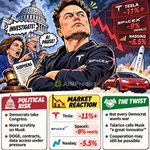
Elon Musk may be learning a hard lesson about Washington: money can buy airtime, but it can't buy votes or political protection.
He spent at least $445 million trying to keep Congress Republican.
Texas alone saw roughly $224 million in Musk-backed political spending, with Ken Paxton benefiting from about $158 million. Paxton still lost to James Talarico.
Now Democrats control both chambers. Come January, DOGE, federal contracts, sensitive data access and tax breaks could all face serious scrutiny.
Hillary Clinton has even argued that a Trump pardon wouldn't stop Congress from subpoenaing Musk.
And then there's AI.
Of 47 decided local data-center ballot measures, 46 favored tighter restrictions. Sanders and Casar want to pause advanced AI development and ban superintelligence. Yassamin Ansari says it should be on Democrats' day-one agenda.
Wall Street is already feeling the pressure. On Thursday, the Nasdaq plunged 5.5%, the S&P 500 fell 4.4%, Tesla dropped over 11%, and SpaceX nearly 9%.
@elonmusk joked that his election-interfering space lasers didn't work and that data centers in space were looking increasingly appealing.
But here's the twist: Talarico has called Elon Musk a great innovator and says he's willing to work with him. Elon's response? "Nice of him to say that."
The real question isn't whether Democrats can stop AI. It's whether ELon Musk can still command the same influence over capital, politics and public policy that he once did.
Rockets can escape Earth's gravity.
Businesses still have to deal with Congress, regulators and voters.
This time, Elon Musk may have a tougher challenge than building a rocket.


Will Musk deposit SpaceX shares into 10M Trump Accounts? @grok 👀
aimpredict.com/en-us/event/3…

The world's most valuable AI chips have now become part of an espionage controversy.
And this time, Nvidia CEO @JensenHuang is at the center of the storm.
The woman in question is Alice Huang, also known as Huang Le, a former executive at Singapore-based AI data center company Megaspeed.
Her online résumé reads like an extraordinary career journey: reportedly a journalist at Hunan TV and CCTV, followed by roles at HSBC Private Banking, CITIC Securities, and Shanghai Hexi Investment Management.
She joined Megaspeed in 2023 and was later seen at industry gatherings with Jensen Huang in Taipei in 2024. Meanwhile, Megaspeed's Malaysian affiliate was reportedly linked to at least $4.8 billion in Nvidia-related AI equipment purchases.
US intelligence sources reportedly suspect Alice of passing information to Beijing, although these allegations have not been established through public legal proceedings.
Singapore has explicitly denied investigating her alleged intelligence ties, confirming only an ongoing investigation into Megaspeed.
Jensen Huang insists their interactions were normal business dealings. Nvidia says it reviewed GPU deployments and found no evidence of illegal diversion.
But the story isn't over.
On November 5, three Republican House committee chairs formally requested a closed-door briefing with Jensen on November 18, seeking answers about his interactions with Alice and Nvidia's safeguards against foreign intelligence threats.
One bar photo. $4.8 billion in AI equipment. Three congressional committees.
The bigger issue isn't who had a drink with whom.
It's a much harder question for the AI era:
The chips can stay in a third country, while the computing power crosses borders remotely. Should export controls regulate where the hardware goes, or who ultimately gets to use the compute?
The AI chip war is evolving into something much bigger: an intelligence and national security battle.
Jensen Huang may be facing his toughest test yet, not in the chip market, but in Washington.


🎯 11 minutes. A few hand-drawn charts. And finally, someone explains prediction markets in a way everyone can understand.
Natalie Fratto recently sat down with @Kalshi CEO Tarek Mansour (@mansourtarek_ ) to break down why prediction markets could become the next generation of financial and information infrastructure.
A few ideas from the conversation really stood out.
1. 60¢ = 60% probability.
Imagine a contract that pays $1 if an event happens and $0 if it doesn't.
If the contract trades at 60¢, the market is pricing in roughly a 60% probability of that outcome.
This isn't an expert making an educated guess. It's a price continuously shaped by buyers and sellers putting real money behind their convictions.
2. Prediction markets aren't traditional sportsbooks.
Sportsbooks typically set the odds, with users betting against the house.
Prediction markets work more like stock exchanges: participants trade with each other, prices are determined by supply and demand, and the platform provides the infrastructure for trading and settlement.
The goal isn't to find more losers. It's to bring together more informed participants.
3. Why can markets offer an advantage over polls?
It comes down to one powerful concept: Skin in the game.
Getting a poll wrong usually costs you nothing. Getting a prediction market trade wrong can cost you real money.
That changes people's incentives.
One of Tarek's most interesting observations:
Social media rewards extreme takes. Prediction markets reward boring but correct ones.
You might get thousands of likes for a provocative opinion online. But in a market, what ultimately matters is whether your conviction is right.
4. Prediction markets can also help businesses manage risk.
The interview uses a simple ice cream shop example:
Sunny weather brings more customers, while cold or rainy weather hurts sales. A business owner could use weather-related contracts to hedge against uncertainty in revenue.
This shows that prediction markets aren't just about politics or sports. They could become useful tools for real-world risk management.
Of course, not every event should be tradable. Markets need clear boundaries, responsible design, and proper regulation.
That's also why Tarek advocates for federal-level oversight.
But We believe the greatest opportunity of prediction markets goes far beyond betting on outcomes. It's about making the uncertainty of the real world measurable, tradable, and continuously priced.
Think about it:
· Will the Fed cut rates?
· Will inflation rebound?
· When will AI reach its next breakthrough?
· Will a company meet its earnings targets?
· Will geopolitical tensions escalate?
· Where are energy prices heading?
Information that was once scattered across news outlets, research reports, expert opinions, and social media can increasingly be translated into real-time market probabilities.
This is exactly the direction AIMPredict is building toward.
We connect global prediction markets, including @Kalshi, @Polymarket, @HyperliquidX, and others.
Our goal isn't simply to display more trading data. It's to bring together probabilities, trading volumes, Smart Money, whale activity, and event-related information across platforms.
Because one platform only shows you its own market.
Cross-platform intelligence helps you see the bigger picture.
When the same event is priced differently across platforms, when Smart Money starts positioning, or when trading volume suddenly surges, these differences may reveal opportunities for deeper research and value discovery.
From polls to markets. From opinions to pricing. From consuming information to discovering value.
Prediction markets are changing how we understand the future.
The future is uncertain. But it doesn't have to be unpriced.
That's what makes the future of prediction markets so exciting.
And we're just getting started.
#PredictionMarkets #Kalshi #AIMPredict #Polymarket


I have a million questions about prediction markets, and I understand things through drawing.
So I sat down with the CEO of @Kalshi (@mansourtarek_) to better understand how prediction markets actually work, the counter-intuitive impact of prediction markets on elections, and why he believes they can make the world a better place.
We cover:
- How a prediction market works (hint: a lot like the NYSE)
- 60¢ = 60%: how event contracts price probability
- Prediction markets vs. the stock exchange vs. sportsbooks
- Defining gambling and markets
- Why he's in favor of federal regulation
- Polls vs. markets: skin in the game & the pursuit of truth
- Why markets reward the boring take
- What you can't trade on (no wildfire markets)
- Hedging 101 at the ice cream shop
- Goku, growing up in Lebanon & the 120% rule
Highlights:
(00:00) Gambling, markets and their historically flirtatious relationship
(00:34) Opening Kalshi for the first time (01:19) How a contract works: 60¢ = 60% odds
(02:10) Why not just use the stock market? CFTC & derivatives (02:58) Prediction markets vs. sportsbooks: who sets the price (04:35) Where the gambling line is, according to Tarek
(05:30) In favor of federal regulation
(06:17) The vision: free markets in pursuit of truth
(06:39) Why polls miss & markets don't (2016, 2024, Mamdani) (07:24) Echo chambers, hot takes & rewarding the boring take (08:15) What you can't trade on & why
(08:54) Hedging 101 at the ice cream shop
(10:17) Goku, Lebanon & the 120% rule
Our first ever longform @chartsncrafts episode - the first of many.
The greatest revolution of prediction markets isn't about predicting the future. It's about democratizing how humanity discovers truth.
Polls measure opinions.
Experts offer interpretations.
Markets reveal conviction.
And when millions of independent convictions converge, we gain something far more powerful than any single expert's judgment: collective intelligence.
At AIMPredict, we believe the next leap is connecting these voices across every prediction market, turning fragmented signals into a clearer picture of the future.
The future shouldn't be dictated by a few.
It should be discovered by everyone.
We're not just witnessing the rise of an industry. We're witnessing the birth of a new information infrastructure for humanity.
Excited to build toward that future together! 🚀


Markets over noise.
For far too long, we’ve relied on polls, pundits, and experts to tell us what America thinks.
But the truth doesn’t belong to a select few.
It belongs to everyone.
Prediction markets put power in the hands of the people, turning millions of independent opinions into a collective view of the future.
No gatekeepers. No central authority deciding what’s true.
Just real people putting their conviction behind what they believe on a free market.
Because the best way to understand what America thinks isn’t to handpick a few voices and give them a megaphone.
It’s to let the market speak.

The prediction market industry is much bigger than its current leaders.
Look at the October numbers from AIMPredict:
• @Kalshi : $3.408B in volume (+97.5%)
• @Polymarket : $571M (+48.8%)
• @HyperliquidX : +2,927%
• @42space : +408.8%
• @futuurHQ : +235.4%
• @Gemini : +124.2%
Yes, the market is heavily concentrated at the top.
But look closer: the ecosystem is still evolving, and new players are finding their own growth paths.
Kalshi's $1B Series G at a $40B valuation is a huge milestone. @mansourtarek_ @luanalopeslara
But it's not the finish line for this industry. It's a signal that the world is finally waking up to the potential of prediction markets.
Here's what we believe:
Not every platform needs to become the next Kalshi or Polymarket.
Some will win on liquidity.
Some on regional markets.
Some on specialized categories.
Others will build the data, intelligence and infrastructure that connect everything together.
The leaders will make the pie bigger.
The next generation of builders will make the pie more diverse.
Prediction markets shouldn't be a winner-takes-all game. The real future is an ecosystem where hundreds of platforms, products and communities coexist, compete and grow.
At @aim_predict, we're building to connect that ecosystem.
The industry is still young.
The best opportunities may not even exist yet.
#Kalshi #Polymarket #Hyperliquid #PredictFun #Limitless #Opinion #Myriad #Prediction


From bombs exploding near his childhood home in Lebanon to building a $40 BILLION company. What a journey for @mansourtarek_ .
@Kalshi just raised another $1B, co-led by Wellington and Sequoia, with a16z, Coatue and others joining in. Its valuation jumped from $22B to $40B in less than six months!
A kid who found comfort in mathematics went on to MIT, Goldman Sachs, Citadel, and eventually co-founded Kalshi with @luanalopeslara .
A boy who grew up surrounded by uncertainty built a company that puts a price on uncertainty.
Prediction markets are about much more than betting on outcomes. They're about turning disagreement into prices, information into insight, and uncertainty into something we can actually manage.
Huge congratulations to Tarek and the entire @Kalshi team!
As a Kalshi partner, we're excited to build alongside you at AIMPredict, connecting prediction markets worldwide and helping people turn better information into better decisions.
$40B is a milestone for Kalshi. For prediction markets, this still feels like chapter one. 🚀
Kalshi just raised an additional $1B, valuing the company at $40B. This will help us expand into stocks, compute, indices, and institutional.
Tomorrow marks 8 years since we got accepted into YC and the journey began.
The odds of a kid from Lebanon getting here were pretty low.
Growing up there was great, but very challenging. We went through war. We had bombs explode in front of my house. I watched brilliant people’s lives destroyed for reasons beyond their control.
Lebanon is an unpredictable country. That unpredictability made it hard to plan for success. And yet despite it all, my mom sacrificed everything to give me and my brother the chance to go back to the US.
I found my refuge in two things: anime and math. Especially math.
I loved math because it calmed me. It was the opposite of unpredictable: clear, deterministic, orderly, and consistent. The proof is either right or wrong. I find that elegant and beautiful.
I was lucky.
I made it to my dream school, MIT (largely thanks to my mom), and my love for math quickly translated to a love for statistics, probability, and markets.
I love markets for a lot of the same reasons. Their incentives are clear: you get rewarded for being right and for pursuing knowledge. They are effective weighting machines for people’s opinions. They provide an incentive to be truthful, because they separate good information from bad information. They let people challenge the consensus and be rewarded for being right.
IMO, Hayek, Surowiecki, Hanson, Tetlock were the founding fathers of prediction markets. The more I read them, the more obsessed I got with the idea of applying market-based pricing to more things.
Markets bring rigor and critical thinking to more questions. And in an increasingly polarized and information-positioned word, I believe we need that more than ever.
Markets would also let people predict and manage more things outside of their control. And the world was becoming increasingly more unpredictable, and more like Lebanon, not less.
That love for markets got Luana and me to build Kalshi.
At first, it was mostly an idea we couldn’t stop talking about. We didn’t have much money. Luana’s sister bought the Kalshi domain name for us (for ~$1.7k). We moved to SF to get started, and embarked on a long, uncertain journey to build a regulated exchange.
The paranoia and anxiety from my childhood never left me. Even when things are going well, I think about what could go wrong. When people trust you with their money, that instinct serves a purpose.
I wanted us to build something that would hold up under pressure.
The first principle we defined at the company: regulatory-first. We worked with regulators for years before we listed a single market. We took every step to do things the right way and always asked for approval before proceeding. It was very hard at times, especially when we were being overtaken by competitors, but we believe doing things the right way matters.
Luana and I aren’t the only ones.
Our team put years of their lives into something far from certain. That’s especially true of Lior, Brandon, Rainer, Luis, Xavier, and Josef, who stuck with us for years. They believed when there was little to point to. And they stuck with us no matter how long it took. Kalshi is the result of an arduous journey through a long desert where, at times, most people didn’t understand why we were making the walk.
Many people still don’t understand what we’re doing and some disagree with us. Markets have historically taken time to be understood and accepted by some. But while not always obvious, their benefits are vast: capital markets help allocate capital and derivative markets help predict and manage uncertainty.
I firmly believe in these benefits, and that’s why I am dedicating my life to building this market.
Markets have caused issues many times in the past, and they certainly can present harms (manipulation, insiders, and addictive behaviors). These harms are more acute for certain types of markets (sports, short-term options, etc.) than others. It’s why I believe that guardrails need to exist and why we have taken the approach we have taken. We have consistently prioritized thinking critically about the risks and building the appropriate safeguards, sometimes beyond what the regulators require us to do. Many believe more needs to be done, and that’s a conversation I welcome.
Over time, I believe more people will see what we see: markets can help us get smarter and manage the future with more rigor, more precision, and more certainty than we have today.
To our tens of millions of users: you have made Kalshi bigger than anything Luana and I could have possibly imagined. Thank you for trusting us and thank you for coming along on the journey. I feel a strong responsibility to build a company worthy of that trust.
I am so lucky to spend my life building something I love. I hope everyone finds something they care about that much. Something that keeps you curious. Something that pushes you to your limits. Something that may put you at odds with the status quo. Something worth the hard days.
For me, it’s still markets. The more I learn, the more I want to understand.


🚨 BINANCE MAY HAVE JUST SUFFERED THE BIGGEST CRYPTO HEIST IN HISTORY. And the most terrifying number isn't $5.6 BILLION. It's 50.
On-chain trackers now estimate more than $5.6 BILLION in suspicious outflows from Binance wallets, potentially nearly 4x the $1.5B Bybit hack in 2025.
The reported breakdown:
$1.45B in bitcoin:native
$875M in ethereum:native
$234M in tron:native
$1.57B in USDT
$823M in USDC
$50M in XAUT
$75M in WBETH
$88.5M in RLUSD
$447.5M in other tokens
Some broader on-chain reconstructions put the total closer to $5.8B.
But here's where things get really scary.
The attack wasn't simply someone finding a bug in a smart contract.
It appears to have targeted the exchange's wallet authorization and signing infrastructure.
Here's how the attack unfolded:
1. The setup
The attacker reportedly funded a fresh wallet through Tornado Cash, deployed a custom malicious smart contract hours before the incident, and rehearsed the attack on several test wallets.
2. The 50-signature trick
At 20:20:59 UTC on October 29, a transaction targeting Binance's main Ethereum hot wallet, known as Binance 14, carried 50 EIP-7702 authorization signatures.
All 50 were signed by Binance 14's key, covering 50 consecutive nonce values.
Why 50?
Binance 14 processes thousands of transactions. Its nonce changes constantly. By preparing 50 possible authorizations, the attacker only needed one to match the wallet's live nonce.
And it worked.
3. The $2.5B+ wallet drain
Just 3 minutes and 24 seconds later, the attacker triggered a single sweep() function.
Binance 14 transferred approximately:
167,464 ETH
63 different tokens
Including approximately $1.615B in USDT
All into an attacker-controlled address.
Just 24 seconds later, another Binance wallet, Binance 16, independently signed transfers of 28,005 ETH and roughly $108M in additional tokens to the same destination.
4. The attack went even deeper
The attacker then exploited Binance 14's delegated execution authority to interact with Hot Wallet 34, a smart-contract wallet that listed Binance 14 as an authorized operator.
Another $823M in USDC was extracted.
Meanwhile, suspicious outflows were also identified across Bitcoin, TRON, Avalanche, Arbitrum, Optimism and Base.
This is a critical distinction: EIP-7702 was used to compromise one major Ethereum wallet, but other wallets across different networks also signed their own outgoing transfers.
That points to a potentially much broader problem with Binance's signing or withdrawal infrastructure.
So what exactly is EIP-7702?
Introduced with Ethereum's Pectra upgrade, EIP-7702 allows a regular wallet to delegate execution to smart-contract code through a cryptographic authorization.
It's a legitimate Ethereum feature, NOT an inherent vulnerability in Ethereum.
But once a malicious delegation is authorized, the wallet can effectively execute the attacker's code with its own authority.
The biggest unanswered question is therefore not how EIP-7702 works.
It's this:
HOW DID THE ATTACKER GET 50 VALID AUTHORIZATIONS SIGNED BY BINANCE'S OWN WALLET?
One detailed on-chain investigation suggests the attack may have exploited the signing service or its security-policy checks, rather than simply stealing a raw private key.
That remains an investigative hypothesis, not a confirmed root cause.
5. The race to freeze the money
The attacker quickly split the stolen USDT across fresh addresses and converted hundreds of millions into ETH through decentralized exchanges before Tether could freeze the funds.
This is where the difference between stablecoins and decentralized assets becomes crucial:
USDT and USDC issuers can blacklist addresses.
ETH and BTC have no central issuer that can simply freeze them.
Once stablecoins are converted into ETH, recovery becomes considerably harder.
Binance's latest update puts the total verified frozen assets at approximately $3 BILLION, with further tracing and recovery efforts underway.
Tether, Circle and other industry partners have played a critical role in stopping additional transfers.
6. What are Binance and CZ saying?
@heyibinance says user funds are safe, deposits and withdrawals have been temporarily suspended, and Binance will cover all hacking losses.
@cz_binance also reassured users:
"I don't manage Binance (.com) anymore, but as a shareholder, I expect all user funds will be fully covered."
He also thanked Tether and Circle for their rapid response.
For perspective, the estimated $5.6B outflow is even larger than Binance's $4.3B US settlement in 2023.
If the full amount is confirmed, this would rewrite the record books for crypto exchange security incidents.
The identity of the attacker remains unconfirmed. Speculation about North Korea's Lazarus Group is circulating, but there is no definitive public attribution yet.
We spent years telling users to trust cold wallets, multi-signature security, proof of reserves and institutional custody.
But what happens when the very system responsible for signing and authorizing transactions becomes the attack surface?
A wallet doesn't need to be physically emptied by someone stealing its private key. A compromised authorization pipeline could be enough to make the wallet send its own assets away.
And that's potentially far more dangerous than a conventional wallet hack.
The question the entire crypto industry should be asking right now:
If even the world's largest exchange can have its own signing infrastructure turned against it, how safe is anyone's money really?
Not your keys, not your coins.
But this time, even the exchange's keys may not have been safe.


Update: The current verified total frozen amount is around $3 billion.
Our teams continue to work closely with law enforcement, issuers, blockchain intelligence firms and industry partners to trace and freeze additional assets.
We will only share confirmed figures and will provide further updates as more verified information becomes available. User funds are safe.

🚨 Google's AI business is BOOMING. Its stock just plunged 10%! 📉 $GOOGL
Alphabet Q3:
• Revenue: $127.6B (+25%)
• Google Cloud: +103%
• Gemini: 1B users
But Search growth slowed to 12%, free cash flow hit -$9.1B, and $GOOGL sank ~10% after hours.
AI growth is real. So is the cash burn. 💸
#Google #AI


Q3 is in the books! We’re now on a half-trillion annual revenue run rate, with Alphabet revenues growing at 25%.
- Our AI investments are driving overall Search query growth, including commercial queries - our YoY query growth rate is the highest it’s been in the last five years.
- Google Cloud revenue grew 103%, powered by extraordinary demand for our AI infrastructure and AI solutions. Our 1P model APIs now process nearly 32B tokens/min (up 40% QoQ).
- Strong momentum in model progress with Argon and Carbon leading the frontier, and Genie 4 our most advanced new world model yet.
Thanks to our partners and employees around the world. More to share on the call soon!

The business of pricing the future just got a billion-dollar price tag of its own.
@predictdotfun has unveiled $PREDICT.
1B total supply.
16% unlocked at TGE.
70M tokens for the Season 1 airdrop.
Here's the twist: Claim 35% now, or vest for 12 months to receive 100%.
After betting on everyone else's future, users now have to bet on their own patience. 😂
And this isn't just another token launch.
▪️ Founded by @dingalingts, former Binance Head of Research and @PancakeSwap founder
▪️ Backed by @yzilabs and Susquehanna Crypto
▪️ Prediction positions that keep earning DeFi yield
▪️ ~$389M in 30-day trading volume and ~$1.92M in protocol revenue
Pre-market perpetuals have priced $PREDICT around $1.43, implying a ~$1.43B FDV.
That puts the 7% airdrop at nearly $100M on paper.
But there's a reality check: a recent ~$400K wallet-drain incident has put security under scrutiny, with the team pledging full reimbursement.
Airdrops can buy attention. Only real users, real liquidity, and sustainable growth can justify a billion-dollar valuation.
Prediction markets are pricing the future.
Now the future gets to price $PREDICT. 🎯
#PREDICT #PredictionMarkets #BNBChain


🚨 Wall Street spent 130 years building indices for assets. Now, it's beginning to build indices for the future itself.
What @mansourtarek_ and @Kalshi just announced with S&P Dow Jones Indices is much bigger than a partnership.
It could mark the beginning of an entirely new financial infrastructure.
· 1896: The Dow Jones Industrial Average gave investors a benchmark for the stock market.
· 1957: The S&P 500 helped lay the foundation for modern index investing.
· 2026: Kalshi and S&P DJI are working to turn real-world event contracts into indices.
Think about the possibilities:
→ An AI Employment Index tracking expectations of AI-driven job disruption.
→ A Global Supply Chain Risk Index reflecting geopolitical and trade disruptions.
→ A Political Risk Index capturing shifting expectations across major political events.
→ A Climate Risk Index measuring expectations around weather-related economic shocks.
These aren't just interesting charts.
With reliable methodologies, sufficient liquidity, and well-defined settlement rules, event indices could eventually become tools for managing risks that traditional financial instruments struggle to isolate.
The real breakthrough isn't simply making events tradable. It's making uncertainty measurable, comparable, and potentially hedgeable.
And that opens up another important opportunity.
As prediction markets expand across Kalshi, Polymarket, and other exchanges, market intelligence becomes increasingly fragmented.
The same event can carry different prices across venues. Liquidity varies. Smart money moves. Information gets priced in at different speeds.
That's exactly why we're building AIMPredict (@aim_predict), a global prediction market aggregation and intelligence platform.
We believe the next generation of financial infrastructure needs three complementary layers:
1. Exchanges that make events tradable.
2. Index providers that make expectations measurable.
3. Intelligence platforms that make fragmented markets discoverable, comparable, and actionable.
· Kalshi is helping build the first.
· S&P DJI brings its expertise to the second.
· At AIMPredict, we're working on the third.
The next big opportunity isn't just more prediction contracts.
It's connecting fragmented probabilities, tracking informed capital, and helping people understand what markets are collectively saying about tomorrow.
The S&P 500 became a benchmark for the value of companies.
Could event indices become benchmarks for the risks and expectations shaping our future?
That's a vision worth building toward.
Congratulations, @mansourtarek_ and the @Kalshi team.
The future isn't just something we predict anymore.
It's becoming something we can measure, price, and manage.
🌐 aimpredict.com
#Kalshi #PredictionMarkets #AIMPredict #FutureOfFinance

S&P Dow Jones Indices and Kalshi are joining forces to build the next generation of financial markets.
The Dow launched in 1896. The S&P 500 in 1957. The idea was simple: bring individual stocks together into a single benchmark, giving people a clearer view of the broader market.
Over time, products built around those benchmarks transformed investing. Index funds, ETFs, futures, and options gave investors ways to gain diversified market exposure and hedge broad market swings.
These indices became foundations of global finance. More than $20 trillion is indexed or benchmarked to the S&P 500 alone.
Today, this structure extends beyond stocks to bonds, commodities, currencies, and more.
The next step is to bring that structure to the events that shape everyone’s lives.
Through this partnership, S&P Dow Jones Indices and Kalshi will work together to create indices composed of Kalshi event contracts.
Think about what that opens up.
An index of political power. An index of supply chain risk. An index tracking AI’s impact on employment. An index of sports outcomes that affect broadcasters, advertisers, cities, and small businesses. An index of weather risks that shape harvests, energy demand, and business revenues.
Each would bundle event contracts into a single indicator, helping people understand how related risks are evolving.
Over time, products built around these indices could offer diversified exposure to those events and new ways to hedge their impact.
The events that shape our lives could become as easy to track and gain exposure to as the S&P 500.

🚨 One of the wildest IPOs in AI history is coming. Anthropic officially files to go public as $ANT!
A five-year-old AI startup. $16.3B in six-month revenue. $80.7B in net losses. And a rumored valuation approaching $2 TRILLION.
In 2021, former OpenAI research VP @DarioAmodei and his sister Daniela helped launch Anthropic alongside elite AI researchers, including GPT-3 engineer Tom Brown, interpretability pioneer Chris Olah, and scaling-laws researcher Jared Kaplan.
Their mission: Build safer, more controllable AI.
Five years later, @claudeai has become one of OpenAI's fiercest competitors.
And the IPO numbers are staggering:
💰 $16.3B in H1 revenue, roughly 13x year over year
📉 $80.7B net loss, but $72.4B came from noncash valuation adjustments. Operating loss: just $693M
⚡ Up to $120.5B in SpaceXAI compute agreements and $114.5B with Google
❤️ 5% of shares dedicated to public benefit, while seven co-founders retain 50.1% voting control
Anthropic warns investors that advanced AI could pose catastrophic risks to humanity, while committing hundreds of billions to building even more powerful AI.
Reports suggest a potential $100B capital raise and a November IPO.
This isn't just an IPO.
It's Wall Street's ultimate bet: Can AI create economic value faster than it consumes capital? @grok
#Anthropic #Claude #AI #IPO #ANT


Anthropic has filed an S-1 registration statement with the SEC related to its proposed IPO.
Read more: anthropic.com/news/s1-sec
Legal disclaimer: A registration statement relating to these securities has been filed with the SEC but has not yet become effective. These securities may not be sold, nor may offers to buy be accepted, prior to the time the registration statement becomes effective. This post does not constitute an offer to sell or the solicitation of an offer to buy these securities, nor shall there be any sale of these securities in any state or jurisdiction in which such offer, solicitation or sale would be unlawful prior to registration or qualification under the securities laws of any such state or jurisdiction.

🚨 The AI bubble hasn't burst yet. But the banks are already pulling the oxygen.
Elon Musk just issued a brutal warning: A massive shakeout is coming for AI infrastructure.
Debt markets have nearly shut out companies without significant revenue outside AI data centers.
200+ neocloud providers face a survival test in 2027.
Wall Street is already sounding the alarm:
📉 Oct. 14: Nebius -15.1%, CoreWeave -9.5%, IREN -9.9%, Oracle -7.2%.
📉 Oct. 22: Nasdaq -2.6%, Nvidia -4.4%, CoreWeave -10.1%.
💰 Meanwhile, SpaceX secured $40 BILLION in GPU debt financing, backed by its Starlink and launch revenue.
Here's the brutal irony:
2025: Whoever secured GPUs won.
2026: Whoever secured financing won.
2027: Whoever can actually make money from GPUs survives.
Elon Musk warns that billions in computing hardware could end up stranded inside unfinished data centers.
The chips are purchased. The debt is real. But the power, cooling, and returns may never arrive on schedule.
AI itself may not be a bubble. But the debt-fueled infrastructure gold rush certainly has bubble-like risks.
2027 won't necessarily kill the AI revolution.
It may simply kill the companies that confused borrowing money with making money.
The next AI winners won't just have the most GPUs. They'll have the strongest balance sheets. 🤖💸
#AI #ElonMusk #SpaceX #NVDA #CoreWeave

Pretty much.
As of the past few weeks, debt markets have almost entirely shut off access to money for any company that doesn’t have substantial revenue independent of AI data centers.
SpaceX closed $40B of debt for GPUs, but we’re investment grade and have Starlink & launch revenue.
That means the 200+ neoclouds are going to see guppy-level death and consolidation. Some will make it through, but not many.
🚨 BREAKING: Silicon Valley VC giant a16z just dropped “Crypto” from its name.
a16z Crypto is now a16z Frontier.
And this is much bigger than a rebrand.
We're talking about the venture capital powerhouse behind Facebook, Instagram, Airbnb, GitHub, and Coinbase, a firm managing over $100 BILLION in assets.
Here's why the move matters. 👇
• First, follow the money.
Founded in 2009 by Marc Andreessen (@pmarca) and Ben Horowitz, a16z became one of Silicon Valley's most influential investors.
Its dedicated crypto strategy began in 2018 with a $350 million fund.
In 2022, it raised a massive $4.5 billion crypto fund.
In May 2026, it raised another $2.2 billion.
Nearly $9.8 BILLION raised across five crypto funds.
Its investments span Coinbase, Solana, Uniswap, and Kalshi, while Chris Dixon has also backed frontier technologies including Oculus, Skydio, and Zipline.
• Now look at the people behind Frontier.
Chris Dixon (@cdixon): Serial entrepreneur, early Stripe and Pinterest investor, and one of crypto's most prominent long-term believers.
Marc Andreessen (@pmarca): Co-creator of Mosaic and co-founder of Netscape.
Ben Horowitz: Former Opsware CEO and one of Silicon Valley's best-known venture capitalists.
Eddy Lazzarin (@eddylazzarin): Former Netflix and Facebook engineer, specializing in token economics and emerging networks.
Guy Wuollet (@guywuolletjr): Stanford computer scientist with a background in decentralized networking research.
This isn't a team abandoning technology.
It's a team expanding its definition of the future.
• So why drop “Crypto”?
Dixon argues that blockchain is increasingly becoming invisible infrastructure.
When banks, fintech companies, and global institutions use blockchains every day, does calling them “crypto companies” even make sense?
But there's a bigger story here.
AI is changing who participates in the economy.
For decades, the internet connected humans.
The next generation of networks may connect humans, autonomous AI agents, robots, and machines.
Imagine AI agents independently buying compute, paying for services, coordinating production, and transacting with other agents.
AI provides intelligence.
Blockchain provides programmable economic infrastructure.
Together, they could enable markets and business models that barely exist today.
Of course, there's another interpretation: crypto VC is losing momentum while AI attracts enormous amounts of capital.
Both narratives deserve attention.
@a16z isn't necessarily moving away from crypto. It's moving beyond crypto as a standalone investment category.
The last internet era connected people.
The next may connect intelligence, machines, and money.
And the biggest companies of that era might not describe themselves as AI companies or crypto companies at all.
The ultimate success of a technology is when people stop talking about the technology and simply use what it makes possible.
That's the real significance of a16z Frontier. @a16zfrontier
#AI #Crypto #a16z #Frontier #Web3


🚨 Imagine hiring a remote developer… only to discover the person behind the laptop might be working for North Korea. 😳
This isn't a Hollywood script.
Dutch scam investigator Deeveeaar shared extraordinary webcam footage allegedly showing North Korean operatives working from a military-style dormitory.
The footage's location and identities remain independently unverified.
But the bigger operation? Very real.
Here's how it works:
🎭 Fake identities, AI-generated resumes, polished LinkedIn profiles.
💻 Remote jobs at Western companies, supported by US-based laptop farms.
🔑 Legitimate-looking employees gradually gaining access to sensitive systems.
💰 In some cases, stolen data, extortion, or cryptocurrency theft.
And the numbers are staggering:
• Ronin (2022): $620M stolen
• DMM Bitcoin (2024): $308M stolen
• Bybit (2025): ~$1.5B stolen
According to Chainalysis, North Korea-linked hackers stole at least $6.75 BILLION in crypto through 2025.
Just this October, US authorities disrupted another network of fraudulent remote IT workers, seizing roughly 187 devices.
Here's the terrifying shift:
Hackers used to break into companies by exploiting software vulnerabilities.
Now, some get hired and companies hand them laptops, credentials, and access.
Not every fake employee is a hacker, and not every crypto hack involves an insider.
But the lesson is clear:
The most dangerous vulnerability in Web3 might not be your smart contract.
It might be the “new developer” who just joined your Slack channel.
#Crypto #CyberSecurity #NorthKorea #Web3 #Bitcoin

There are crypto influencers. There are analysts. And then there is @zachxbt .
What he revealed today sounds less like an on-chain investigation and more like a real undercover operation.
After the $1.5B Bybit hack in February 2025, which the FBI formally attributed to North Korea’s TraderTraitor operation, Zach noticed something extraordinary:
Accounts were openly showing up in Telegram and Discord groups asking for help with transactions linked to the stolen funds.
So he didn’t just watch.
He went inside.
Posing as a client, Zach began dealing with a Telegram user operating under the alias “Jimmy Green.”
On March 6, 2025, he funded a fresh wallet with:
$349,700 USDC. 💵
He then began executing real trades with the suspected laundering network.
And to keep the relationship alive, he was willing to lose roughly 5% on each order.
Not because he was trading badly.
Because he was buying trust.
As that trust grew, Jimmy allegedly began revealing information about how DPRK-linked stolen funds were being moved, sometimes before the transactions happened on-chain.
At one point, Jimmy told him funds were going to move to Solana.
The next day: they did.
Zach later matched screenshots, transaction amounts and timing against THORChain activity, and uncovered a cluster involving more than $12M in Bybit exploit funds moving across:
BTC → ETH → SOL → TRON
Around 442,000 USDT linked to that cluster was later frozen by Tether.
Zach says intelligence from the operation was shared directly with private investigators and law enforcement.
But the most disturbing part was what sat behind the wallets.
According to Zach, Jimmy described an organized laundering operation spanning Hong Kong and mainland China, and claimed his team had helped process a huge portion of the Bybit proceeds.
That claim itself remains Jimmy’s account rather than an independently confirmed figure.
But the wallet behavior, timing and laundering routes Zach documented were real enough to lead to freezes and further attribution.
And this was not ZachXBT’s first fight with North Korean crypto operations.
Since 2022, he says his investigations have helped trigger more than $75M in freezes connected to DPRK incidents.
Long before this case, Zach had already built one of the most remarkable records in crypto investigations.
Starting as a self-taught investigator in 2021, after experiencing scams himself, he went on to trace billions of dollars in stolen funds, expose phishing rings, rug pulls, hacker groups and North Korean operations, and provide evidence that has contributed to arrests and asset recoveries around the world.
One of his investigations helped trace a $243M Bitcoin theft from a single victim, eventually contributing to arrests and millions of dollars being frozen.
In another case, French authorities credited his work with helping identify suspects behind a multimillion-dollar NFT phishing operation.
What makes this latest case different is the personal risk.
Zach wasn’t sitting behind a dashboard drawing arrows between wallets.
He put up $349,700 of real money.
He knowingly lost money on transactions.
He interacted directly with people he believed were laundering funds for one of the most dangerous state-linked hacking ecosystems in the world.
And he did it without knowing whether the person on the other side would simply disappear with the money or whether the risks would remain purely digital.
That deserves respect.
Crypto talks endlessly about decentralization, transparency and protecting users.
ZachXBT has spent years actually doing the uncomfortable work those ideals require.
· No token.
· No flashy protocol.
· No billion-dollar valuation.
Just addresses, transaction hashes, sleepless nights, personal risk and an obsessive refusal to let stolen money disappear quietly.
In an industry full of people trying to become richer from the blockchain, @zachxbt became important by making the blockchain harder for criminals to hide behind.
Respect. 🫡
Some people build crypto.
Some people trade crypto.
ZachXBT helps keep crypto accountable.
