

There is something special about this province 🏞️⛰️🌾
Joined November 2018
- Tweets6.2K
- Following1.5K
- Followers3.3K
- Likes376







Pinned Tweet
A new analysis from the Macdonald-Laurier Institute lays out a clear idea: Alberta's path to greater power doesn't begin with separation. It begins by using the constitutional powers the province already has.
The paper, How the West Wins, authored by Alberta energy leader Michael Binnion, makes a straightforward case. Canada's constitution already gives provinces real authority over taxation, pensions, policing, immigration, and resources. The task is turning that authority into real capacity for responsible self-government. Alberta doesn't get stronger by waiting for Ottawa to grant it influence. It gets stronger by governing well, proving it can, and negotiating from a position of strength, the way Quebec has done for years.
With Albertans set to vote on change or keeping the status quo this October, the question has rarely been more timely.
Read the paper at the Macdonald-Laurier Institute: macdonaldlaurier.ca/how-the-…
What could a stronger, more self-governing Alberta mean for the whole country? Tell us below.

1
2
279
Fifteen Canadian soldiers remain on ventilators more than three weeks after the deadly fire at CFB Wainwright.
As of early November, nine soldiers are still in critical condition and a total of 21 remain hospitalized across Alberta, with 14 at the University of Alberta Hospital in Edmonton and seven at the Foothills Medical Centre in Calgary. These soldiers sustained severe burns, with some having over 50% of their bodies affected, and many require prolonged ventilator assistance due to smoke inhalation.
Federal Emergency Management Minister Eleanor Olszewski approved Alberta's request for assistance, and 15 Canadian Armed Forces nurses are arriving to provide support until January 2027. Dr. Sayeh Zielke, interim CEO of Acute Care Alberta, noted that while Alberta's hospitals managed the influx of patients, this additional staff is "the right thing to do" to relieve healthcare workers.
On this Remembrance Day, let's all remember the sacrifices of our current military members, in addition to the ones of the past.

Albertans could face unnecessary costs and ineffective environmental policies if Ottawa's plastic straw ban is built on shaky science.
This comes as Alberta's Environment and Protected Areas Minister Grant Hunter's office announced it is reviewing new research that casts serious doubt on the environmental benefits of paper straws.
A South Korean government-funded study revealed plastic straws actually fared better in 10 out of 16 environmental categories, prompting Minister Hunter's office to state the findings raise "very serious questions" about the ban’s effectiveness.
If federal policies are forcing Albertans to pay more for products that might not even be better for the environment, what purpose does the ban truly serve for your pocketbook and the planet?

1
80
Four Canadian soldiers tragically died in a training fire at CFB Wainwright on October 17.
Pte. Shaun Farrell, 23, Pte. Aidan Goulding, 23, Pte. Hayden Lykkemark, 19, and Sgt. Morgan Wong, 26, lost their lives in the blaze during an attack training exercise at the base southeast of Edmonton. Thirty-nine other soldiers were injured, and 21 are still recovering in hospital.
The Charlie Company unit of the 3rd Battalion Princess Patricia’s Canadian Light Infantry, comprising roughly 84 soldiers, were hit by flames from a grass fire driven by strong winds. A community Remembrance Day ceremony in St. Albert will now honour their sacrifice, with roughly 300 members of the regiment set to attend, featuring a parade and a memorial Air Force flypast.
These young Albertans made the ultimate sacrifice for our nation, reminding us of the profound cost of freedom. How will you honour their memory this Remembrance Day?

Canadian scientists are now growing new skin for soldiers injured in the deadly CFB Wainwright training accident, bringing hope to those recovering from severe burns.
Véronique Moulin's research group at the CHU de Québec-Université Laval research centre has developed a groundbreaking process to reconstruct human-like skin from a small biopsy of a patient's healthy skin. This innovative method, unlike other lab-grown technologies, coaxes the patient's own cells to create natural tissue, helping the 25 soldiers still hospitalized after the Wainwright incident to heal faster with less pain and fewer scars.
Biopsies from several injured soldiers are currently being processed in Moulin's lab, though it takes up to eight weeks to grow the first batch of skin. After this initial growth, the lab can send additional grafts every two weeks. Tyler Pelke, a burn survivor and former firefighter who now leads Alberta's Emergency Health Services, emphasizes that such advancements are crucial in easing the long and painful recovery for burn patients.
This incredible Canadian innovation is giving our injured soldiers a chance at a better recovery. Doesn't this kind of ingenuity make you proud to be Canadian?

72
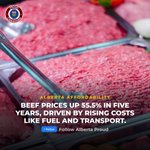
Ranchers like Michael Munton in Warner, Alberta, are seeing beef prices come down after reaching all-time highs this summer, but costs are still astronomical across the supply chain.
Michael Munton, who operates Benchmark Angus, confirms that while some prices are now easing from their summer peak, the overall cost of infrastructure, machinery, and equipment for ranchers remains astronomical. Brenna Grant, executive director of Calgary-based Canfax, highlights that these rising costs extend throughout the entire supply chain, directly impacting the price of beef Albertans pay at the grocery store and restaurants.
Experts warn that despite a growing cattle herd, North American beef supplies remain tight, meaning prices are unlikely to return to previous levels. This ongoing pressure on ranchers, from rising feed costs to expensive fuel and transportation, means consumers will likely continue to see higher prices for their favourite cuts of meat.
With fuel and transportation costs adding to the burden on ranchers and consumers, what more can be done to make everyday necessities more affordable for Albertans?

71
After a $9 million investment in Calgary Transit safety, only 34% of riders report feeling 'very safe' on the system.
Last year, Calgary made a $9 million investment into transit safety. This funding led to increased security at 10 CTrain stations and the deployment of 34 new Transit Peace Officers with full enforcement powers. A survey of nearly 5,000 riders now offers a look at the impact of these changes.
While the percentage of riders feeling 'very safe' did increase from 27% to 34%, reports of disorder only saw a slight drop from 76% to 70%, and confidence in help arriving rose from 67% to 73%. Still, one in four riders continue to report that disorder seriously affects their sense of safety, and overall safety ratings have not improved, highlighting how much work remains.
After a significant investment, the vast majority of Calgary Transit users still do not feel very safe on the system.
What more do you think Calgary needs to do to ensure everyone feels truly safe on public transit?

71
A Calgary man found five names, an Air India boarding pass, and a cheque scattered in roadside garbage in northeast Calgary.
The man, who cleans up garbage along roadsides and open areas through his Instagram account @oneditchatatime, encountered these personal documents alongside other waste north of Homestead. This discovery highlights the growing problem of illegal dumping, an ongoing concern in Calgary's developing communities and outskirts that creates environmental hazards.
Illegal dumping not only creates an eyesore but also puts personal privacy at risk, as seen with these discarded documents. Currently, Calgary can fine individuals up to $10,000 for illegal dumping. However, the Alberta government is stepping up to protect our communities by proposing a significant increase in penalties, with individual fines ranging from $10,000 to $100,000 and corporations facing penalties starting at $100,000.
The provincial government's proposed new fines aim to crack down on those who jeopardize the privacy and safety of others by illegally dumping personal information. What more can be done to ensure personal data is protected from illegal dumping across Alberta?

4
237
An independent provincial report reveals former Mayor Naheed Nenshi's office withheld critical warnings about Calgary's water utility from city councillors.
The report, written by independent inspector David Goldie and appointed by Alberta Municipal Affairs Minister Dan Williams, found that five of nine priority recommendations from a 2015-2016 consulting review were deliberately kept from city councillors.
Calgary's water utility was warned nearly a decade ago that its financial management and governance needed significant reform, warnings that came years before the catastrophic Bearspaw South Feeder Main failures in 2024 and 2025. These crucial details were received by then-Mayor Naheed Nenshi and his chief of staff, but never reached the council.
The decisions made years ago could directly impact the reliability and cost of water for Calgary households today.
What accountability do Calgarians deserve when critical information affecting their daily lives is withheld?

Irvin Badarm, the man who initiated a group attack near an Edmonton LRT station that killed a father of two, was sentenced to four years in prison but will serve just 90 more days.
Badarm, 34, pleaded guilty to manslaughter in Edmonton Court of King’s Bench for the death of Clinton Quintal, who was attacked early May 15, 2024. Quintal suffered seven stab wounds, mostly to his back, after Badarm tackled and repeatedly punched him, with another man, Adam Chinery, joining the assault. Prosecutors accepted the plea to a lesser charge because it was unclear whether Badarm or Chinery used the knife in the attack that ultimately killed Quintal.
Clinton Quintal’s older sister, Angela Pearson, told the court she was upset and angry that Badarm will be free so soon, while Badarm himself offered an apology to Quintal's family and kids.
With Irvin Badarm walking free in a matter of weeks, how does this sentencing protect our communities from violent crime?

RCMP in Alberta have begun court proceedings against a 17-year-old for a terrorism-related offence, following allegations of online correspondence with ISIS.
INSET officers of the RCMP Federal Policing Northwest Region arrested the teen on October 26, 2026, in Alberta. The investigation began in February 2026, when police looked into online communications between an online user and others affiliated with the Islamic State of Iraq and Syria.
The court process involves a terrorism peace bond under section 810.011 of the Criminal Code. This legal tool allows authorities to monitor individuals who may commit a terrorism-related crime, even if there is not yet enough evidence for formal charges. The youth was released with conditions and was scheduled to appear in Fort McMurray Provincial Court.
This preventative measure can include strict conditions such as limiting travel or access to electronic communications. What role do you think preventative legal measures play in keeping our communities safe?

1
82
Pierre Poilievre was throwing some shade at Mark Carney today over the budget. Do you think he was justified?
4
165
A proposed 1,600 megawatt data centre, larger than all of Edmonton's power use, is being planned for Parkland County.
TransAlta Corp., along with partners Brookfield and CPP Investments, signed a memorandum in February to evaluate the Boreal Technology Hub. This large-scale project will be located directly south of TransAlta’s gas-fired Keephills Generating Station, with an initial 230 megawatts approved through Alberta’s grid operator.
The Alberta government actively seeks to attract data centre developers to the province, highlighting our plentiful natural gas and available land. TransAlta CEO Joel Hunter stated the province's careful strategy ensures grid reliability and keeps power affordable for Albertans, avoiding problems seen in some US jurisdictions where rapid development raised consumer bills.
This Boreal Technology Hub represents a significant investment, attracting new industry by leveraging Alberta's abundant natural gas and strategic land resources. How do you think Alberta's energy advantages can attract even more tech development?

1
2
201
Canada is bracing for a more dangerous world. This week the government released Canada’s first national security strategy in more than 20 years, and it is blunt: the country must now prepare for every contingency, up to and including war.
Defence Minister David McGuinty pointed to the threats shaping that reality, Russia’s aggression in Ukraine, rising tension between China and Taiwan, and the ongoing conflict in the Middle East. At the core of the new strategy is a striking idea: that economic security is national security. In a volatile world, controlling our own energy, resources, and supply chains stops being just good economics and becomes self-defence.
A country that can feed, fuel, and power itself is a country that can stand on its own. Do you think Canada is doing enough to secure its own future? Tell us below.
1
72
Albertans value faith, community, and safety for all.
That’s why it’s deeply concerning that federal Liberal and Bloc MPs have actively blocked a study into crimes targeting religious institutions like church burnings and synagogue attacks.
At the House of Commons Heritage Committee, they shut down motions to even *begin* a public airing of these issues, and even refused to recognize faith as integral to Canadian identity.
This impacts the sense of security and belonging for many Albertans. Police-reported hate crimes targeting religion have more than doubled since 2015, and attacks on Jewish Albertans have quadrupled. Over 400 arsons have targeted places of worship across the country since 2015, with 90 of them in 2021 alone, and over 100 churches burned.
Why are federal representatives preventing transparency and understanding on issues that affect our communities so profoundly?
Albertans deserve answers and action, not political roadblocks that ignore a rising tide of religious persecution.

Albertans can expect greater stability and relief for their household budgets with a new three-year education property tax freeze.
The province plans to collect $99 million less in property taxes in its next budget by introducing a single, province-wide Education Property Tax (EPT) rate. This rate will be set at $2.65 per $1,000 of assessed value for residential and farmland, and $3.98 per $1,000 for non-residential properties, with Finance Minister Jason Nixon confirming no cuts to education funding.
The EPT rate will be frozen for three years, then adjusted and refrozen every three years, aiming for clarity and fairness across all municipalities. Calgary Mayor Jeromy Farkas, who noted previous disproportionate hikes, praised the system as a step toward keeping the city affordable for residents.
With years of rising costs, will this tax freeze truly ease the financial burden on Alberta households?

1
120
Albertans are set to pay a staggering amount towards Ottawa's debt this year, and it’s not for new programs or services.
Federal interest costs have reached $58.7 billion, now consuming 90 percent of Ottawa's $65.3 billion deficit, according to the latest Parliamentary Budget Officer figures. This comes as Canada has seen the largest percentage-point increase in gross government debt of any G7 country since 2014.
Hub contributor Charles Lammam argues that despite the government emphasizing higher revenues and an early operating balance ahead of the November 5 budget, federal debt continues to grow. This means rising debt-servicing charges are making the true deficit significantly higher than what headline numbers suggest, directly impacting how taxpayer dollars are being spent.
When most of the federal deficit goes to debt interest, what’s left for actual services for Canadians?

1
1
94
Alberta's heavy oil is facing its widest discount in years, even as global prices surge, and there's a clear reason we're missing out.
As of Tuesday, Western Canadian Select's (WCS) discount to the US benchmark widened to US$31 a barrel in Alberta, the largest gap since 2022. This discount also reached US$23.50 a barrel on the US Gulf Coast, marking its widest point since 2018, according to Link Data Services.
While global prices for West Texas Intermediate and Brent crude climbed over US$104 and US$117 a barrel due to Middle East conflicts, Alberta's WCS has remained below US$70 a barrel since June. With 90% of Canadian oil exports going to the US and shipping disruptions impacting Gulf Coast routes, Alberta urgently needs diversified international market access.
As Alberta and Ottawa back the Pacific Link pipeline, how long should the province wait to fully connect its oil to the global market?

2
1
112
Failing to approve Calgary's police budget could have 'major impacts' on the safety of every Calgarian, warns Chief Katie McLellan.
Chief McLellan is seeking a substantial budget increase for the Calgary Police Service over the next four years. Her plan includes hiring 309 new officers and 214 additional civilian employees by 2030. This also involves boosting the annual operating budget 19 percent, from $684.5 million in 2026 to $816.7 million by 2030.
She also requests $191.9 million in capital spending, a 73 percent increase. McLellan states that without full funding, officer response will be further limited, worsening public safety outcomes given rising shootings, fatal collisions, and mental health calls in Alberta's largest city.
With the Chief stating they need double the officers requested, how will Calgary ensure public safety without sufficient funding?

1
1
105
An opportunity to export 250,000 barrels of Alberta oil daily is blocked by a federal tanker ban.
Conservative Leader Pierre Poilievre and Alberta Premier Danielle Smith are backing MP David McKenzie’s Bill C-264 to repeal the federal tanker ban. This bill targets the ban along British Columbia’s northern coast, which prevents the export of 250,000 barrels of Canadian oil daily. Poilievre urged Prime Minister Mark Carney to scrap the ban ahead of an upcoming vote.
Calgary-based Strathcona Resources proposes shipping this oil by rail to Prince Rupert for overseas export, potentially within two years, using existing infrastructure. Prime Minister Mark Carney, however, pledged in July to maintain the tanker ban under a B.C. agreement. MP McKenzie challenged the government on October 26, arguing Strathcona could export immediately if the ban were lifted.
Why does Ottawa continue to block Alberta's energy export potential, especially when it pays their bills?

1
2
114