

Academics say I’m too practical. Gurus say I’m too rigorous. Prof of Entrepreneurship. I write about what actually works — most of what you’ve heard is wrong.
Worldwide
Joined November 2010
- Tweets991
- Following39
- Followers131
- Likes14



Sears helped launch an online service in 1984, a decade before Amazon existed. Then it shut its catalog in 1993, the customer habit online shopping was built on. Protect the behavior a shift depends on before you chase the tech.

4
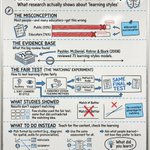
Someone told you that you're a visual or auditory learner. A 2008 review of 71 learning style models found the evidence insufficient to justify teaching to those styles. Did it change how you studied?

2
A pricing option nobody picked lifted the bundle from 32% to 84% in an MIT experiment. Researchers then made 91 attempts to produce the same decoy effect. Eleven produced a reliable one. Students are not your customers, so test it.

6
Toys R Us owed lenders about $400 million a year in interest, whether it sold toys or not. Most people blame Amazon. Fortune's analysis says the debt landed the first blow. Could you cover your biggest bill through three slow months?

2
People worked 3 minutes and 5 seconds, on average, before they switched tasks or something interrupted them. About 44% of those interruptions came from the workers themselves. Nobody pinged them. Study by Gloria Mark, UC Irvine.

5
Xerox invited Steve Jobs in on purpose. It invested $1 million in Apple for the right to buy 100,000 pre-IPO shares, and the PARC visit was part of the deal.
Where do you draw the line between borrowing an idea and stealing one?

5
A man robbed 2 banks with lemon juice on his face, sure it made him invisible to cameras. That story inspired the Dunning-Kruger effect.
The paper never said stupid people think they're smart. Which smart-sounding term gets misused most where you work?

6
Klarna bragged its AI did the work of 700 people. Then the CEO told Bloomberg it was cheaper but lower quality, and Klarna started hiring humans again.
You automate whatever you can measure first. Who checks the rest?

9
Wells Fargo's goal: 8 products per customer. The CEO's reason: "Eight rhymes with great." Regulators found 2M+ accounts may have been unauthorized, opened to hit sales targets. Which of your KPIs could be hit with zero customers knowing?

5
"70% of mergers fail." A study of 40,000+ deals found 70% to 75% missed their stated goals. Another found a few giant deals caused most of the value lost in 1998 to 2001. Is a missed goal a failure, or only a loss?

1
Google's own head of HR wrote that the idea of 20% time mattered more than the reality. He estimated about 10% of time went to side projects. A perk nobody can use is a slogan. Did anyone at your company use its innovation time?

2
Trip.com let birthdays decide who worked from home. In a randomized trial of 1,612 employees, 2 days at home cut resignations 33% with no measurable effect on output. Would you let your birthday decide your office days?

6
In a 30-year simulation, Welch's fire-the-bottom-10% rule paid off fast, then faded: about 16% a year in years 1 to 2, about 1% by year 10. Year 1, you cut mismatches. Year 3, you cut people who were fine. What happened in year 3?

3
Yahoo paid $1.63 billion for the first company that made paid search work. Google built the bigger business. In a study of about 500 brands, 47% of pioneers failed vs 8% of early leaders. Name a pioneer that a follower beat.

2
Netflix paid $1 million for the winning algorithm, then never launched it. A crowd can beat your in-house team at a problem you've defined well. It won't tell you the problem has moved. Where have you seen a great answer to the wrong question?

1
A small fine made parents twice as late. Removing it didn't fix it. In 10 Haifa daycares, late pickups went from about 8 a week to about 16 with the fine, then about 19 after it was dropped. Have you seen a penalty make a problem bigger?

2
Same two candies. Handed over with the check, the average tip was 21.62%. One with the check and one offered on the way out: 22.99%. No candy: 18.95%. One server, 20 parties per group. What's the standard freebie you give that nobody notices?

11
A hotel sign said 75% of guests who stayed in your exact room had joined the towel-reuse program. Reuse hit 49.3%, vs 37.2% for the standard sign. Which request do you keep explaining that a peer fact might help?

1
In 1982, Mars said no to putting M&M's in E.T. Hershey said yes and Reese's Pieces got the part. Nobody can tell you what that no cost. What's the last big "no" you gave, and how would you know if it was wrong?

6
