




Pinned Tweet
I want my customers to get promoted.
Someone has to put their reputation behind choosing our software. I want to help that person show their boss why it was a good decision.
And as marketeringleaders, I think it's critical for us to ensure we drive this mentality across our orgs.
So @GamacP and @DemandDarrell were kind enough to host me on @humansofmartech Podcast to share how I’ve approached this at Amplitude and MoEngage.
The sale is where we start having to prove them right.
youtube.com/watch?v=Di-pkR-_…

Clarity is kindness.
It sets the tone and ensures folks know what is expected.

We had a new sales hire bring up work-from-home culture during his first week at Coram.
I told him, "Of course, we allow working from home... on Saturdays and Sundays."
He left the next day.
This isn't a post about remote vs. in-person work.
It's about **leaders being clear about the culture they're building.**
Not everyone will want to be part of it, and that's okay.
The right people will get on the boat. And when everyone is rowing in the same direction, you can move at incredible velocity.
This explains why physical AI And how @asheshjain399 thinks about the business and not just the technology.
Highly recommend if you're thinking about AI and which companies actually have moats. But beyond that, how to spot founders who don't just think about tech, they think about distribution first.
Yes I am Biased, as I run marketing at Coram. Luckily I get to see this every day.

Not all apply but enough here to ensure your a rockstar by your late 20’s
Things I’d want someone to tell me at 20:
> Get around people with ambition. Your surroundings play the biggest role in who you become.
> Make your idea more ridiculous. Big ambition attracts good people.
> Pick the best people and the hardest problem. Early in your career, those are the 2 things that matter most.
> Build your network by working with smart people. A coffee chat can start a relationship, but it can’t replace the depth you get from working together.
> Take more risk. The downside of risk early on is mostly time, and you have a lot of it.
> Worry when everything is going well. If you’re doing hard enough things, things will never all go well.
> Pick a problem you’d work on for 20 years. Most success comes after a long stretch of pain.
> Be useful. Wealth and status come after.
Your first customers are teaching you how to market your product.
Pay attention to the words they use. Learn what they’re replacing and why they keep coming back.
That’s where your positioning and GTM should start.
I wish more marketing teams were involved in early access this deeply. This playbook should be required reading.

I've spent 20+ years launching products and features.
I finally wrote down the early access playbook I wish I'd had when I started.
docs.google.com/document/d/1…

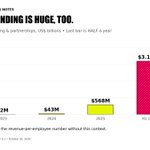
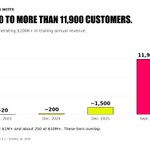
~900% net revenue retention. LMAO. Customers they already had are spending roughly 9x more a year later. Craziest number in the filing.

4 rules I used for picking my next marketing job:
1. Don't get too comfortable. With how fast marketing is changing, comfort is mortgaging your future for the present.
2. Go where the whole company is pushing on new tools. Engineering, product, and sales too. One department doing it alone isn't enough.
3. Be clear on where the tools stop and taste and decision-making take over. That part comes from time with customers, and it's hard to copy.
4. Pick a mission that actually fuels you, so going above and beyond means something.
Which one did you skip last time?
Judging big marketing bets quarter by quarter is a scam you run on yourself.
Big ideas almost always look wrong on spreadsheets. Early on they show up as cost without proof. They need time to land and to earn trust, and before that all you see is spend.
The pressure is reasonable. Boards want confidence, finance wants control, and leadership wants to know what a dollar buys next quarter. But asking marketing to prove a big idea in one quarter is like telling a pharma company to invent a blockbuster drug on a deadline. You accept a lot of misses because the one that works pays for everything.
So teams fund the safe stuff that justifies itself right away, and the ideas that could have mattered most get cut. Squeeze the variance out and the upside goes with it.
Protecting those few bets, before they look reasonable, is the CMO's job.
This is why I love early stage: Easy wins are forgettable. Hard ones change you.
Do the hard shit, not because it's fun, but because the win actually means something.
And honestly, the stuff I'm proudest of was never that easy. It's what I bled for and broke me a bit.
3 org chart mistakes killing your team's customer sense:
1. Thinking it starts with the org chart. Who owns demand, where PMM sits, how brand works with SDRs. Those calls matter, but everyone has to understand the customer no matter who owns what.
2. Letting brand and design off the hook. Your audience might be on Instagram while your budget sits on LinkedIn. Brand often spots that gap first, so PMM needs to work with them.
3. Building a team that's afraid to talk to customers. Customers tell you which routes not to take as much as which ones to take.
Which of the 3 is your team making right now?
Hot take: most of a marketing leader's job is getting out of the way.
From the outside it looks like sitting in the rooms and making the call. Most of it is making sure your team has what it needs, and knowing what your boss needs from marketing, like pipeline and brand.
It gets harder as you get more senior. More people means more tradeoffs, and your time turns into the scarce resource. You have to decide where your energy matters and where the team should carry it.
When did you last ask your team where you're in the way?