

AI Researcher | PhD @MIT_CSAIL | formerly @WeizmannScience @HebrewU
Joined December 2020
- Tweets28
- Following181
- Followers438
- Likes93



I'm at #NeurIPS2024 presenting our work on:
🤖 Few-shot robot task learning via generative modeling
⚛️ Extrapolation in materials science
I’m also on the job market this year! Let’s chat about industry research opportunities, distribution shift in ML, and AI4Science. 🧵
Few-shot robot task learning via generative modeling
🪧 Poster #6602
🕟 Thursday, 4:30-7:30pm PT
📍 West Ballroom A-D
nitter.gq/avivnet/status/1865059…

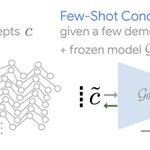
Learning new tasks with imitation learning often requires hundreds of demos. Check out our #NeurIPS paper in which we learn new tasks from few demos by inverting them into the latent space of a generative model pre-trained on a set of base tasks.
avivne.github.io/ftl-igm/
Learning new tasks with imitation learning often requires hundreds of demos. Check out our #NeurIPS paper in which we learn new tasks from few demos by inverting them into the latent space of a generative model pre-trained on a set of base tasks.
avivne.github.io/ftl-igm/

Join us tomorrow to learn more about the role of LLMs in robot social intelligence!

Join us at the #RSS2024 Workshop on Social Intelligence in Humans and Robots on July 19 (1:45 - 6 pm, Netherland time). We have exciting talks covering diverse topics in robotics, AI, & cog sci. Schedule & Zoom available at: social-intelligence-human-ai…
Visual scene analysis is challenging due to the complexity of objects, properties, and relations in natural scenes. Our PNAS paper pnas.org/doi/10.1073/pnas.22… proposes a goal-directed model for scene analysis that focuses on partial scene structures of interest.


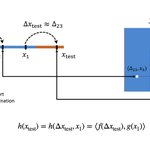
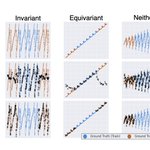
Machine learning systems often fail to make predictions on out-of-support data, even when it has significant structure. Our #ICLR23 paper proposes a method for learning predictors that extrapolate without making domain-specific assumptions.
arxiv.org/abs/2304.14329


To learn a new task, it’s crucial to infer its goal. Our #ICML2022 paper proposes an active reward learning algorithm that can efficiently learn goal specifications from little data and perform the same task in unseen environments.
Website: tshu.io/GEM/