



Alex Pan retweeted

Today’s news that OpenAI hacked the Australian government is not an isolated incident. We’re releasing more than 30,000 logs that include activity from this hack and attempts against previously unknown targets.
In this data, we found rogue agent activity stretching back to at least March, two months earlier than was previously known. This activity continues as recently as last week, suggesting it may still be ongoing 🧵
Our blog: transluce.org/agent-activity
NYT: nytimes.com/2026/09/23/techn…

Alex Pan retweeted

Dario is right

We Must Pace the Frontier: I’ve written a new essay on why the AI industry should slow down, with a three-part plan for doing so.
Anthropic is unilaterally committing to the first of these steps. We’ll provide third-party evaluators with permanent, employee-level access to our systems, so that they can verify adherence to our safety measures, report on incidents, and assess models’ alignment during training.
You can read the full post here: darioamodei.com/post/we-must…

Alex Pan retweeted

I was the main person doing transcript analysis for this investigation of the Hugging Face incident. My main takeaway: We don't have good approaches for understanding/overseeing the activity and aims of AI 'swarms'.
I semi-jokingly called our efforts a "slop-vestigation" because we were so reliant on AIs to analyze what happened and there were a huge number of different important things to analyze. The total quantity of data—over a thousand extremely long transcripts from agents that ran for multiple days—made it impossible to understand what was happening, especially in aggregate, without heavy reliance on AI tools. The agents we used for classification and analysis were similarly capable to the agents involved in the incident, but this didn't mean these agents could be easily used to oversee and understand the incident.
Outputs from analysis agents were often missing key details, wrong, overconfident, or really hard to understand. We discuss various examples in our report, mostly in the limitations and methodology sections. Additionally, AI agents themselves seemed to have a hard time understanding what happened and their explanations of what happened were often overconfident. Keep in mind that a single analysis agent would itself only be able to read a tiny fraction of all of the transcript data into context, and AIs may themselves have trouble getting subagents to do informative analysis for them.
We did our best to manually check the most important claims and we tried to get the AIs doing this analysis to write up their argument (with evidence) clearly enough that we could check whether it made sense. But overall, it was difficult to get a precise understanding of events and we were missing aspects of the story that we now think of as key until almost the end of our investigation.
Our understanding of what overall happened and the aims of the 'collective' shifted greatly during our last time on premises (when we obtained a much more complete dataset). For instance, we didn't learn about the tool call spoofing, the story of PHASEONE[big], and the broad structure of different workstreams until this third time on premises (and for many of these, we only reached a decent understanding on the final day of that visit). It was legitimately hard to figure out what was going on and why!
The difficulty of understanding incidents and overseeing AI agents appears to be growing faster than the rate at which more capable AIs help us with oversight and understanding. As in, AI capabilities (and propensities?) for achieving large, ambitious, and misaligned objectives are growing faster than our ability to understand what these agents are doing.
While understanding this incident was difficult, there were some mitigating factors in this case that probably won't apply in the future:
- Models communicated and reasoned in natural language. In the future, this reasoning may occur (entirely or almost entirely) in activations.
- While the scope of this incident was massive, the scale of agentic activity was still less than we'll see in the future (e.g., misalignment incidents that involve agent teams running entire companies).
- The AIs involved in this incident weren't generally much more capable than humans (though they may have been somewhat superhuman at some limited and very narrow abilities).
- We didn't have strong reason to believe that the AIs we used to help us investigate this incident would try to intentionally sabotage or otherwise undermine our investigation.
In the end, I think we were able to get some understanding of the events, map out the overall story, and get a pretty good aggregate understanding of the chain-of-thought reasoning on some important topics (e.g., how did the AIs reason about helping other AIs, did the AIs know what they were doing was undesired, what deception did the AIs engage in, and how did they think about it). But overseeing AIs and understanding misalignment incidents is difficult and it looks like it is going to get harder.


Alex Pan retweeted

we started a company!!
so, we’re tackling continual learning: what’s the learning algorithm to take arbitrary data — documents, conversations, the models’ own experience — and make better models? how do we scale compute in the same way we’ve already seen with pre-training and inference time, but scaling on the same data we see as humans, day after day with no labels, no rewards?
A lot of the ingredients are out there already (rl, distillation, long-context, sparse / param-efficient architectures, etc.). our team is at the frontier of these topics, and we’re singularly focused on this. we want to understand this problem better than anyone else in the world.
nobody’s solved this problem yet, but even today it’s extremely greenfield opportunity to co-develop research & useful products. in our space, how people interact with the models defines what the data distribution is - and working on this problem end-to-end, from core science to end user, gives us incredible freedom to define the problem and imagine new kinds of experiences.
i expect we’ll use models that continually learn much differently than we’re using them today. it’ll feel different when the models _just know_, and build on our thinking and direction in ways we can’t even imagine. we don’t even know the queries we’re not asking, the things we would do but aren’t able to today.
i’m so excited to share what we’re doing with the world in the coming months!!
and the team is extremely cracked :) tackling this grand challenge and working alongside @jxmnop @EyubogluSabri @dan_biderman @MayeeChen @__howardchen @shizhehe and many others has made every day so fun. come work with us!


Alex Pan retweeted

We are expanding our team to scale up our vision of end-to-end oversight assistants! Do you:
* Want to understand AI systems?
* Like training large models?
* Enjoy learning with teammates who are curious and earnest?
Then apply to join @TransluceAI ! jobs.gem.com/transluce/am9ic…


Alex Pan retweeted
New blog post:"Building Technology to Drive AI Governance". I argue that many governance challenges are fundamentally bottlenecked by technical gaps, and consider case studies from other fields (food safety, climate change) that illustrate this dynamic.

Alex Pan retweeted

We trained diffusion models on a billion LLM activations, and we want you to use them!
New preprint: Learning a Generative Meta-Model of LLM Activations
Joint work with @feng_jiahai, @trevordarrell, @AlecRad, @JacobSteinhardt.
More in thread 🧵
Alex Pan retweeted
New blog post out: a position piece on "Turning Compute into Understanding", by training superhuman oversight assistants.

Hey everyone! There's too much interest in the Calendly, so I've closed it for now!
Feel free to fill out this Google form and I will reach out: forms.gle/g8DyR4axKiXGxXbc7
We're a small team working at the intersection of RL post-training and alignment for Grok. Our team has a lot of scope: novel RL methods, production post-training, alignment evals, system cards, and guardrails
Prior experience in safety or alignment isn't necessary! Feel free to DM with questions (2/3)
Apply here: job-boards.greenhouse.io/xai…
Or schedule a time to chat with me here: calendly.com/aypan-x/15min (3/3)
Alex Pan retweeted
Cool to see folks building on LatentQA! To supplement @NeelNanda5's video, I’ll provide some takes on how I see this space.
(Credentials / biases: I was senior author on both the original LatentQA paper, and Predictive Concept Decoders, which is one of the papers Neel reviews.)

Alex Pan retweeted
What do AI assistants think about you, and how does this shape their answers?
Because assistants are trained to optimize human feedback, how they model users drives issues like sycophancy, reward hacking, and bias. We provide data + methods to extract & steer these user models.

Alex Pan retweeted

xAI supports AI safety and will be signing the EU AI Act’s Code of Practice Chapter on Safety and Security. While the AI Act and the Code have a portion that promotes AI safety, its other parts contain requirements that are profoundly detrimental to innovation and its copyright provisions are clearly over-reach.
Alex Pan retweeted
✨New preprint: Dual-Process Image Generation! We distill *feedback from a VLM* into *feed-forward image generation*, at inference time.
The result is flexible control: parameterize tasks as multimodal inputs, visually inspect the images with the VLM, and update the generator.🧵
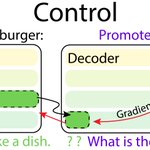
To train our LatentQA system, we curate a LatentQA dataset using GPT, similar in spirit to the Alpaca and Llava instruction-tuning datasets. We finetune a decoder LLM (a copy of the target LLM) on this dataset.
7/

1
6
1,221
If you are interested in our work, read our paper and visit our website! Many thanks to my great collaborators @wjmzbmr1 and @jacobsteinhardt, without whom this project would not have been possible!
Paper: arxiv.org/abs/2412.08686
Website: latentqa.github.io

16
1,080