

#CompChem professor at NDSU, specializing in cheminformatics, machine learning, AI in materials, coatings and polymeric materials
Fargo, ND
Joined January 2010
- Tweets711
- Following331
- Followers172
- Likes3.5K





Pinned Tweet
One more our work recently published in Environmental Science and Technology (EST).
Congrats to my group members and collaborators from Europe Hrvoje Kusic and @glezdiazh Humbert G. Diaz
pubs.acs.org/doi/abs/10.1021…
Multi-Endpoint Toxicity Assessment by Large-Scale Machine Learning


Bakhtiyor Rasulev retweeted

The most detailed image ever captured of a human cell.
For perspective, the human body contains around 37 trillion cells.
Life truly is a miracle.
Our recent publication in Advanced Intelligence Systems. Thanks to our collaborator Dr. Humbert Diaz @glezdiazh and his team! "Polymerase Chain Reaction. Perturbation Theory and AI/ML-Experimental Microbiome Analysis: Applications to Ancient DNA" advanced.onlinelibrary.wiley…

Alvadesc highlighted our new study that we published recently in journal Results in Chemistry on predicting toxicity for polymeric particles. #ML # #NDSU #RasulevGroup #polymers #microplastics

ML-based QSAR for safer polymeric coatings
@bakhras et al. (2026) developed interpretable #QSAR models to predict green #algaetoxicity (EC50) of #polymers using mixture descriptors.
🔗 #Paper: doi.org/10.1016/j.rechem.202…
🔗 #AlvaDesc: alvascience.com/alvadesc/
#machinelearning

Bakhtiyor Rasulev retweeted

🚨 PLEASE RT🚨
Are you a comp chem student or postdoc attending Spring ACS in Atlanta?
Would you like to expand your network with mentors in industry & academia at the COMP Mentor Lunch on 3/24?
Fill out this form if you are interested in attending!
forms.gle/TtwztN9T5ZNjksDS6

Alvadesc was very kind and announced of publication of our paper on their page. We just published a nice study on toxicity of series of polymers that used in coatings.
ML-based QSAR for safer polymeric coatings
@bakhras et al. (2026) developed interpretable #QSAR models to predict green #algaetoxicity (EC50) of #polymers using mixture descriptors.
🔗 #Paper: doi.org/10.1016/j.rechem.202…
🔗 #AlvaDesc: alvascience.com/alvadesc/
#machinelearning
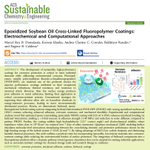
Happy to share a paper published in collaboration with a great group of Prof. Eugene Caldona - "Epoxidized Soybean Oil Cross-Linked Fluoropolymer Coatings: Electrochemical and Computational Approaches" | ACS Sustainable Chemistry & Engineering pubs.acs.org/doi/full/10.102…


Cancer rates by country per 100,000 pooulation. Visualization. visualcapitalist.com/mapped-…

Bakhtiyor Rasulev retweeted
We are now accepting applications for the Spring 2026 ACS Meeting in Atlanta, GA! Learn about our awards for grad students, postdocs, junior faculty, and GPU-based posters here acs-comp.org/awards
Applications are due September 15

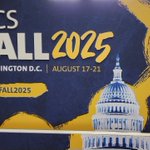
Our group is attending ACS Fall 2025! Find the schedule of our presentations below. Looking forward to seeing you there! #ACSfall2025
#RasulevGroup
#AmericanChemicalSociety

I completely agree with Andrew White on this. Machines are changing the whole idea of publishing and it needs to be dramatically revised.


Bakhtiyor Rasulev retweeted

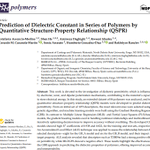
New QSPR study by Ascencio-Medina et al. explores dielectric constant prediction in polymers using ML and alvaDesc-calculated descriptors. @bakhras
🔗 doi.org/10.3390/polym1619273…
More on alvaDesc: alvascience.com/alvadesc/
#QSPR #Polymers #ML #alvaDesc #Cheminformatics

AlvaScience kindly posted the announcement about our paper published in SoftwareX about the multi-component descriptors developed for materials. #descriptors #machinelearning #materials #computational #AI
CombinatorixPy, a Python tool to compute mixture descriptors for QSAR/QSPR using Cartesian-based combinations doi.org/10.1016/j.softx.2025… @bakhras @gmaikelc
Supports descriptors from alvaDesc via CLI wrapper: alvascience.com/python-alvad…
More on alvaDesc: alvascience.com/alvadesc/

I'm at ACS Fall 2025 Meeting. Will be happy to chat with my colleagues. See you at the meeting. #ACS #ACSFall2025

This map highlights the U.S. states leading and lagging in manufacturing employment. visualcapitalist.com/u-s-man… via @visualcap


Bakhtiyor Rasulev retweeted

While wealthy universities might absorb these costs from endowments. This is going to be very painful to public schools and smaller colleges :((

Last year, $9B of the $35B that the National Institutes of Health (NIH) granted for research was used for administrative overhead, what is known as “indirect costs.” Today, NIH lowered the maximum indirect cost rate research institutions can charge the government to 15%, above what many major foundations allow and much lower than the 60%+ that some institutions charge the government today. This change will save more than $4B a year effective immediately.

This is a great article about the project where our North Dakota State University teams - Rasulev group and Webster group are involved as well. Rasulev group applies AI and ML methods to predict properties of ice-release coatings and ice nucleating chemical compositions.
This Post is from an account that no longer exists. Learn more
