
criminal lawyer @HeneinHutchison • former law clerk @SCC_eng + bcca • @Cambridge_Uni + @queensu alum • he/him • law and
Toronto, Ontario
Joined May 2018
- Tweets315
- Following697
- Followers427
- Likes506

Not that it’s a robust protocol, but maybe worth mentioning that the SCC reserves room for “editorial revision” of its decisions before their publication in the SCRs. Would be interesting to see how this has been applied

This channel does more ambient versions of the original score, cutting out some of the more dramatic (and thus distracting) changes. They organize the mixes by place, which is kind of different. I dig it
youtu.be/eVCR3X6OfSc

repeatedly deploying concepts like surveillance and drawing on authors like Lyon and Haggerty. I’ll link the case, but see in particular the passage below:
scc-csc.lexum.com/scc-csc/sc…

Interesting. Seems like a lot of this rests on whether the point from Ryan survives the removal of the word “justified” from the provision. Does it? Steve Coughlan asks this question in a recent article (journal.queenslaw.ca/sites/j…):

This daylight continues to disappear for me after considering the accepted method for identifying a purpose. I really struggle to see how Martin J.’s recent explanation of this method in R v Poulin, 2019 SCC 47, differs from what originalists are asking for with respect to text:

The text of the Criminal Code doesn’t require this. Nor does the jurisprudence. Code J. explains the how the law on this point has developed in Thompson, at paras. 33-59 (canlii.org/en/on/onsc/doc/20…). He says that R v Genest, [1989] 1 SCR 59, makes it pretty clear:

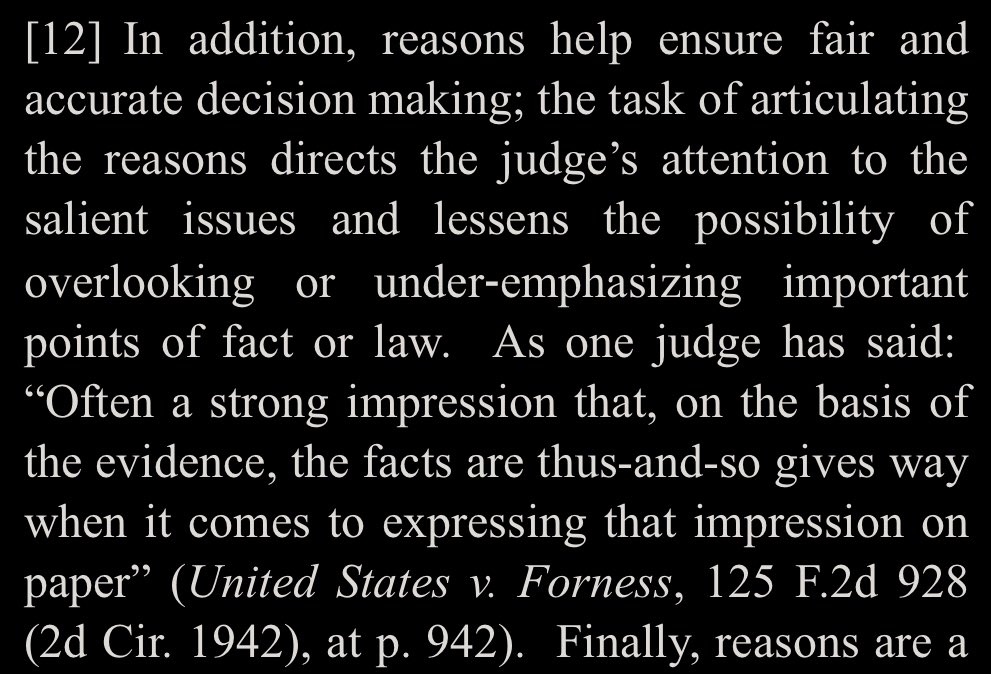
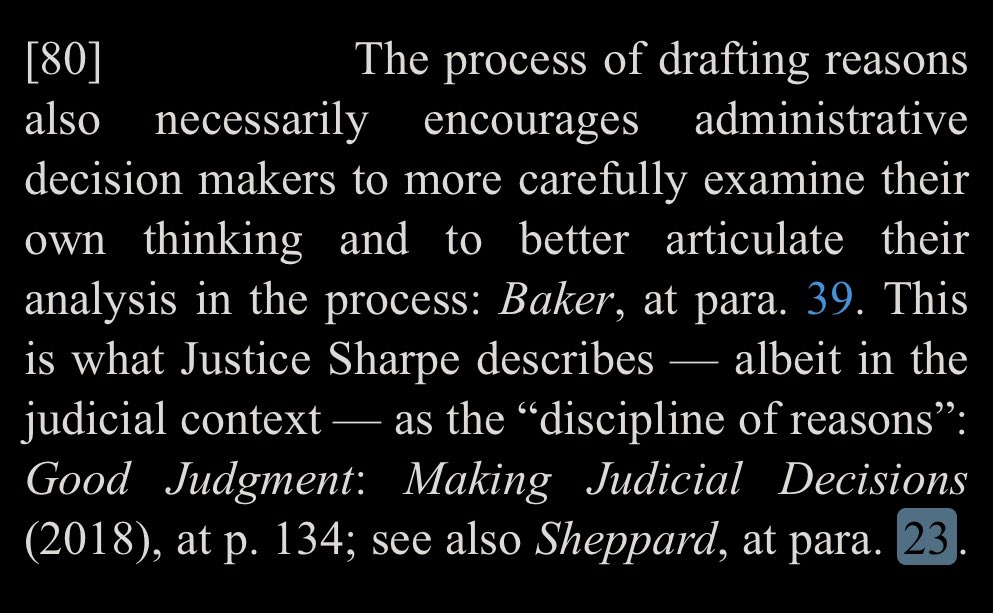
The SCC itself has recognized that reasons improve the decision-making process on multiple occasions. Two good examples are R v REM, 2008 SCC 51, at para 12, and Vavilov, at para 80.

Really just parroting Don Stuart here. Surprise — he gets it right: “[t]he focus should be on what the police did, not on what they might have done”.

