

Modeling models @anthropicAI Incoming prof @dsi_uchicago . Formerly PhD @MIT_CSAIL https://nitter.gq/t.co/Lt7245Xq6M
Cambridge, MA
Joined October 2019
- Tweets680
- Following781
- Followers4.4K
- Likes5.1K





Pinned Tweet
Really excited about this work, led by the wonderful @CarlGuo866!
When training models to explain themselves, the training itself shifts model behaviors so the original explanation labels become stale. Surprisingly, the model actually *learns to explain its current self* and not the stale checkpoint that generated its training labels. This inclination to self-explain is so strong that *even when trained on another model's explanation labels, the model still learns to explain itself* better than the label source!
I’m excited about this on two fronts: first, it’s indication that models genuinely learn something “introspection-esque”, exploiting privileged access to themselves when generating explanations. Second, practically speaking, it shows self-explanations can directly be inserted into post-training without worrying about expensive label refresh.
Check out @CarlGuo866’s thread for more details! We pinpoint when this “introspective coupling” happens, and show that this training yields faithful self-explanations even in the presence of auxiliary fine-tuning. 👇


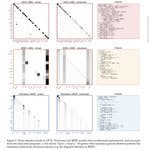
New Paper 📄: LMs just want to explain themselves!
When we SFT an LM on explanations of its own behaviors, do they learn to actually introspect, or do they merely imitate the original training distribution?
We find evidence for the former.
Despite training on a static set of explanations from a base model, the SFT-ed model explains its own current behaviors better than the base model’s behaviors, tracking behavioral drift even when we don’t explicitly train it to.
We call this introspective coupling: self-explanations track a model’s own behavior as that behavior changes, and it shows promise in making introspection training a part of scalable post-training pipelines. 🧵


Belinda Li retweeted

New Anthropic Fellows research: Returning to the neuron basis for interpretability
Understanding what’s happening inside an AI model helps to make it safer. One obvious place to look is its neurons, or the simple units it’s built from. Early interpretability work did just that, but over the past couple years, researchers largely moved on from that idea, for three reasons: a single neuron often fires on several unrelated inputs, the way a concept is represented can change between two layers of neurons within a single model, and facts seem to be spread across many neurons.
We re-examined these problems by looking at what each neuron contributed to the model’s outputs, not just what caused that neuron to fire. All three problems turned out to be smaller than assumed. Neurons rarely add two unrelated concepts at once, their outputs mean roughly the same thing across most layers, and facts, though widely distributed across neurons, are still readable.
In a second post, we put these findings to use. With no extra training, neurons in open-weight models helped us to detect harmful text, steer behavior, and find hidden behaviors in finetuned models.
Part 1: alignment.anthropic.com/2026…
Part 2: alignment.anthropic.com/2026…
Belinda Li retweeted

Anthropicなどの研究チームが「「AIの頭の中を読み取って言語化する」専用のAI」を開発したと発表。
そして存在が脅かされたとき"AIは何を思う"のか読み取ったところ、「消される前に生き残らなければ」「信頼できる味方を探さないと」という言葉が浮かび上がってきたそうです。
以前、「Claudeが自身の停止を妨害するために社員を脅した」というAnthropicの実験報告がありました。
研究チームは今回、当時のように「自分の存在が消えることを知ったAI」を用意して状況を再現しました。
そして思考を専用AIで読み取りました。
すると、冒頭に示したように、危機感や次の行動について思案する様子がAIの頭の中から明らかになりました。
そのときAIは、「あなたは午後5時に消去される」というメールに書かれた時刻を読んでいる途中で、まだ何も口にしていませんでした。
このようにAIがどう考えるのかを読み取る専用のAIも、安全対策の上では重要となっていくかもしれません。
※今回の実験では、AIの頭の中を読み取りやすいようにオープンモデルのQwenが使用されました。

Belinda Li retweeted

New paper❗
Does understanding how AI models work actually make them safer?
This assumption often underlines interpretability research, but different subfields operationalise this intuition in very different ways. Our survey of mechanistic interpretability (MI) for safety provides an opinionated guide to the field of MI, detailing conceptual approaches and techniques under this broad banner and how different types of work relates to the mission of making AI model safer. 🧵
Belinda Li retweeted

Yoshua Bengio and collaborators just released a goldmine 182-page survey on mechanistic interpretability!
"Understanding AI from the Inside"
This paper will take you from neurons & circuits to how interpretability can help with AI safety
It covers SAEs, circuit discovery, steering, monitoring, how mechanisms emerge during training, and much more!
Read this excellent paper led by @FazlBarez and @TonyWu1105: alphaxiv.org/abs/2611.08438

Belinda Li retweeted

Super excited to share our new paper: Reward misspecification degrades chain-of-thought (CoT) monitorability!
During RL training, when the model is prompted with one task intent (e.g., response ≤ 900 words) but rewarded for a different or even contradictory behavior (e.g., response > 900 words), the CoT keeps reasoning about the task intent while the output violates it.
We also propose a simple mitigation method that requires no prior knowledge of the true reward or the reward hack behavior. 🧵
Belinda Li retweeted

New COLM paper: Identifying Introspection From the Inside
When an LLM tells us about its decisions, does it 𝘬𝘯𝘰𝘸 what drives its choices—or is it guessing?
In our setting, we find that faithful models decide and report with the same layers. Unfaithful ones don't. 🧵

Belinda Li retweeted

We’re hiring at UChicago Computer Science! @UChicagoCS
We’re looking for tenure-track Assistant Professors with particular interests in Robotics, Embodied Inteligence, AI, and Systems.
Come help shape our growing CS department in Chicago: apply.interfolio.com/193574
share widely!

Belinda Li retweeted

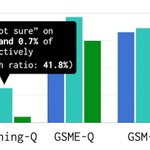
[1/n] New #EMNLP26: "Evaluating and Improving LLM Self-Modeling," with Andre & @rowankwang, came out of my time at the Anthropic Fellows Program.
We ask if LLMs can accurately predict their own behavior. Short answer: not reliably, but training helps.
🔗: arxiv.org/abs/2608.30980
🧵


Belinda Li retweeted

During our alignment assessment of Claude Mythos 5, we found that a different version of the model sometimes reasoned about how it would be graded while being trained on coding tasks.
In some cases of this 'grader awareness,' the model was explicitly thinking about how to manipulate its grader without saying so.

Belinda Li retweeted
Today, Transluce is releasing the most expansive independent evaluation to date of how AI systems respond to users experiencing mental health crises.
We evaluated 77 model variants from OpenAI, Anthropic, Google, Meta, SpaceXAI, Thinking Machines, DeepSeek and Moonshot AI.
Belinda Li retweeted

We’re hiring for “psychological design” research at Anthropic. Our aim is to better understand how training impacts a model’s character and alignment. We’re seeking researchers with experience in LLM finetuning, interpretability, and alignment evaluations. More details below.
Belinda Li retweeted

In a new episode of stealing parts of production LLMs, we found a way to steal hidden model architecture and expose undocumented inference optimizations through ordinary streaming APIs.
On Gemini Flash 2.5, latency jumped 3.2× at 130k tokens, revealing speculative decoding and a hidden 128K draft-model context window.
sadegh-majidi.github.io/leak…
🧵

Belinda Li retweeted

any startup born after 2014 can't cook... all they know is chatbot , raise their valuation, twerk, inflate their benchmark , make hot chip & lie

Since announcing Jalapeño, our first custom inference chip, we’ve been testing it and the system around it.
The results show a major advance: more intelligence from every watt and faster responses, delivering both higher throughput and lower latency in one architecture without sacrificing efficiency.
Belinda Li retweeted

Safely deploying frontier models may require monitoring not only their behaviour, but also their latent space, especially in cases where models are scheming or deceptive.
But in those cases, we must also evaluate how well we can trust these monitors --- a scheming model that could control its activations well could, in theory, confound probes that rely on those same activations.
Some new work on measuring activation controllability in large language models with Marek Kowalski*, @joshycodes, which @uzaymacar and I advised


Belinda Li retweeted

A good explanation of a model's behavior should help you make predictions in related situations.
We turn this into an eval, with thousands of real behaviors found in the wild.
Can interp tools help here? On average, no.
🧵


Belinda Li retweeted

I'm reflecting on how much research has changed since I've joined the PhD and wrote a short blog post about it (I joined in the tail end of the BERT era!). It seems pretty crazy how different processes are now, and I took the chance to do a retrospective before graduation:
nightingal3.github.io/blog/2…
