

Meta + Google Ads for Ecom & Lead Gen Unlock your next $50k MRR 👇
Canada
Joined May 2009
- Tweets788
- Following576
- Followers110
- Likes504

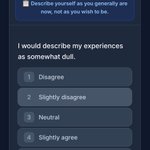



Describing your product < Describing your customer
"our supplement boosts energy." < "if you're the parent who's running on fumes by 10am, this is for you."
Give your customer an identity, force them to act like it.
2
34
Imagine if Meta worked as hard at fixing the Ads Manager as they do at hiding buttons to turn off Meta Enhancements.
1
33
benjaminhill retweeted

I’ve lost money on over 9,000 ads I personally wrote.
I’ve had over 2000 1-on-1 sales consults reject my offer.
My first 300 episodes of my podcast I published with barely any downloads.
In 9 different business partnerships, I was the reason we failed.
3 times I pitched an entire audience - and sold no one.
Nobody is special.
Everybody sucks when they start.

benjaminhill retweeted

Meta ads in 2015:
1. Take a photo of product with iPhone. Open Power Editor, launch ad in under 2 mins.
2. Refresh PE and see 1:1 conversions in under an hour, scale within 3-4 hrs.
3. Spend the rest of the day coming up with fun ideas for new offers, new landing page ideas, new product ideas, new copy ideas.
Meta ads in 2026:
1. Hire creative strategist -> Who hire creative agencies / editors -> who build batches of creative.
2. Open ads manager, go through 25-30 prompts of things you have really no clue about, but Meta is insistent it'll lower your CPA by 7.9% based on a study from 2 advertisers in 2022. Click publish after 1 hr of building out 10 new concepts.
3. You're then hit with an error publish with messages like: "you have no shops select," or "you don't have page permissions," or "this creative has expired, please try a new one" you finally are able to hit publish.
4. Finally, you can go on with your day. But wait, client sees that they are getting discounts on the ads you just launched coming in. You open up ads manager and go to ad level to go through multiple areas to figure out why.
5. Ah, Meta has randomly turned the promotions automatically on. No worries, you pause it. On with your day.
6. Someone who knows someone at the company for whose ads you just launched flags to friend that the ads are appearing with a dubstep version of a Beethoven song and seem out of touch for the brand. You're then texted to go pause the music.
7. Open ads manager, navigate to ad level, pause music. You're then hit with a prompt from Meta: "WHY ARE YOU TURNING THIS OFF?!" You hastily respond, "BECAUSE IT SUCKS!"
8. Visibly irritated now over Meta you finally settle in to do the other part of your job, analysis!
9. But wait, there appears to be an outage! Everyone texting, "Is Shopify down?," "Is it Cloudflare?," "Is it AWS?," "No! It's Meta!" Ok, well now you're in fight of flight. Should we wait? Should we pause? Let's wait, yeah let's wait. This is just a minor blip.
10. Meanwhile you're not left refreshing things every 5 min instead of doing analysis and research.
Finally, it is night time and you can relax (not)!
On this particular day you managed to launch 10 ad sets and do nothing else. Feeling defeated because what once took 2-5 min to do now feels daunting. It feels like you now spend the majority of your day in defense mode. Not because the work has changed or the people, but the process for doing it all has.
And that's why you're feeling burnt out media buying friends and creative friends.
Notes from the latest @myfirstmilpod episode:
1. @ShaanVP is buff
2. Dogs can live forever
78
Anyone who bashed @zach_yadegari for the AppMafia launch needs to listen to him on @myfirstmilpod.
I can’t believe he’s only 19 years old.
You’ll hear a young man who’s grounded, smart, tenacious and humble.
1
90
benjaminhill retweeted

Neither of these men are married or have kids.
Both are simply obsessed with their own personal perfection and optimization.
There is nothing impressive about a single man with no kids sleeping well and being fit.
Show me a man with young children, a full time job, disrupted sleep, who works out regularly, eats healthy, trains Jui Jitsu, with a muscular body…
THIS is impressive. THIS requires extreme discipline.

Chris Williamson just shared his "nuclear" sleep stack that's quietly changing his life—and Andrew Huberman breaks down exactly why it works:
If you're lying in bed at 2 a.m. scrolling or staring at the ceiling, this 4-minute protocol combo might be the fastest way to shut your brain off without pills.
The two killer techniques Williamson swears by:
1. The Mind Walk (visualization on steroids)
- Imagine walking a route you know perfectly (your house → front door → street)
- Do it with insane detail: feel the shoehorn, hear the key turn, feel the door handle, pressure of the pavement
- It's like reading fiction for your nervous system—engages the brain just enough to stop problem-solving loops, but not enough to keep you awake
2. Resonance breathing with the Ohm stone lamp
- Bedside lamp with induction-charging stone that has a built-in FDA-cleared HRV sensor
- Hold the stone → 3/6/9/12-minute guided sessions with silent tactile vibration (no sound, no light, partner-safe)
- Guides you into true resonance frequency (max vagal tone) → the stone knows when you hit it
- Williamson calls it “the sickest” sleep tool he’s ever used—currently in stealth (ohmhealth, not widely available yet)
Huberman adds the neuroscience:
Looking down + eyelids lowering activates parasympathetic circuits and deactivates wakefulness-promoting brainstem nuclei.
It’s literally pedaling the sleep pedal while shutting off the alertness arm.
Williamson:
“Some days you need the adventure story (mind walk), some days you need the physiological hammer (resonance breathing). Stack them and I’m cross-eyed into sleep.”
Already trying one of these? Or is your nighttime routine still a war zone?
As a Father to an almost one year old, this is nuts.
I have averaged 6 hours of broken sleep for almost a whole year.

This is one of the most important studies in sleep science.
Van Dongen et al. ran the experiment that changed how we understand chronic sleep restriction. They had subjects sleep 4h, 6h, or 8h nightly for 14 days, testing cognitive performance every 2 hours.
The 6h group’s reaction time deficits by day 14 matched subjects who had been awake for 24 hours straight. The 4h group? They performed like someone awake 48 hours.
But here’s what makes this study terrifying.
The Stanford Sleepiness Scale ratings in Panel B plateau after day 3-4. Subjects stopped feeling more tired even as their cognitive performance continued deteriorating through day 14. Your subjective experience of fatigue is a lagging indicator that eventually just… stops updating.
This explains why chronic undersleeping feels sustainable. You’ve adapted to feeling tired. Your prefrontal cortex hasn’t adapted to being impaired.
The PVT (Psychomotor Vigilance Task) in Panel A measures lapses in attention. These are the moments where you’re staring at a screen and your brain simply checks out for 500ms. Every additional day of 6h sleep adds more lapses. The curve never flattens.
Panel C and D show working memory and processing speed. Same pattern: continuous degradation with no subjective awareness.
The practical implications:
If you’re sleeping 6h and think you’re functioning fine, you’ve lost the internal calibration to know you’re not. The subjects in this study would have told you they felt “okay” while performing like they’d pulled an all-nighter.
For anyone doing cognitively demanding work, this means you cannot trust how you feel. You need to track objective markers: error rates, decision latency, problem-solving throughput.
Sleep need is biological, not negotiable. Most adults require 7-9 hours, and the research shows no population-level adaptation to chronic restriction. “I only need 6 hours” is almost always “I’ve forgotten what baseline cognition feels like.“
56
Is there an answer to why you can’t buy kindle books on the Amazon app in 2026?
Make it make sense.
23
Not every email has to be a pattern interrupt.
A mix of design types keeps your audience engaged.
Use simple design with strong structure and visual hierarchy to make an email easy to follow and digest.
After all, we want the reader to consume the information in the email.
1
30
Meta just broke landing page view tracking.
Accounts seeing 50% drops - from 90% to 40% conversion rates. Seems to be Apple devices only. Performance tanking across the board.
Either iOS blocking fbclid parameters or Meta scrambling to adapt.
44
100% BUT..
The script and copy is too forced. Real podcast ads pull compelling moments from organic conversations - this sounds like actors reading lines.

$60k–$100k/month AI ads are built exactly like this
it looks like a normal ugc clip
a calm person talking
one simple claim
one everyday visual
nothing feels generated
nothing feels like an ad
ai recreates this structure at scale
same pacing
same hook
same trust
different products
this is why ai ads convert the same as creator ugc
but cost less
and ship faster
i broke down how to build ai ads like this from script to visual setup to scaling
rt + comment “ai” and i’ll send it
(follow for dm)
42
Oh god

HOW TO PROPERLY WARMUP YOUR PIXEL AS A DROPSHIPPER:
1. Create a conversion campaign
2. Optimization event: Add to Cart
3. Budget: €50/day
4. Targeting: Broad (no interests)
5. Placements: Advantage+
6. Run this for 48 hours
7. Let the pixel collect as many ATCs as possible (ignore ROAS)
8. After 48 hours, turn off the campaign and launch your sales campaigns.
This will make your sales campaigns perform 3X better on day 1.
1
55
benjaminhill retweeted

2025 Broke Me and Hampton Wide Open
I don’t usually write posts like this. Ever.
Most founders don’t. It feels safer to share the highlight reel, the wins, the cool logos, the big revenue numbers. But 2025 wasn’t a highlight reel for me. It was a year of collisions: between ambition and reality, between growth and quality, between what I thought Hampton was and what it actually needed to become.
It was the year we stopped treating Hampton like a clever idea and started treating it like a real institution.
And institutions aren’t built on vibes. They’re built on sweat, and sometimes a little tears.
So here’s the truth, the whole year, as honestly as I can remember it.
We started 2025 with momentum and no real spine
We had fast growth, a passionate team, and a “this is working” confidence.
But underneath, the machine was wobbling.
Our virtual groups were slipping structurally, energetically, culturally.
Our IRL cities were growing, but held together by duct tape from a handful of heroic operators we are blessed to have on our team.
We were onboarding new members into a process held together with post-its and personality.
And our early group model, which worked at 400 members, was starting to buckle at 1,000.
But when growth is good, you look the other way.
2025 didn’t let me look away.
The failures hit early. And stupidly.
I’m not talking about existential failures.
I’m talking about the embarrassing ones, the ones that shouldn’t happen, but did.
We genuinely forgot who owned a critical process
We launched a new member process using a Google Doc titled “Use This Until We Build Something Real”
We shipped an onboarding step that literally contradicted the previous step
We found two different teams unknowingly building the same workflow
We ran an event where half the RSVPs ended up at the wrong location
We tried to run an in-person onboarding… through a Zoom link
Now, these were small individually.
Together? A signal.
They told me:
“You’re operating at a bigger scale now. And the systems that got you here won’t get you to the next layer.”
I hate hearing that sentence.
But it was true.
We rebuilt the almost everything from the inside out
We tore into every piece of the product:
IRL became the core of Hampton
We stopped pretending virtual could keep up.
We doubled down on cities where founders actually show up.
We rebuilt group compositions, and curation methodology
It changed everything.
Core Groups got a total reboot
Top/Bottom 5%.
MITs.
Reflections
Deeper Business Explorations.
The famous 3Ms, 3Cs, and 3Ls (iykyk)
A real year-one flow.
A real year-two model.
A real operating rhythm instead of moderator improvisation.
A true Hampton way, consistent and powerful for moderators and members.
This wasn’t cosmetic.
It was structural.
The team doubled up on accountability
Some people stepped up.
Some didn’t.
We reorganized almost every major function, sales, events, retreats, member success, ops, marketing.
We started bringing on leaders with more experience
We sunset roles that weren’t driving impact.
We called out communication problems in real-time, even when it felt uncomfortable. (Jori called me out for this one)
And the market punched back, hard
Costs went up.
Lead volume went down.
Twitter performance swung like a yo-yo.
CAC crept.
Retention became an obsession, not just a dashboard line item.
But we didn’t hide from the numbers.
We rebuilt the funnel, ad by ad, landing page by landing page.
We launched our internal OS (TU Doug!)
We added activation fees, future price tiers, and a membership model that actually matches the value we deliver.
2025 was the year Hampton taught me how to be an operator again. (With a lot of help from Sam pushing me)
We had wins too, big ones
NYC hit retention numbers that felt unreal in this industry.
Austin began to turn its flywheel.
We built multiple IRL groups that feel like they’ll last a decade.
We hosted 6 amazing retreats that created life long members
We rebuilt pricing for 2026 in a way I’m proud of, thoughtful, honest, sustainable.
We're adding structure to our chapter leadership that will compound for years.
We started building our Video capabilities and muscle
And best of all I joined my first IRL core group and I was blown away. A year ago, my virtual group was ok to good. Today, my IRL group is pacing to be game changing. It's night and day the difference. I couldn't be more excited.
But the biggest win?
We finally know what we are:
Hampton is a real community. Not a whim, not a startup idea a lineage. It's weird to talk in terms like this, but when I look at YPO, EO, Vistage, we are talking about institutions that have been around for 60-70 years.
That's my singular goal and purpose. To nurture something that can outlive me and change lives for tens of thousands of members.
And personally… this year exposed some big gaps in me
I walked into 2025 still operating like a founder, not a CEO.
My instincts were all speed, improvisation, and “I’ll handle it.”
That works when you’re building the first version of something.
It does not work when 1,000+ founders depend on your systems actually… existing.
I learned the hard way that a lot of Hampton’s growing pains weren’t “the team.”
They were me.
Hormozi says: Before you get mad at your team ask yourself:
Do they know WHAT to do?
Do they know HOW to do it?
Do they know WHEN to do it?
Do they know WHY they should do it?
Is something blocking them?
Diagnose first. Then fix the actual problem.
It was clear that;
I wasn’t giving enough structure.
I wasn’t giving enough clarity or communication
And I was still solving problems myself instead of building the processes that solve them forever.
And without meaning to, I became a bottleneck inside the company I’m trying to scale.
The truth is, my skill set is still heavily tilted toward founder chaos, not CEO discipline.
I’m weak on frameworks, systems, and documentation all the things that feel slow and annoying when all you’ve ever done is move fast and break things. This is the biggest friction point I have with Sam. He wants CEO excellence, and I'm a founder trying to pretend I know what that is.
But if you want to build something that lasts decades, not years, you eventually have to do the unsexy work:
SOPs. Process, frameworks (EOS!). Clear accountability. Structure. Redundancies.
No founder wants to think about that stuff.
But Hampton (and Sam) forced me to stretch into it.
To build muscles I’ve avoided for 20 years.
To lead with more truth, more candor, more structure, more accountability and a lot less ego.
I’m not done learning.
But for the first time, I’m learning in the direction that Hampton actually needs.
And here’s what I know going into 2026
We’re not trying to be the biggest founder community.
We’re trying to be the deepest.
The most transformational.
The one that actually makes people’s careers and marriages and companies better.
The one that lasts.
2025 was the year we earned the right to try.
And if you’re building something hard right now something that keeps you up at night, something that exposes every weakness you didn’t know you had I hope this gives you at least one thing:
You’re not supposed to have it all figured out.
You’re just supposed to keep rebuilding the parts that break.
That’s what we did this year.
And we’re better for it.
Here’s to the next version.
- Joe
Co-Founder, Hampton
I wonder if those most affected by Andromeda are simply creating crappy ads?
Releasing "10 new ad hooks a day" with 10+ variations most likely means you're stuffing your ad account with shitty ads.
Make better ads first.
1
1
124